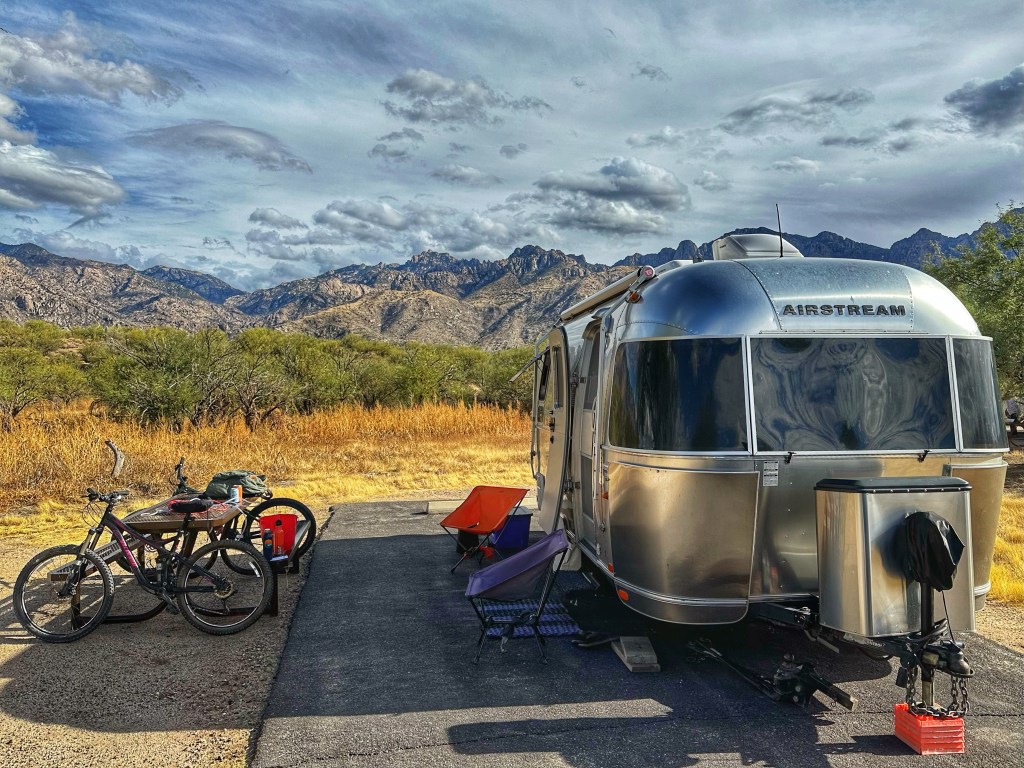
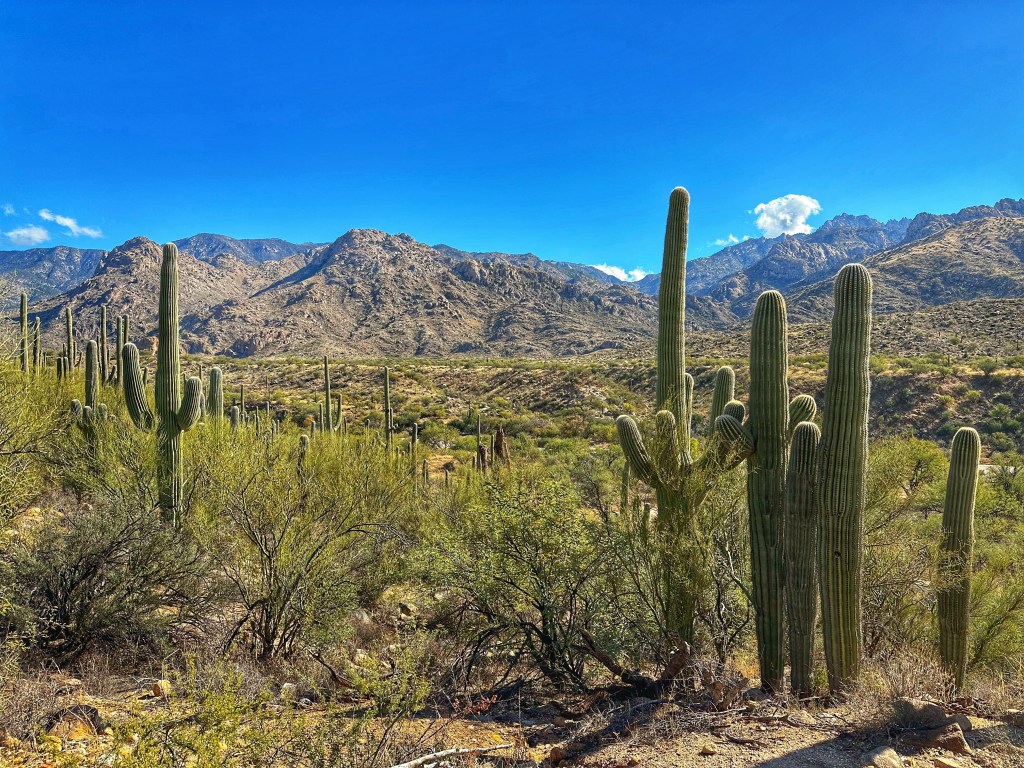
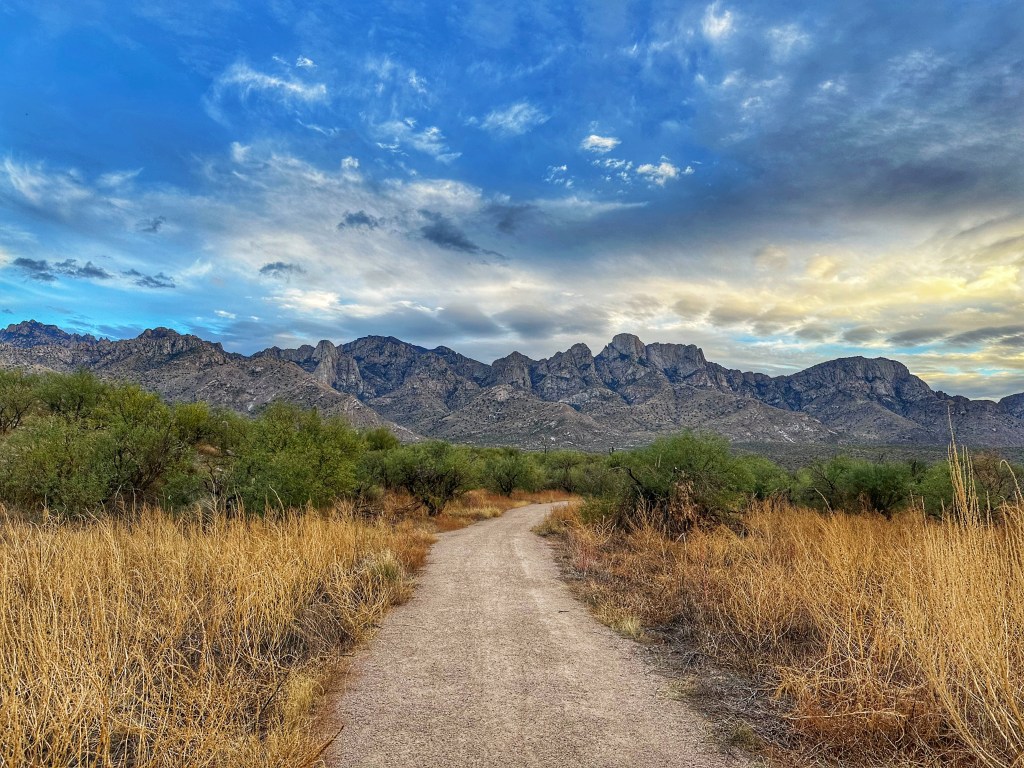
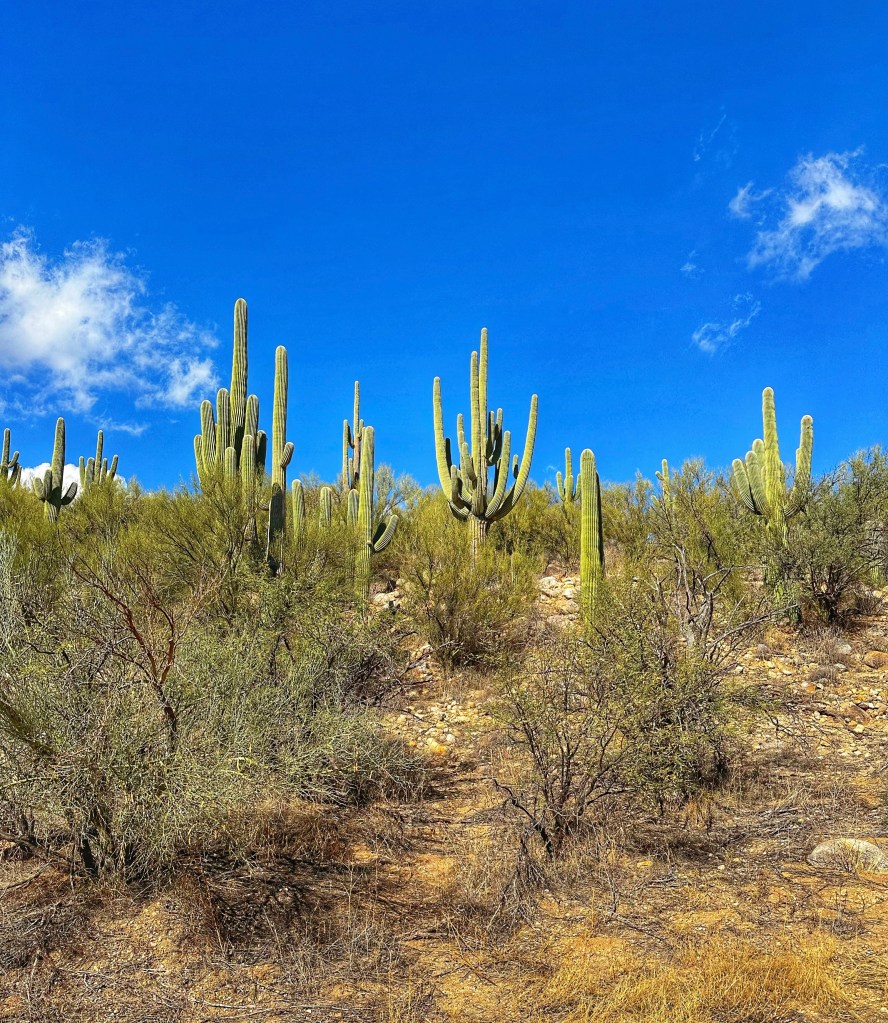
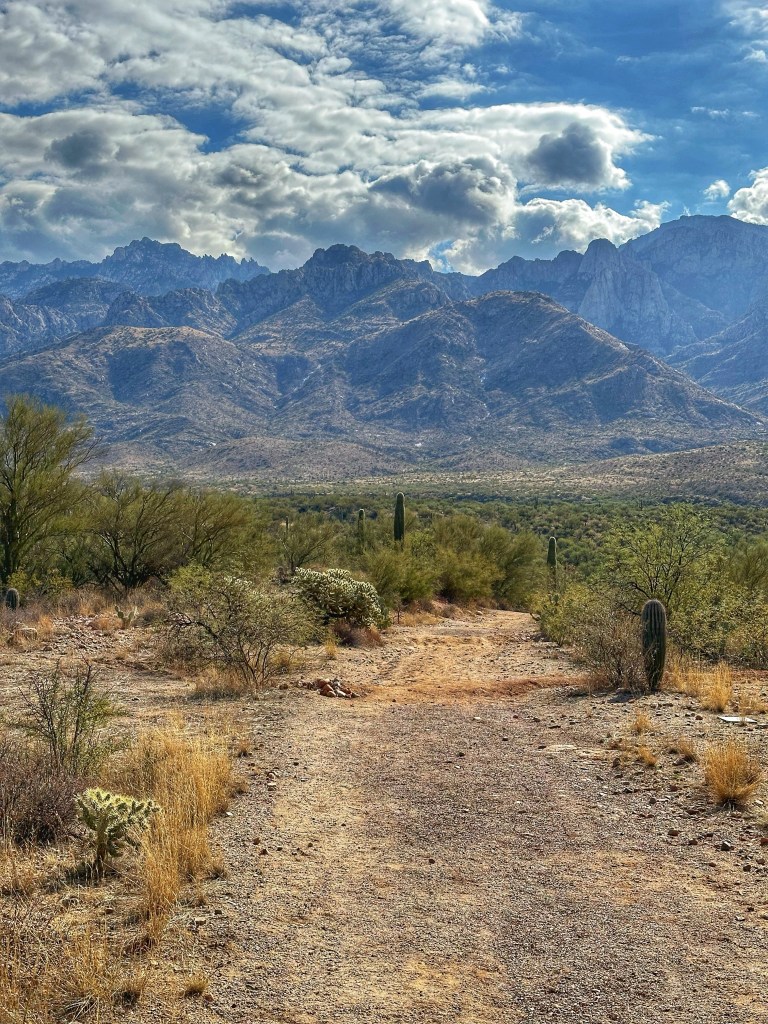
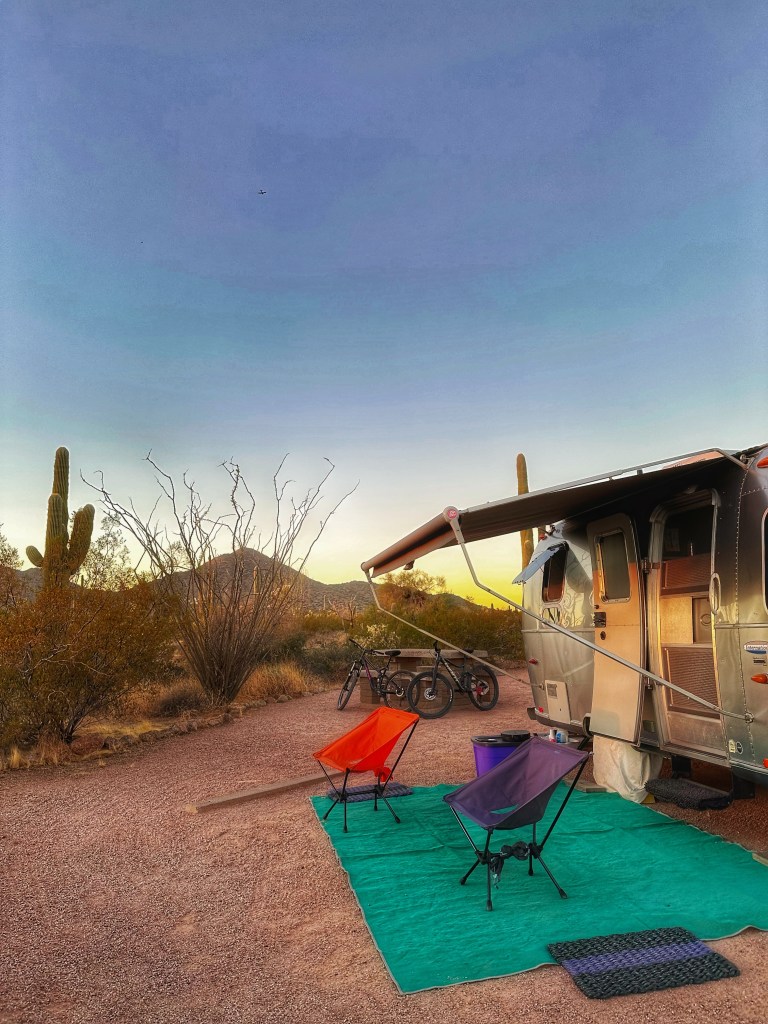
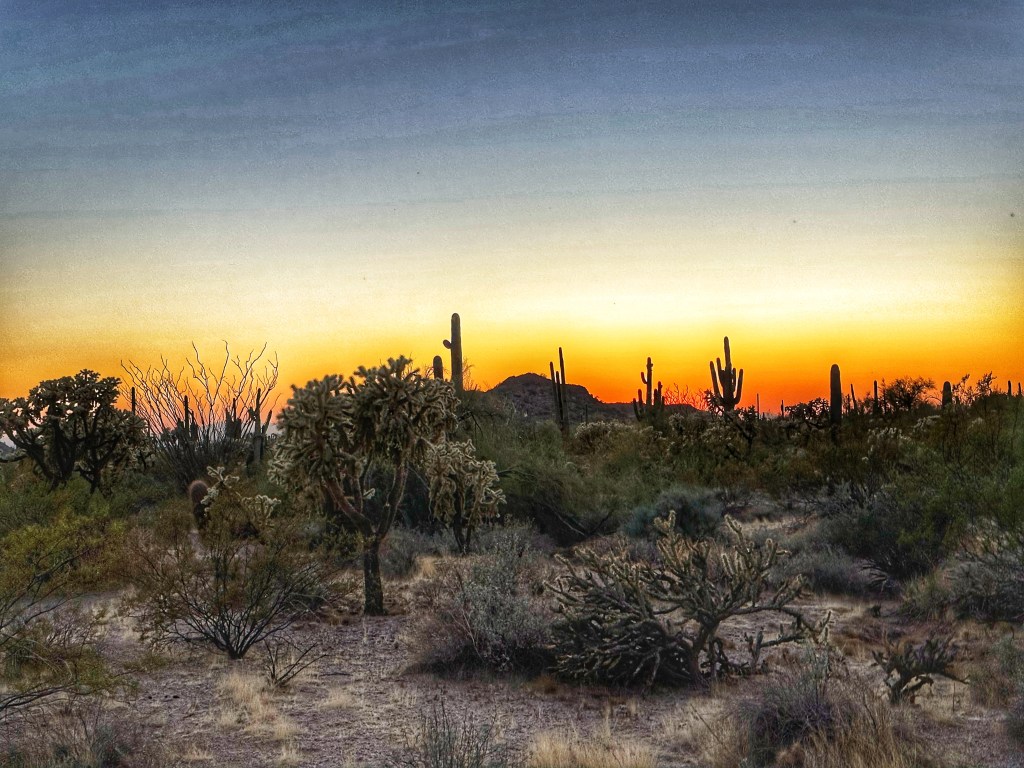
We left Phoenix and headed to Tucson where we plan on spending the majority of our winter. Our first stop is Catalina State Park in the Oro Valley, north of downtown Tucson. The park is in the shadow of the Santa Catalina Mountains and encompasses 5,500 acres of foothills, canyons and riverbeds with more then 150 bird species making the park home. While the park is surrounded by development, you wouldn’t know it once your settled into the park.
Site 47
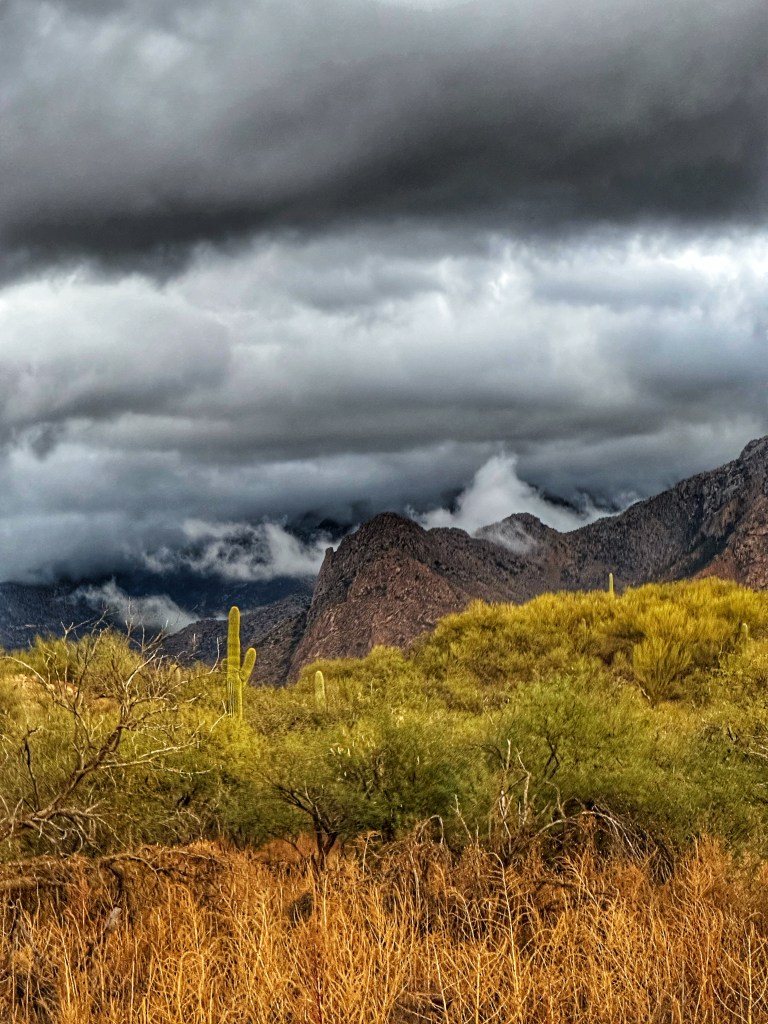
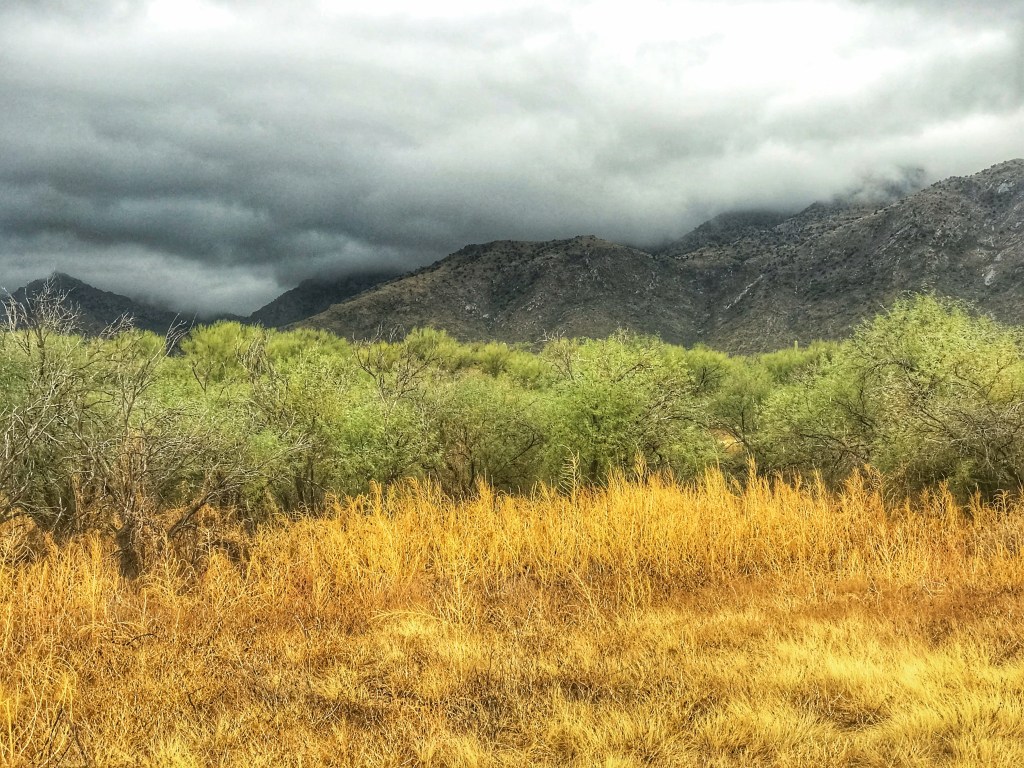
It didn’t take long for the clouds and rain to follow us down from Phoenix.
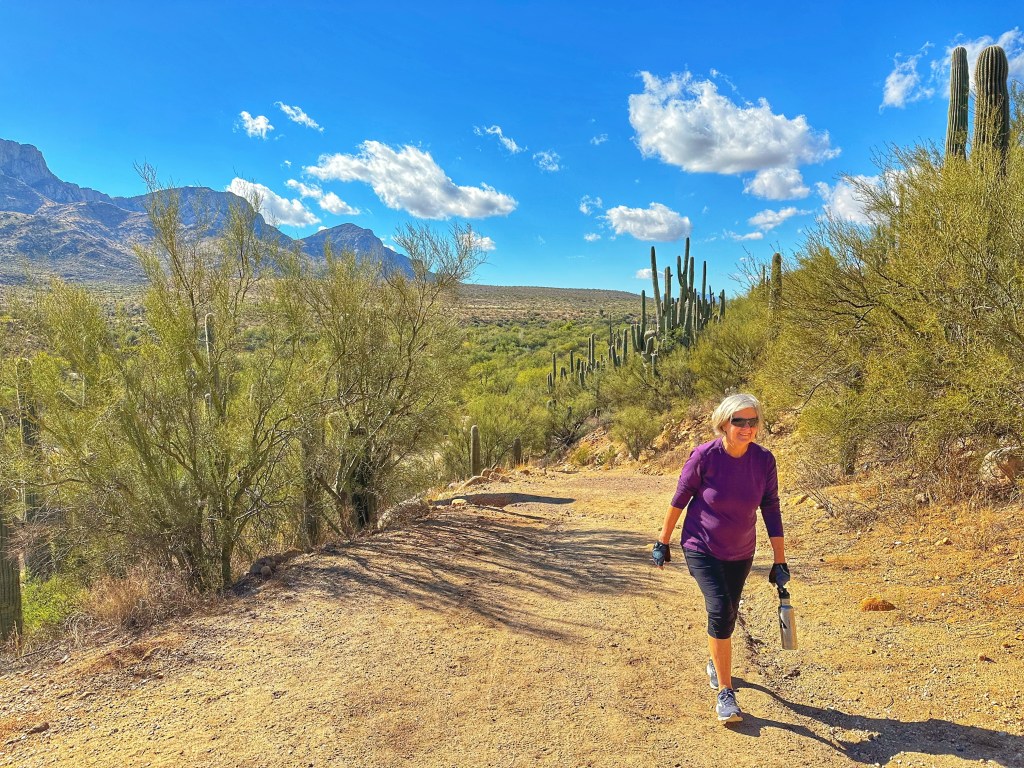
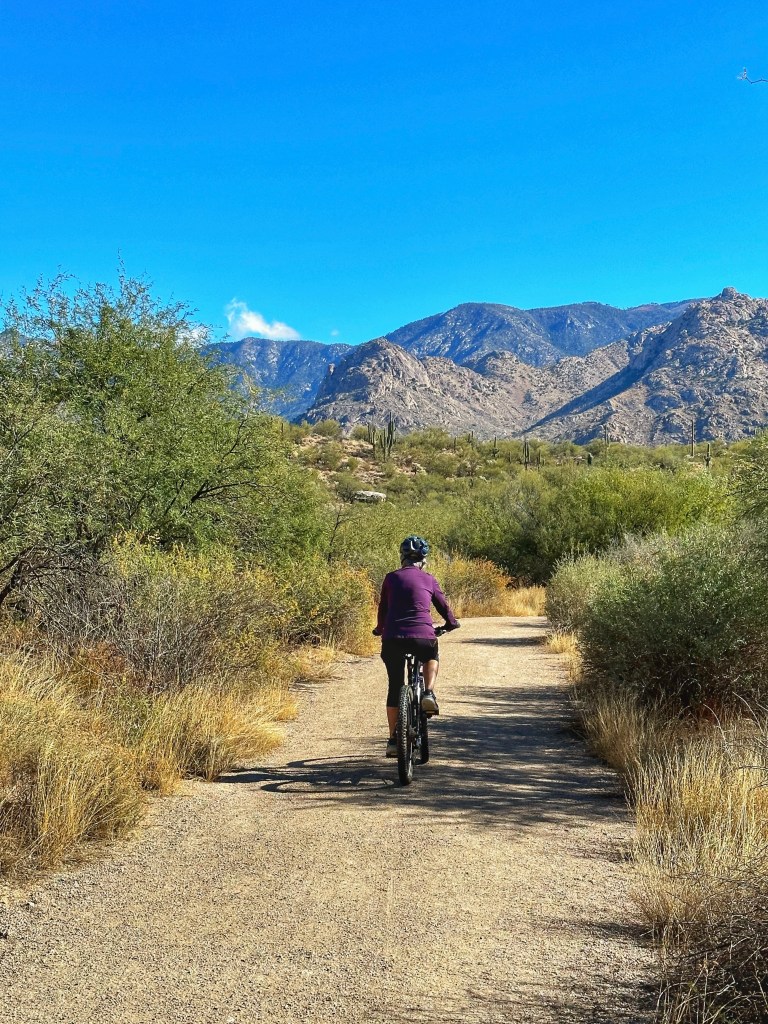
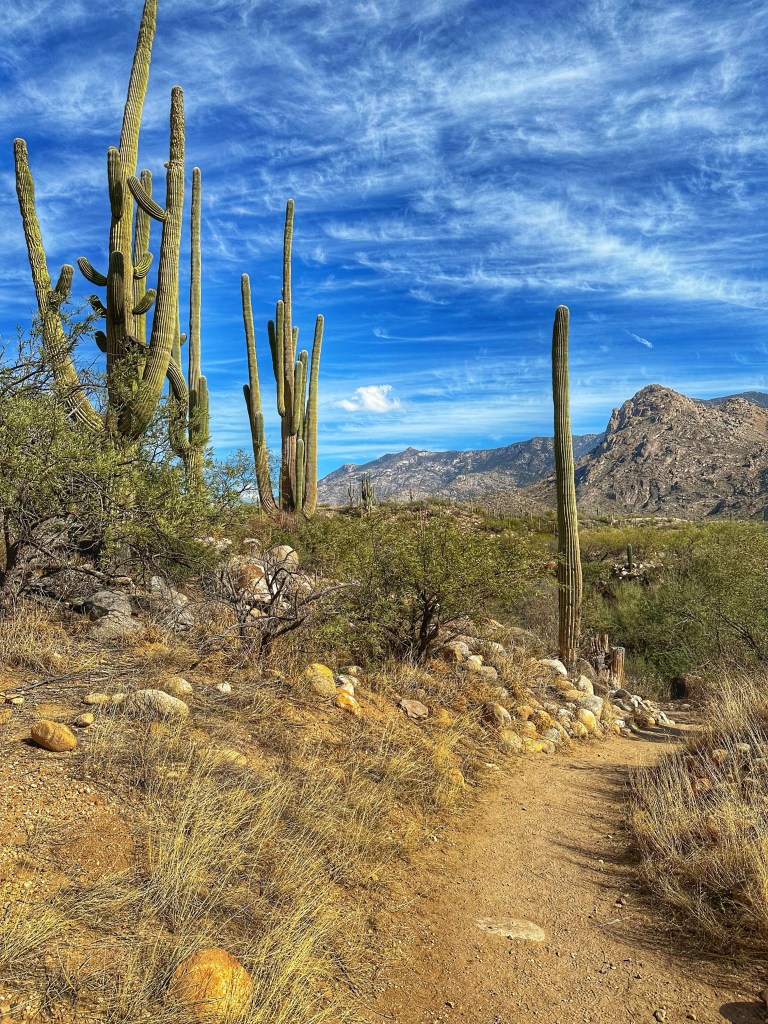
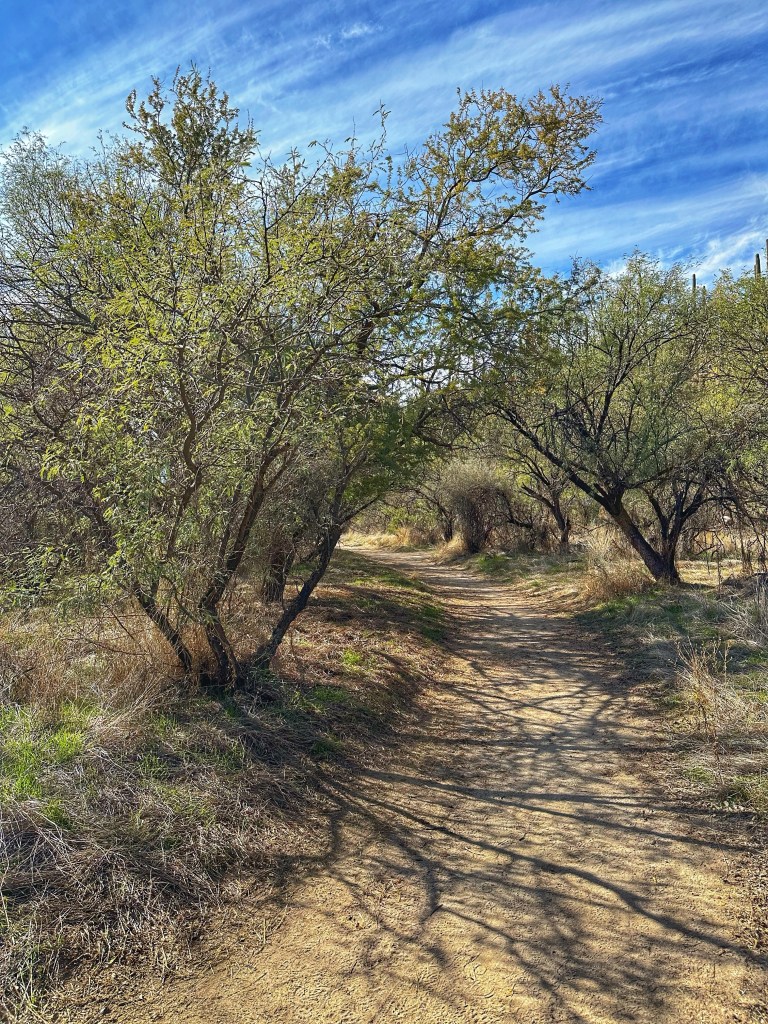
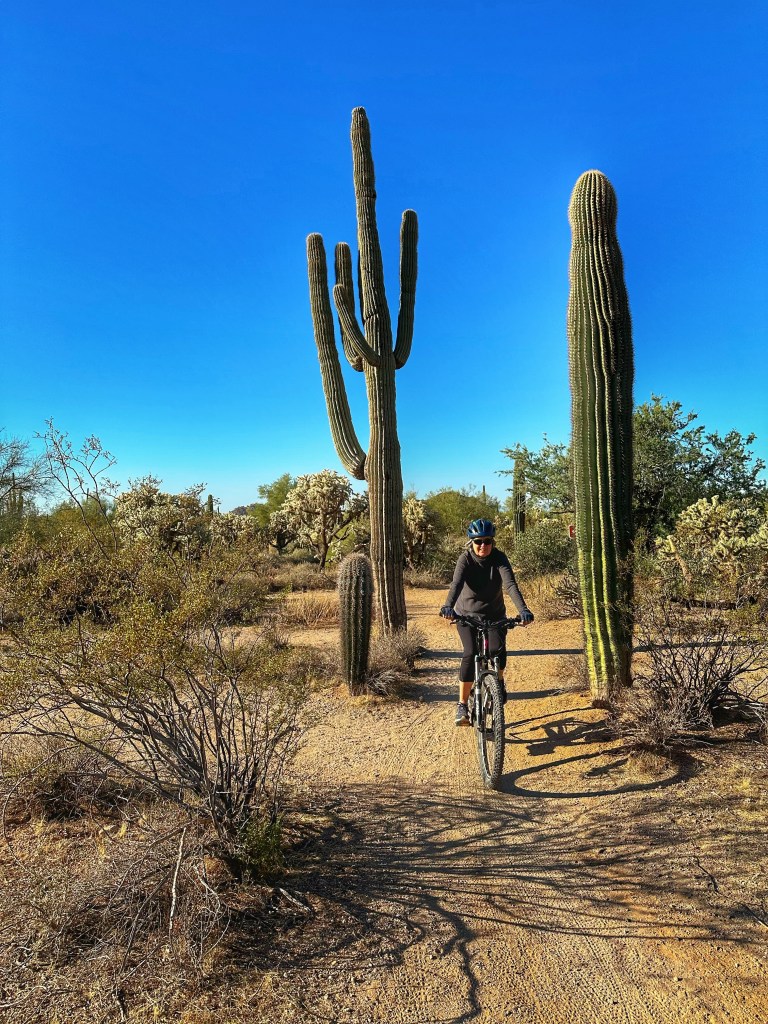
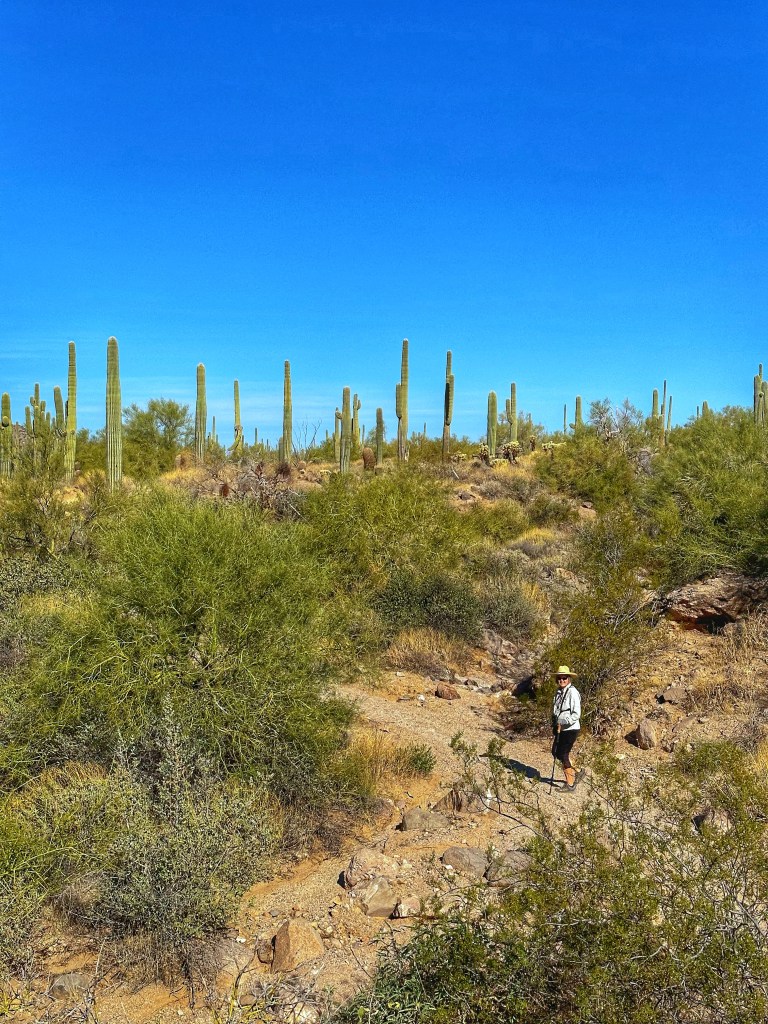
The park offers ample opportunities for hiking and biking.
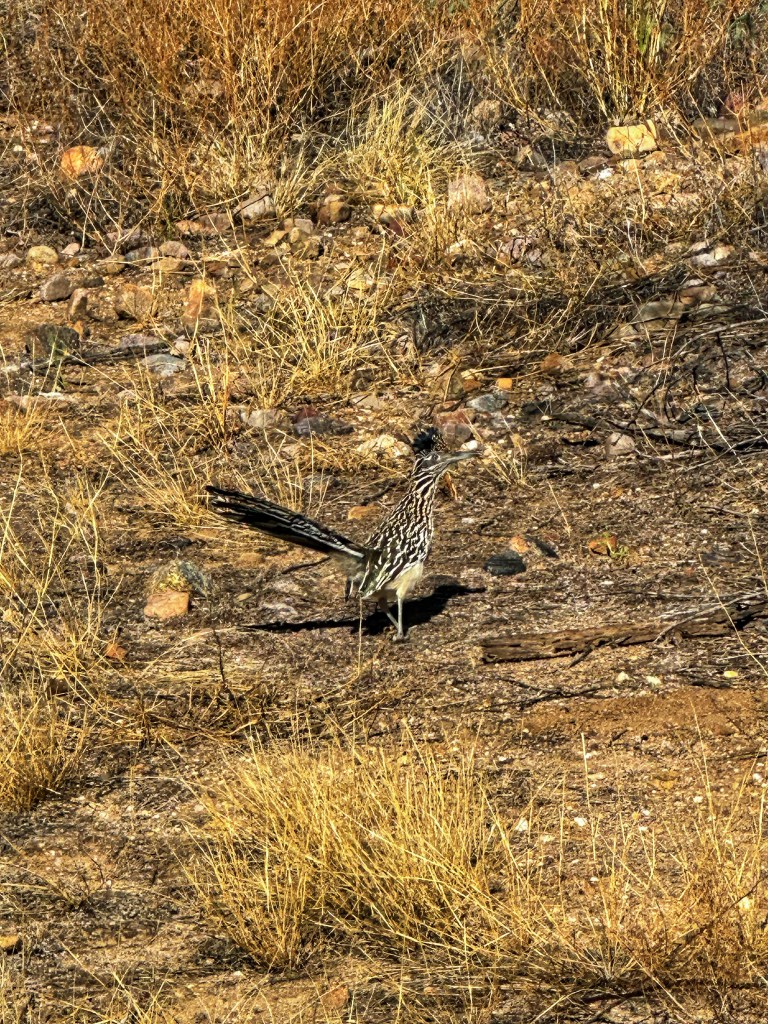
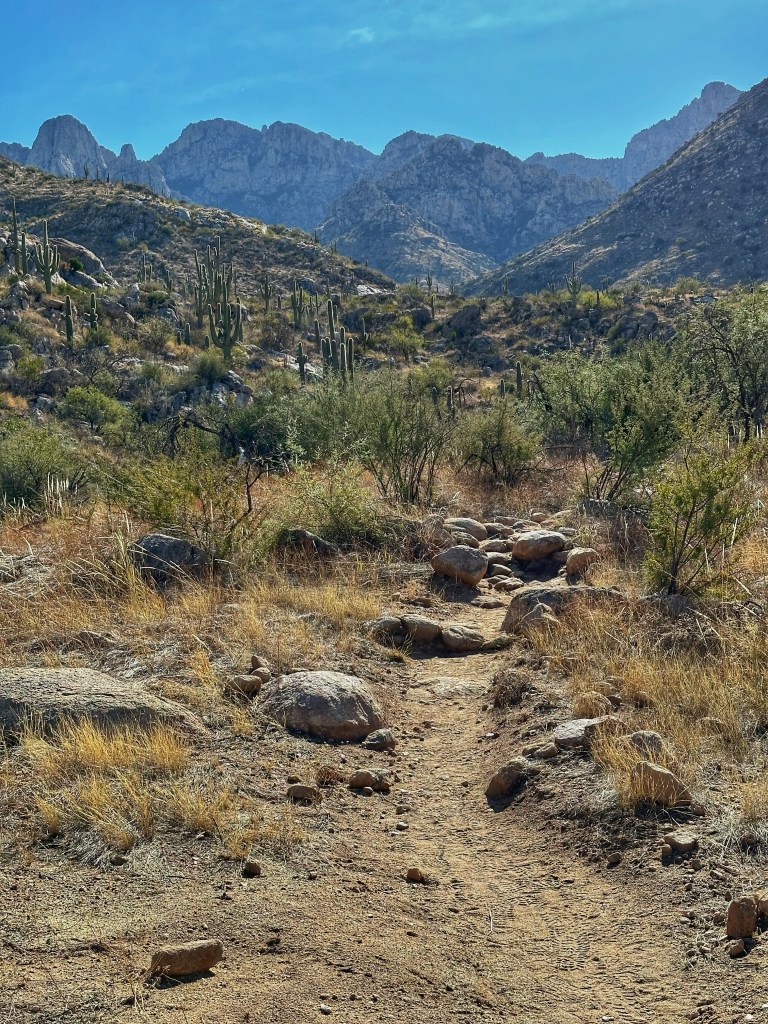
Heading up to the Nature TrailA view of the Santa Catalina Mountains from the Nature Trail The Bridle Trail A Roadrunner along the trail
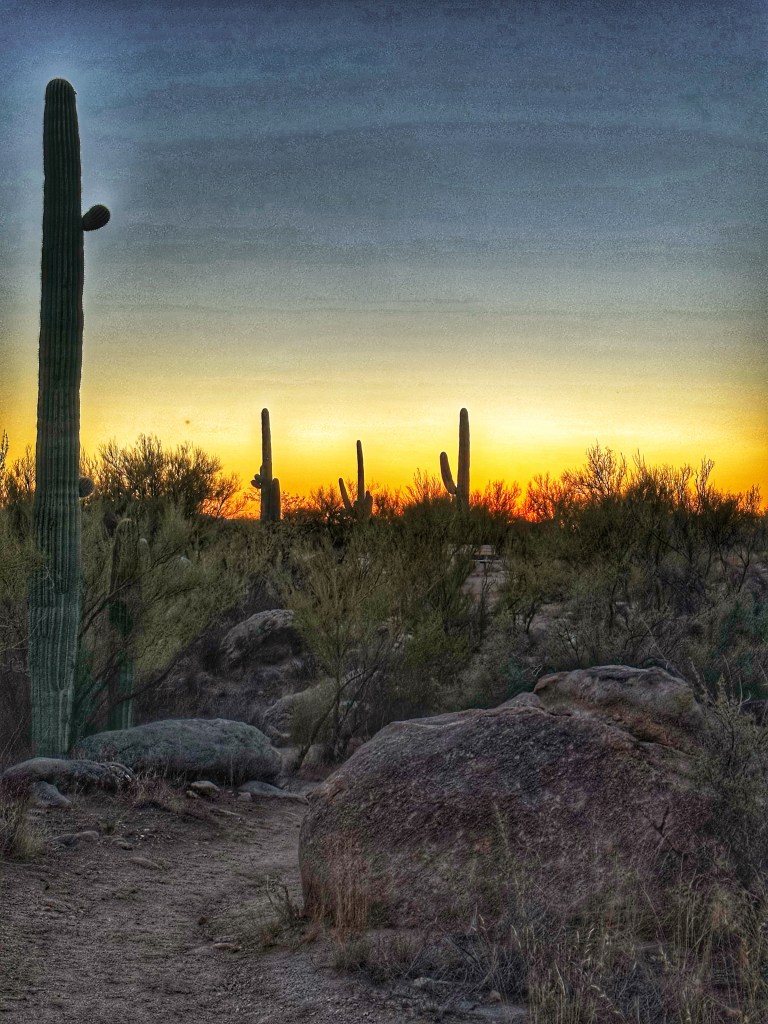
After an early dinner we grabbed our headlamps and headed up to the Nature Trail for a sunset walk.
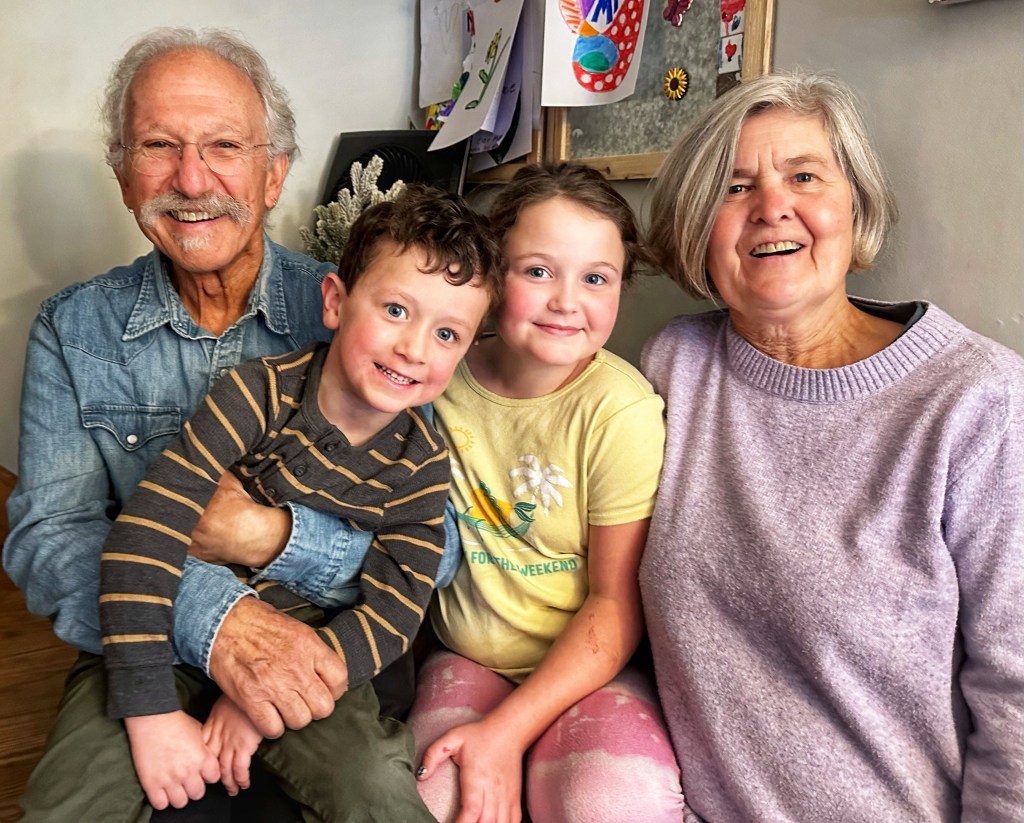
With the Thanksgiving holiday approaching we flew out to spend it with our son’s family. We always enjoy spending time with them.
Grandkids Rule!
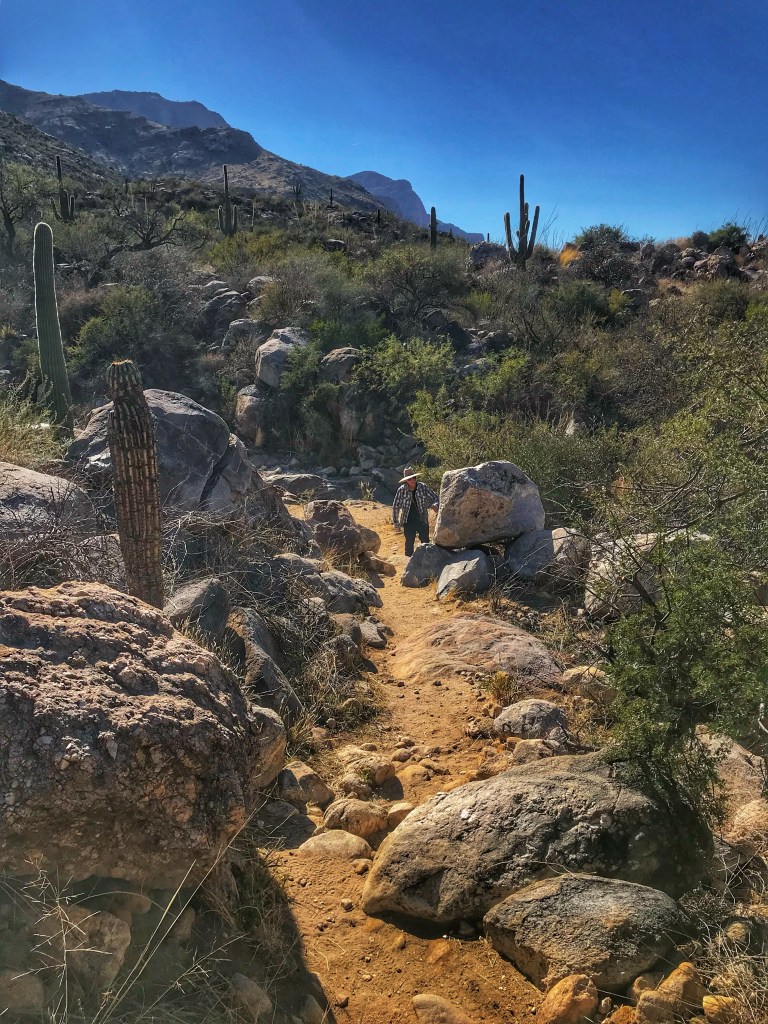
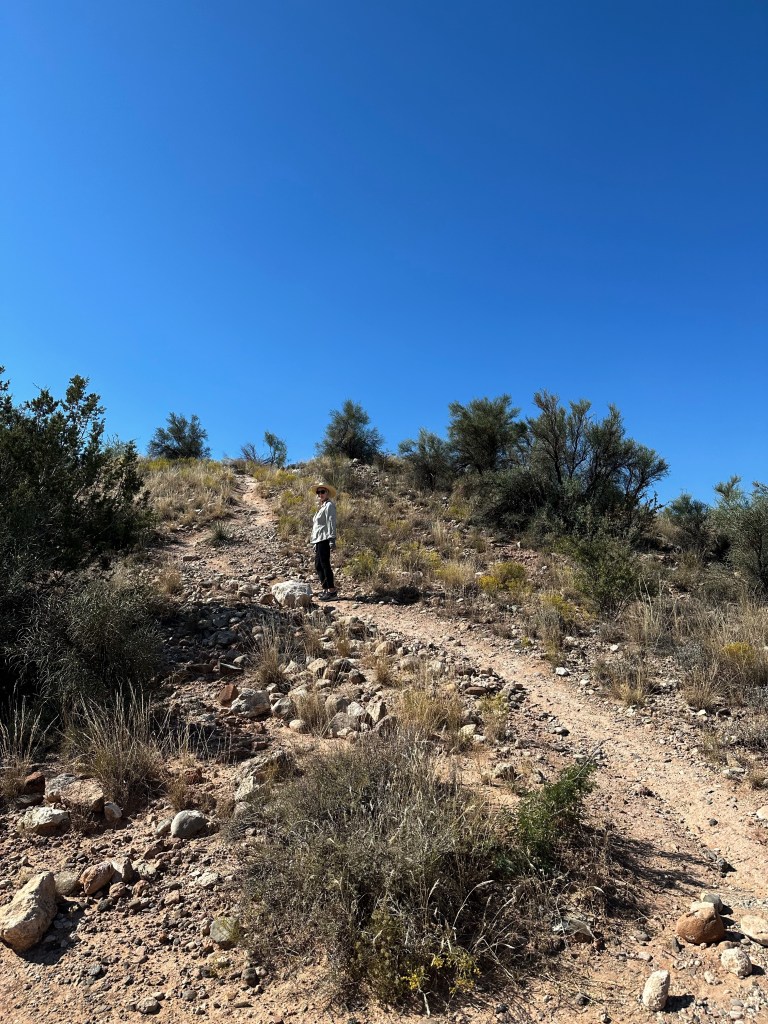
After a thankfully uneventful flight we returned to Catalina State Park. The next morning we hiked up an unnamed trail that takes you to Rams Canyon.
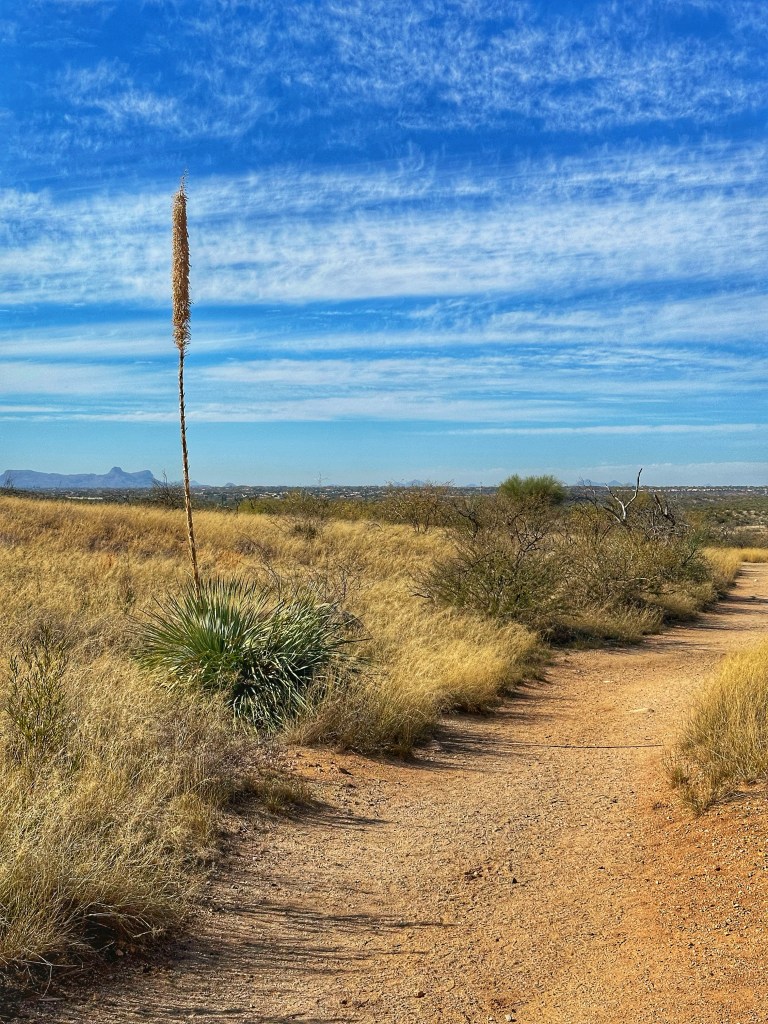
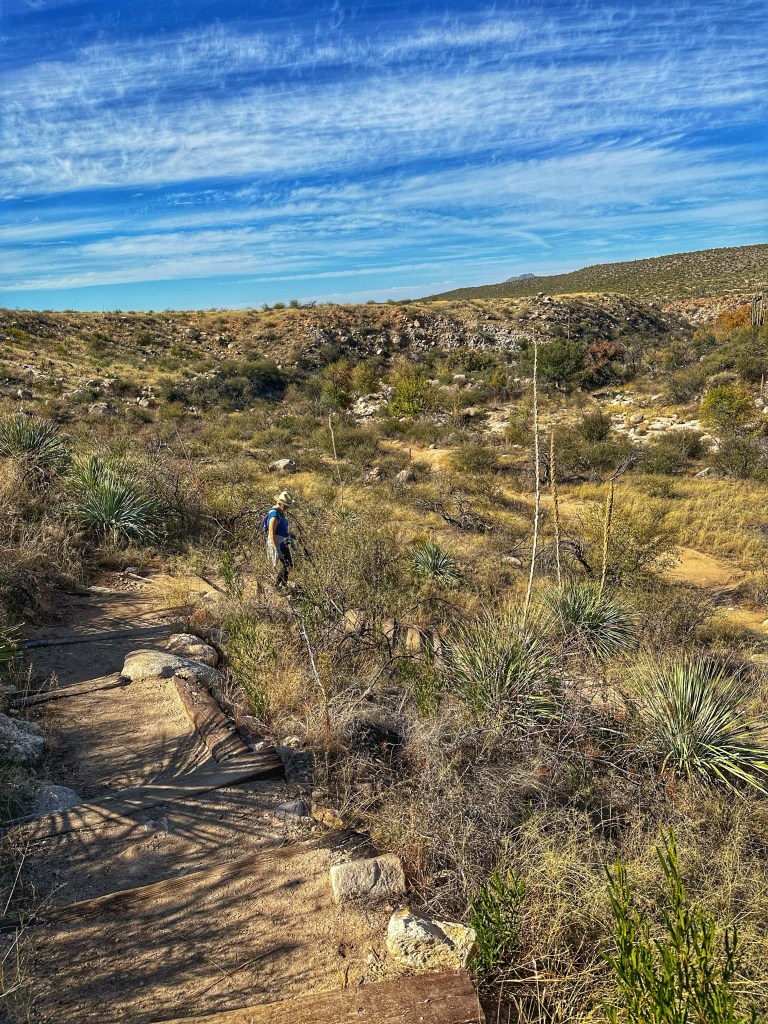
At one end of the Bridle trail is the trail head for the Montrose Pools just off the Canyon Loop. We combined the two hikes for a 3.5 mile jaunt through the desert.
At the top of the trail to the poolsHeading down to the pools
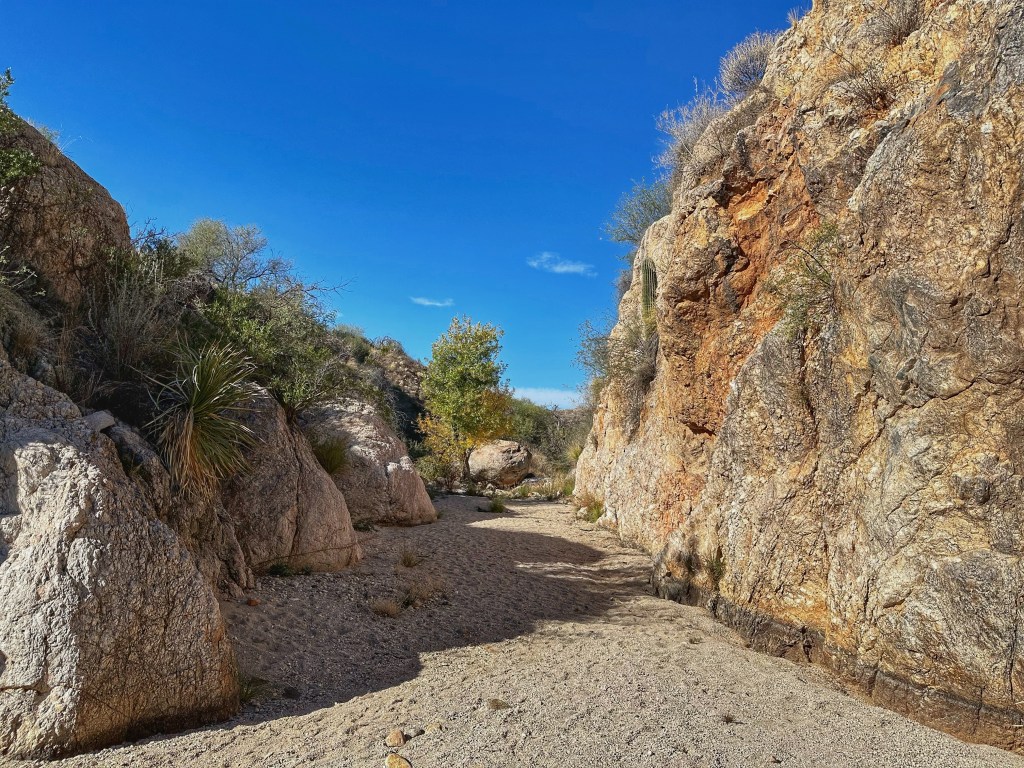
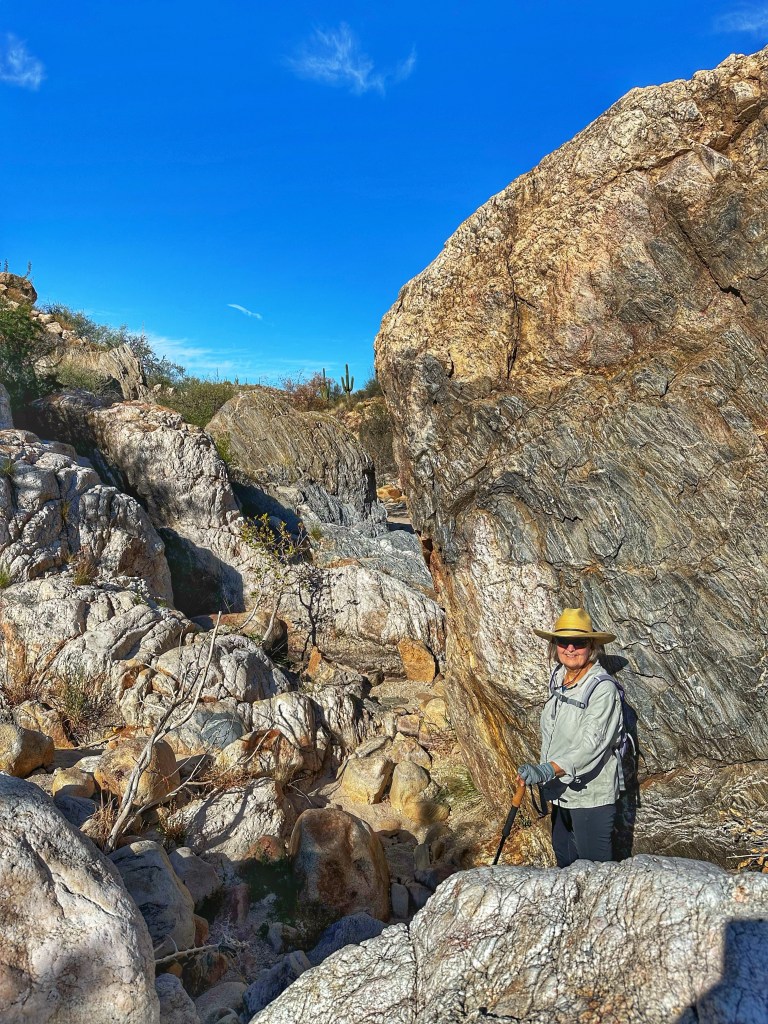
Needless to say the pools were dry. On previous visits in the spring we have seen water here.
We enjoyed our time scrambling on the boulders before heading out to walk the Canyon Loop.
At the opposite end of the Bridle Trail is the trail head for the 50 Year Trail. This is a rugged mountain biking trail that begins with a steep accent. Over the years we’ve attempted to ride up without success. Regardless, we try to do it on every visit. This year Shelly successfully made it to the top. He attributed the success to a new bike with a more accommodating gear ratio, not to being two years older since his last attempt.
The 50 Year Trail
We always enjoy our visits to the park, but they only let you stay for two weeks. We’ll be moving to a private RV park on the south side of the city where we can stay as long as we want.
We left the Sedona area and headed toward Phoenix. It was with some trepidation that we headed to the valley that is the city of Phoenix where approximately 1.6 million people reside. The valley is surrounded by mountains where you can find some of the nicest county parks we’ve had the pleasure to stay in. We reserved eleven days in Usery Mountain Regional Park in Mesa, Arizona. It’s a great park for hiking and biking in the Sonoran Desert.
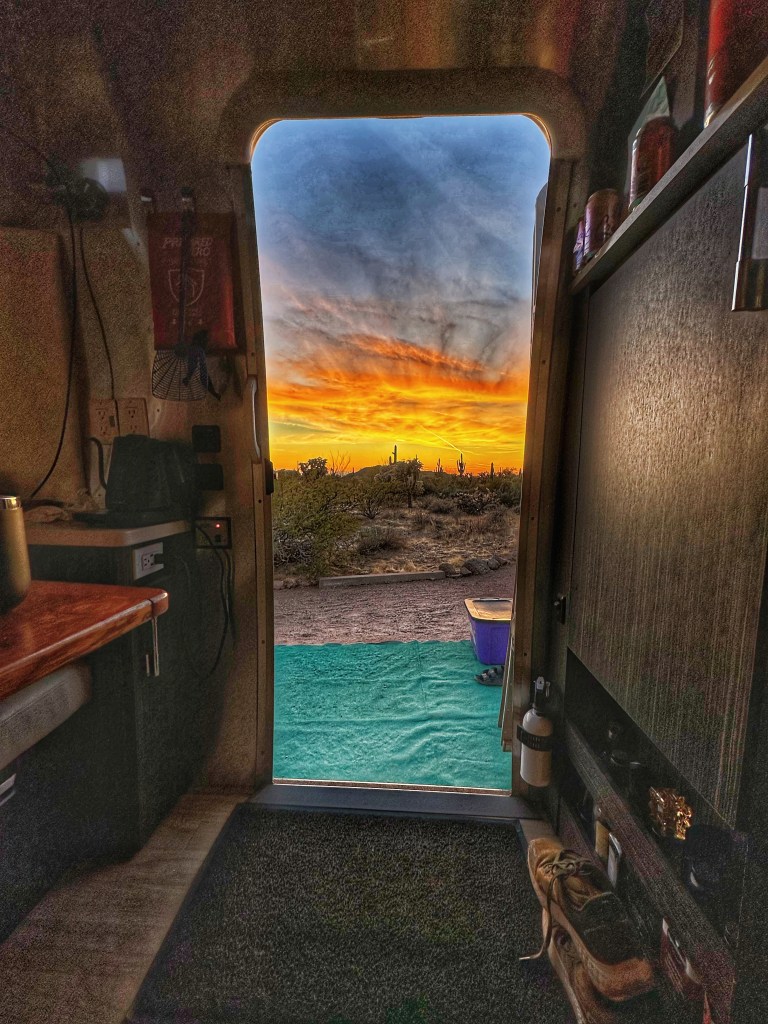
Site 10Our front yard at dusk On the Lost Sheep TrailOn the Pass Mountain Trail
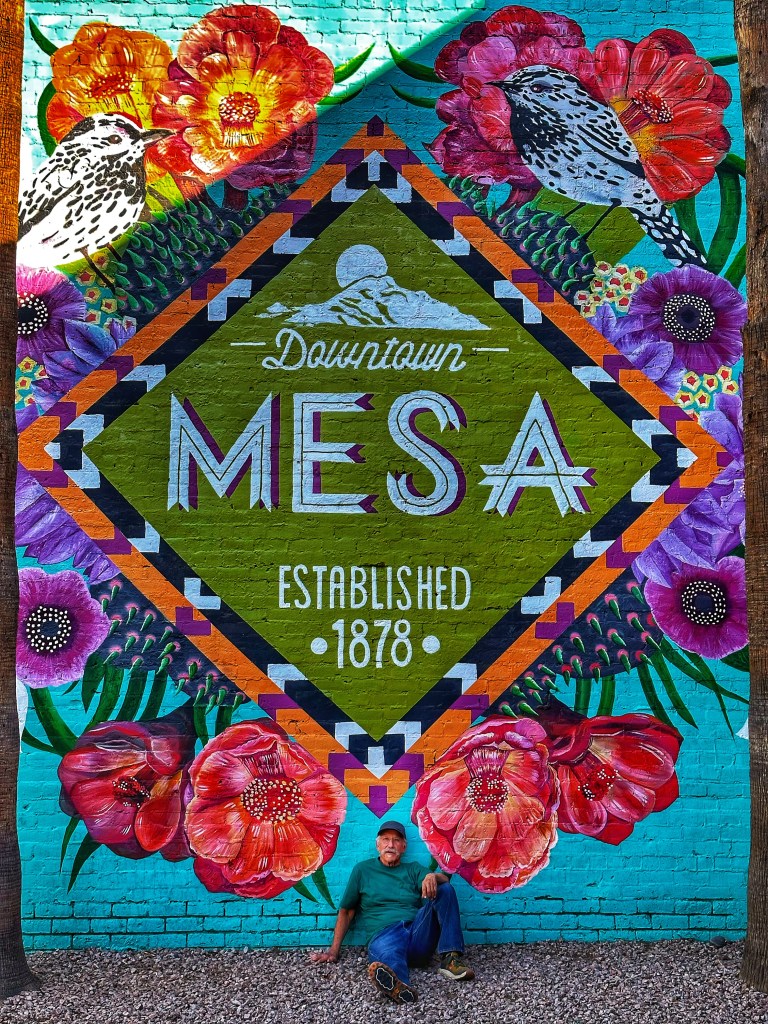
Mesa is located in the East Valley and has had double digit growth since 2010 giving the city a population of just under 500,000. If it’s growth continues at its current rate of 13.3%, in a few years it will surpass Tucson as Arizona’s second largest city.
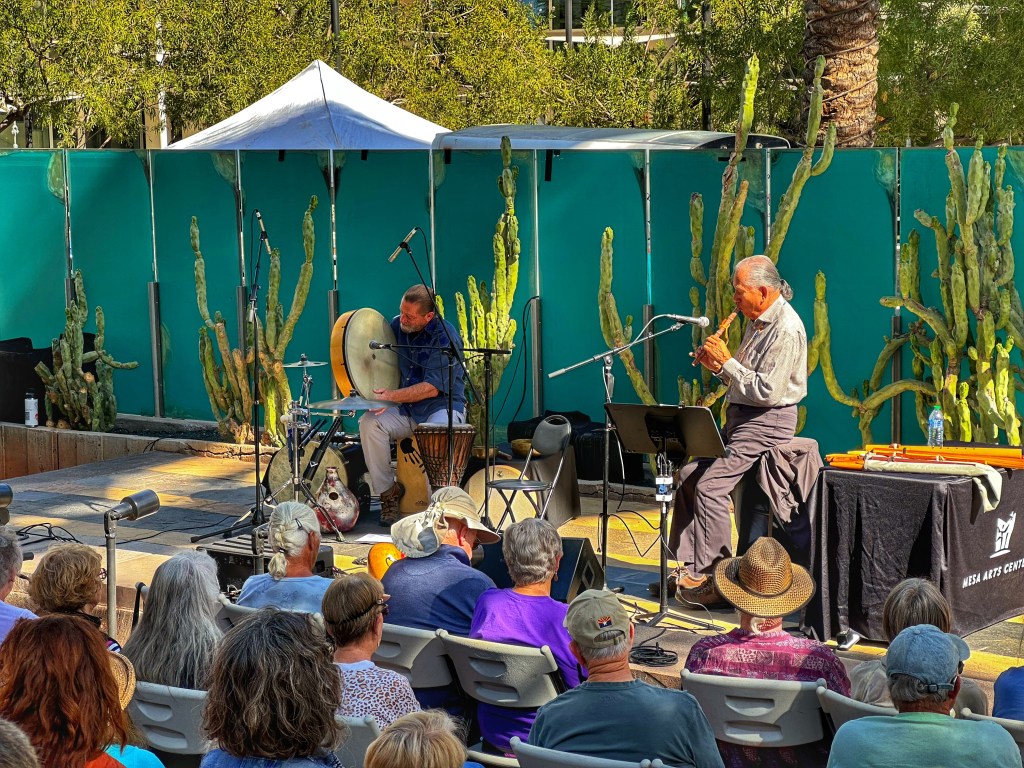
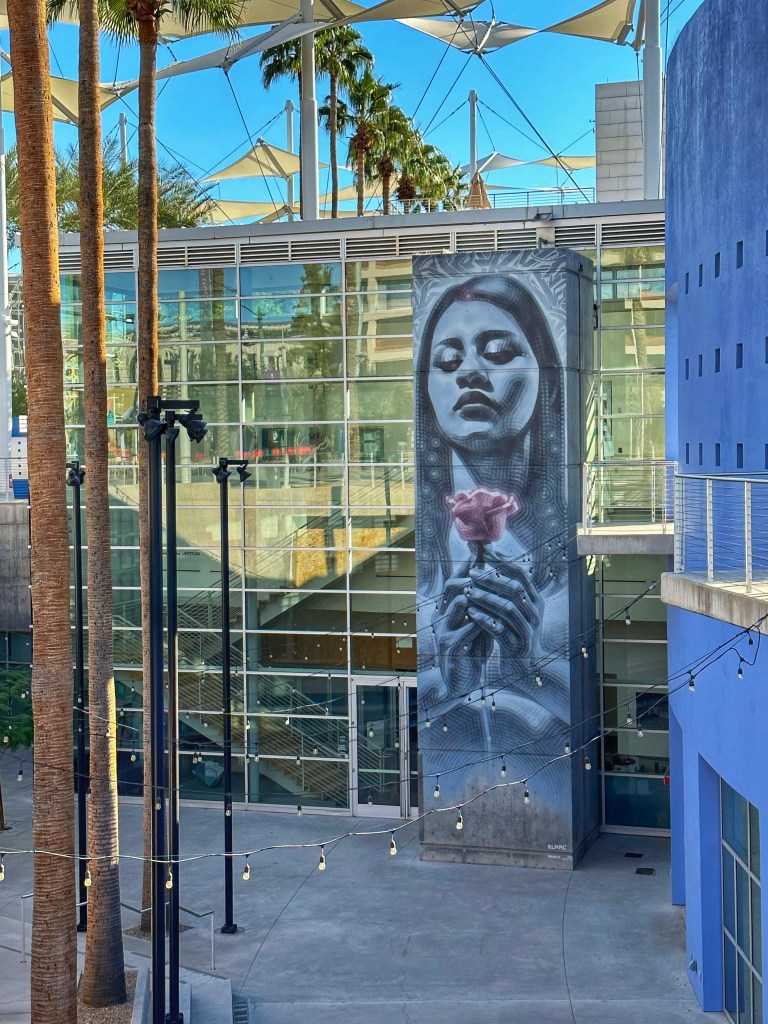
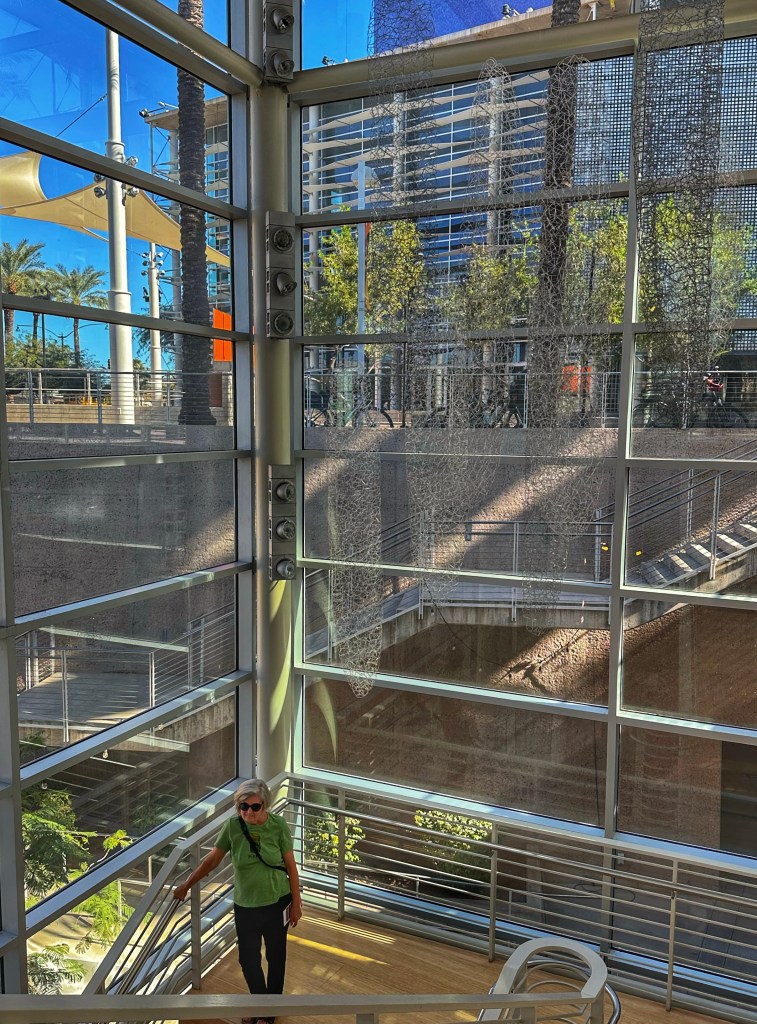
The Mesa Arts Center is an impressive complex of galleries, performance spaces and art studios. On Thursday they present a lunch time concert series.
William Clipman (percussion) and R. Carlos Nakai (Native American flute)The downstairs galleries Heading down to the galleries
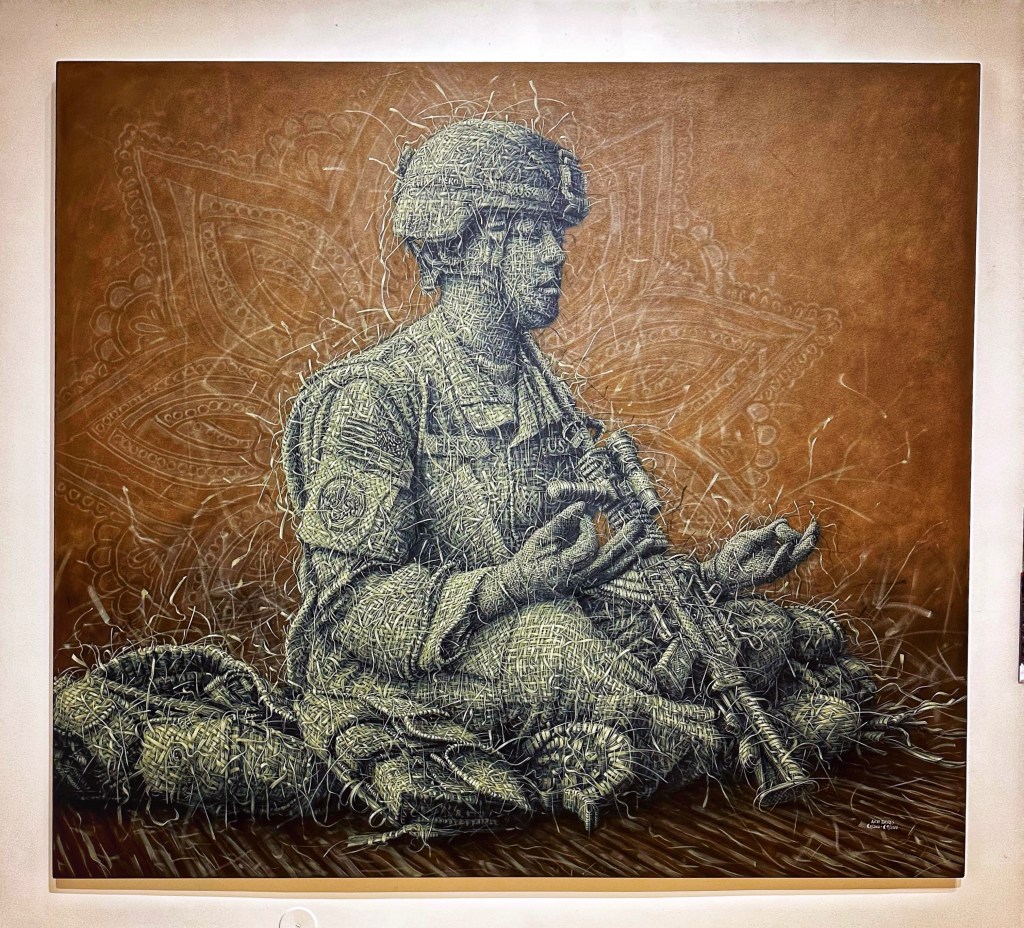
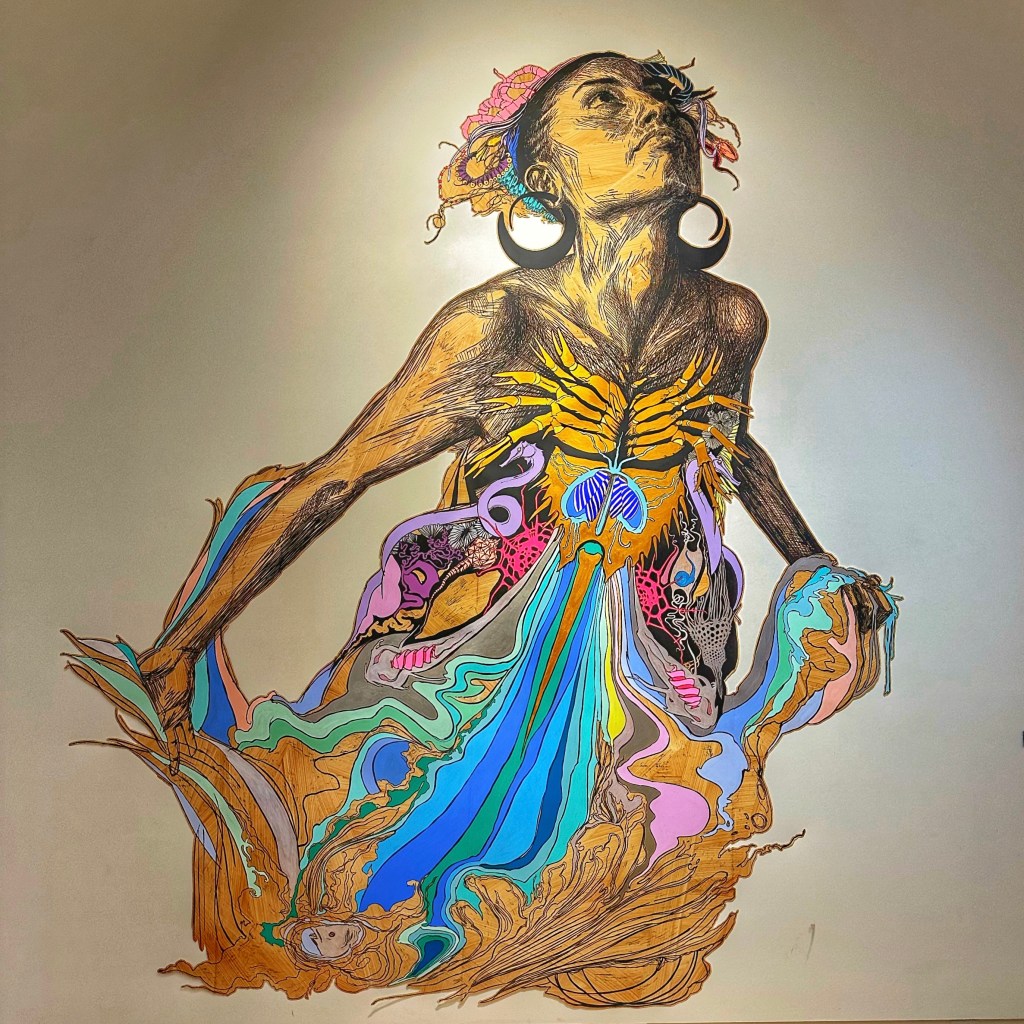
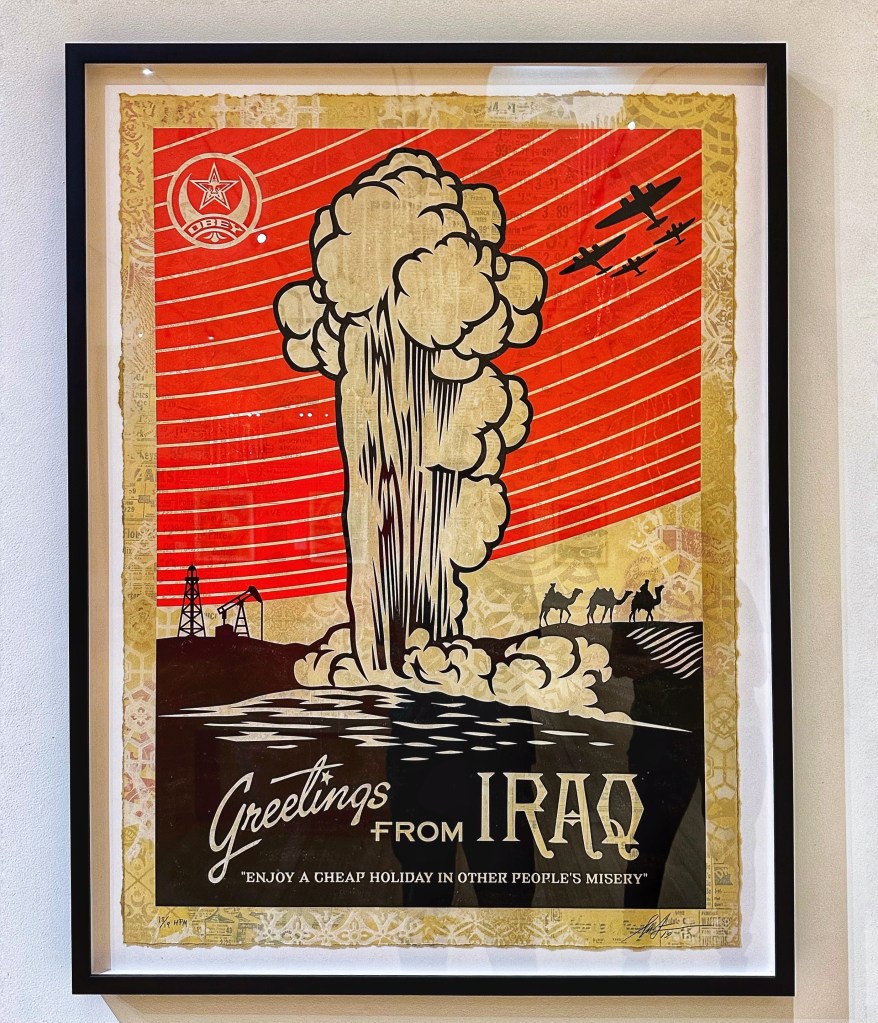
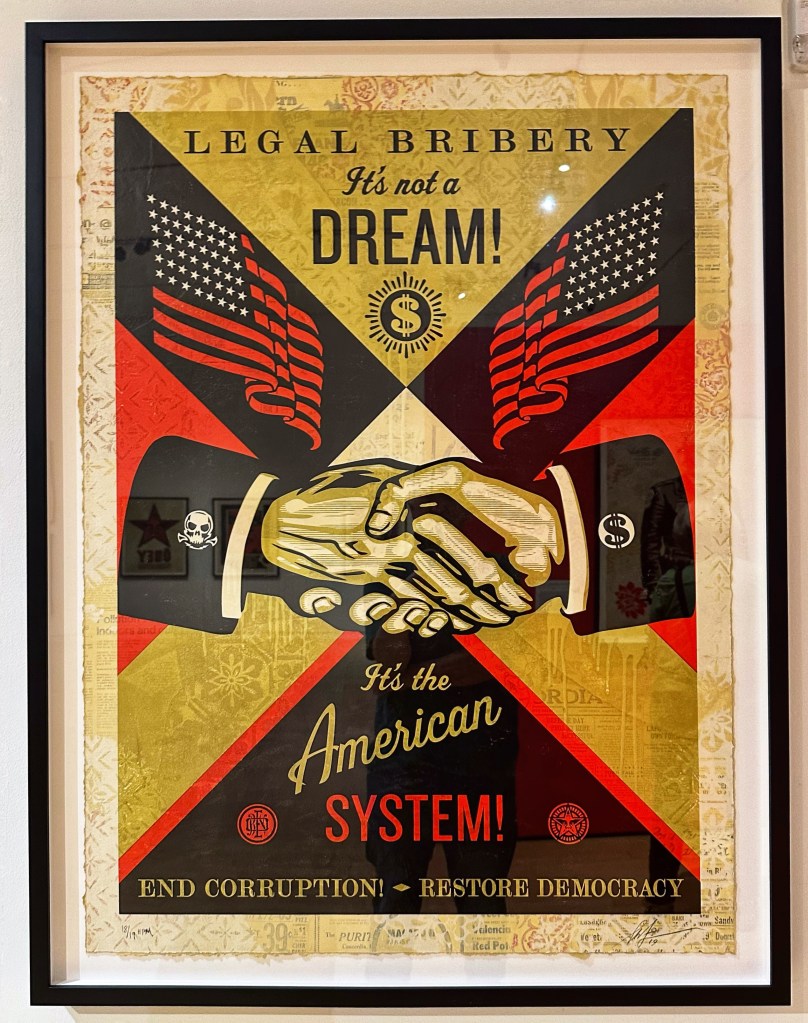
The galleries featured three exhibitions; Just Cause: The power of contemporary art in social engagement, Facing the Giant: 3 Decades of Dissent- Shepard Fairey and Gift In The Rapture- Caledonia Curry (Swoon).
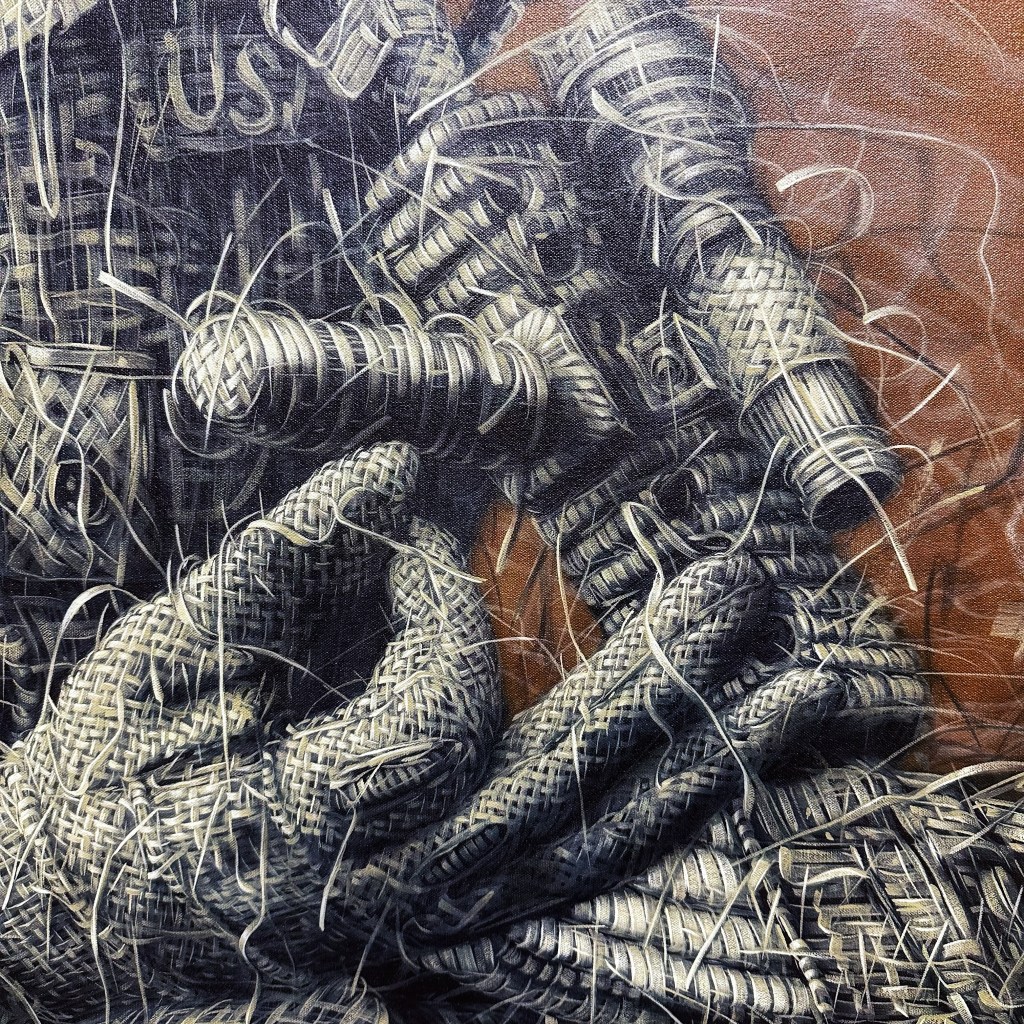
Hero from the Spiritual Security series 2016 by Alexi TorresDetail Thalassa, 2022 by SWOON /Caledonia Curry
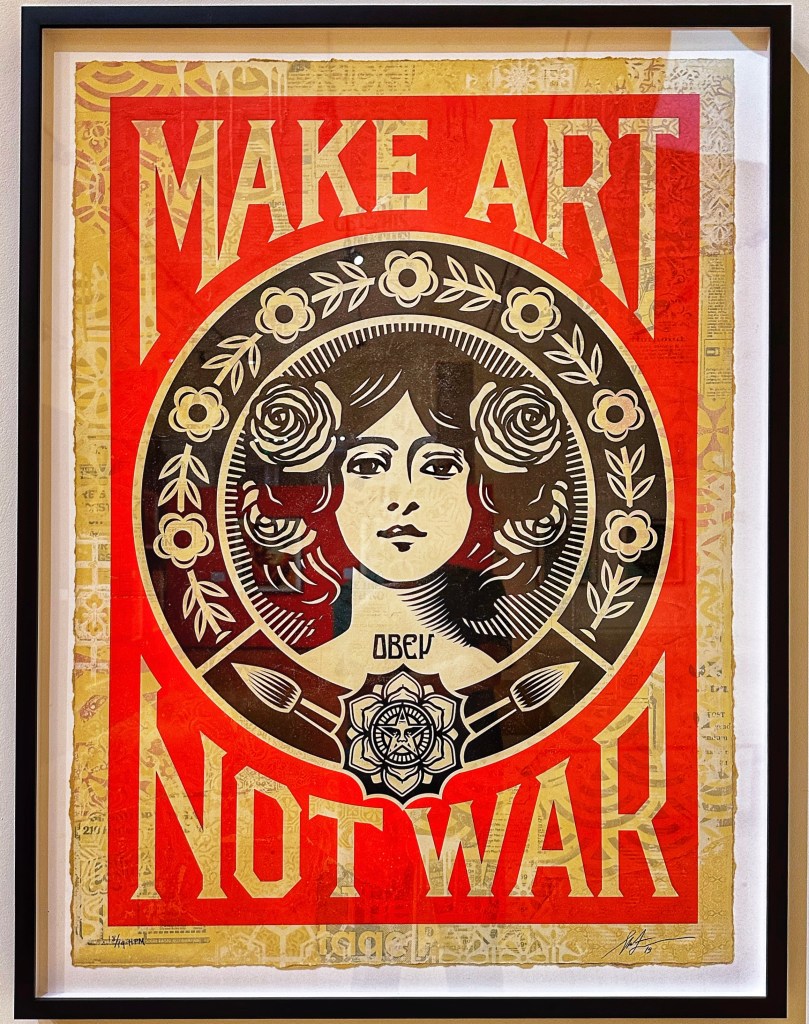
We’ve long admired the work of Shepard Fairey but have not seen his originals. We weren’t disappointed.
Make Art Not War (2005) 2019Greetings From Iraq (2005) 2019End Corruption (2016) 2019
Usery Mountain Regional Park encompasses 3,600 acres with elevation ranges from 1,700 to 2,750 feet and contains a large variety of plants and animals with great birding opportunities. The park features miles of bike trails for every skill level and we spend most of our time in the park exploring those trails. There are two trails that are geared to hikers, the Pass Mountain Trail and the Wind Cave Trail.
Taking a break from biking we laced up our hiking boots and headed to the Pass Mountain Trail and it’s Vista Point, about 4.5 miles round trip.
Vista Point
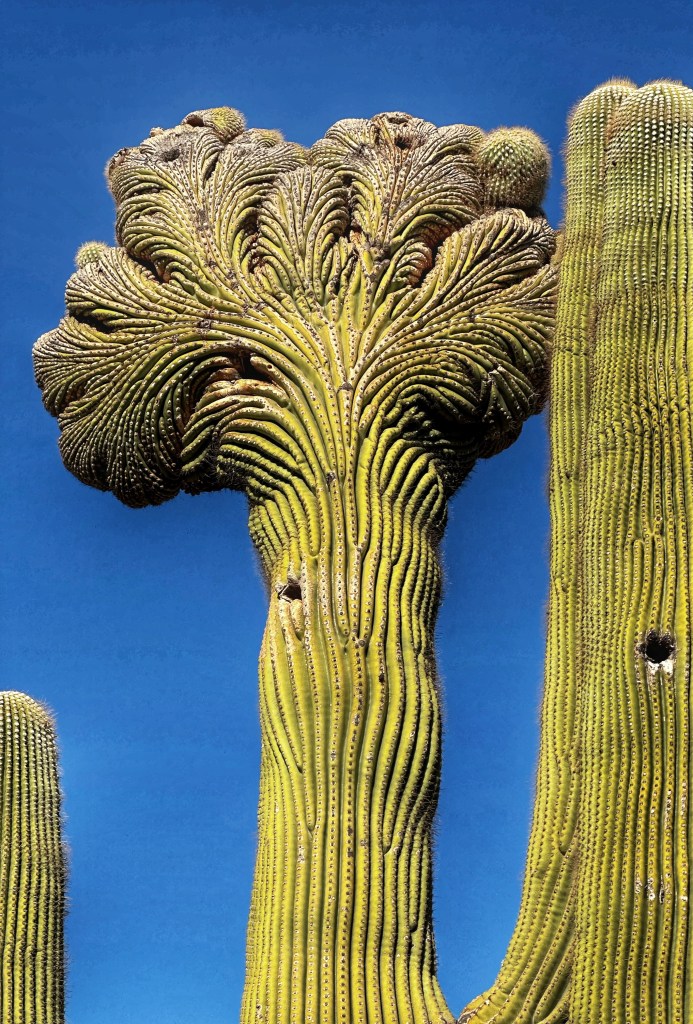
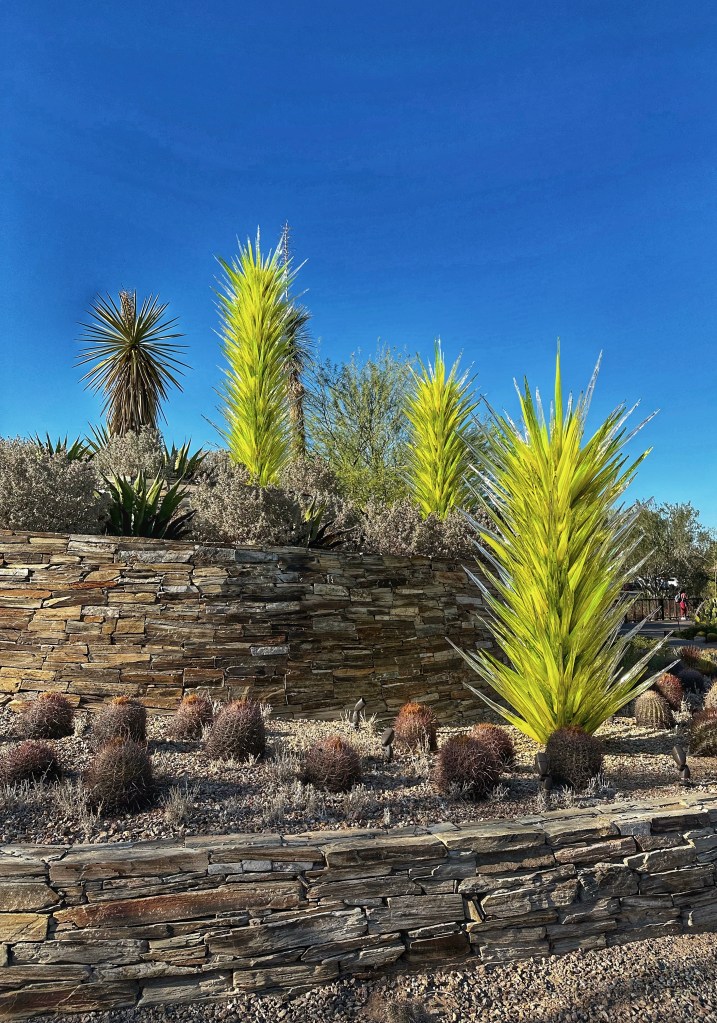
In between biking and hiking, we found time to visit the Phoenix Desert Botanical Garden. The Garden features a wide assortment of cacti as well as a gallery for rotating art exhibitions.
Crested saguaroDale Chihuly glass work
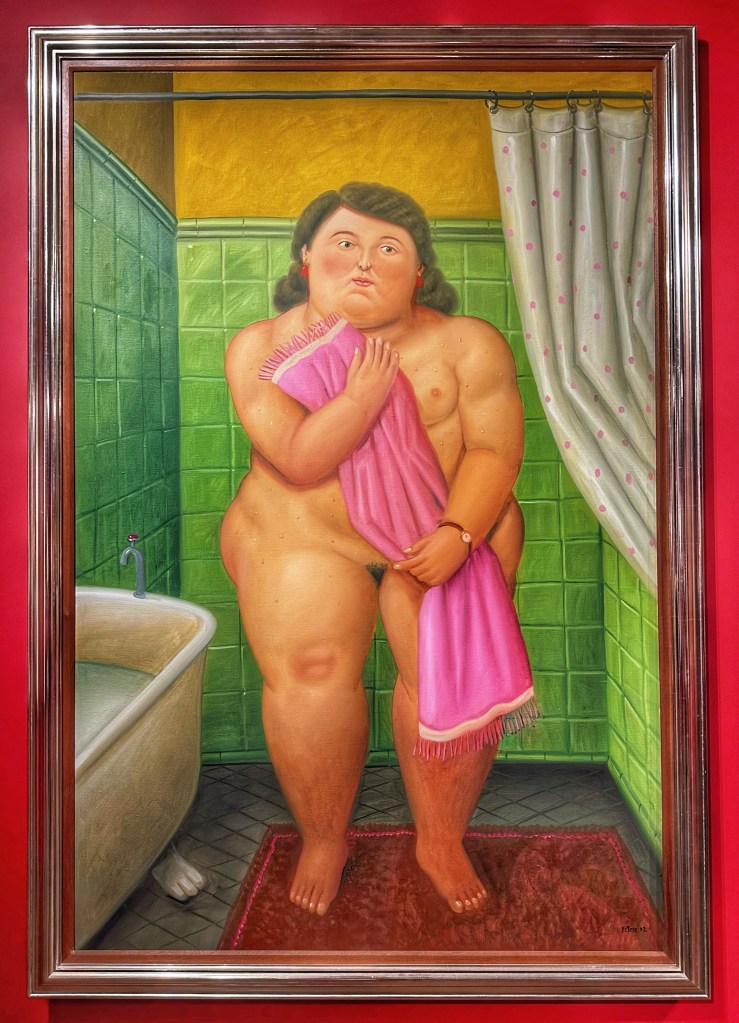
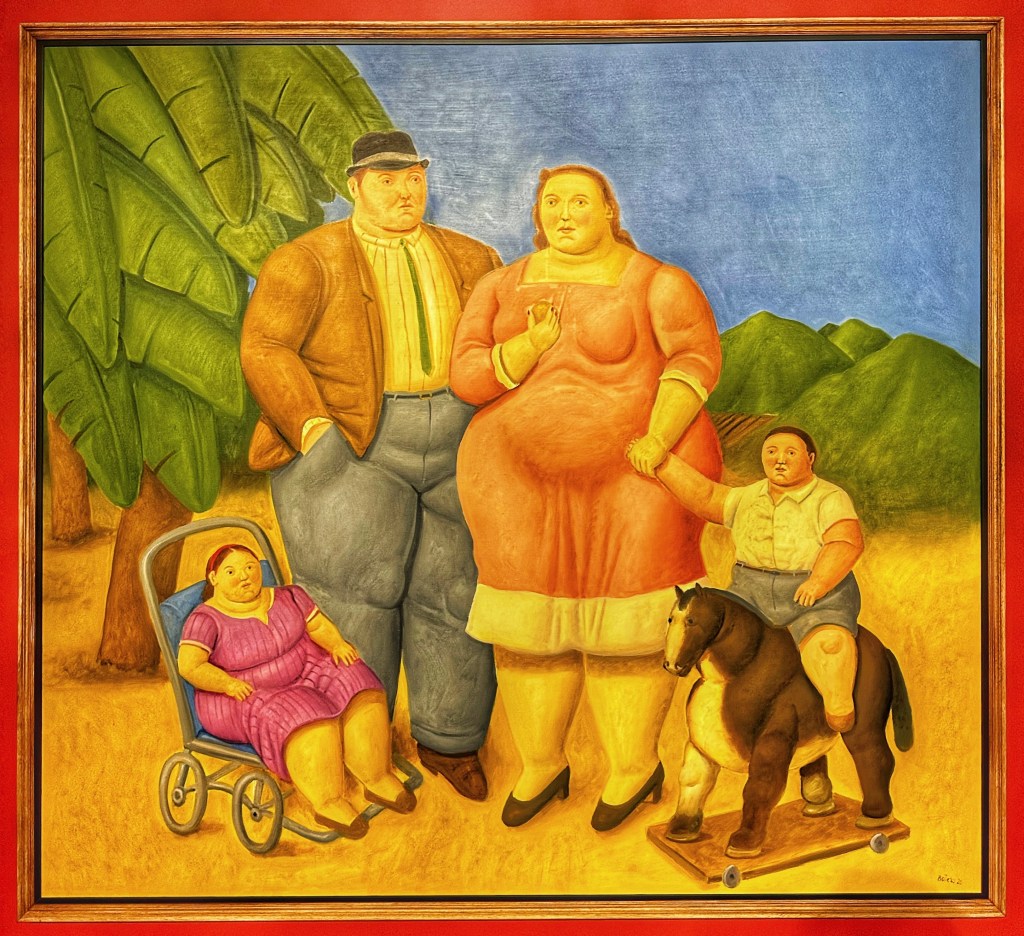
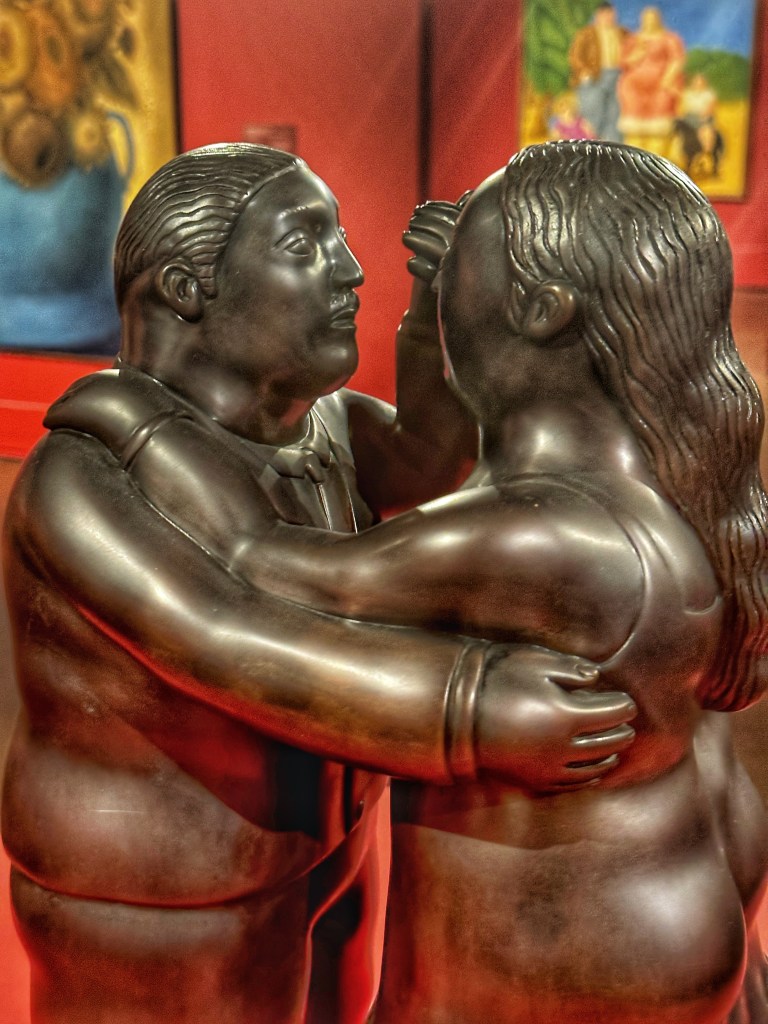
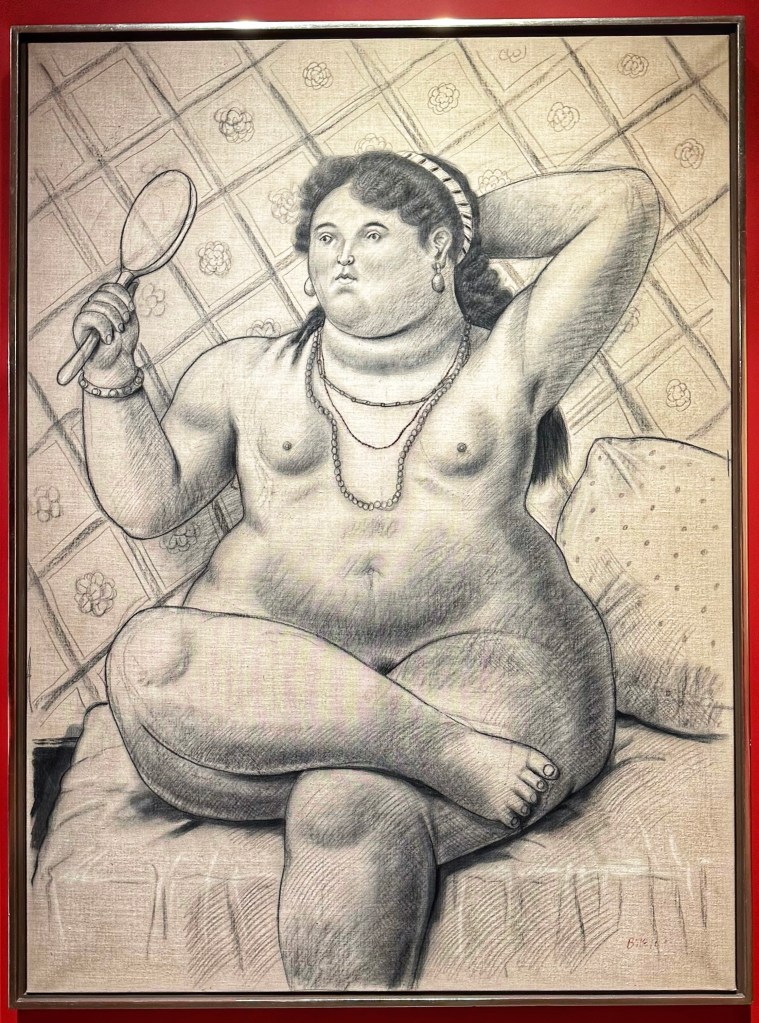
The Garden was presenting a large exhibition of the work of Columbian artist Fernando Botero.
Woman in the Bathroom, 2002Family in the Plantation, 2020Dancers, 2005Woman With Mirror, 1998
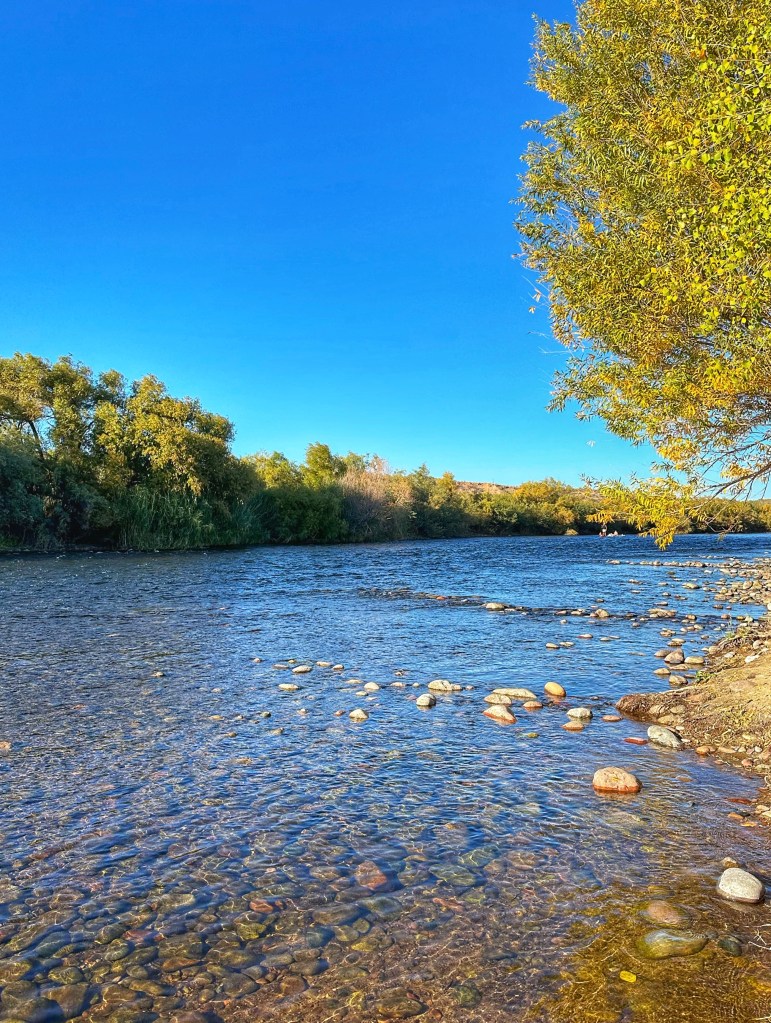
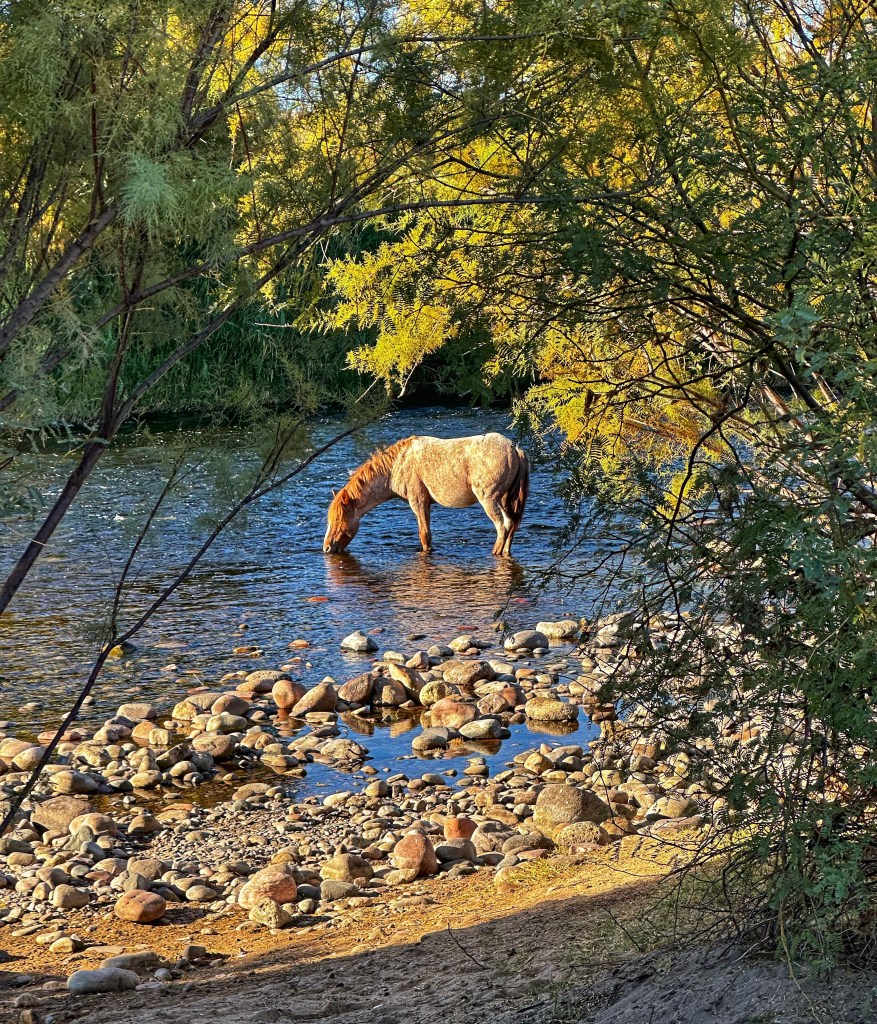
One hot afternoon we decided to drive to the Salt River in the Tonto National Forest to see if we could find the wild horses that live along the river.
The Salt River One of three horses we saw crossing the river
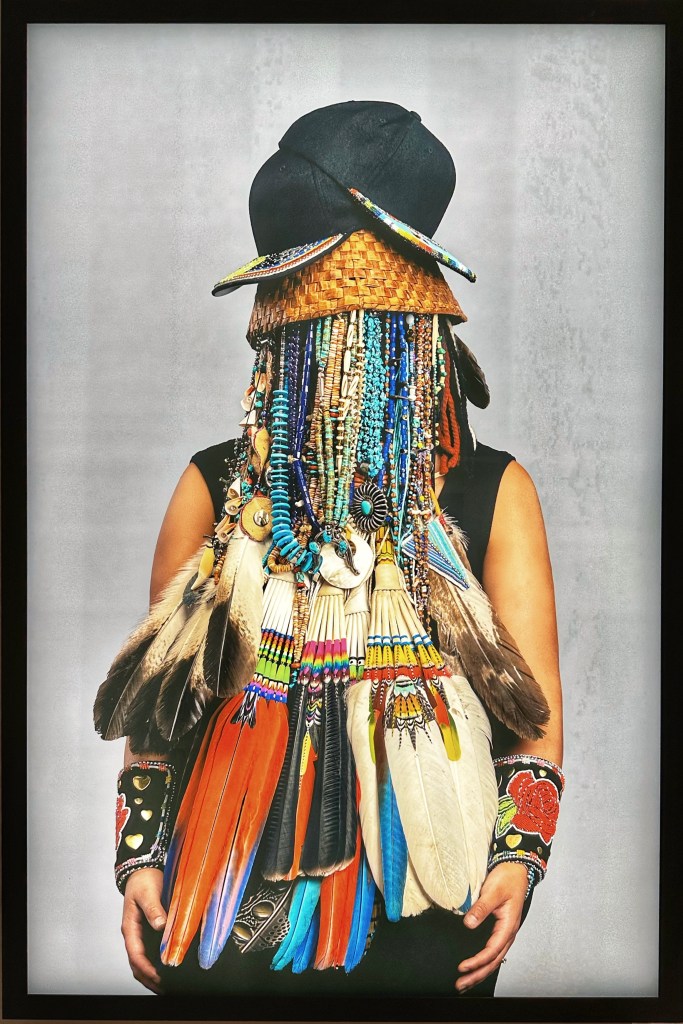
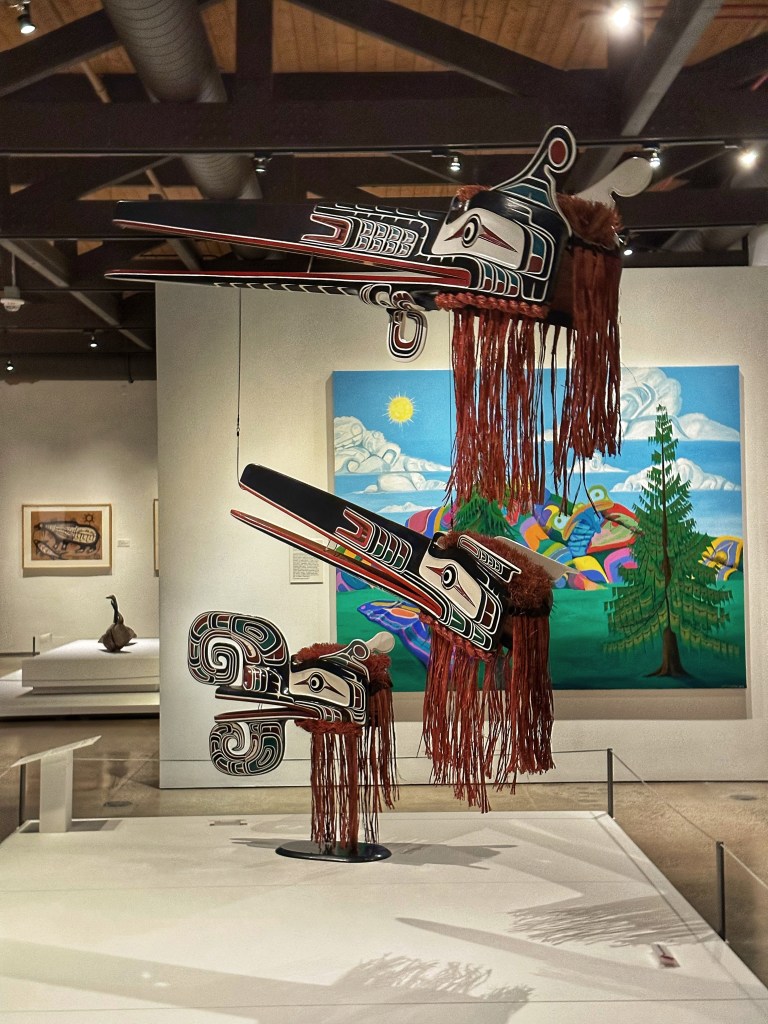
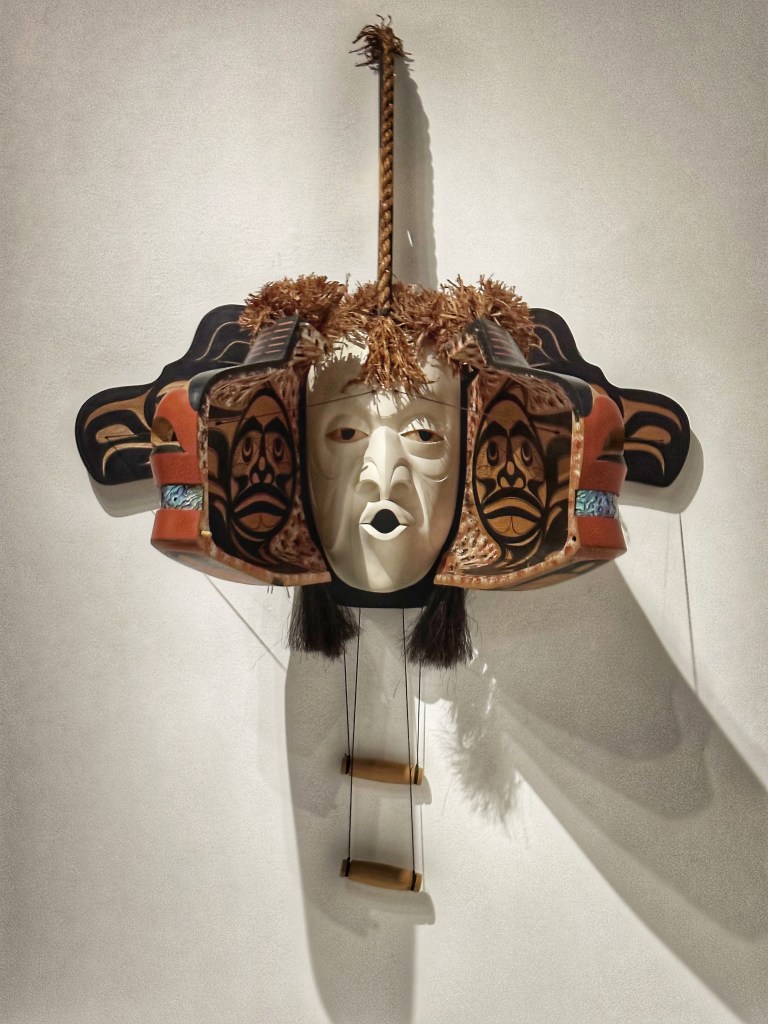
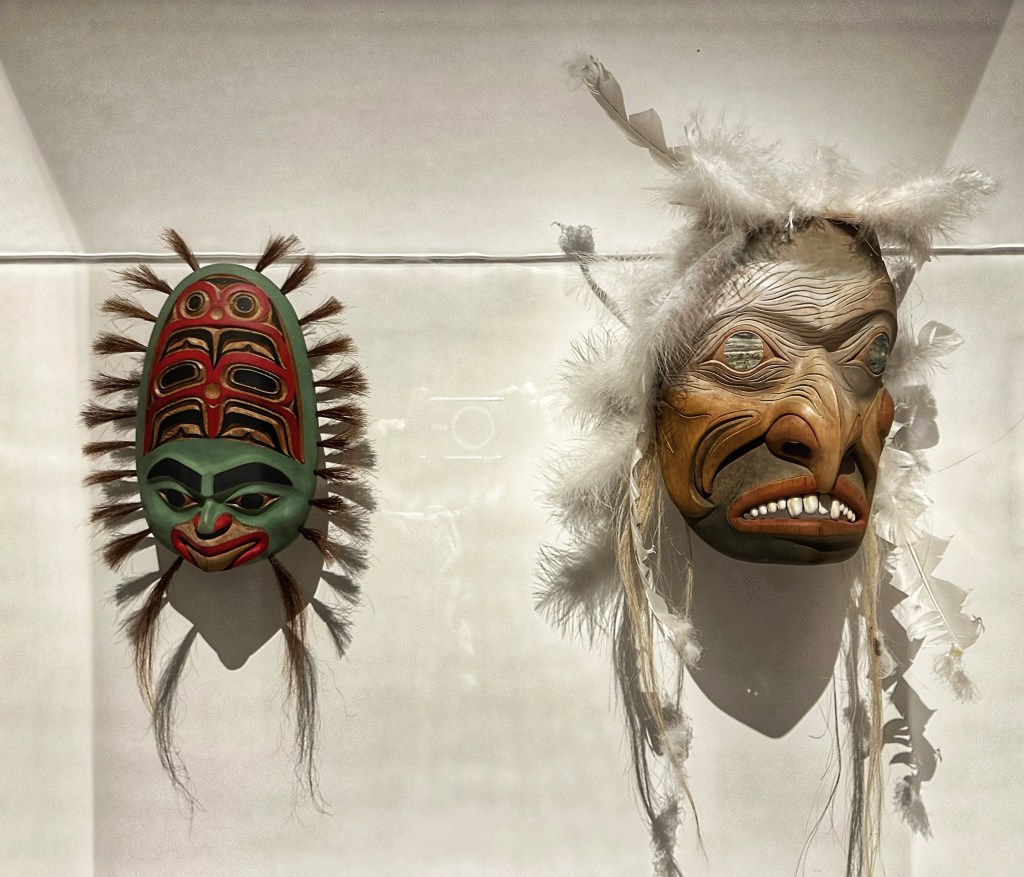
Phoenix is the home of the Heard Museum. The museum features the work of Native American artists, both traditional and modern. The featured exhibition was “Early Days: Indigenous Art from the McMichael”. It was ironic that we came to Phoenix to see work from a gallery in Ontario, Canada. The exhibit featured both historical and contemporary work from throughout Canada.
Headdress-Shadae, 2018 by Dana ClaxtonHamat’sa Crooked Beak Mask, 2005 by Henry Speck Jr. Whale and Pook-UbS Transformation Mask, 2002 by Art Thompson Taksam (left) by Beau Dick and Eagle Spirit (right), 1995 by Simon Dick
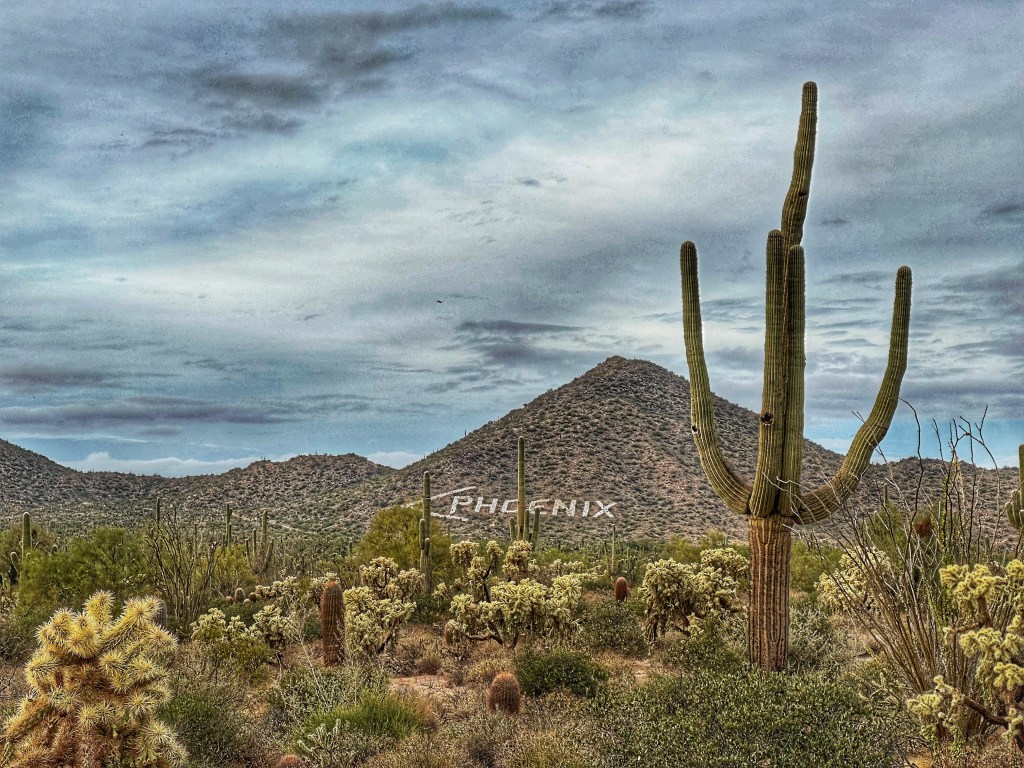
While getting around Phoenix can be problematic, it’s an area that has a lot to offer. From great art museums, botanical gardens, restaurants, and local breweries, we’ve enjoyed our stay. We haven’t even mentioned the great regional and state parks that offer outstanding hiking and biking opportunities in addition to the sunsets.
At the end of our stay we experienced a meteorological phenomenon that we had not experienced in Phoenix before. Heavy cloud cover all day. A touch of Buffalo in the desert.
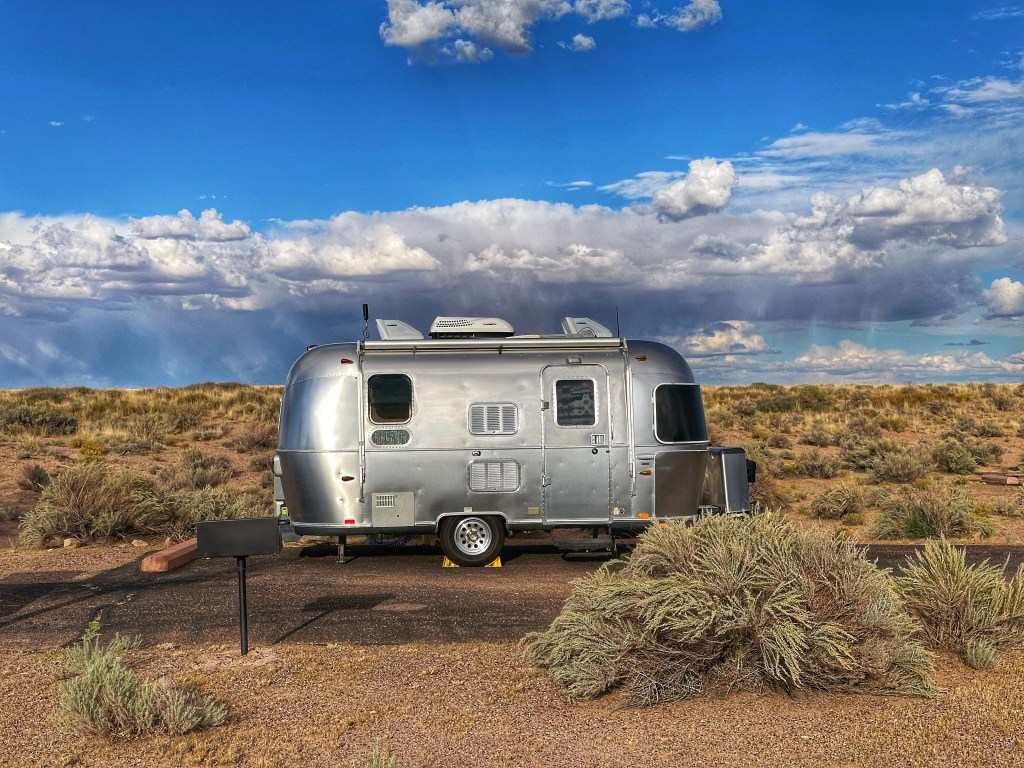
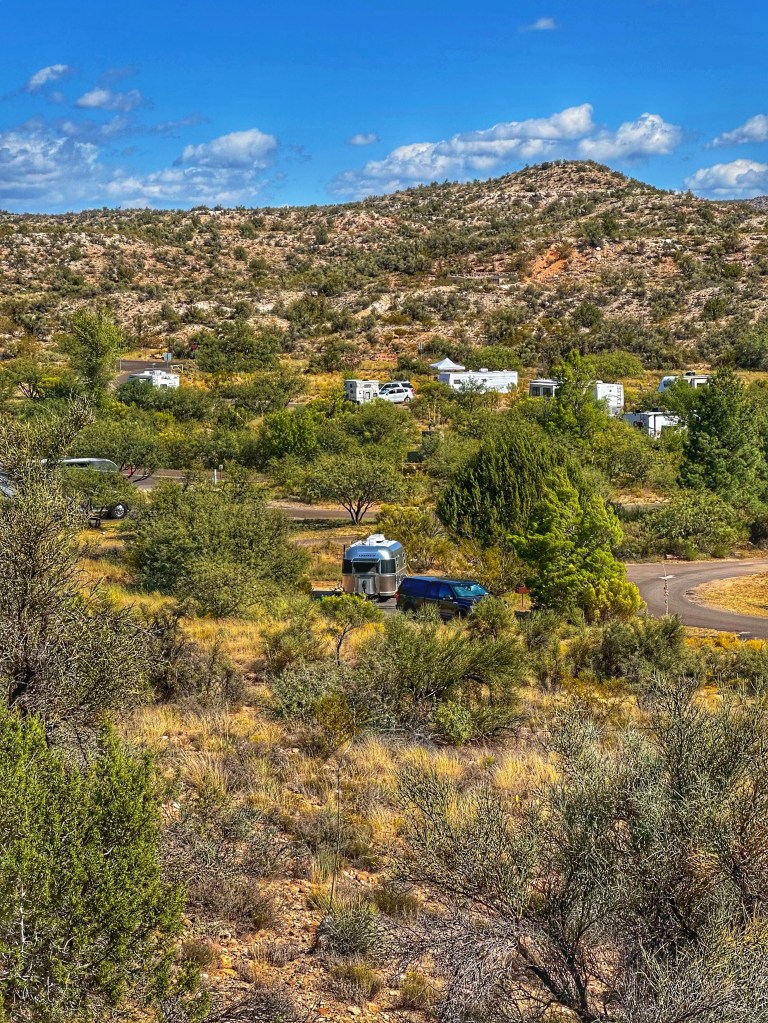
We left Santa Fe and headed to Arizona where we plan to spend most of the winter months. Our first stop was Homolovi State Park outside of Winslow.
Site 48
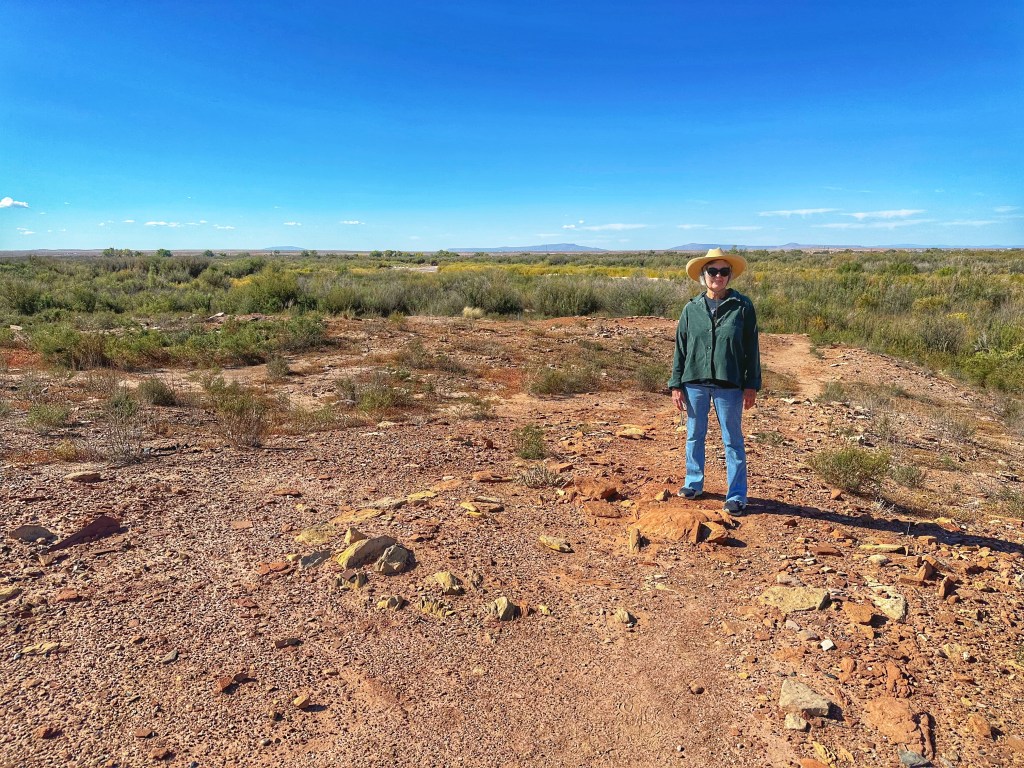
The park is home to the ruins of two 14th century pueblos of the Hisat’sinom people, ancestors of the modern Hopi people.
These ruins have been partially reconstructed
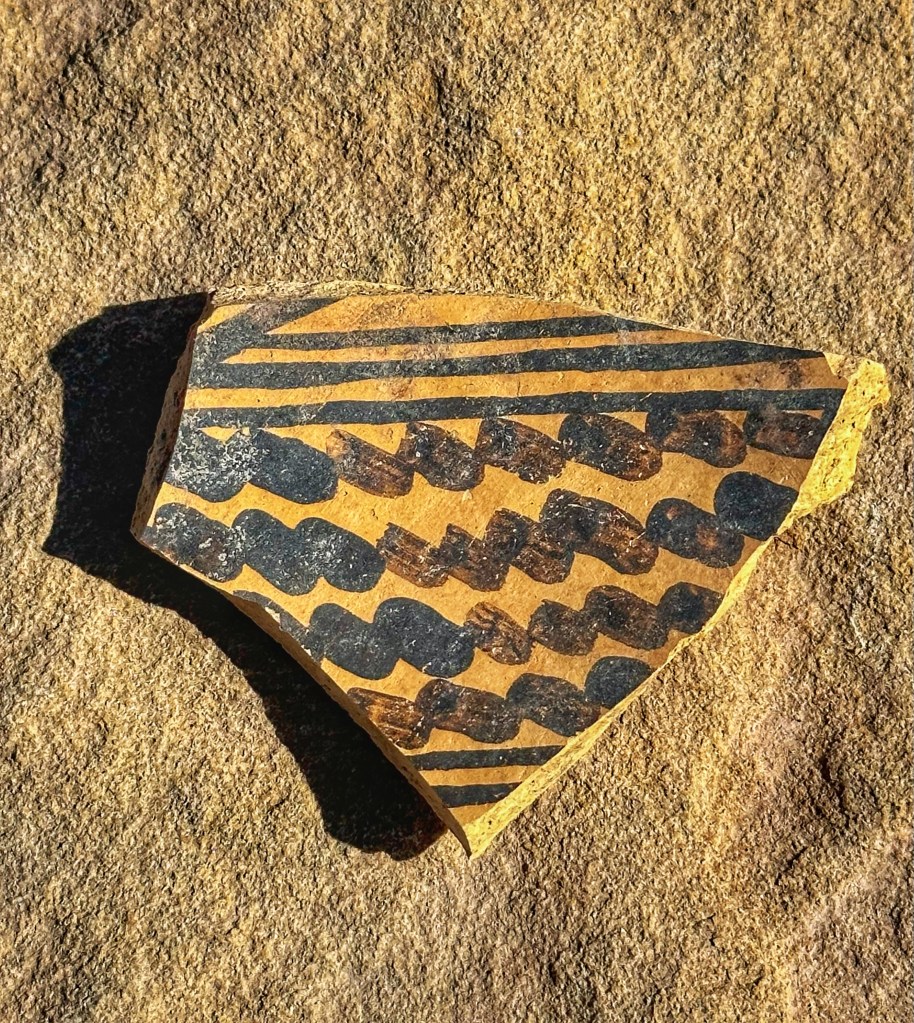
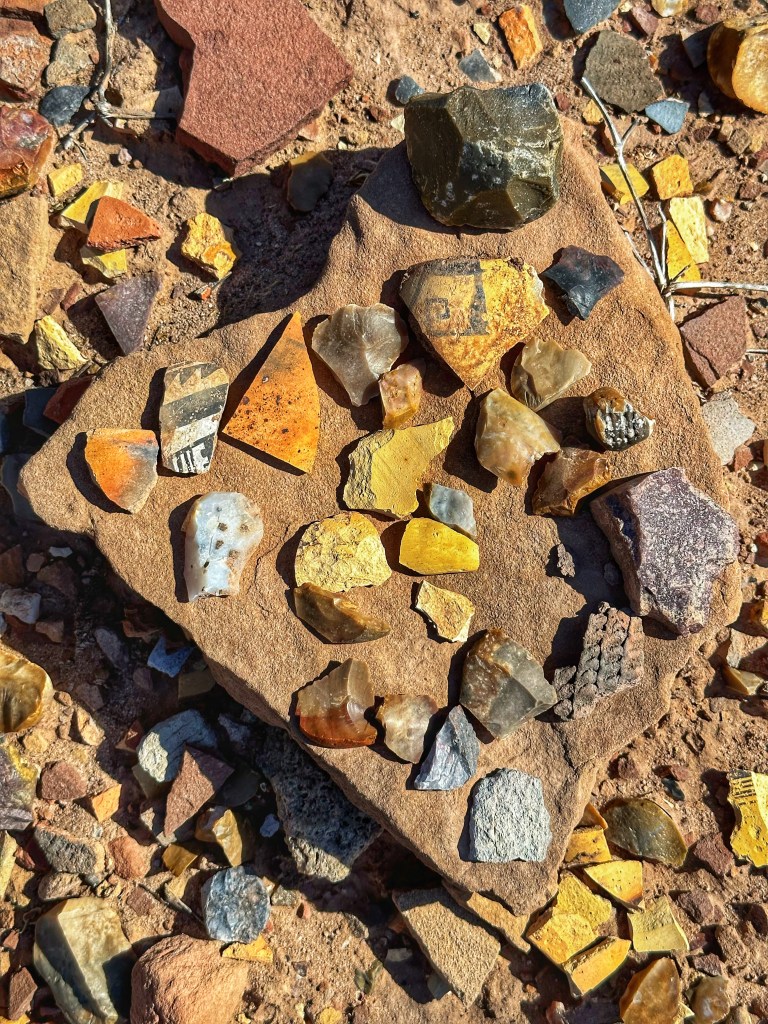
The ruins are littered with pottery shards. The Hopi say that the broken pottery is now part of the land and the trail that Bahana will follow when he returns.
Among the shards along he Little Colorado River A view from the ruins
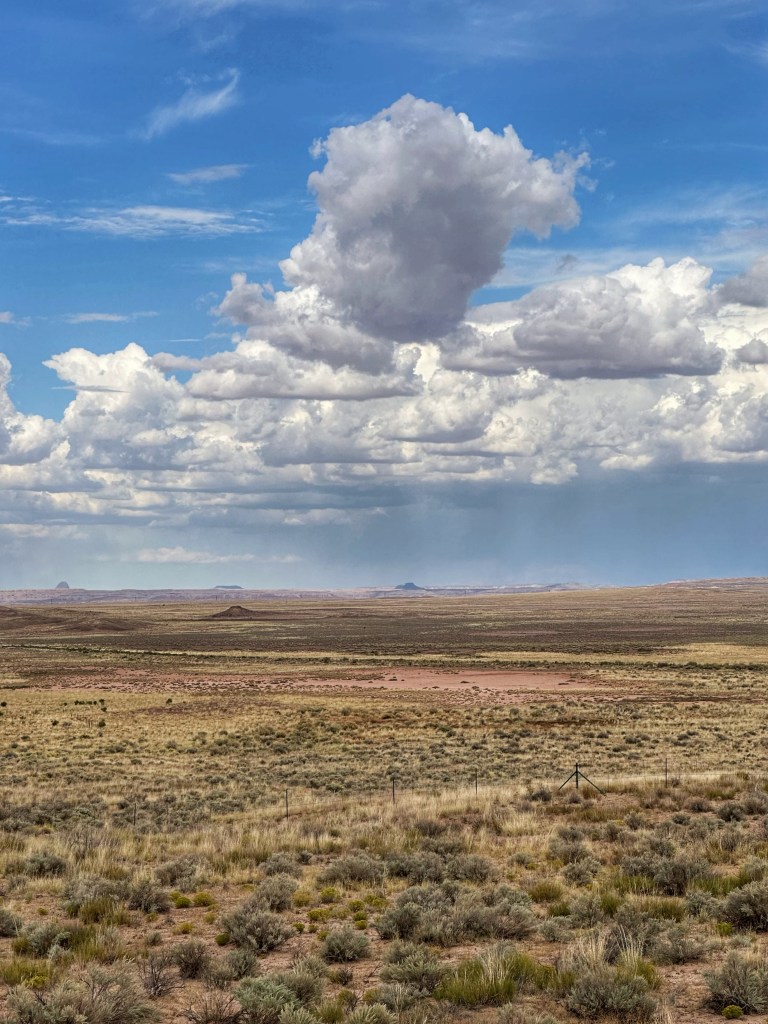
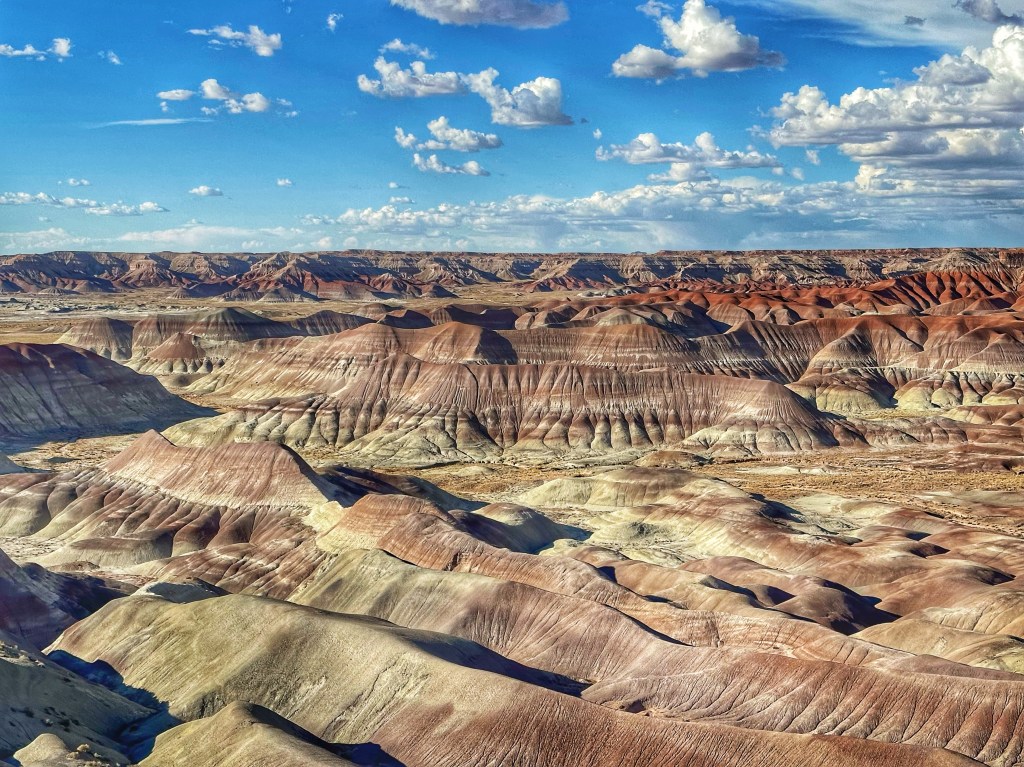
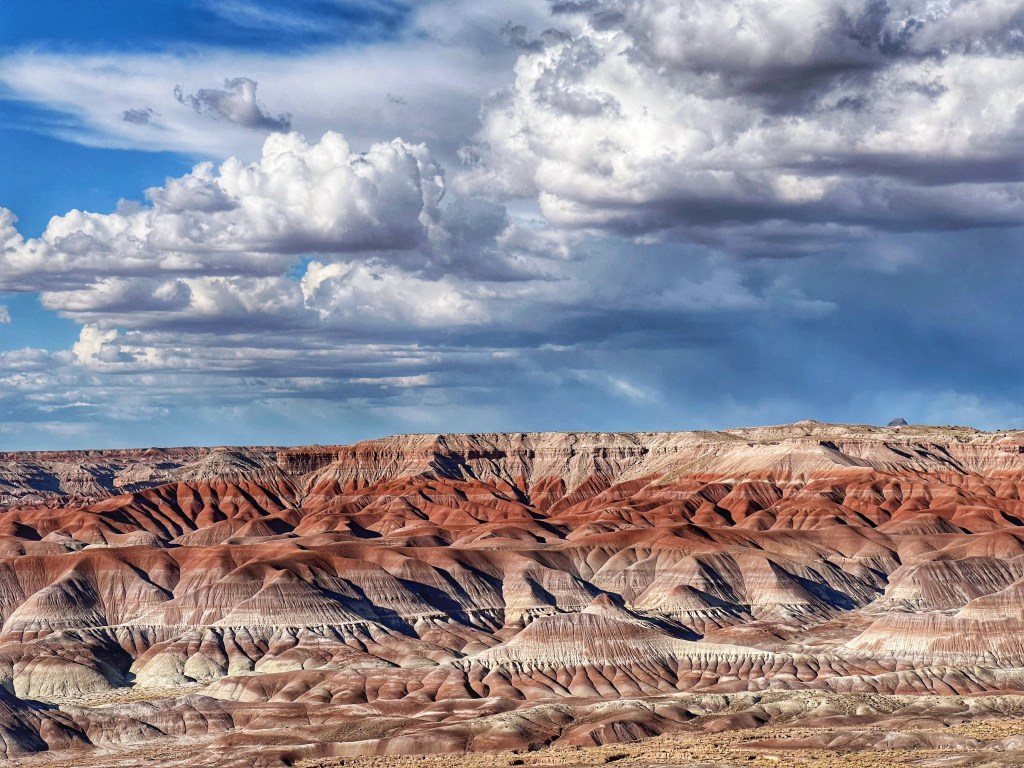
About 12 miles from the park entrance is The Little Painted Desert. At one time this land was privately owned, became a county park and is now owned by the Hopi Nation. We found out about this unadvertised spot from a park ranger. We saw no one during our visit.
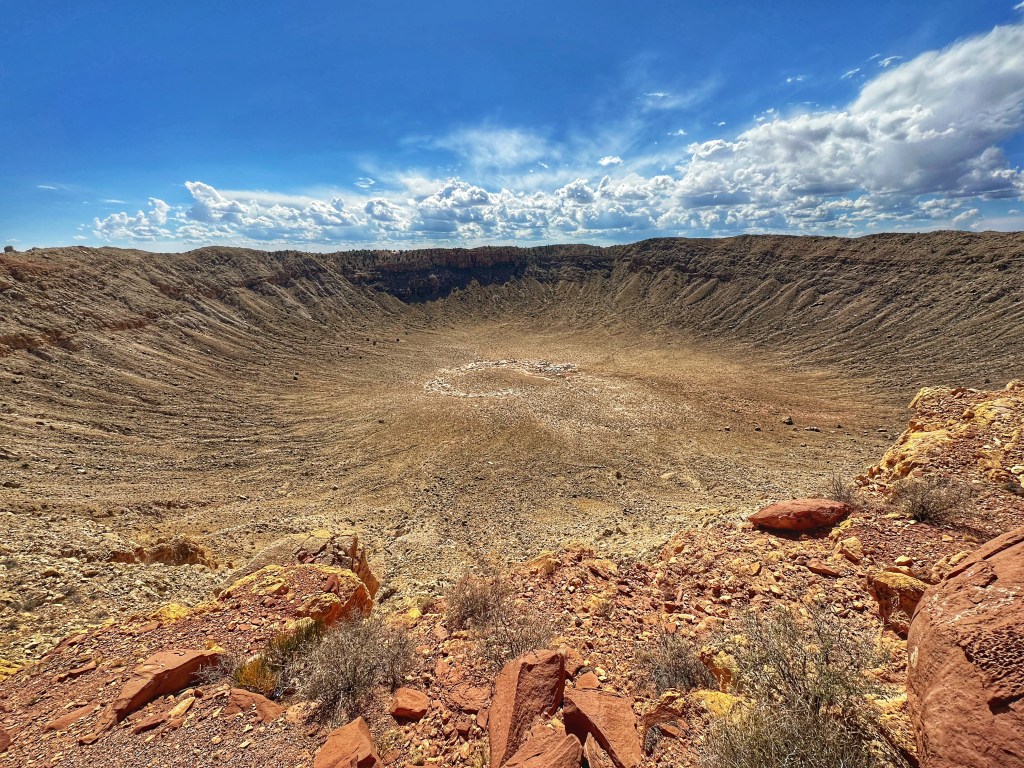
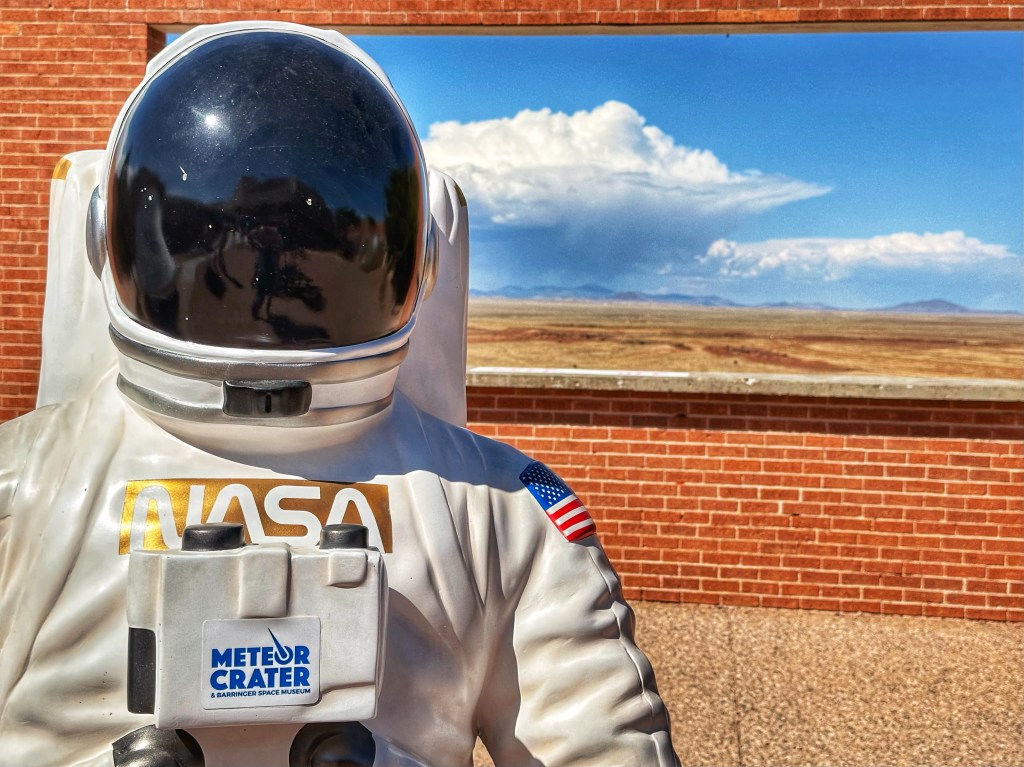
Also near camp is Meteor Crater – a well known Route 66 tourist destination. Over 50,000 years ago a meteorite weighing several hundred thousand tons impacted the earth leaving a crater almost a mile wide and 550 feet deep. It’s an impressive sight.
In the 1960’s the crater was the site where the Apollo astronauts trained for their mission to the moon.
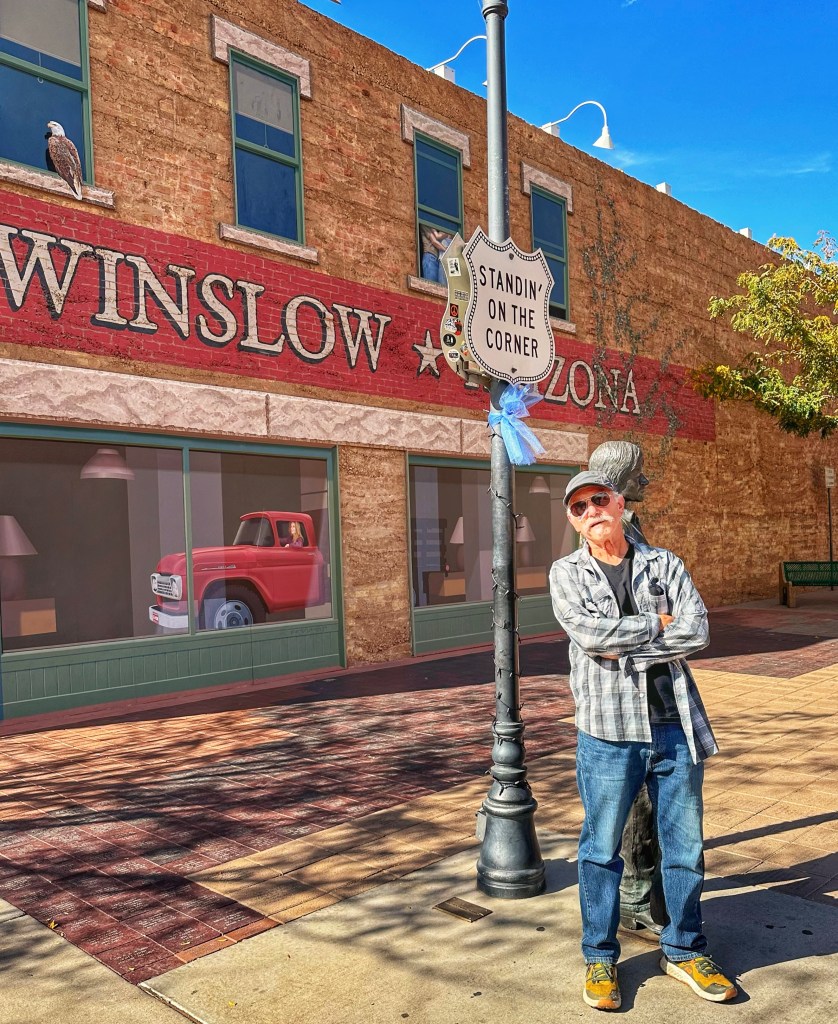
The historic town of Winslow (also a well known Route 66 destination) is a short drive from camp. It’s claim to fame originates from a couple of musical references.
He couldn’t resist
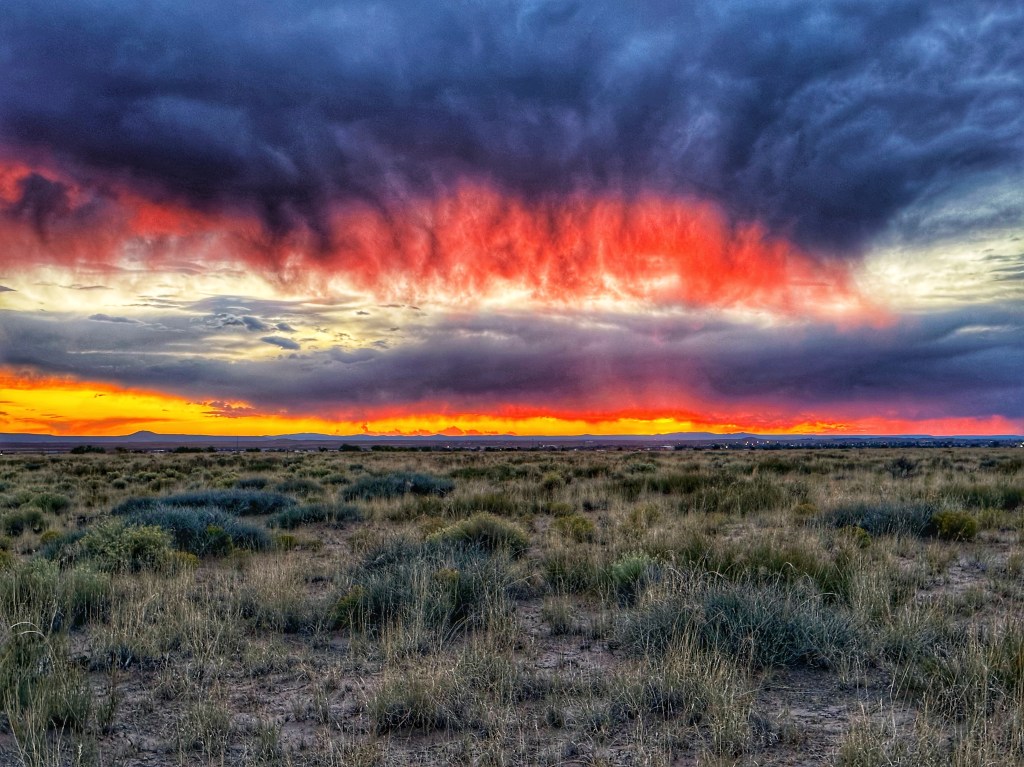
While traveling the desert southwest we’ve seen a meteorological phenomenon known as a virga or dry storm. What happens is that moisture builds up and precipitates from the clouds but evaporates before it hits the ground; creating a dry storm. While we’ve seen this phenomenon before, we’ve never seen it at sunset. That changed on our last night at Homolovi State Park.
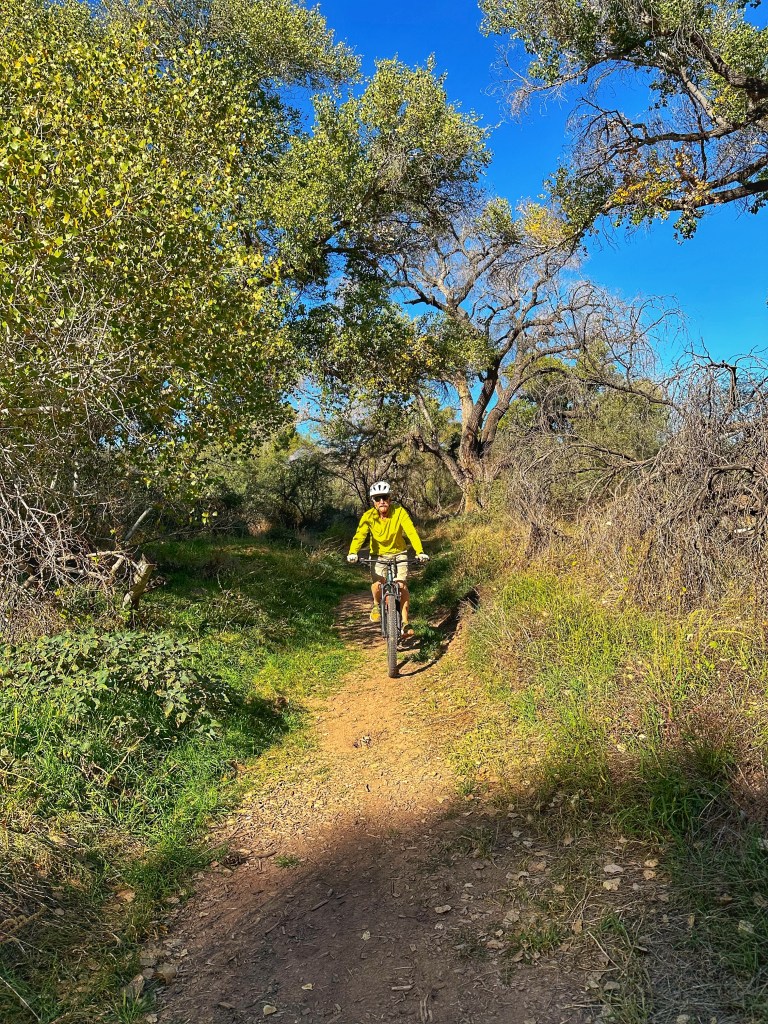
From Winslow we continued on to Cottonwood, Arizona and Dead Horse Ranch State Park. The park puts us in a perfect location to explore Cottonwood, Clarkdale, Jerome and Sedona.
Site 56
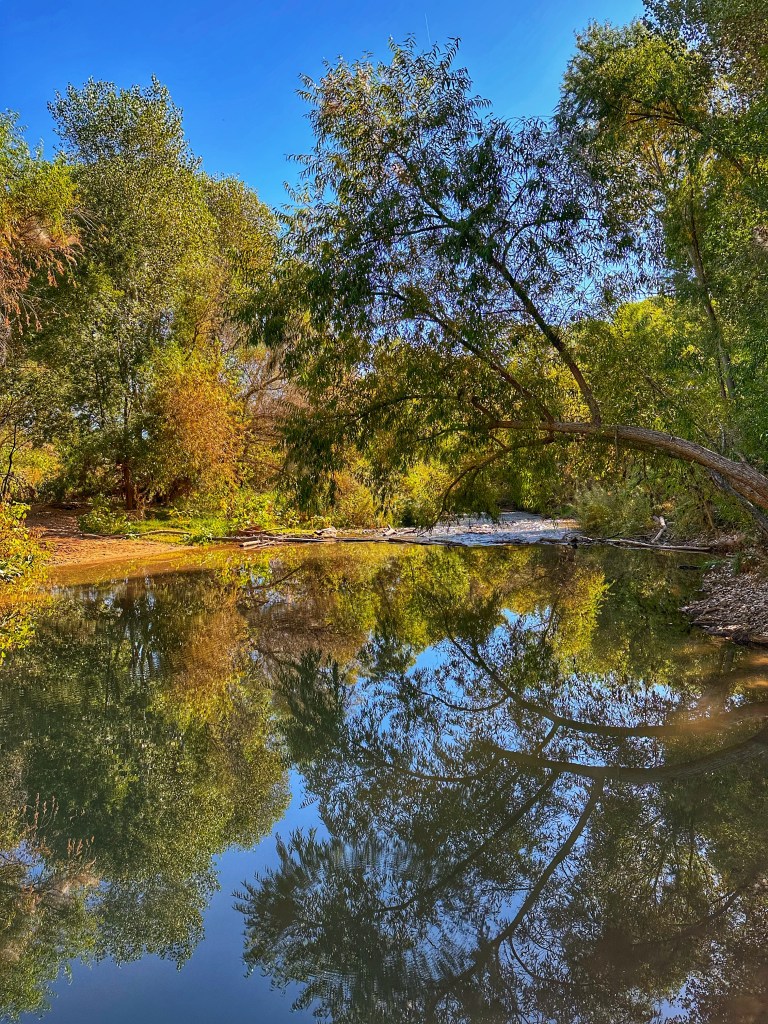
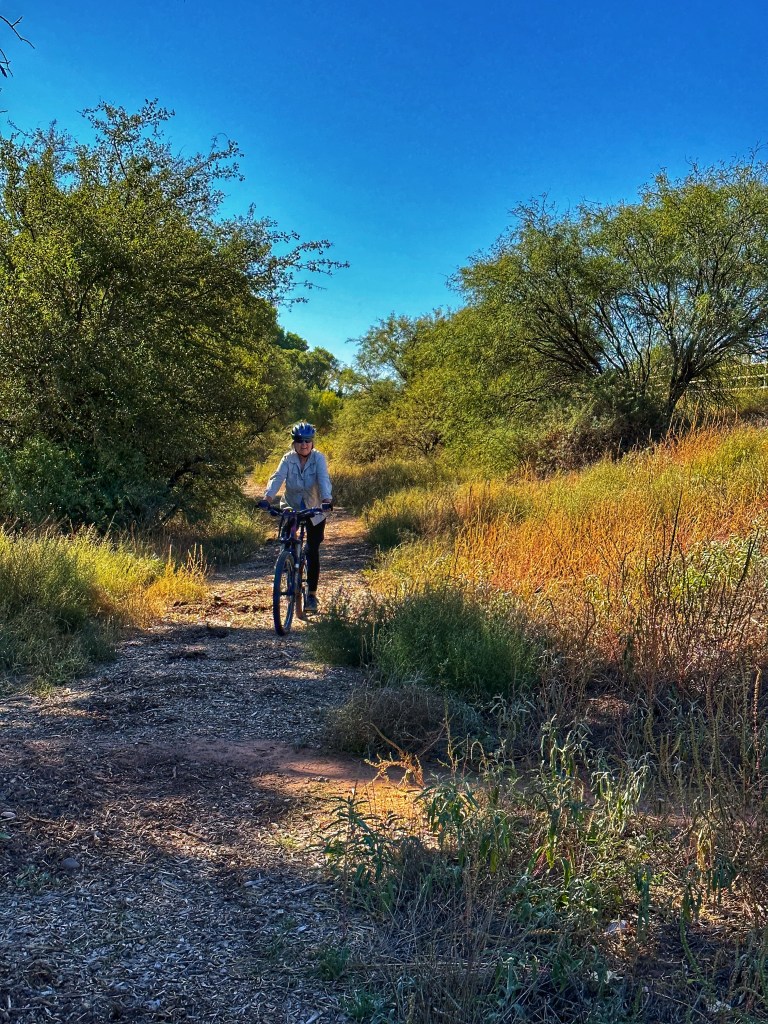
The park features a couple of lagoons, the Verde River as well as hiking and biking trails.
The Verde River
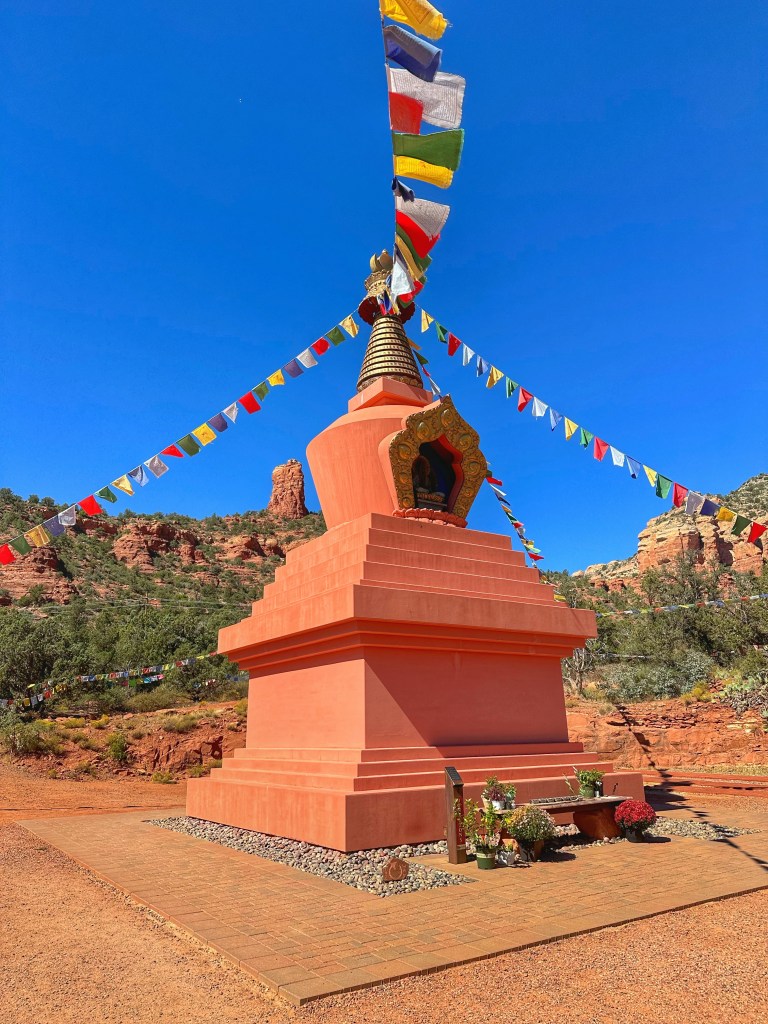
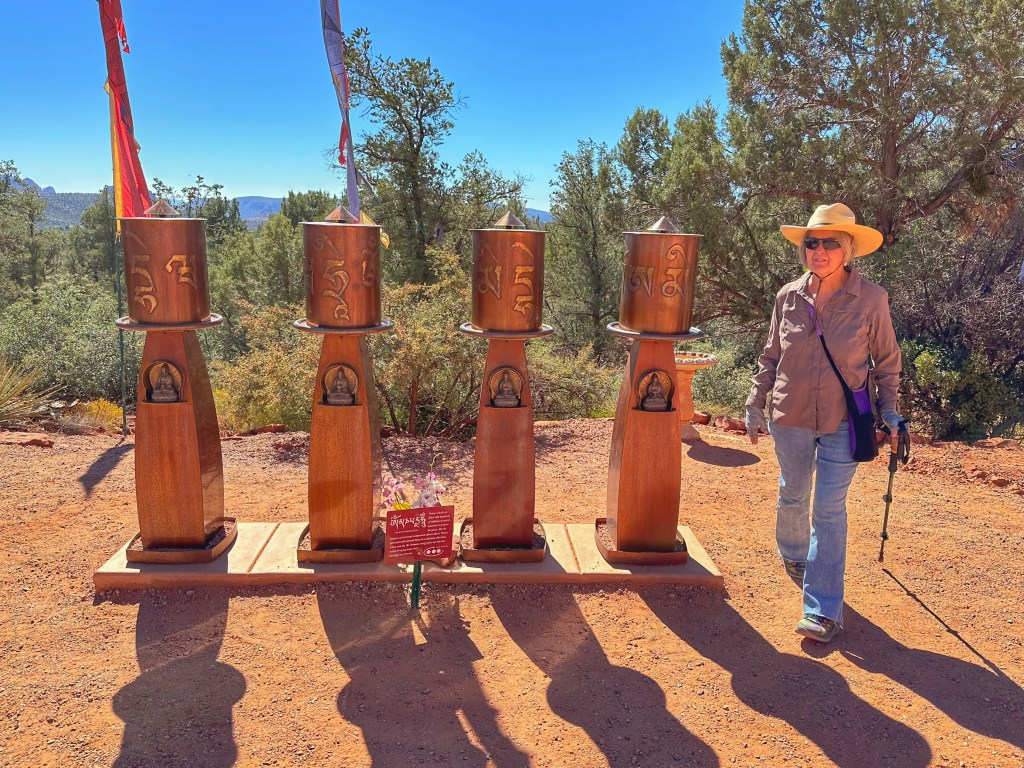
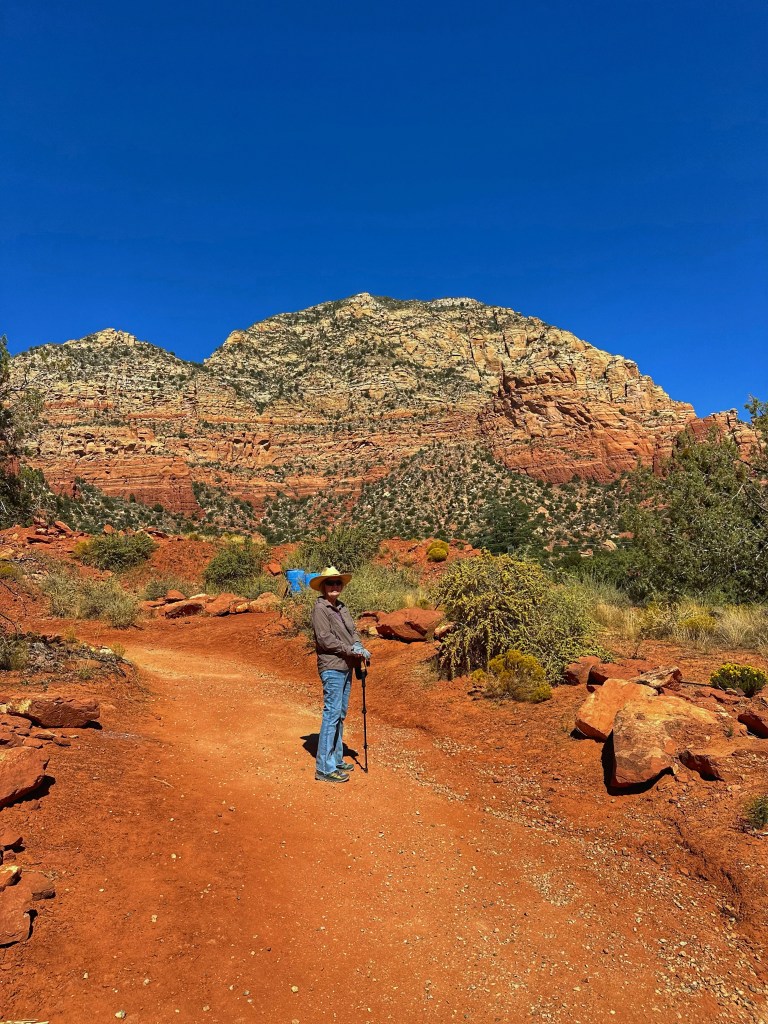
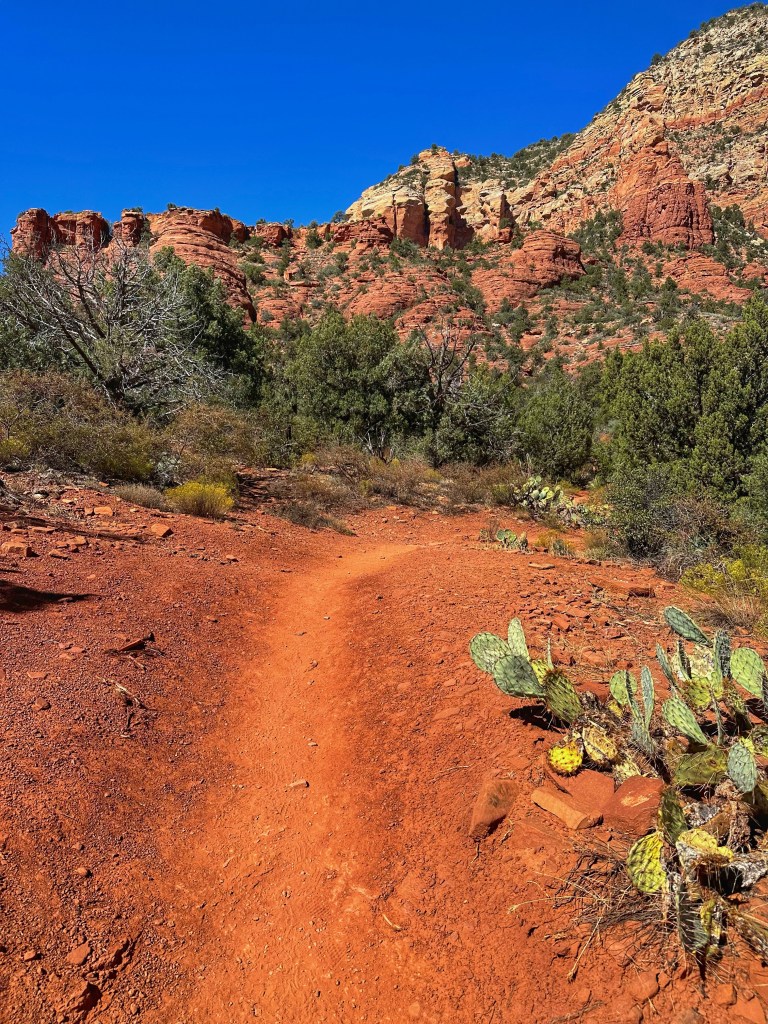
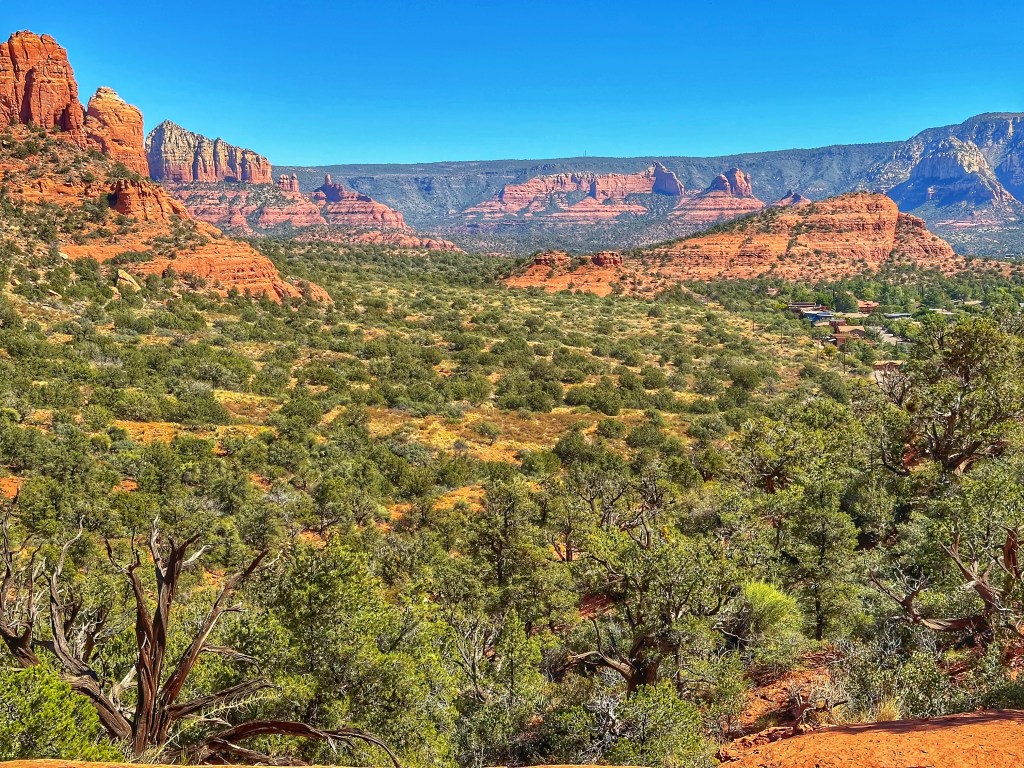
The red rock county that is Sedona always calls us back to hike and contemplate. One of the easiest places to do that is the Amitabha Stupa and Peace Park.
The stupa is filled with relics and is a place for meditation These prayer wheels are filled with thousands of mantras for peace. As you walk clockwise around the wheels you spin them sending prayers for peace into the world.
The Stupa allows easy access to the Thunder Mountain trail system and Chimney Rock.
Chimney Rock
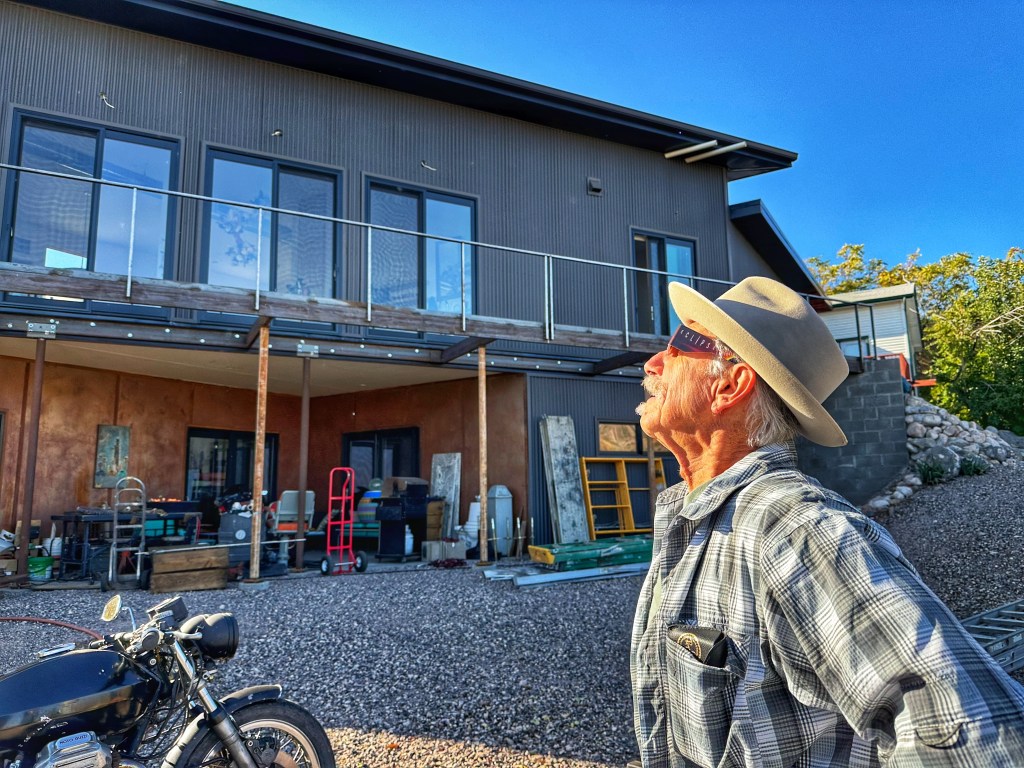
Our friends Andy and Lori are putting the finishing touches on their new house in Jerome. We last saw the project two years ago. We drove up the mountain to check on the progress and take in the annular, ring of fire, solar eclipse.
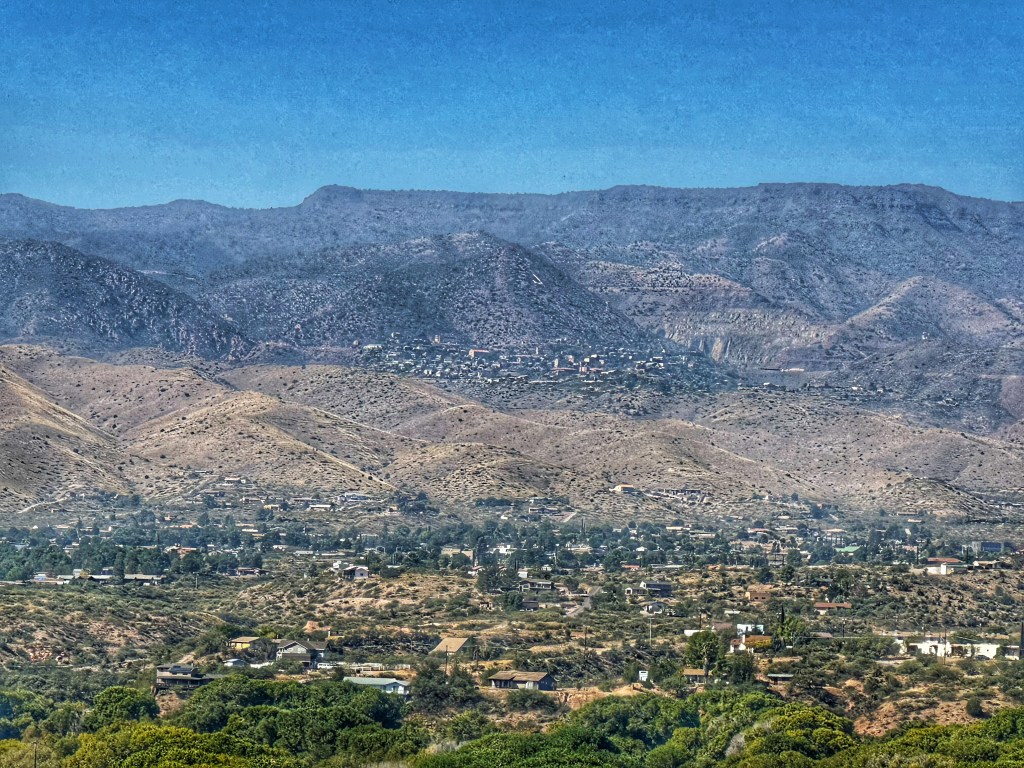
Jerome as seen from Dead Horse Ranch SP
In our location we could observe 80% coverage of the sun. Not a complete ring of fire but a noticeable drop from in temperature as the sun was covered.
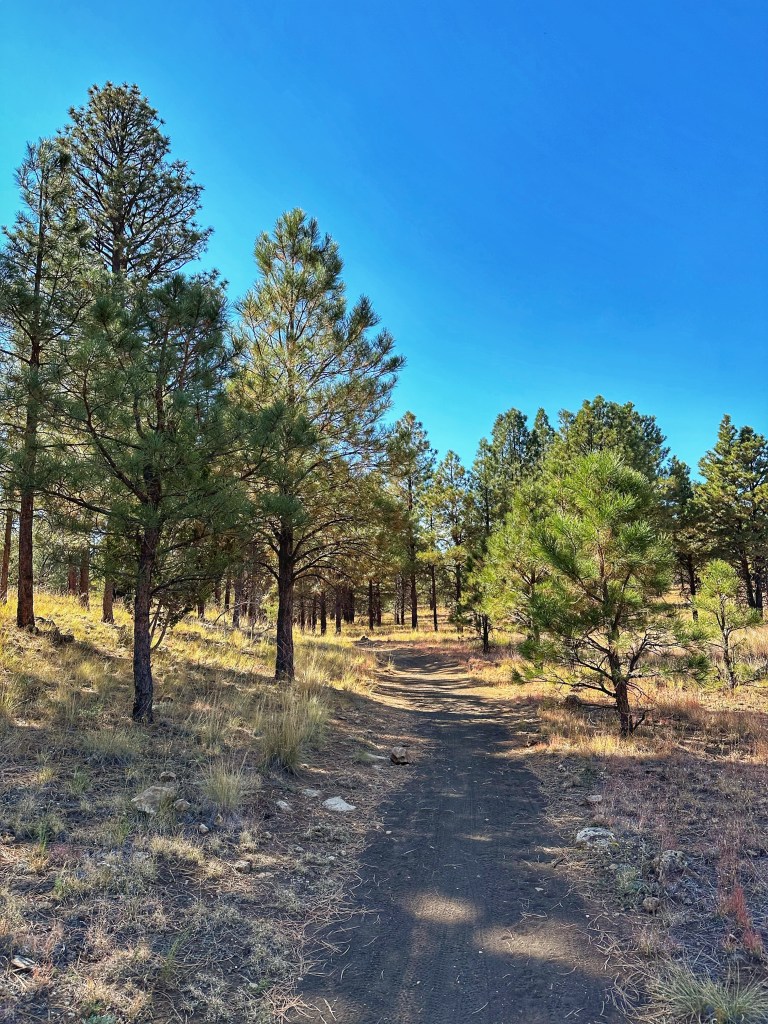
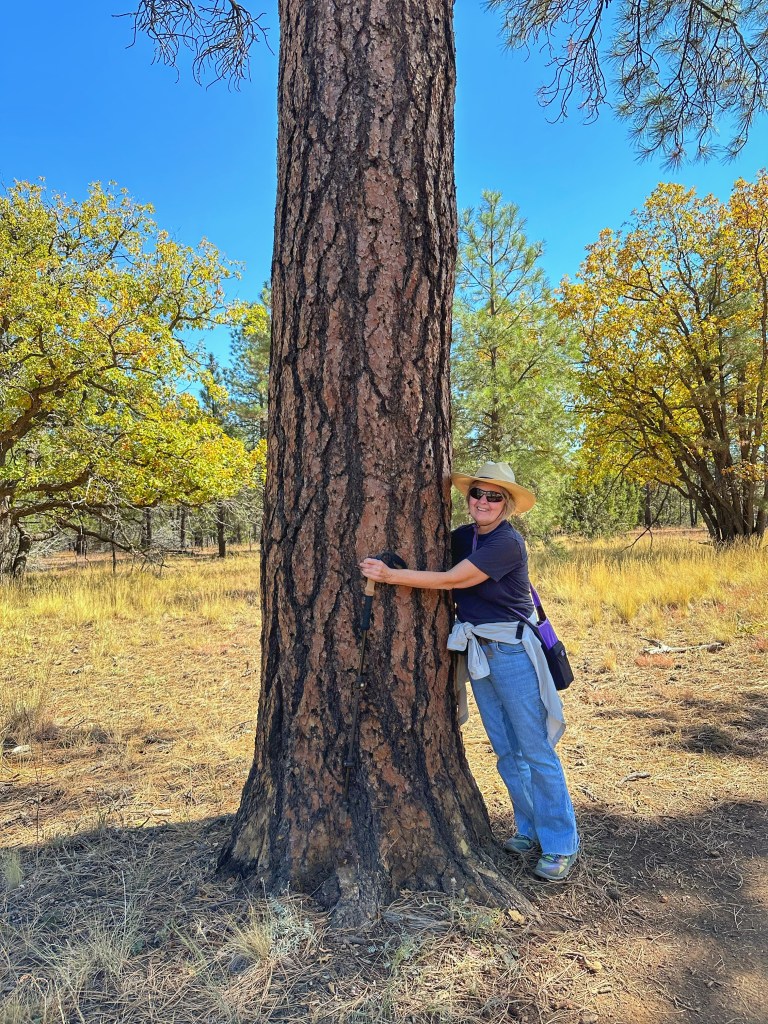
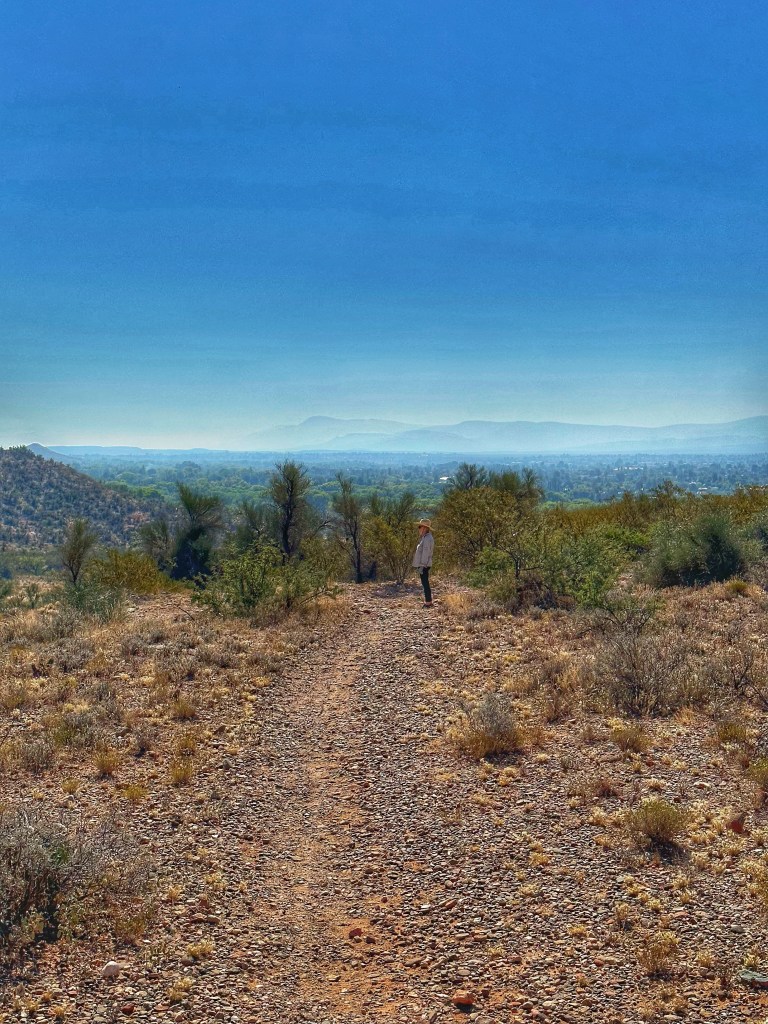
The temperatures have been 10 to 15 degrees above normal for this time of year. With temperatures rising into the 90’s we decided to take a day trip tho Flagstaff for cooler temperatures. We headed to Campbell Mesa for some hiking among the Ponderosa Pines.
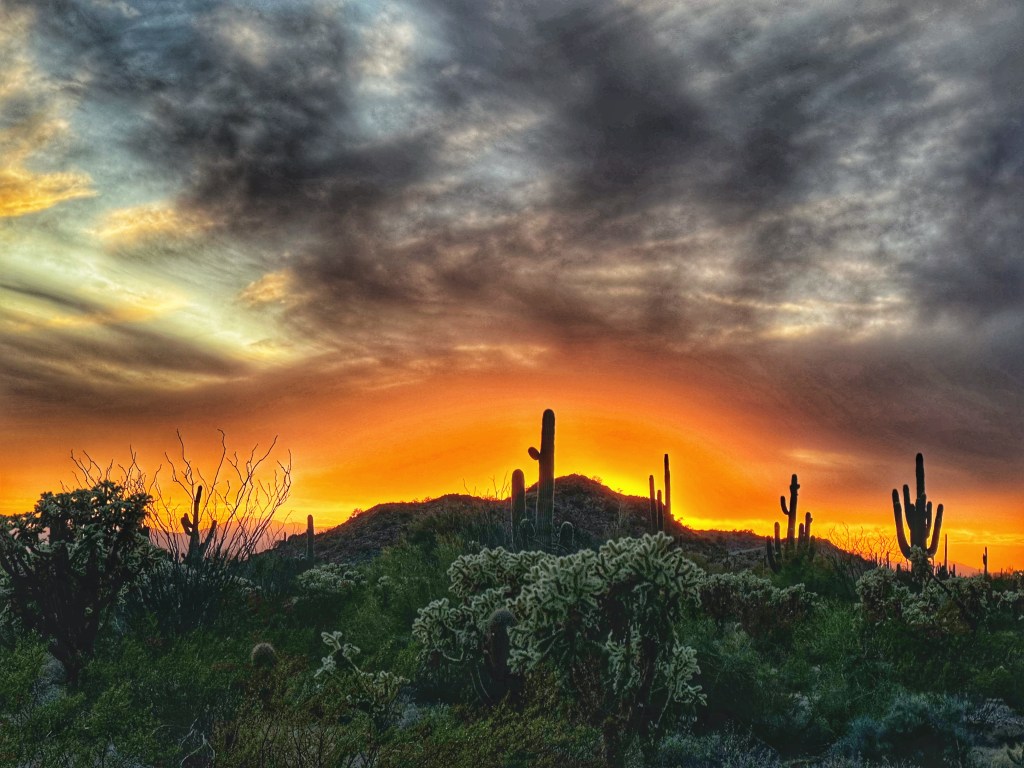
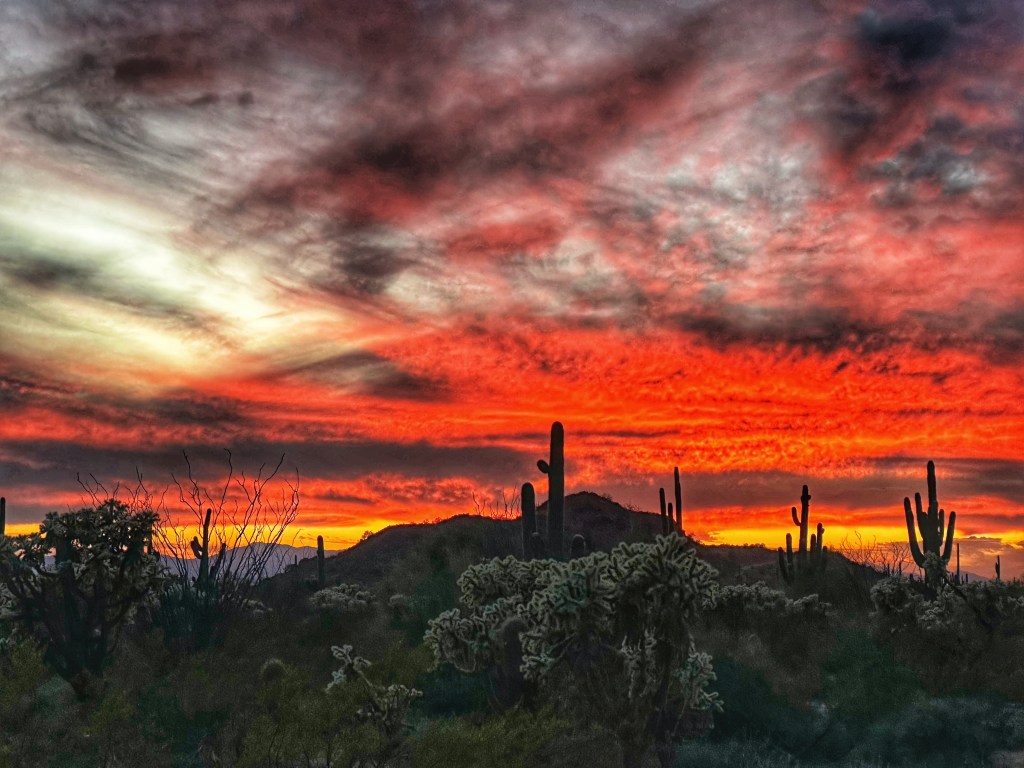
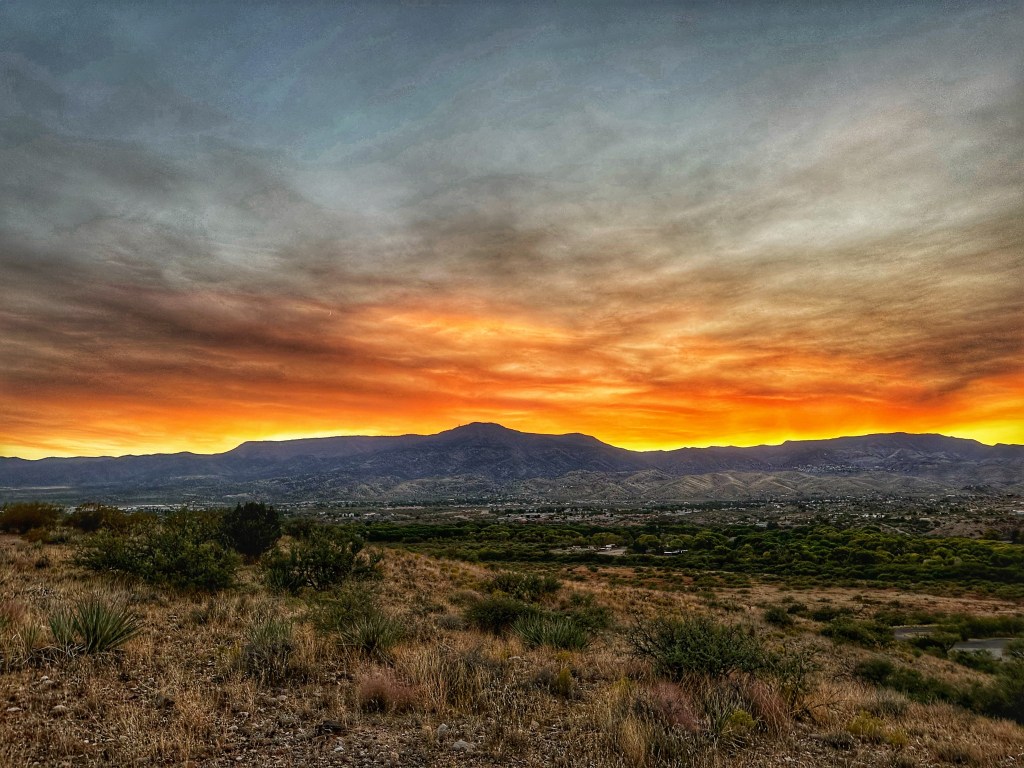
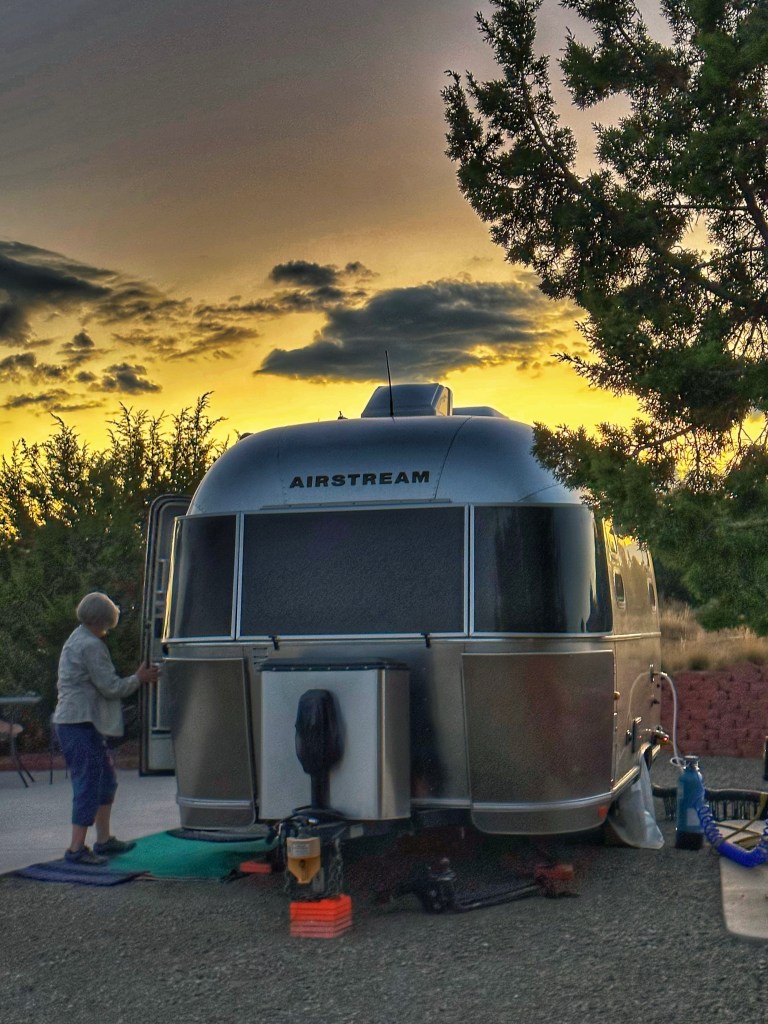
Just behind our campsite is a small mesa that offers great views as the sun sets. Whenever we’re in camp at sunset we wander up for a look.
The smoke/haze in the valley is the result of prescribed burns The smoke makes for some striking sunsets
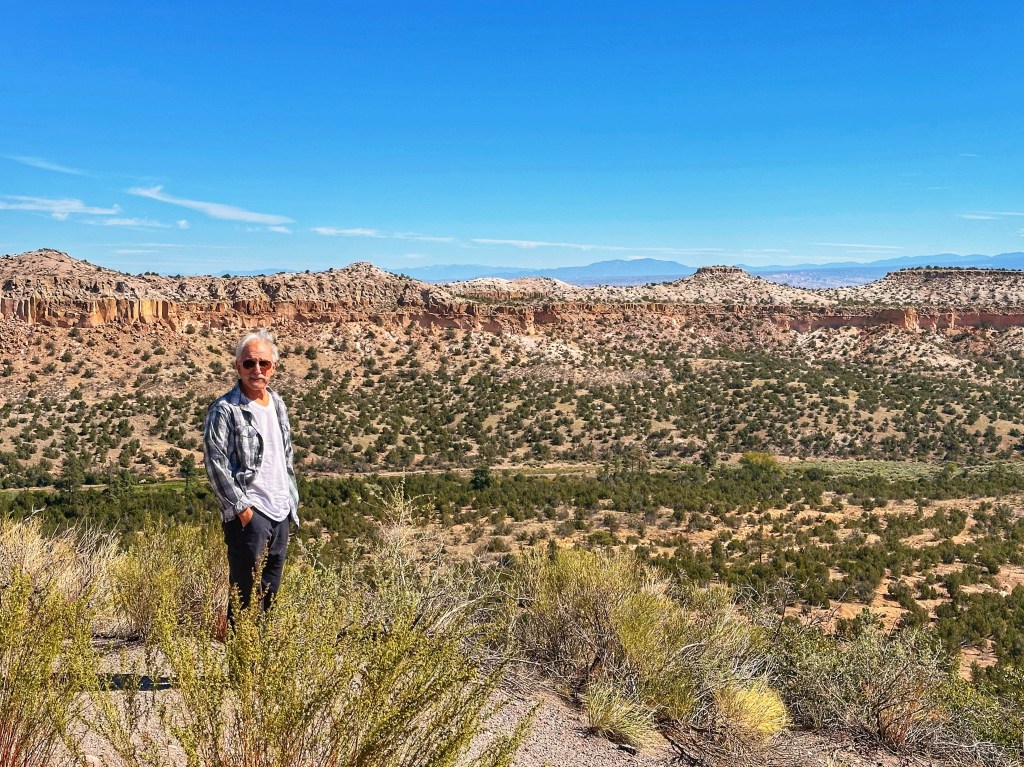
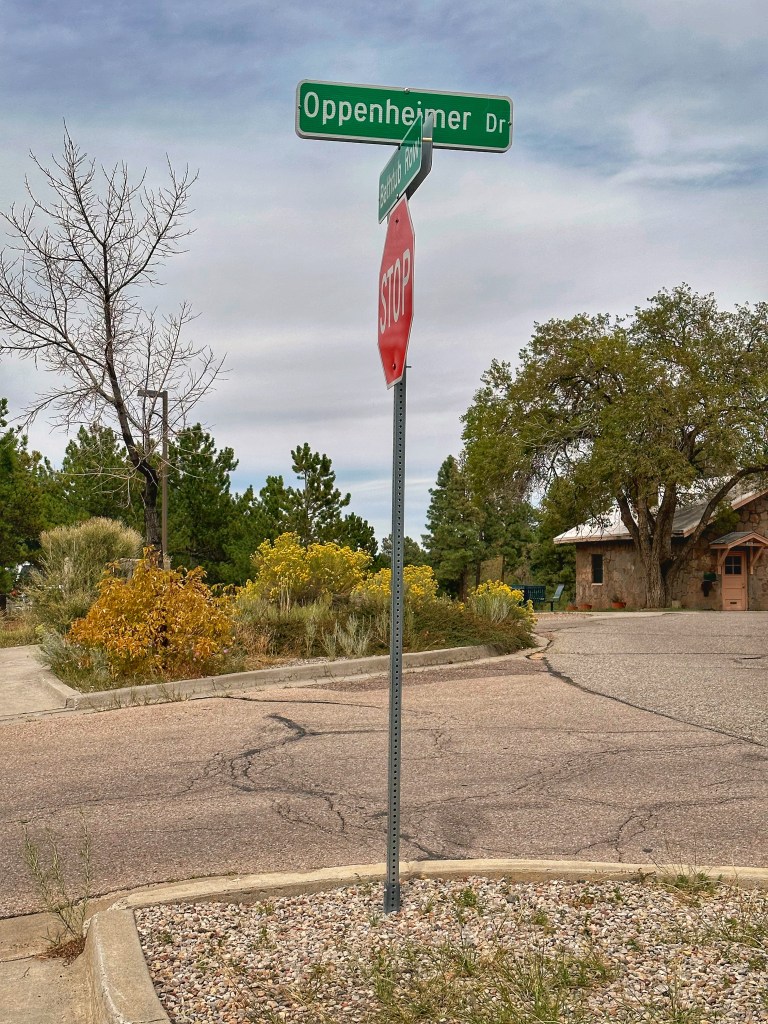
While we love hanging out in Santa Fe our location allows us the chance to explore and enjoy other locales in the area. An hour and a half to the north is Los Alamos, home of the Manhattan Project. The drive takes you through a striking high desert landscape.
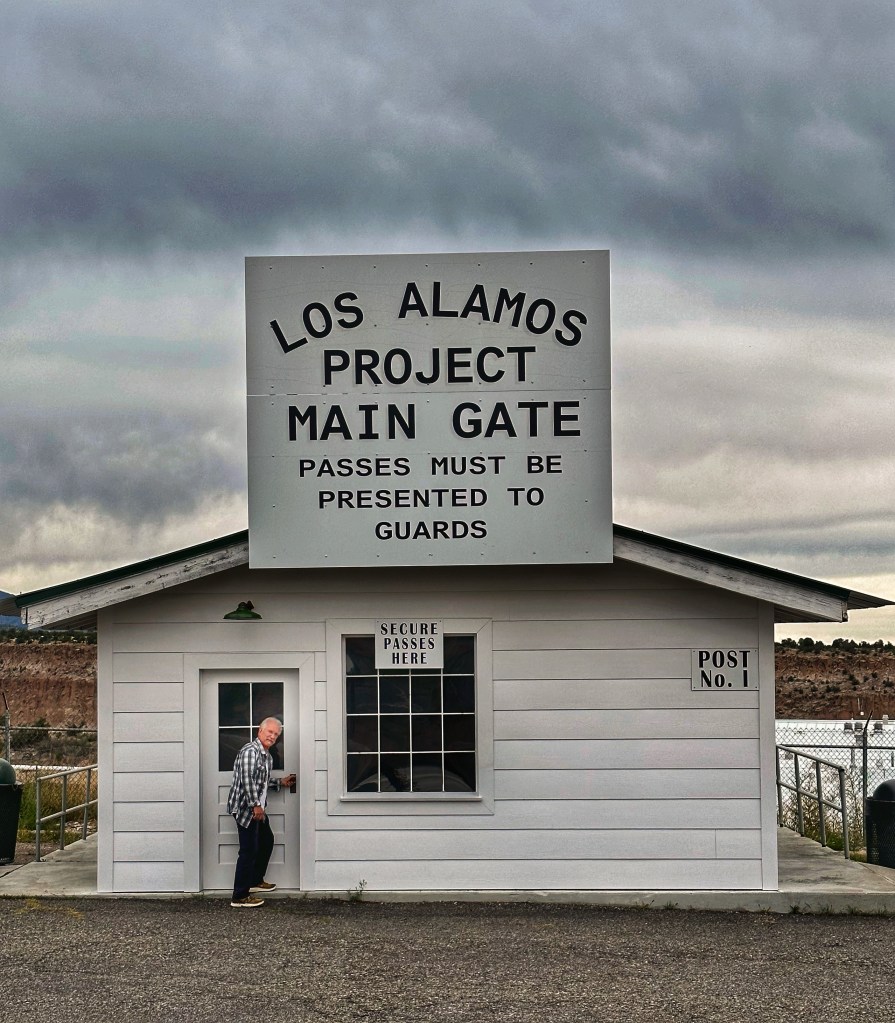
The original Manhattan Project front gate
The land that the city of Los Alamos currently occupies was taken by the US government as the site of the Manhattan Project. In 1943, when the government exercised its right of eminent domain, the property was the site of the Los Alamos Ranch School. The school was a private preparatory school for boys that not only focused on academics but also outdoor survival skills.
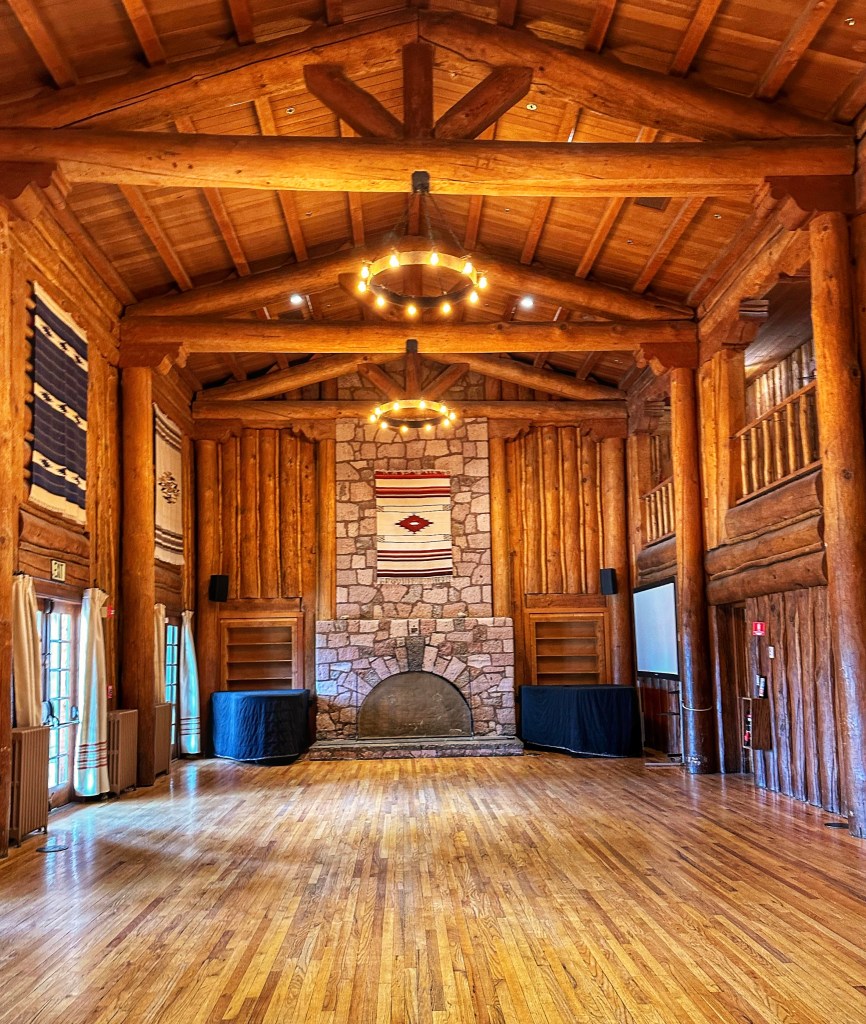
The Ranch School’s dinning hall
Los Alamos was originally built as a closed city. Those who came to work on developing the atomic bomb stayed in this small community.
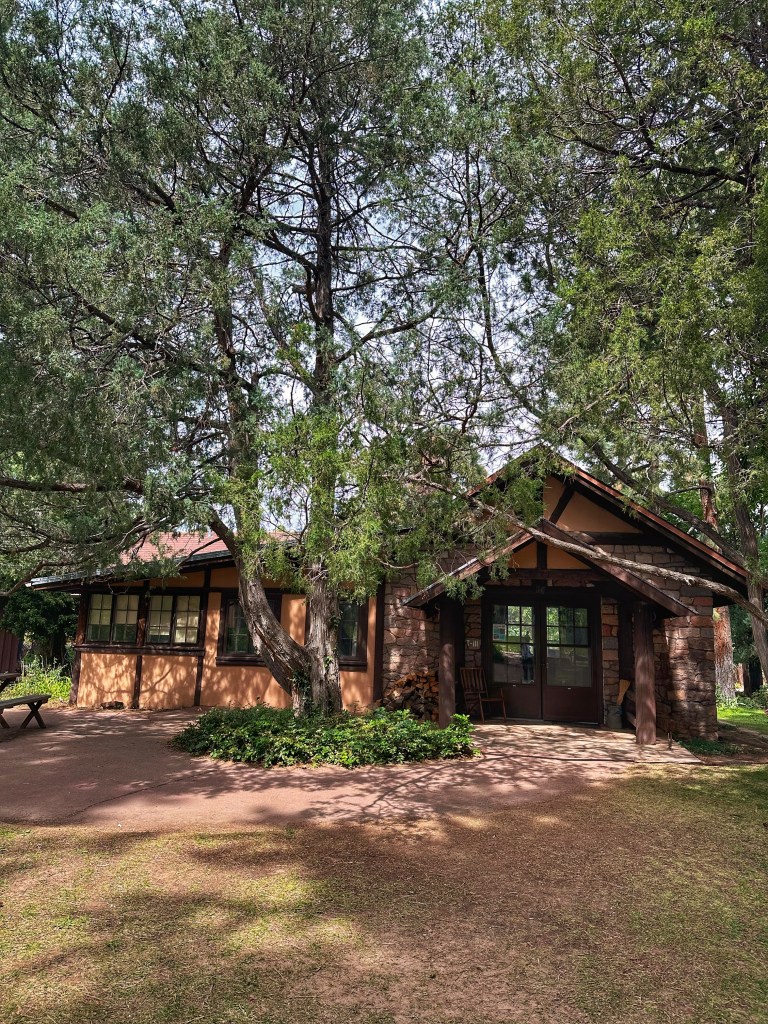
Robert Oppenheimer’s house
There are around 13,000 people who currently make Los Alamos home. The legacy of the Manhattan Project can be seen throughout the city.
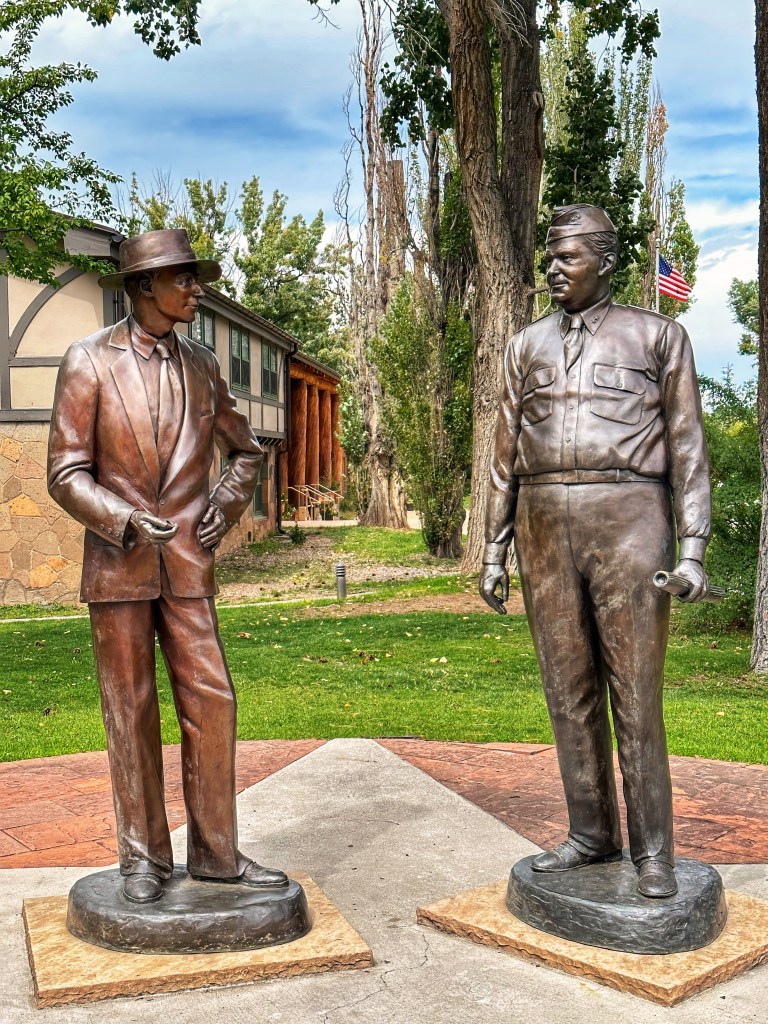
Robert Oppenheimer (Laboratory Director) and General Leslie Groves(Commanding General).
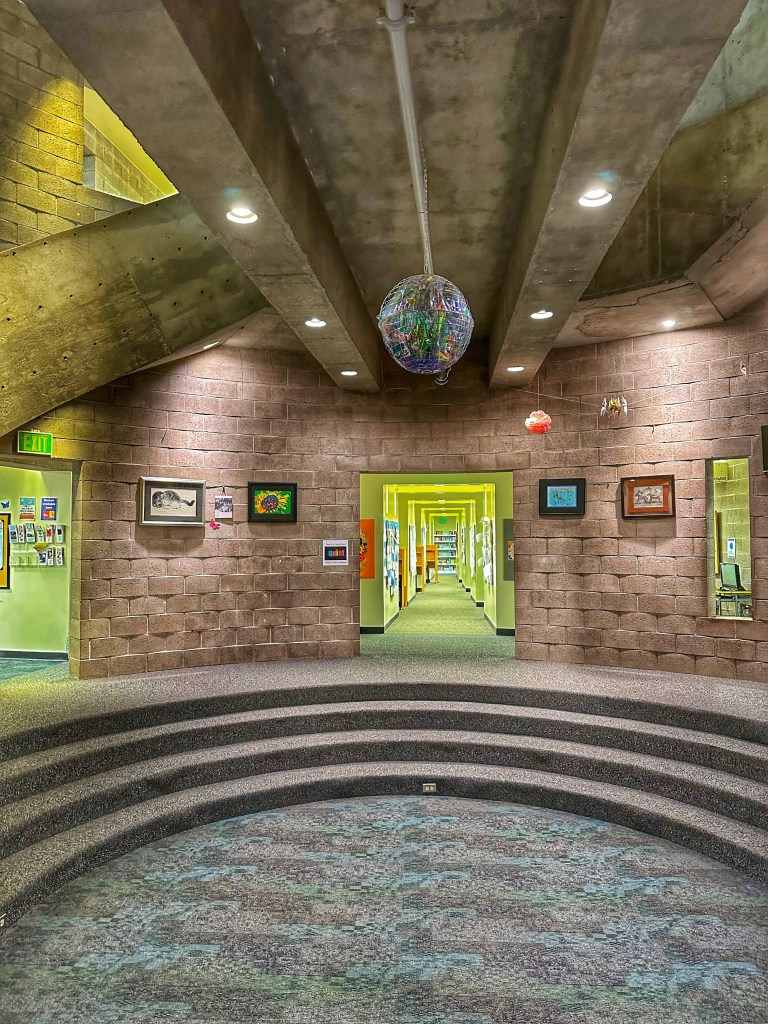
The Mesa Public Library provides a welcoming community space that has an affordable used bookstore, art gallery and book collection for the residents.
The story telling space
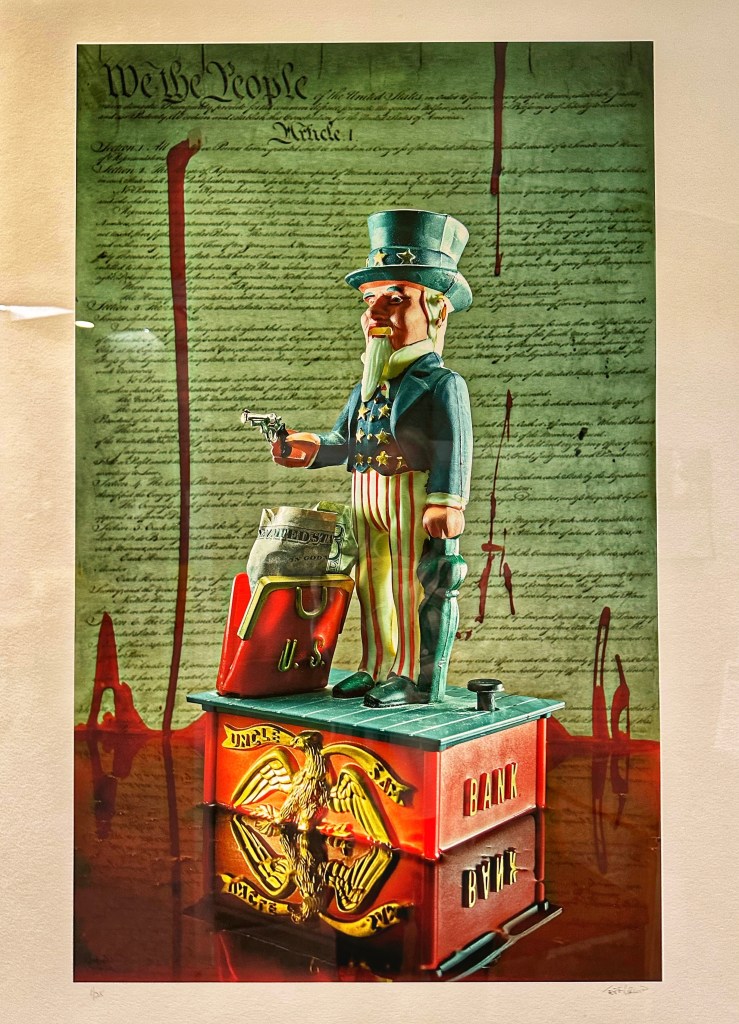
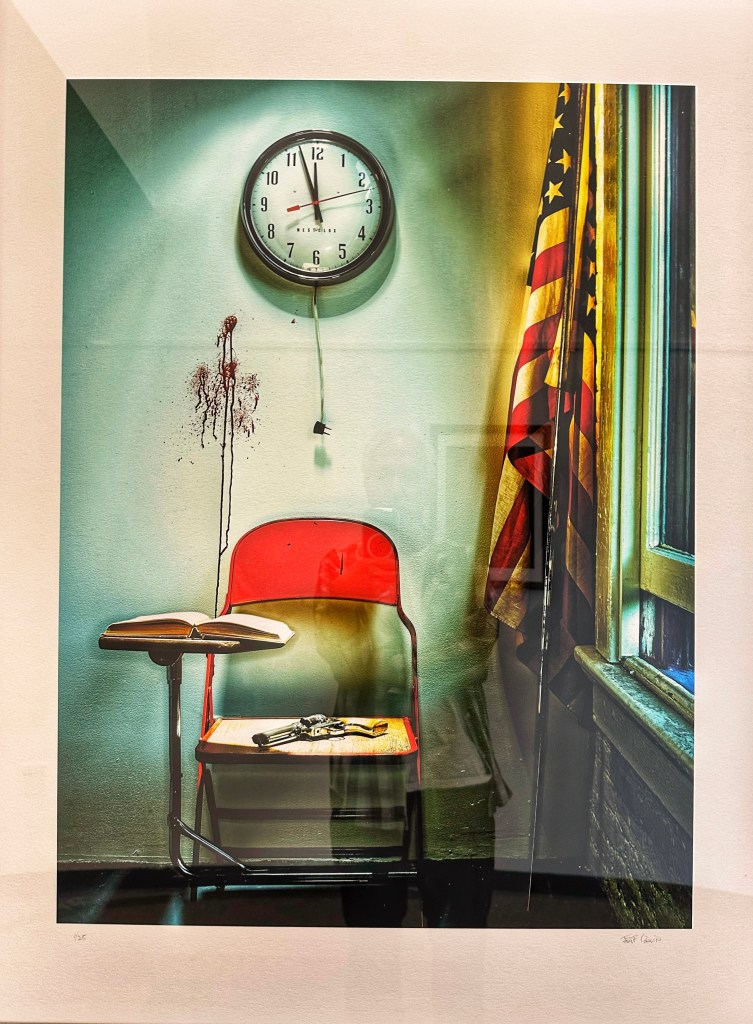
The art gallery was presenting a provocative photo exhibit by Jeff Corwin, “Guns In America”.
Guns in America #5Guns in America #3
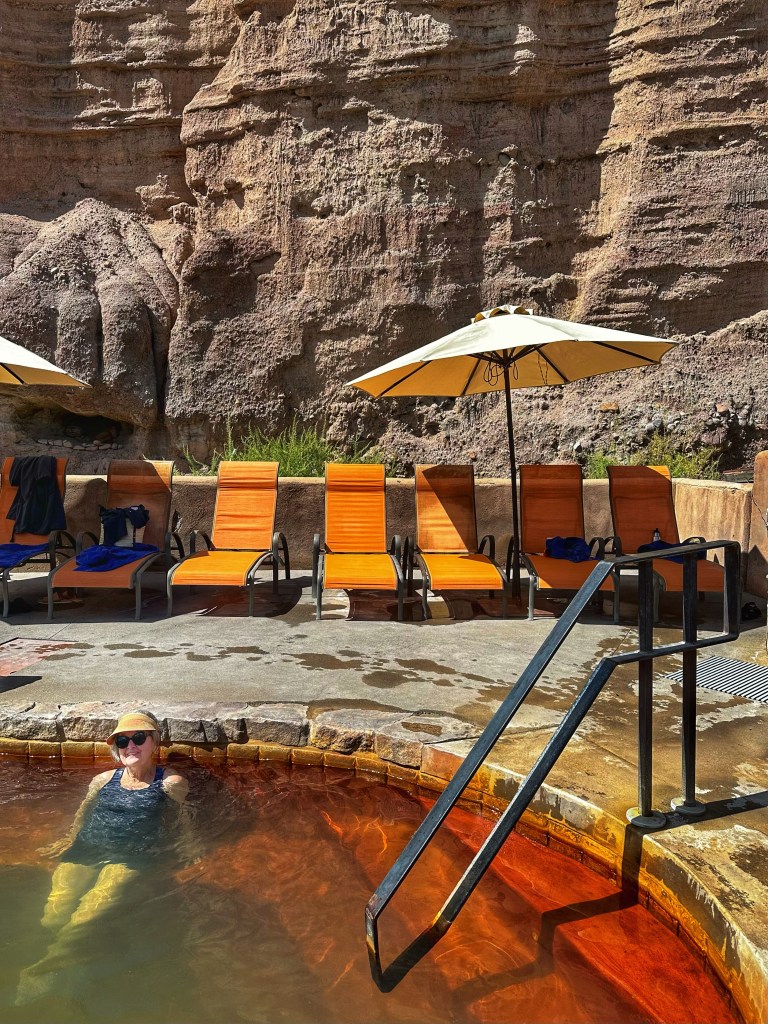
North of Santa Fe on the way to Taos are the hot springs of Ojo Caliente. The springs are located outdoors and provide a relaxing environment.
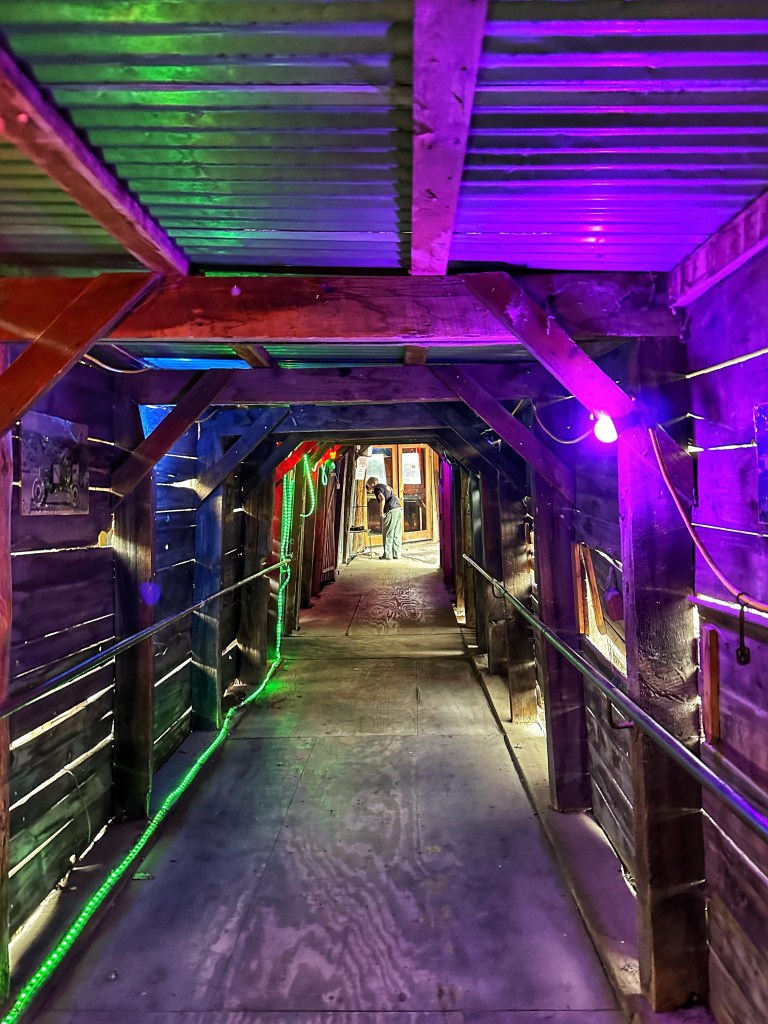
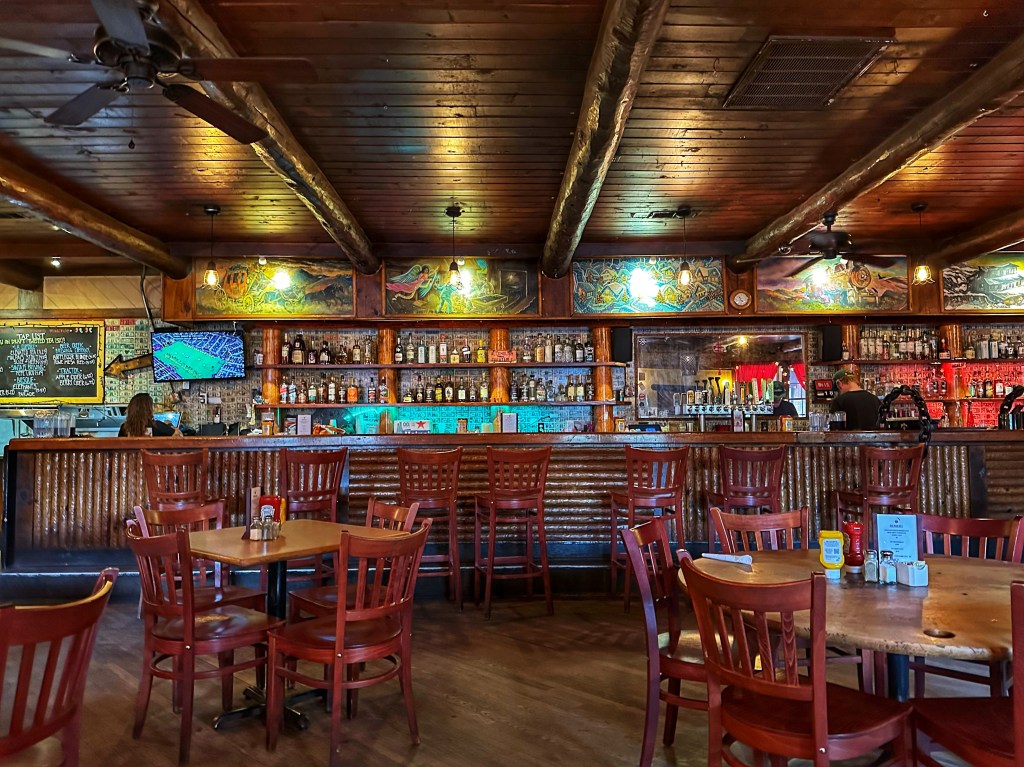
One of the culinary delights of New Mexico is the Green Chili Cheeseburger. It seems like every restaurant that serves one is serving the best in the state. This week we visited the quirky town of Madrid located twenty minutes south of our camp. This is where we found, in our humble opinion, the best Green Chili Cheeseburger at the Mineshaft Tavern. No photo of the burgers, we gobbled them down too fast.
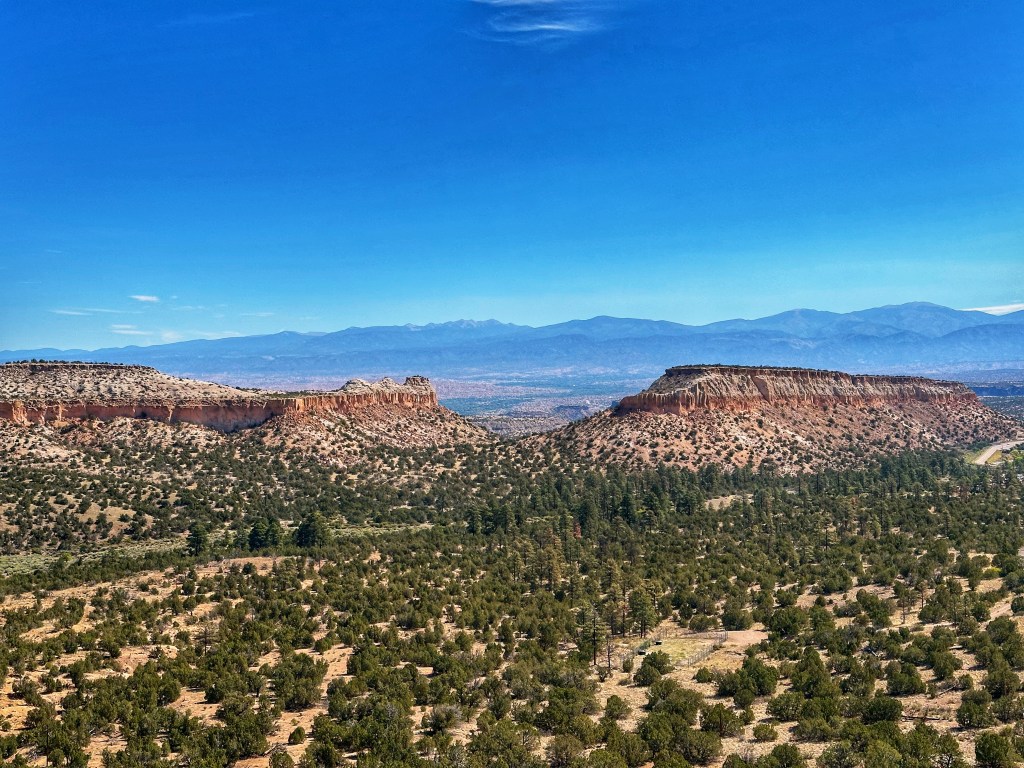
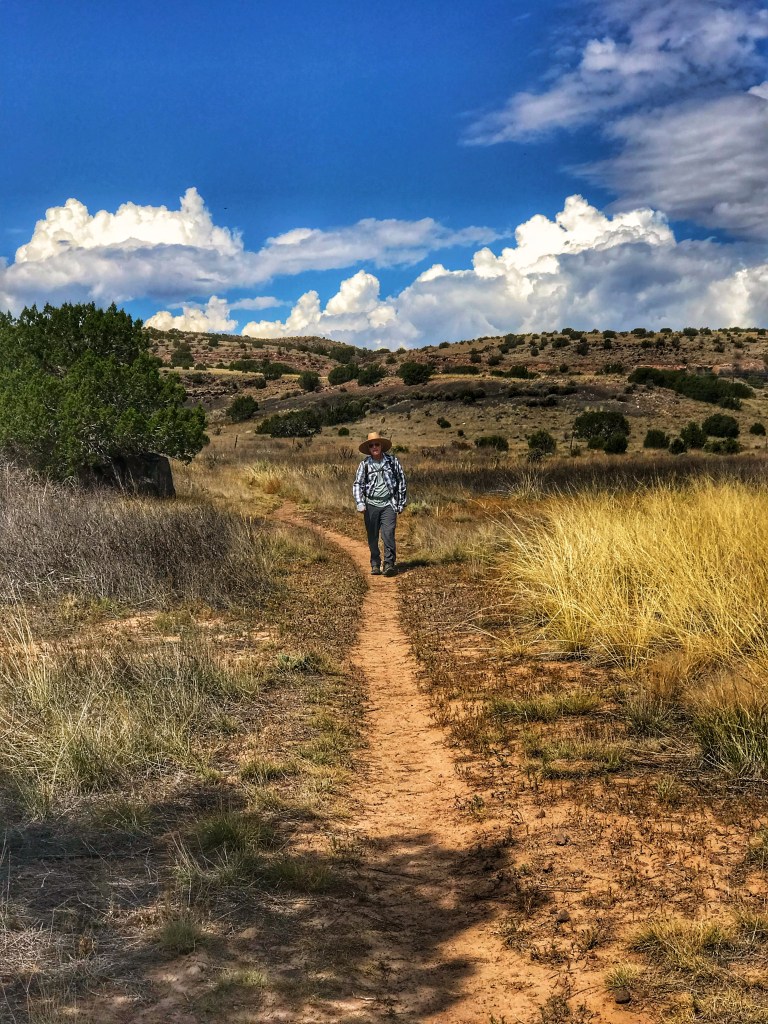
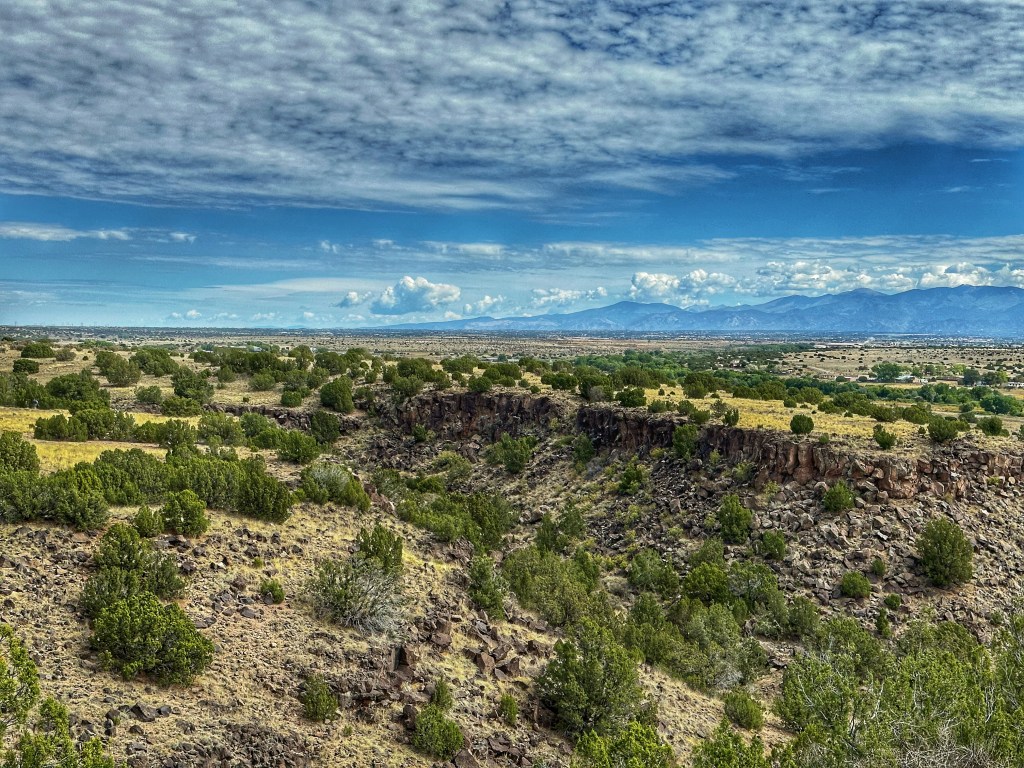
We’ve camped at Santa Fe Skies RV Park several times and thought we knew the area well. This visit we discovered a cool BLM tract not 15 minutes away. At the Cieneguilla Recreation Area you can hike to petroglyphs or go to the top of the mesa for a nice 3 mile hike.
A view from the top of the mesa
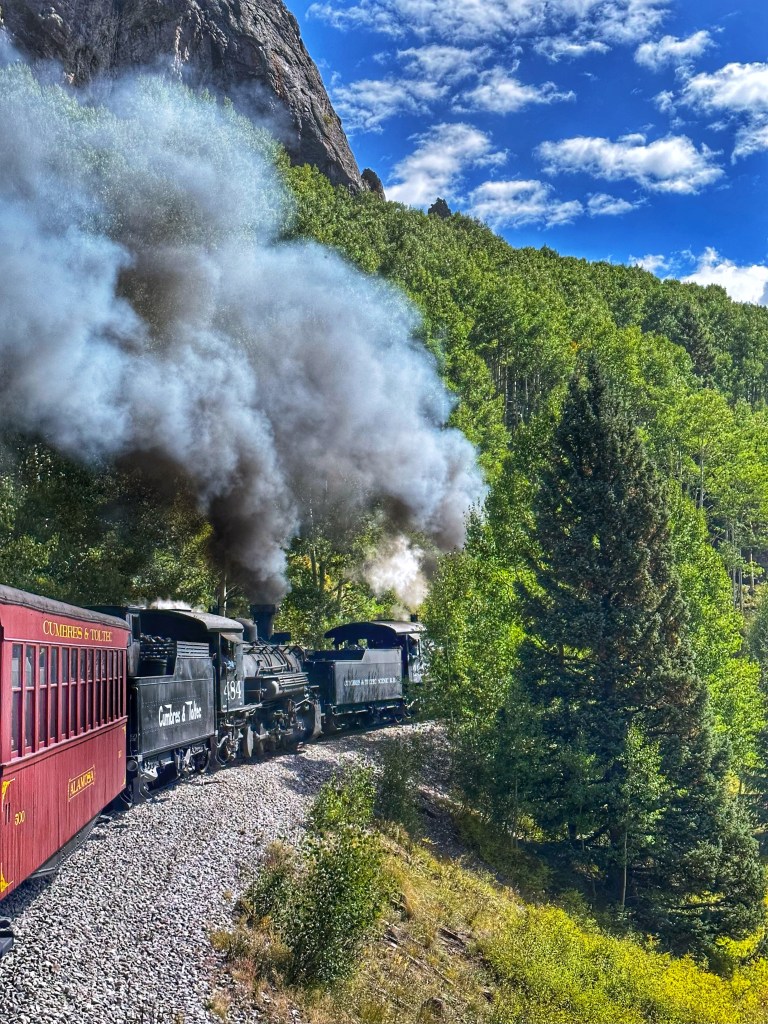
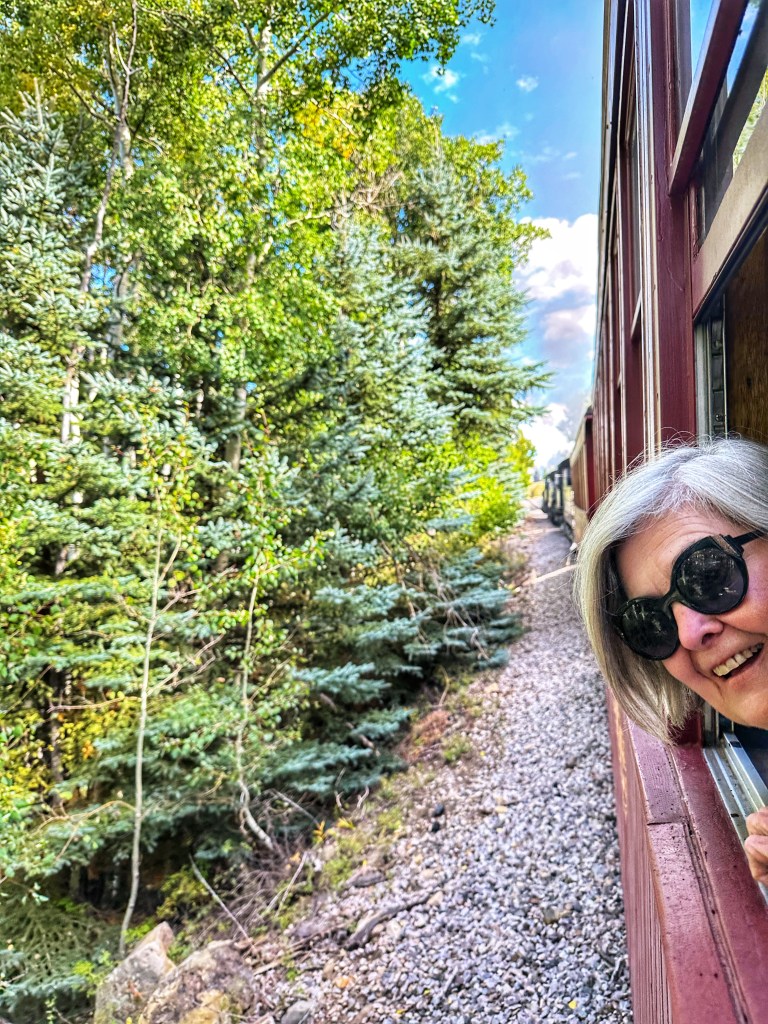
Pat’s sister Carolyn had a bucket list idea to ride the Cumbres- Toltec steam train out of Chama ~we joined her for a fun day on the rails.
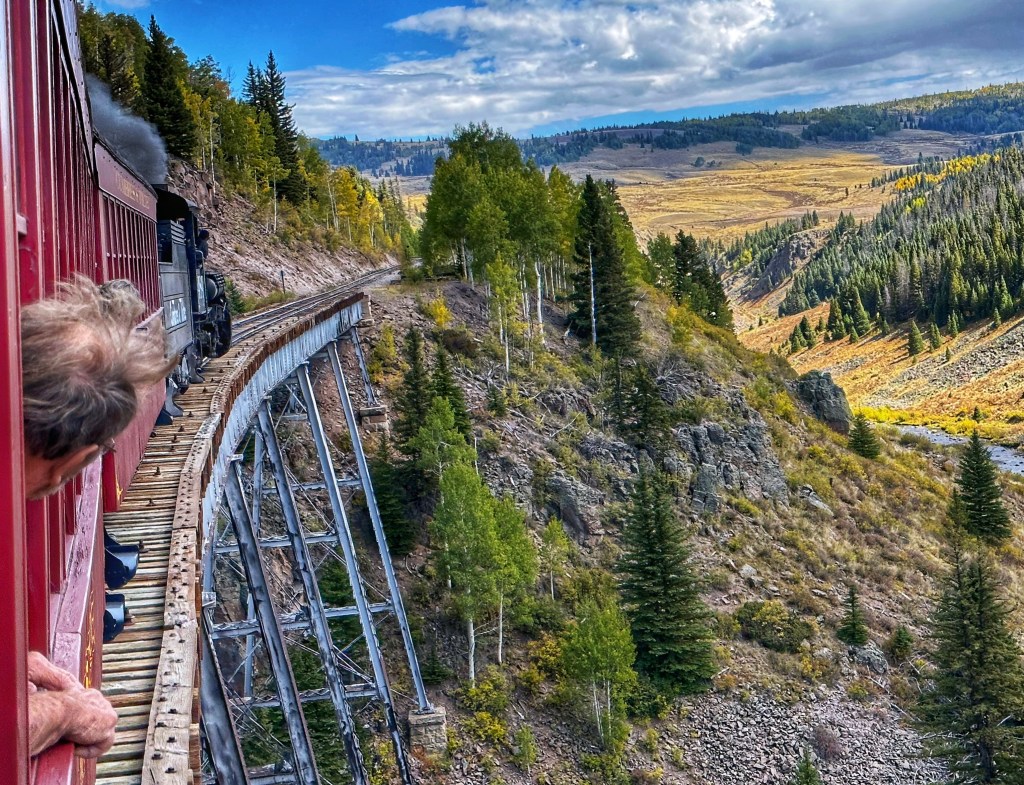
The line is the longest and highest narrow gauge railroad in the US. The line starts in Chama, NM and ends in Antonito, CO, a 64 mile trip. We opted to ride a 25.7 section from Chama, NM to Osier, CO. The trip took us through Cumbres Pass, the highest point on the line at 10,015 feet above sea level.
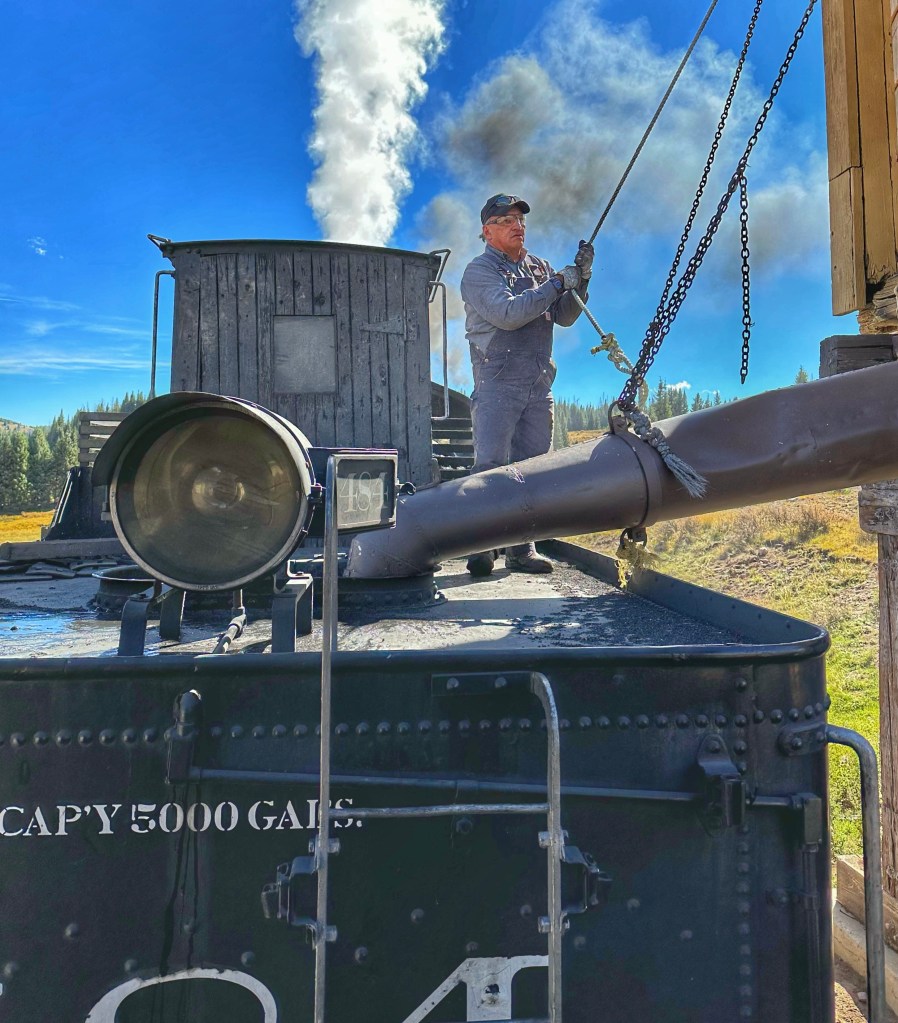
It took two engines to get us through Cumbres PassOur brother in-law Ed taking in the view of Cascade Trestle, the highest bridge on the lineAre we almost there?Taking on water at the Los Pinos Tank
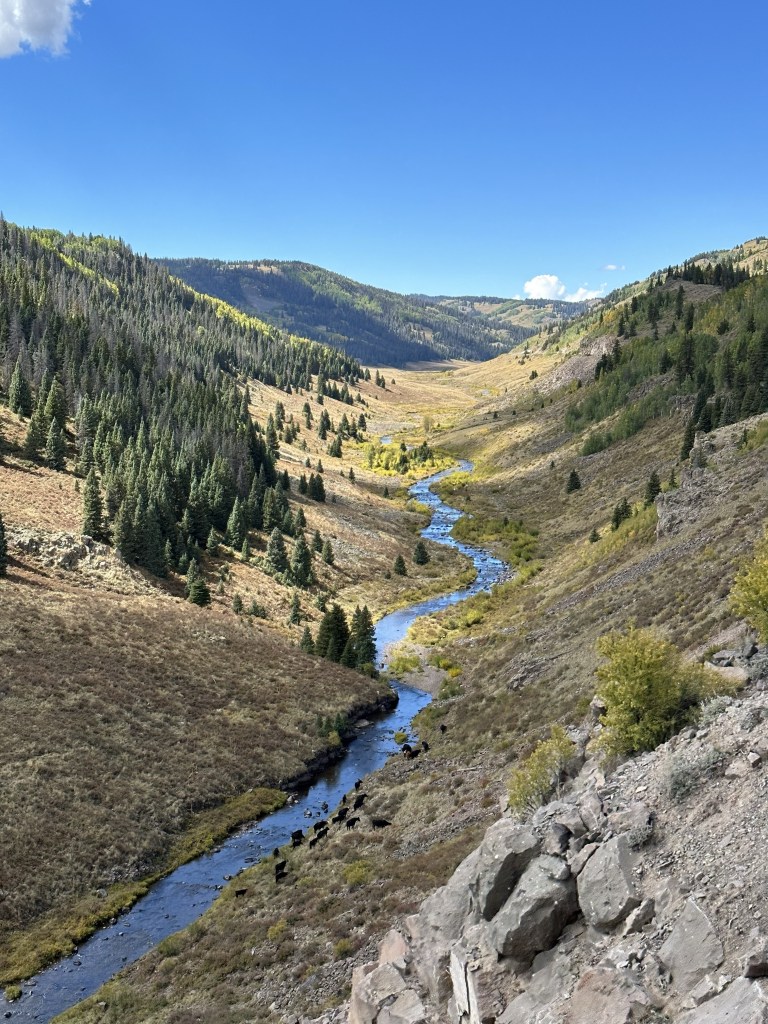
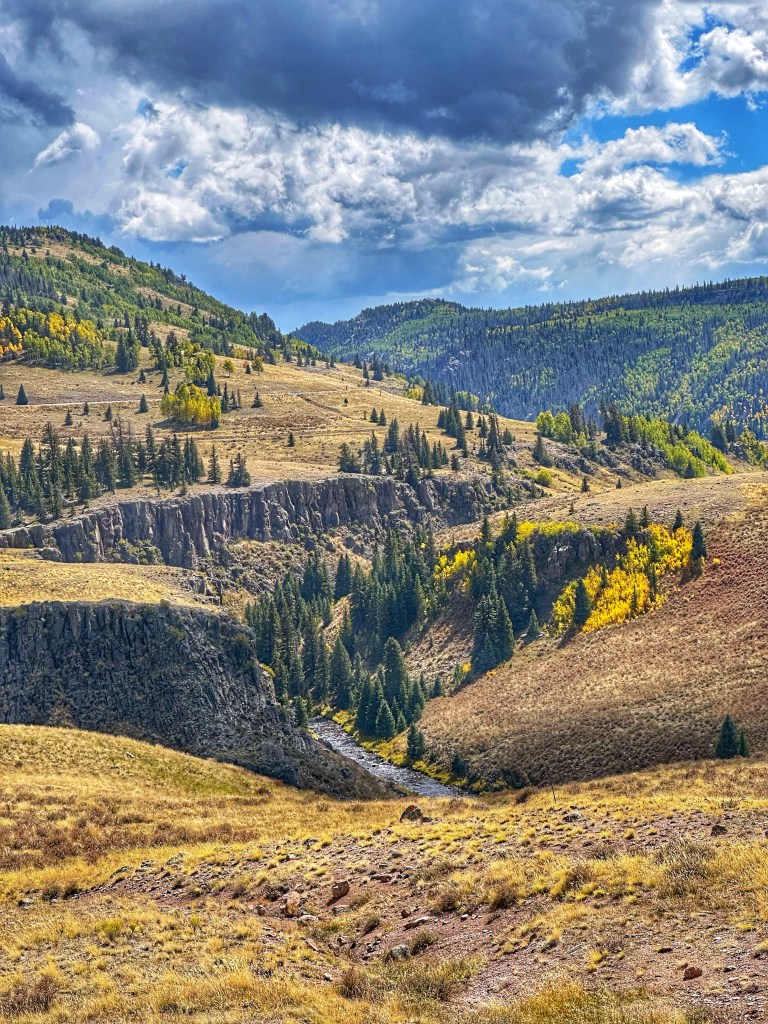
Our train took us through some spectacular mountain scenery.
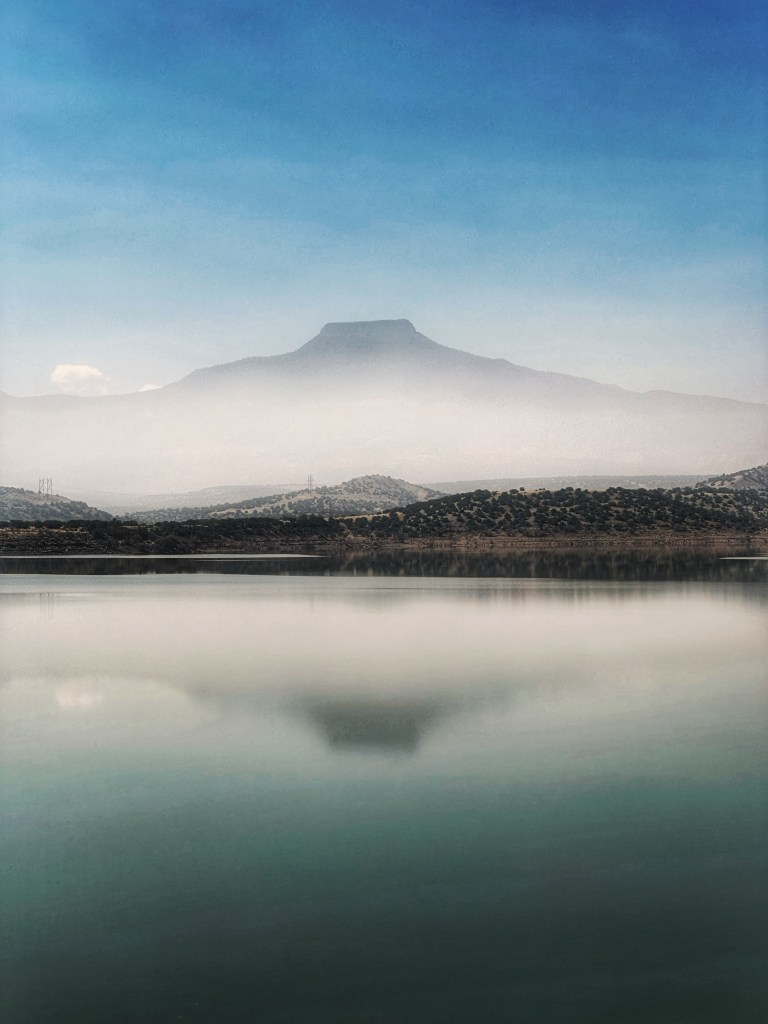
The ride back to Santa Fe takes you by Ghost Ranch and the Village of Abiquiu. This is Georgia O’Keeffe Country, the landscape that inspired many of her paintings.
The Chama RiverThe Pedernal reflected on Abiquiu Lake
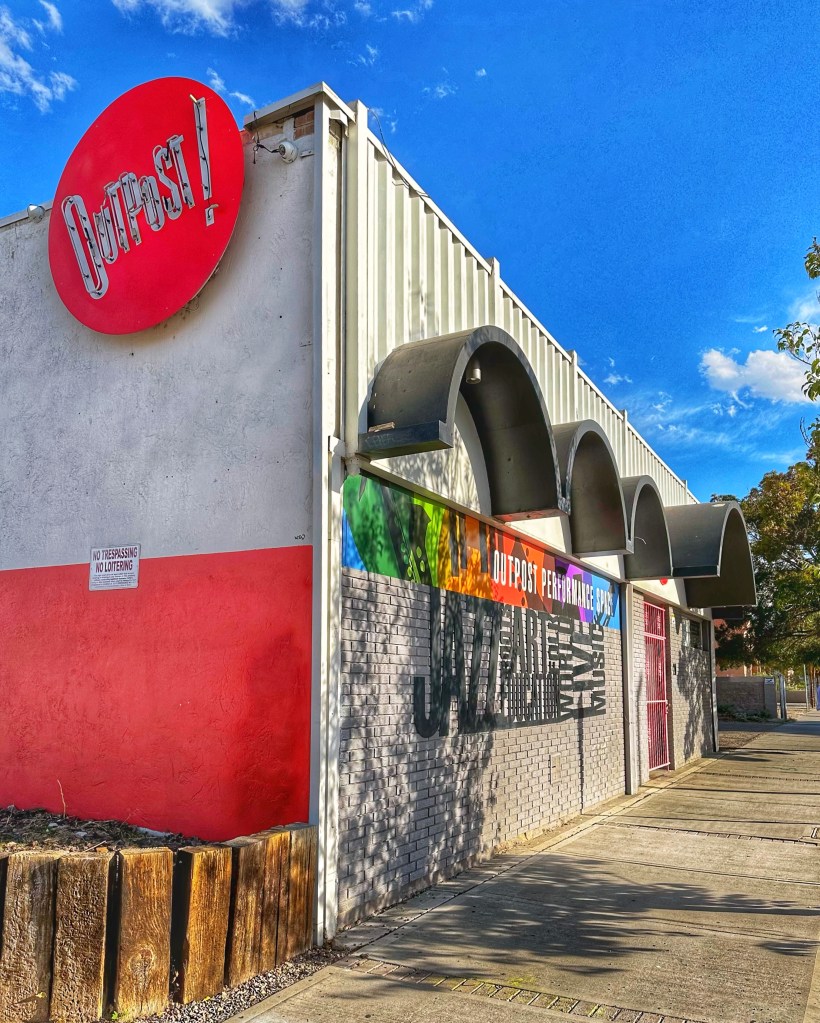
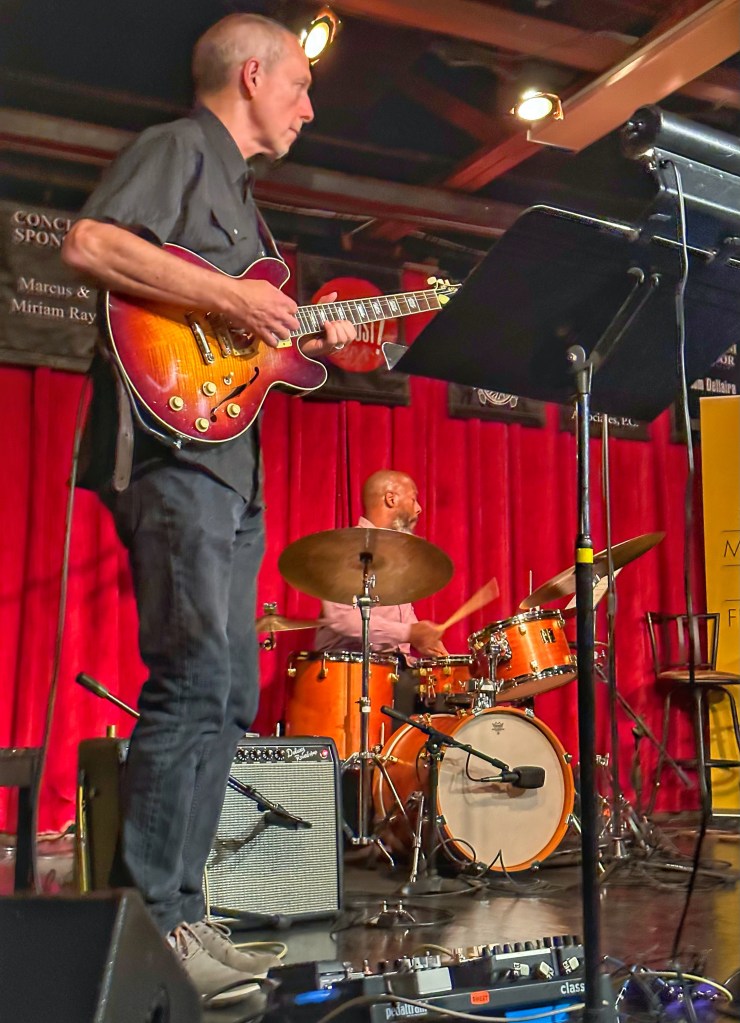
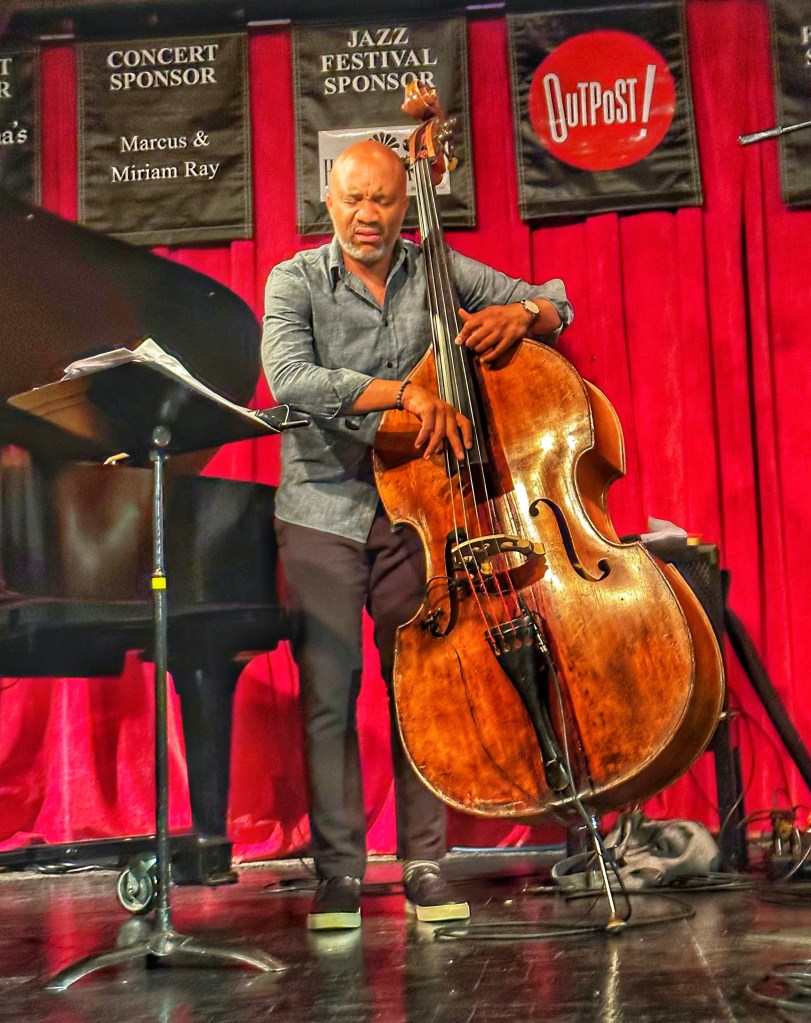
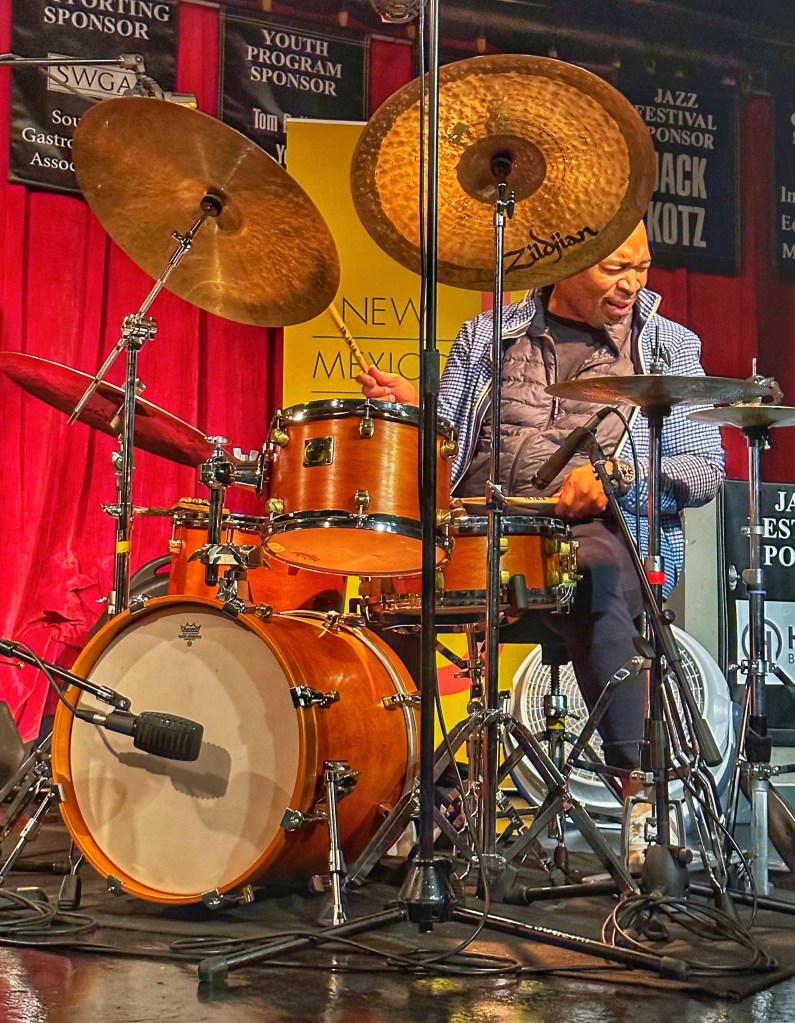
Albuquerque is about a 1 hour drive south from where we are set up. We had tickets to two performances at the Outpost that were part of the New Mexico Jazz Festival.
The Outpost is a nonprofit organization that hosts an intimate performance space. We saw Joel Harrison’s Anthem of Unity project and the Aaron Goldberg Trio.
Joel Harrison and EJ StricklandAaron Goldberg Reuben RogersEric Harland
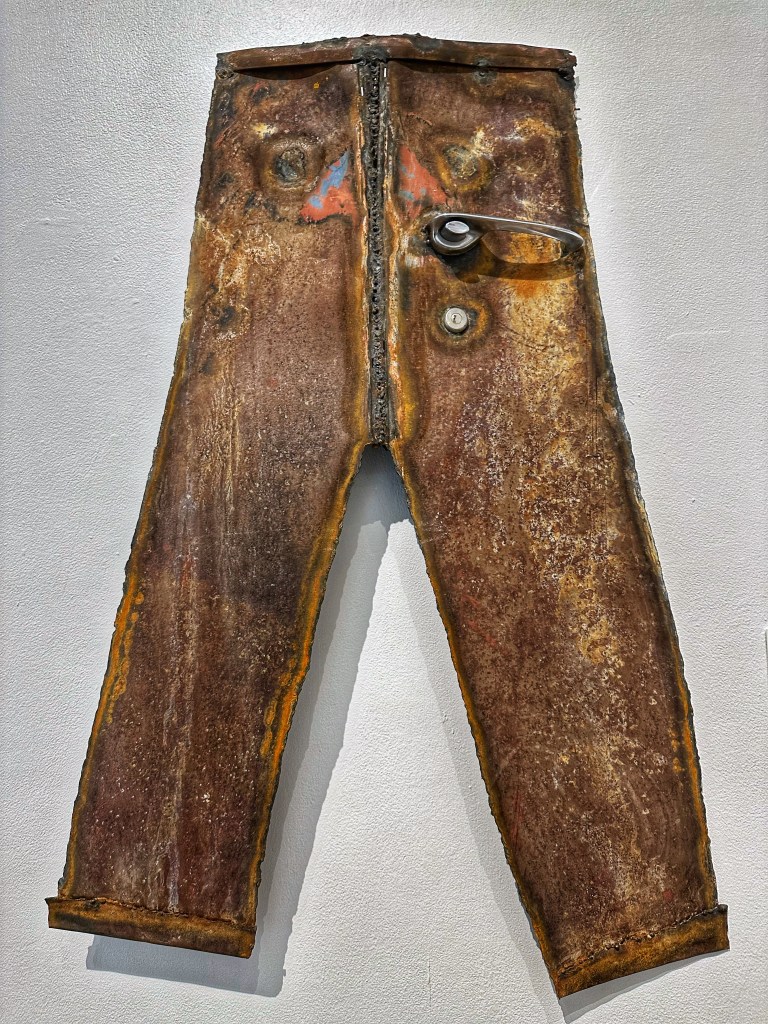
We arrived in Albuquerque early in the day to visit the The National Hispanic Cultural Center. The Center’s mission is to promote the work of Hispanic artists from around the world. The work was varied and very good.
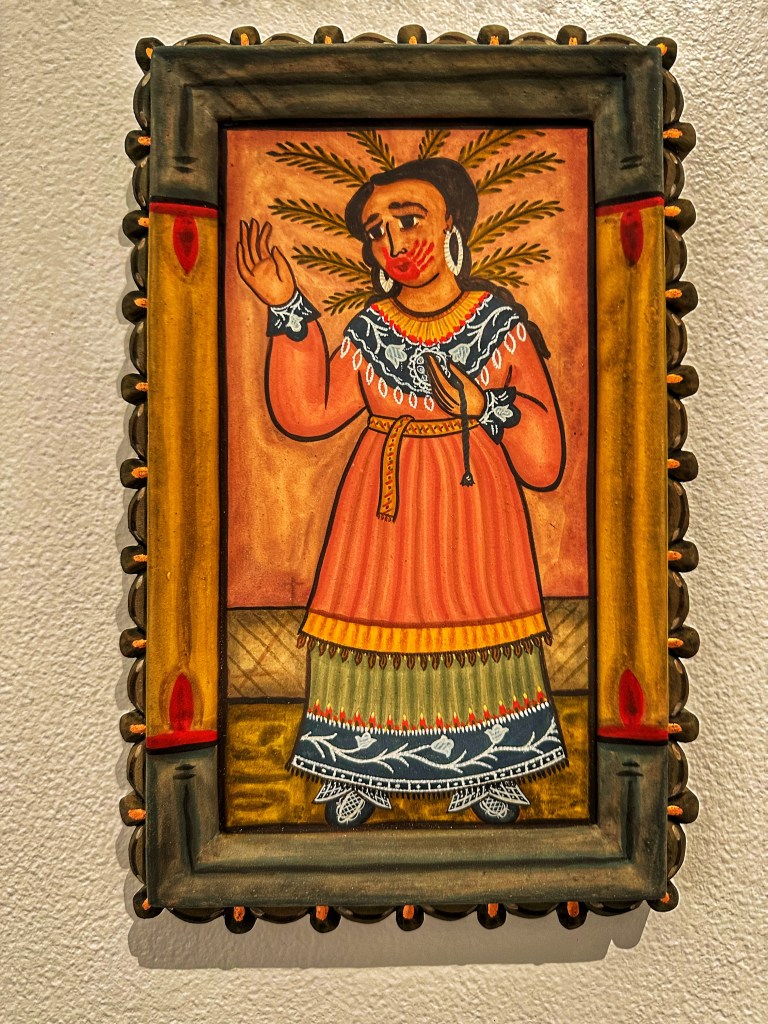
Pants, from Percha Series, 2014 by Nicholas HerreraSanta Katerina, 2019 by Vicente Telles A Slice of American Pie, 2008 by Luis Tapia
We had fun wandering the Center’s extensive campus.
Before our show we wandered over to Central Avenue (Historic Route 66) to take in the sites and grab a bite to eat.
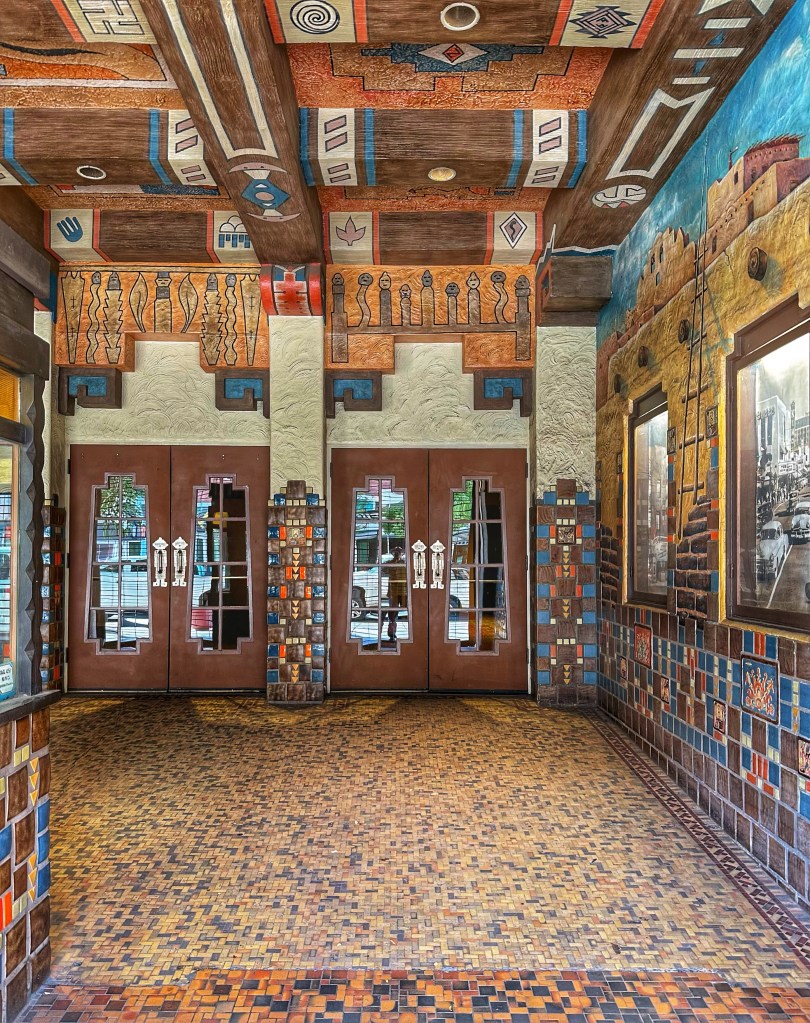
The entry to the Kimo Building built in 1927
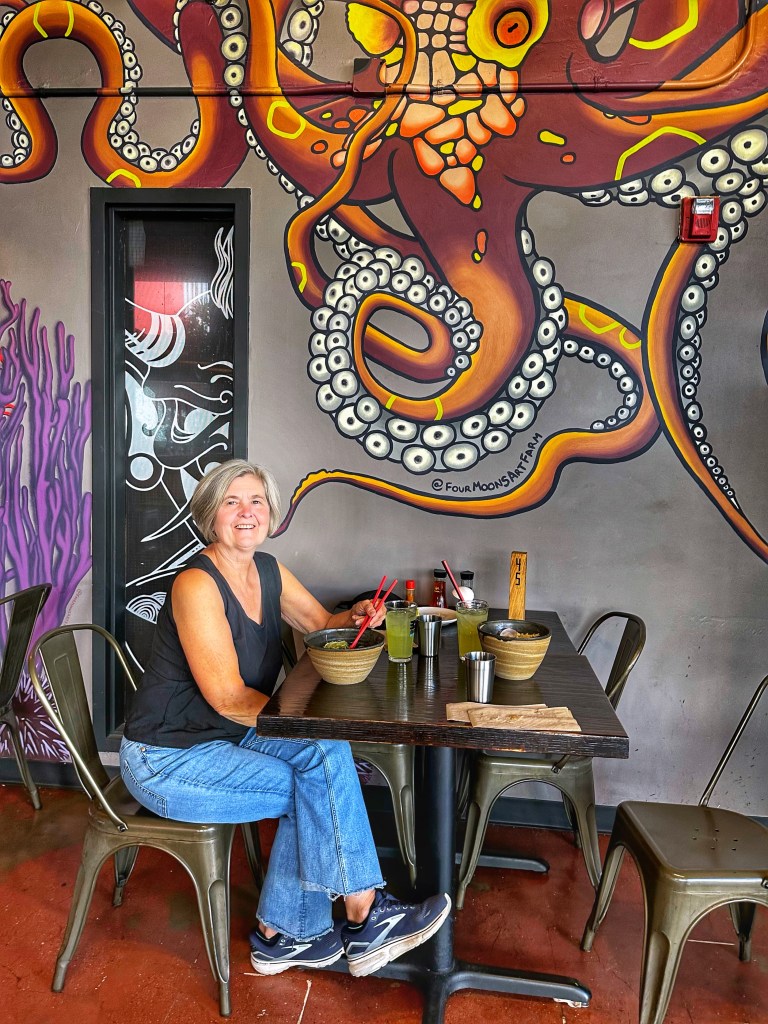
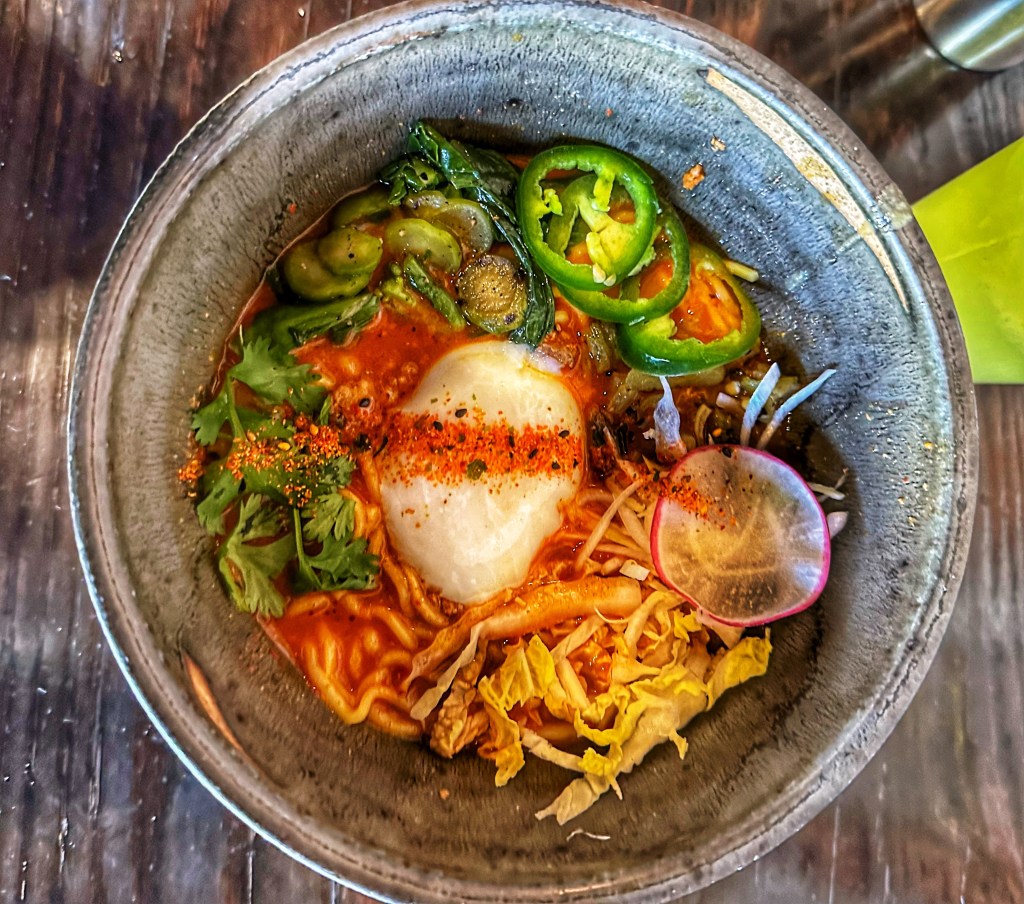
For dinner we settled on Oni, a ramen shop near the Kimo Building.
Green Chili Ramen, only in New Mexico
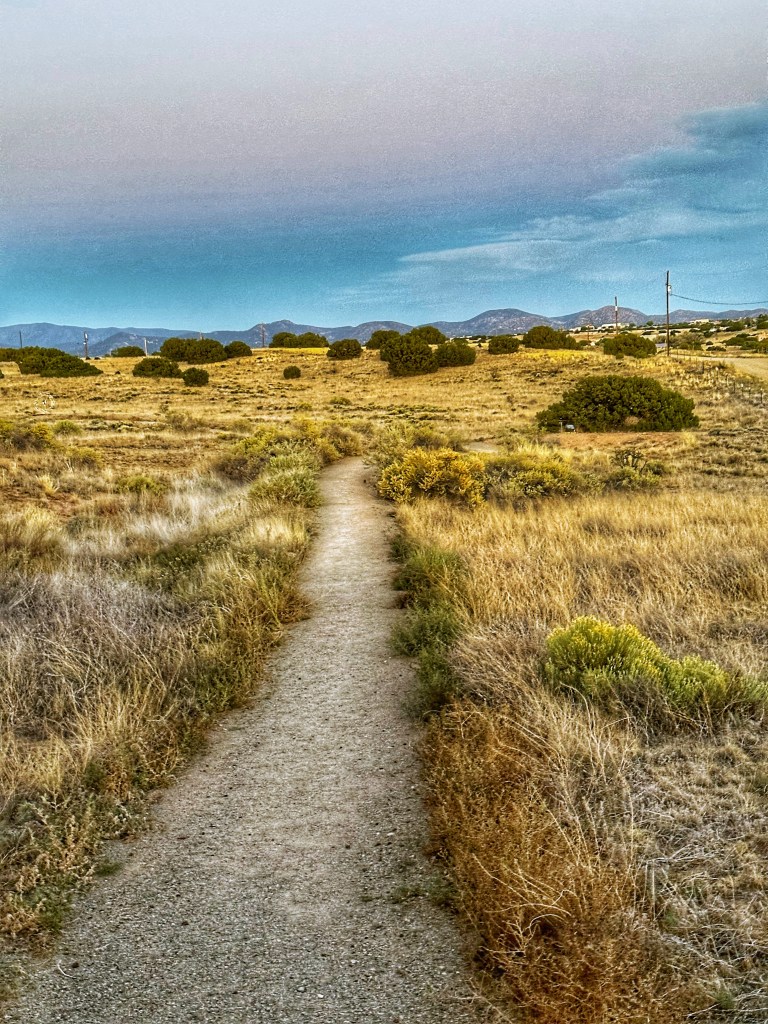
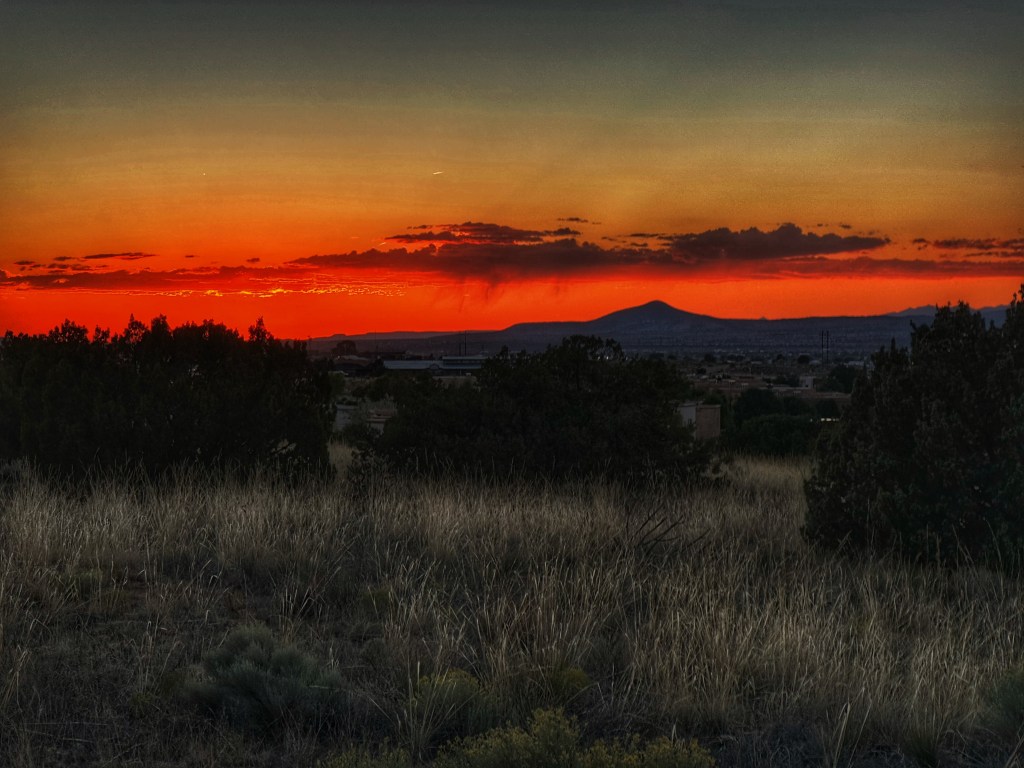
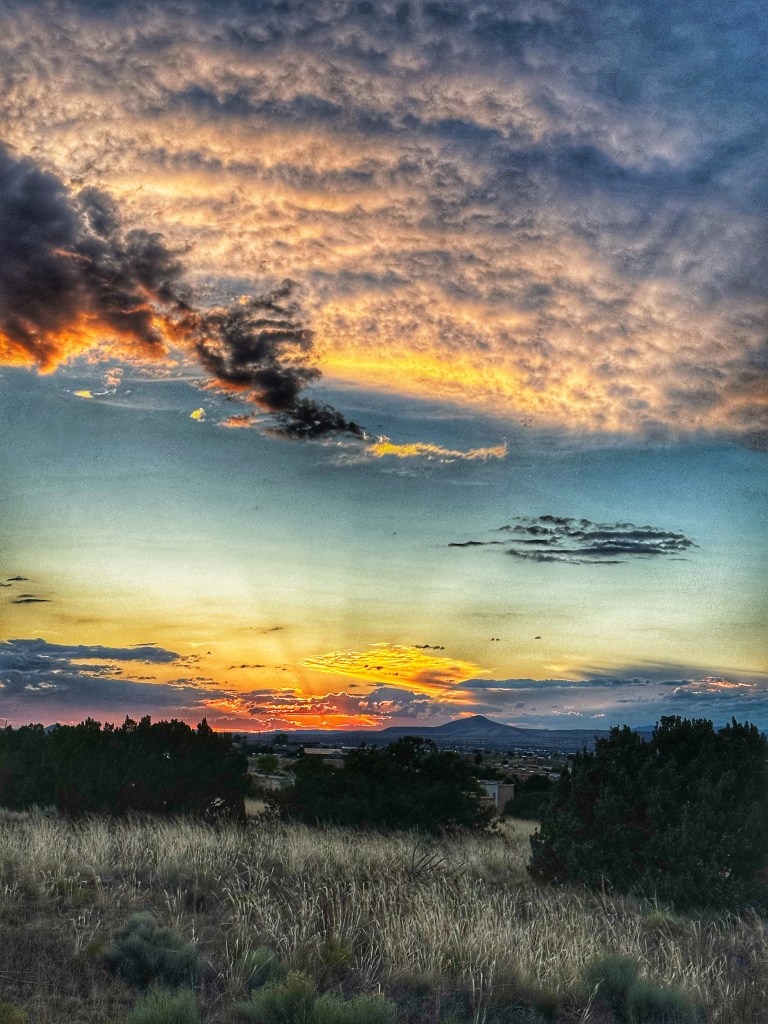
Santa Fe RV Park has a .75 mile walking path around the park. It’s a perfect route to see the always amazing Santa Fe sunsets.
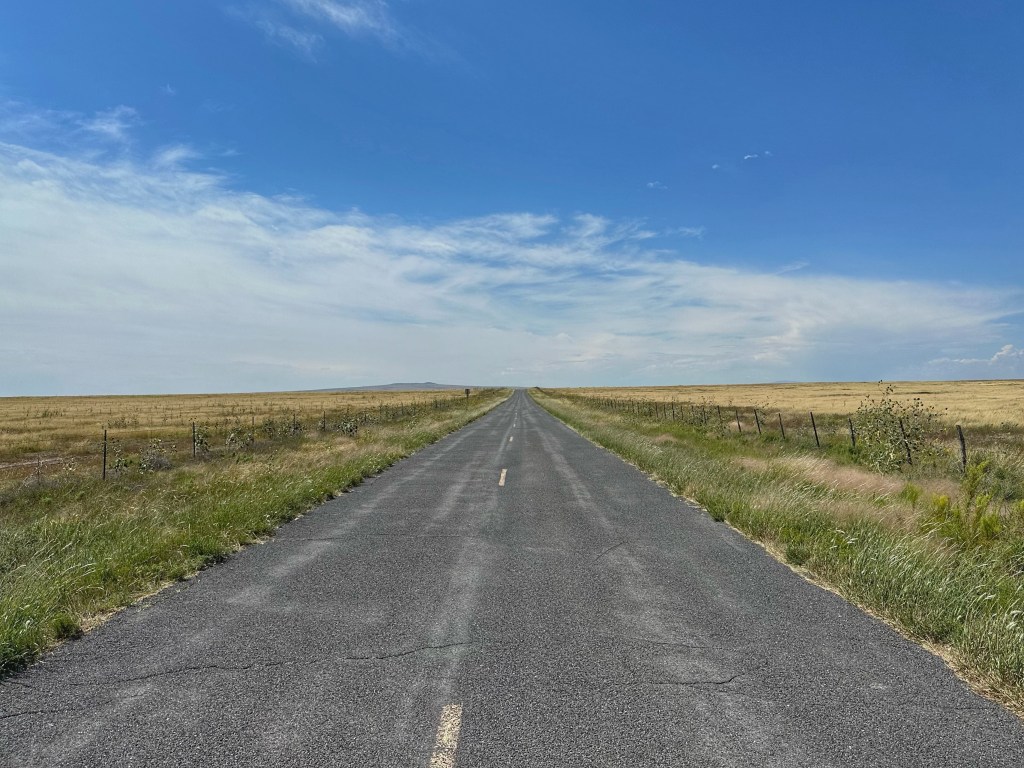
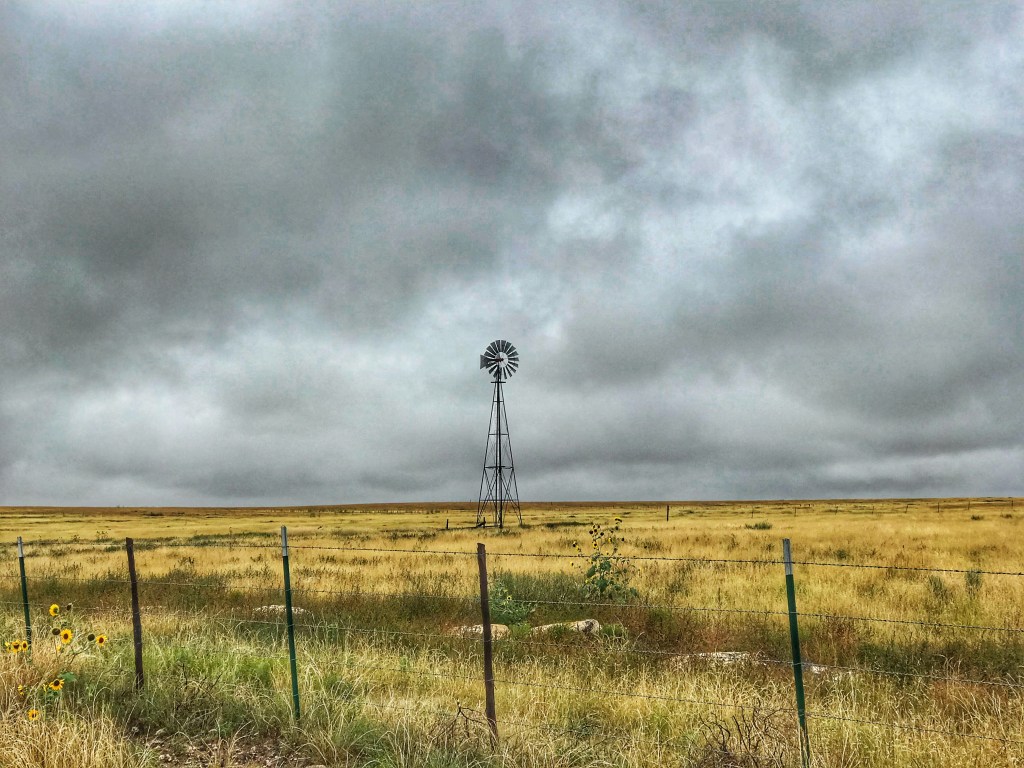
We drove west from Kansas City to New Mexico. Our route took us through the panhandle of Oklahoma, a part of the country we’ve never visited.
US Route 56
This part of Oklahoma has an interesting history. The panhandle was originally part of Texas. Texas became a state in 1845 and joined the United States as a slave state. However, the Missouri Compromise of 1820 forbade slavery north of the 36 1/2th parallel. In 1854 the Kansas-Nebraska Act created Kansas and used the 37th parallel as the border. This 37 mile gap became the panhandle. It was officially known as “Public Land Strip “ and popularly known as “No Man’s Land”. As you might expect it was a lawless and violent place. It remained that way for four decades until it became part of Oklahoma.
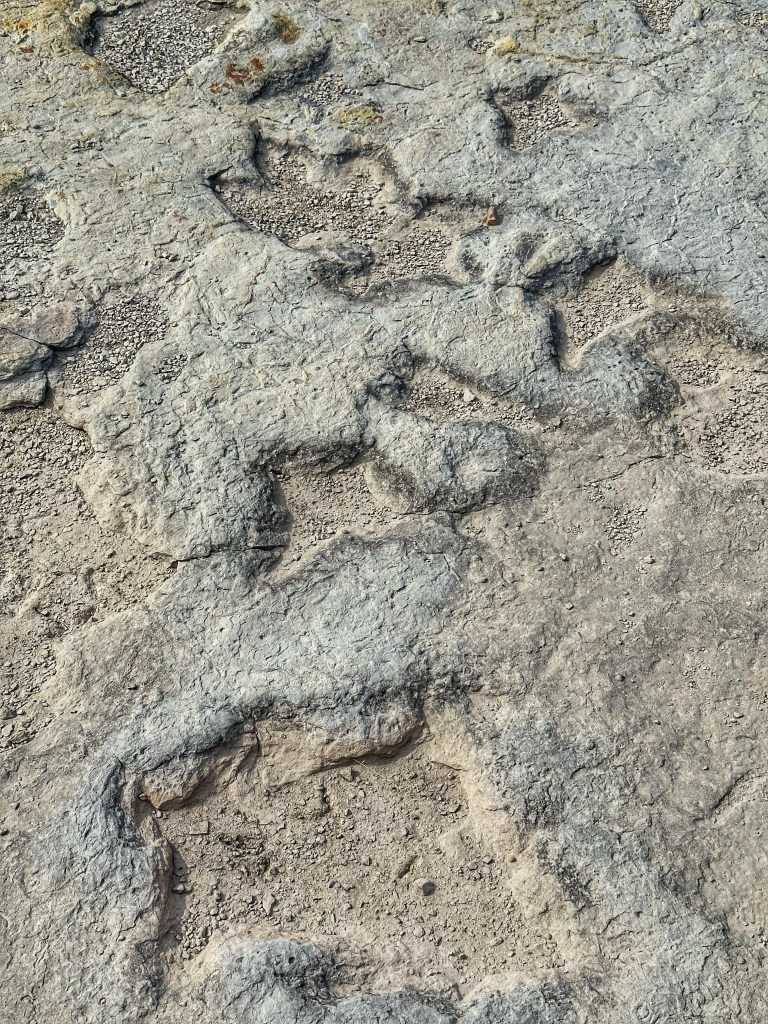
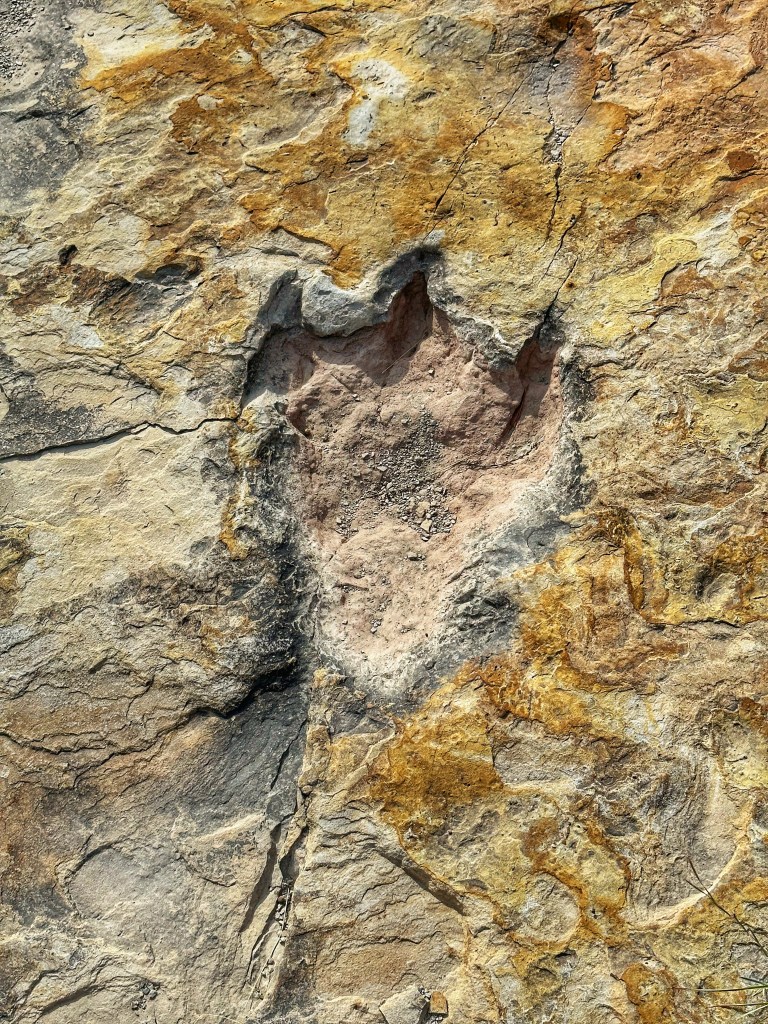
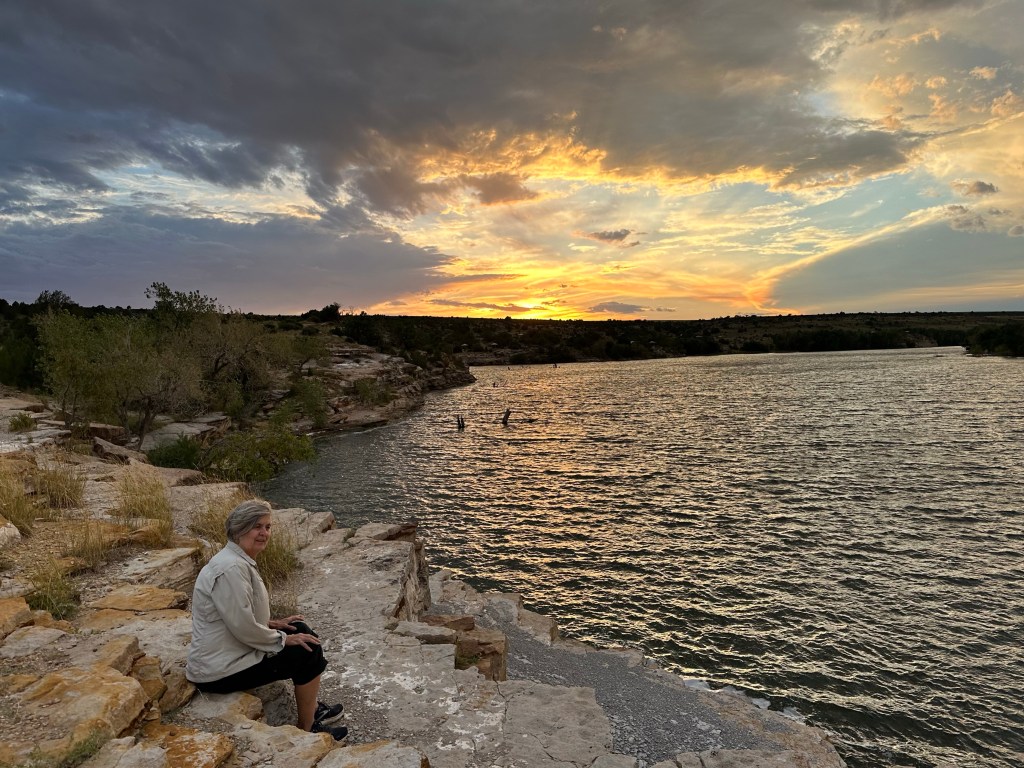
We entered New Mexico in the northeast corner of the state on the hunt for dinosaur tracks. Clayton Lake State Park is the site of a trove of fossilized dinosaur tracks.
Site E 1
In 1955 the state of New Mexico dammed up Seneca Creek to create Clayton Lake. Layers of basalt and shale were blasted away to create an emergency spillway and exposed the underlying sandstone. In 1982 the lake overflowed into the spillway and removed the last few inches of sandstone exposing the dinosaur tracks.
This was our first visit to this corner of New Mexico and hopefully not our last. There’s a lot more to explore.
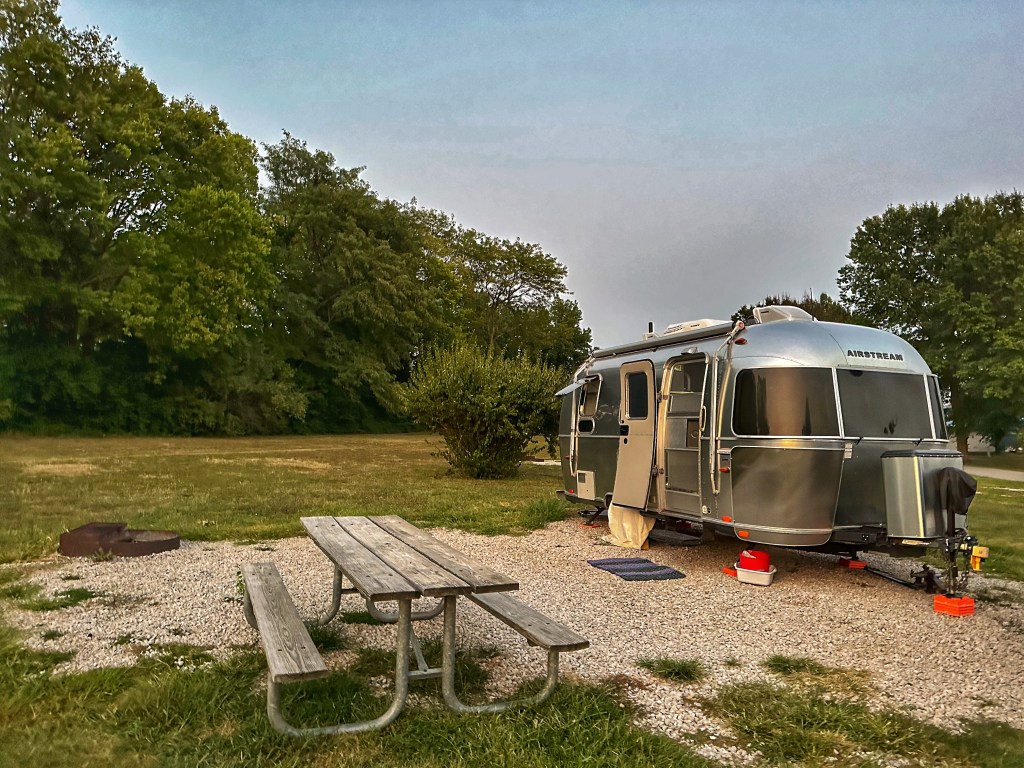
New Mexico is known as the Land of Enchantment. From our first visit to the state in 2011 we were smitten by its charms. We are particularly “enchanted” with the high desert in and around Santa Fe. The landscape, cuisine and architecture all add to its appeal. We set up camp at Santa Fe Skies RV Park. This well run park is a 20 minute drive to the historic Santa Fe Plaza.
Yucca-D
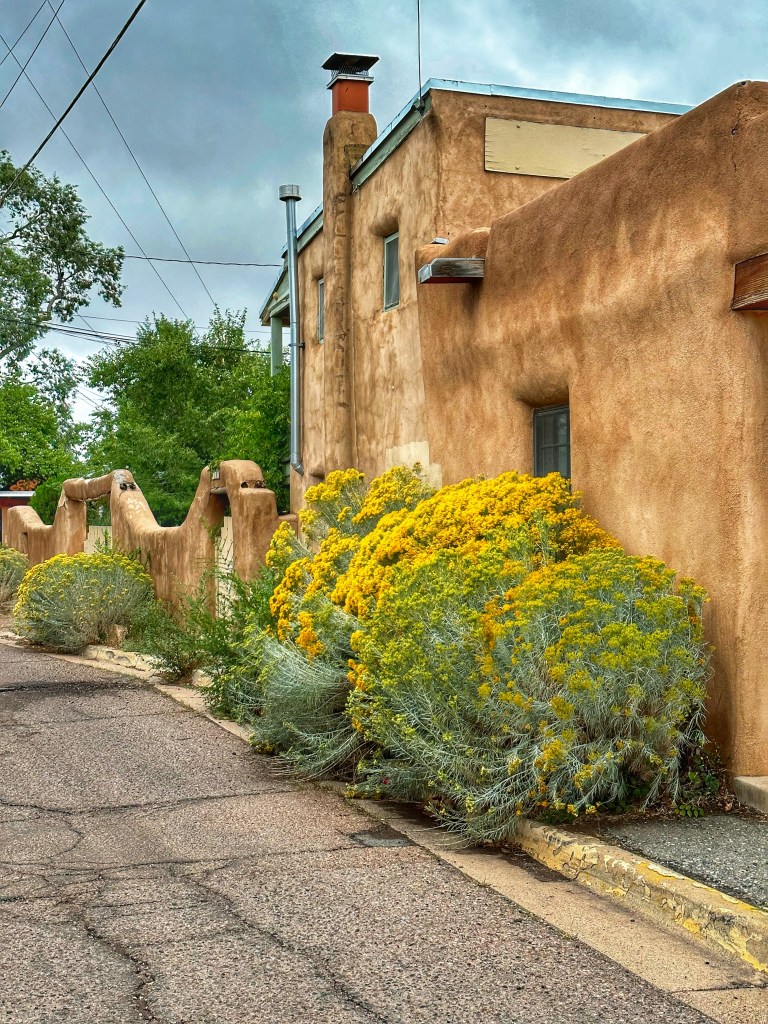
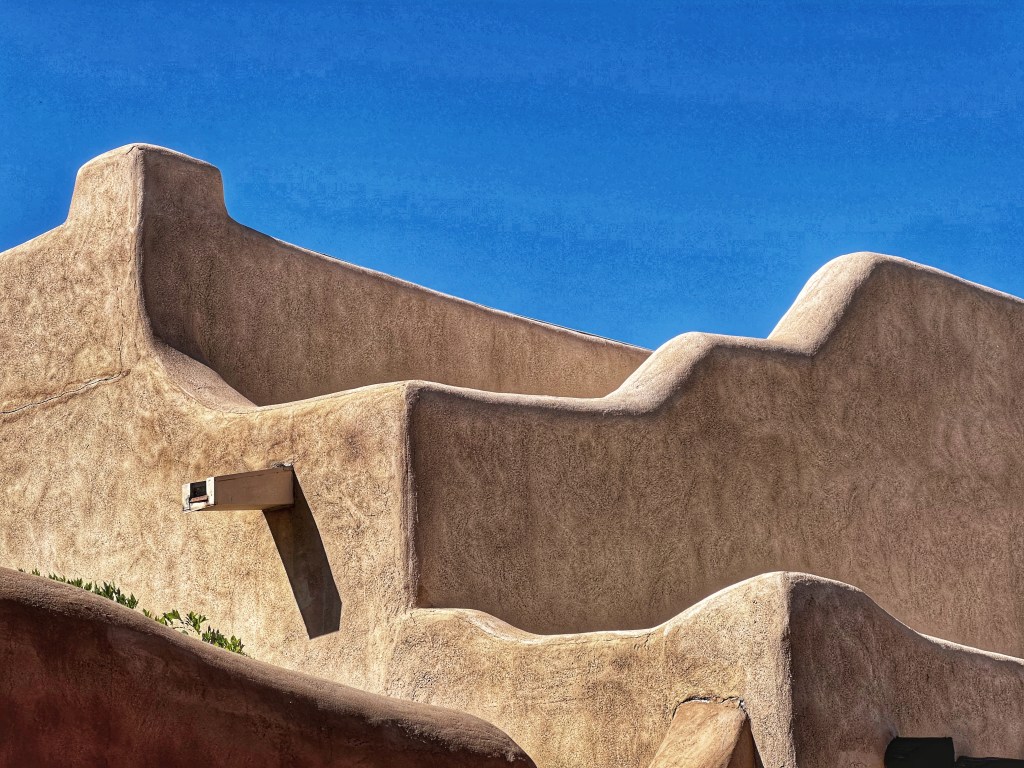
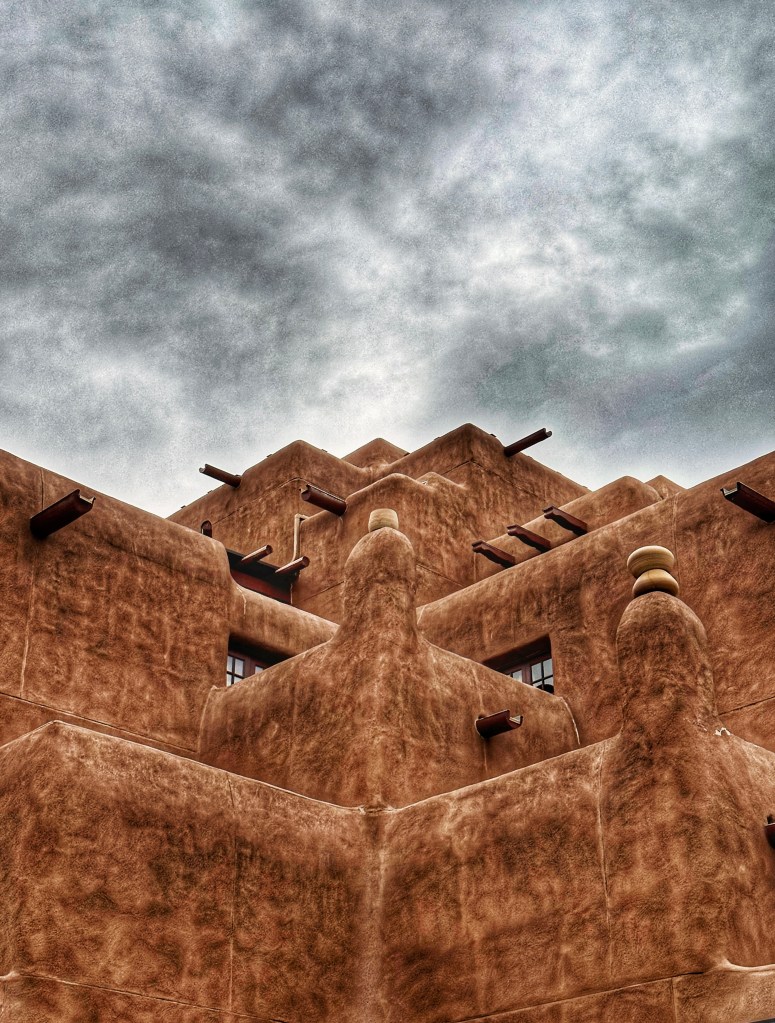
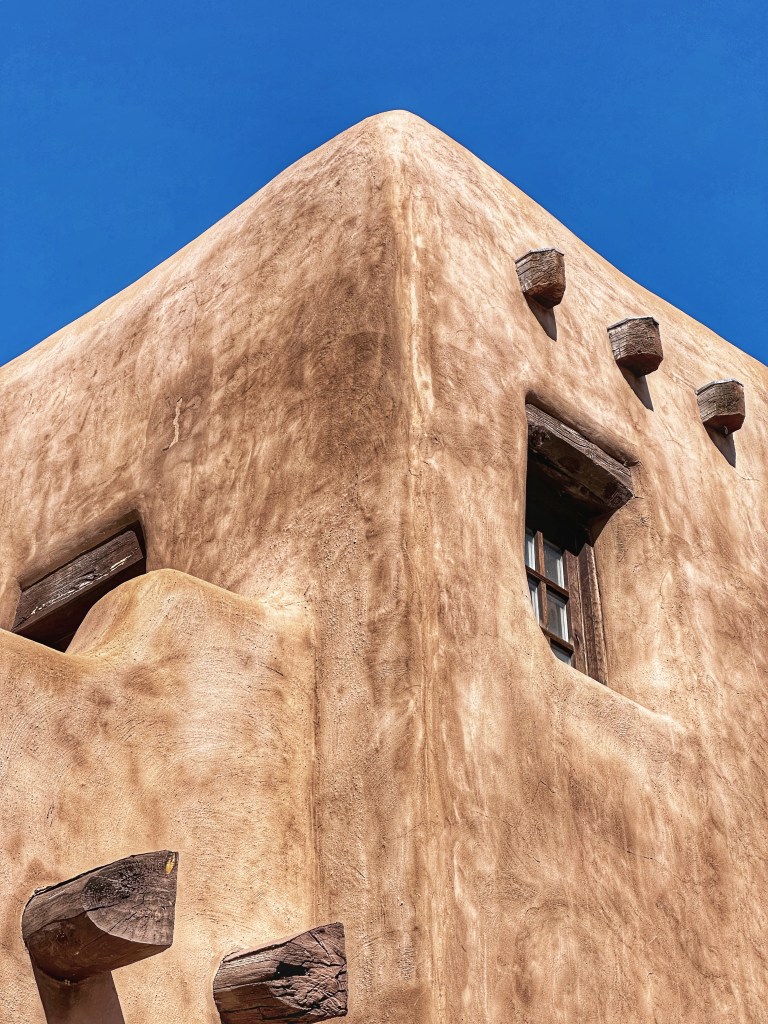
The area around the Santa Fe Plaza is a lovely mix of old and new adobe architecture.
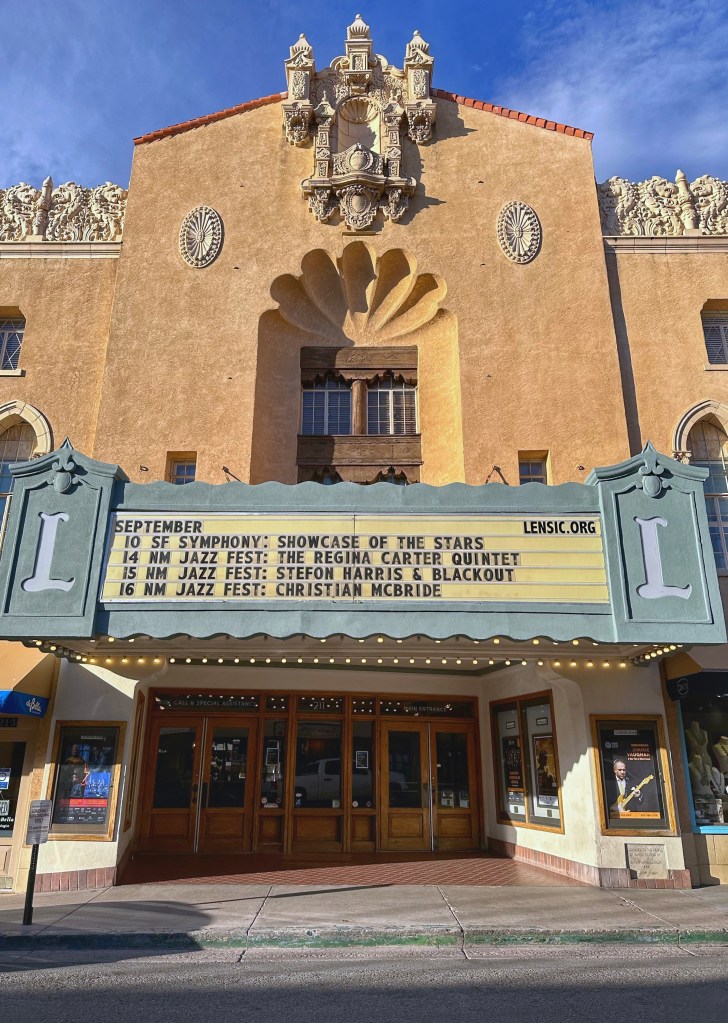
Close to the Plaza is the Lensic Theater, a “Spanish-Moorish” style theater built in 1931. In the 1990’s the theater closed for renovations and re-launched in 2001 after a multi million dollar renovation. It hosted this year‘s New Mexico Jazz Festival where we attended two wonderful performances.
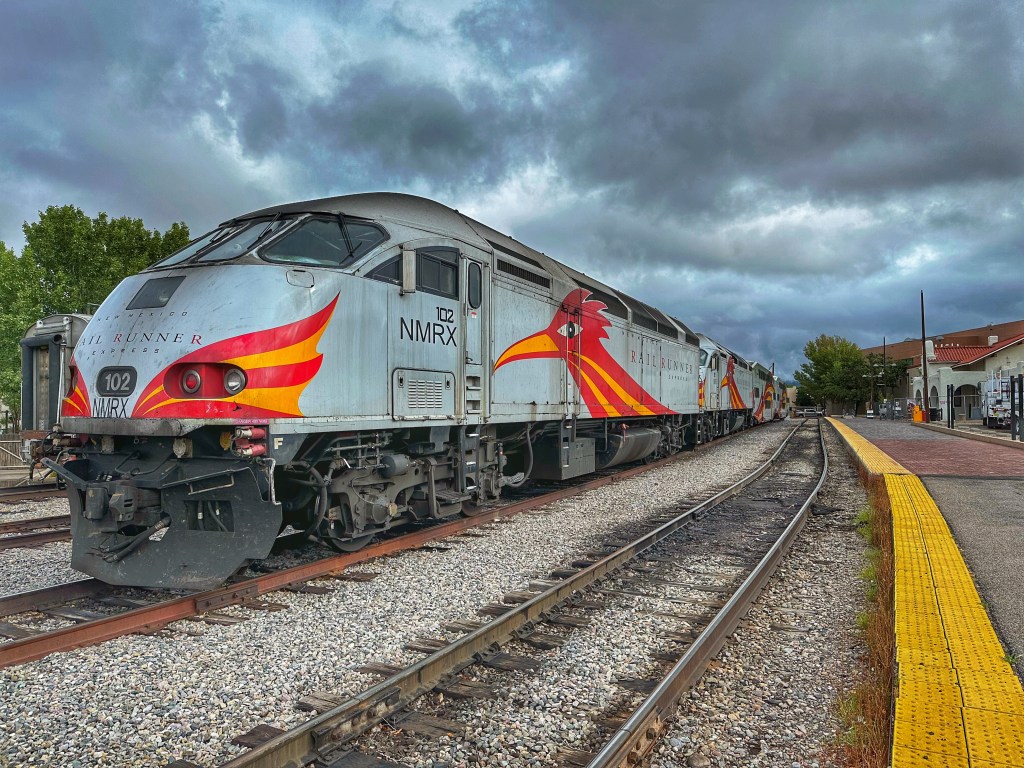
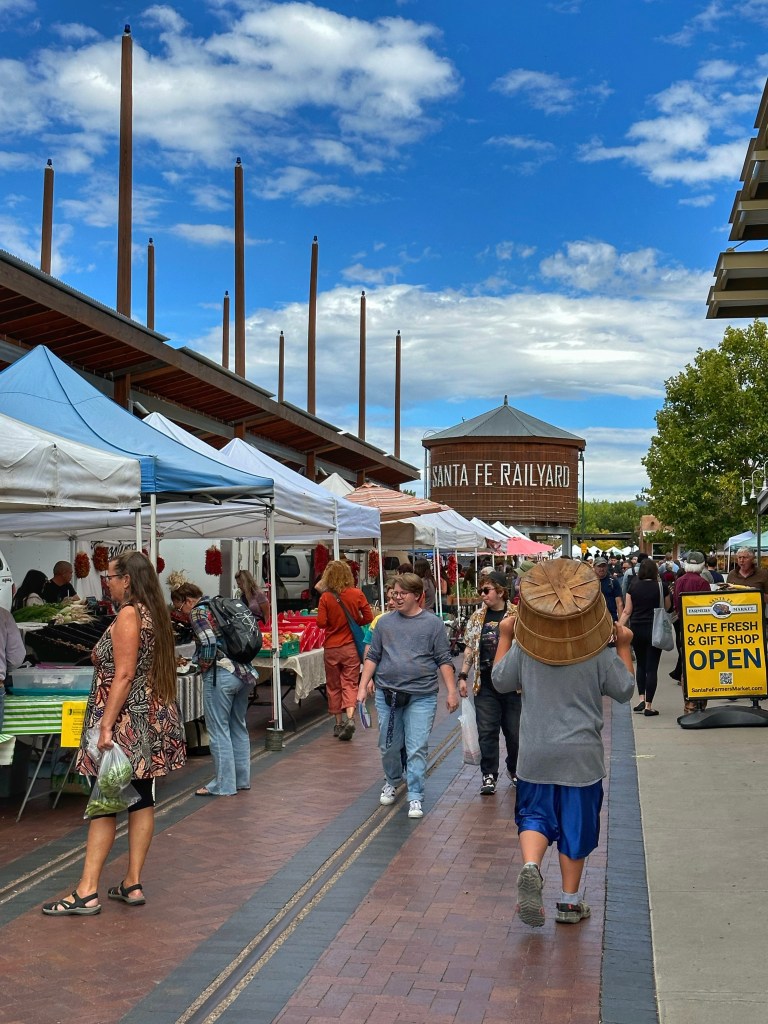
Not far from the Plaza is the Railyard District where a popular farmer’s market convenes twice a week.
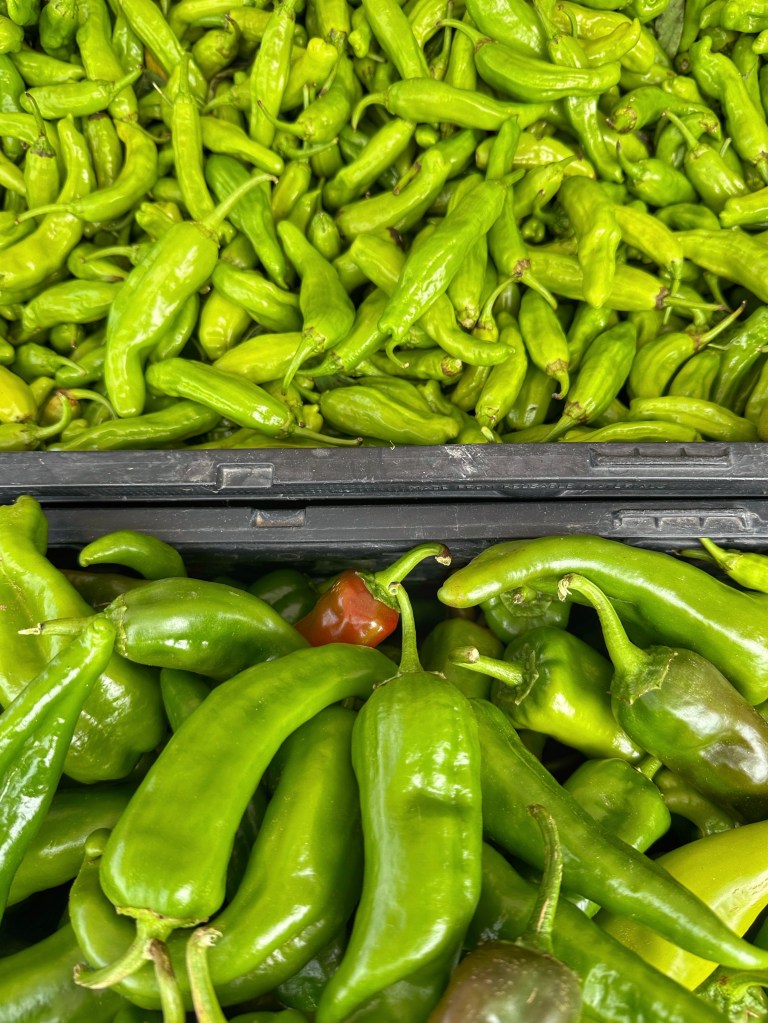
We love shopping the farmers market in the fall during chili pepper season. Nothing better then a New Mexican green chili.
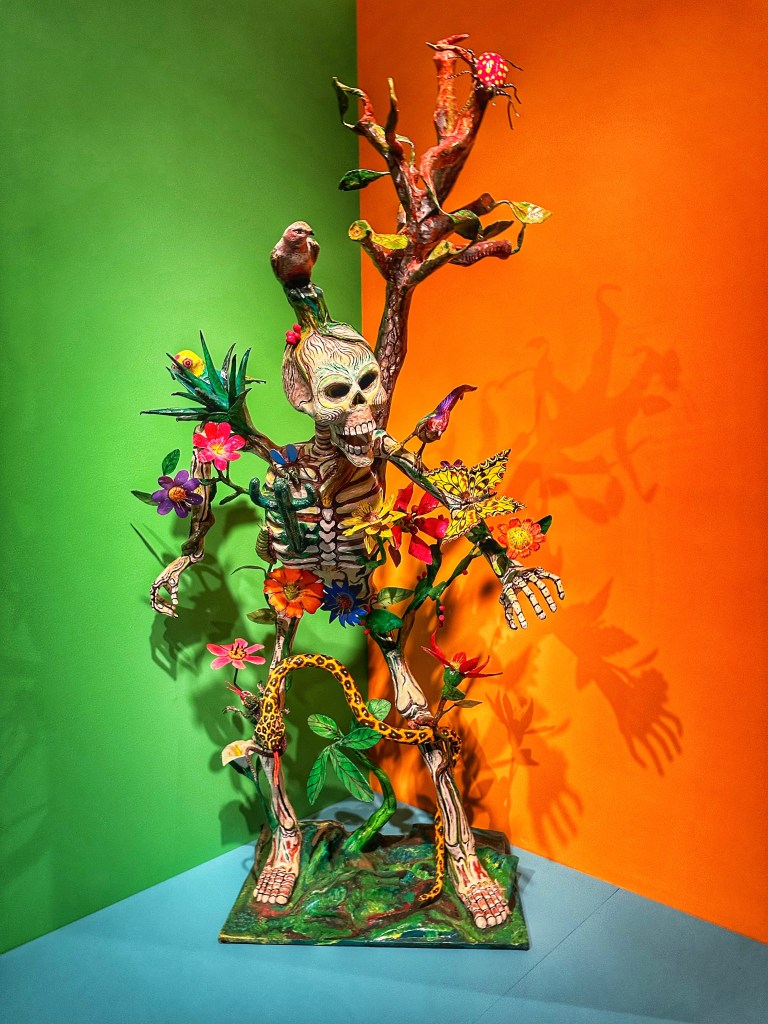
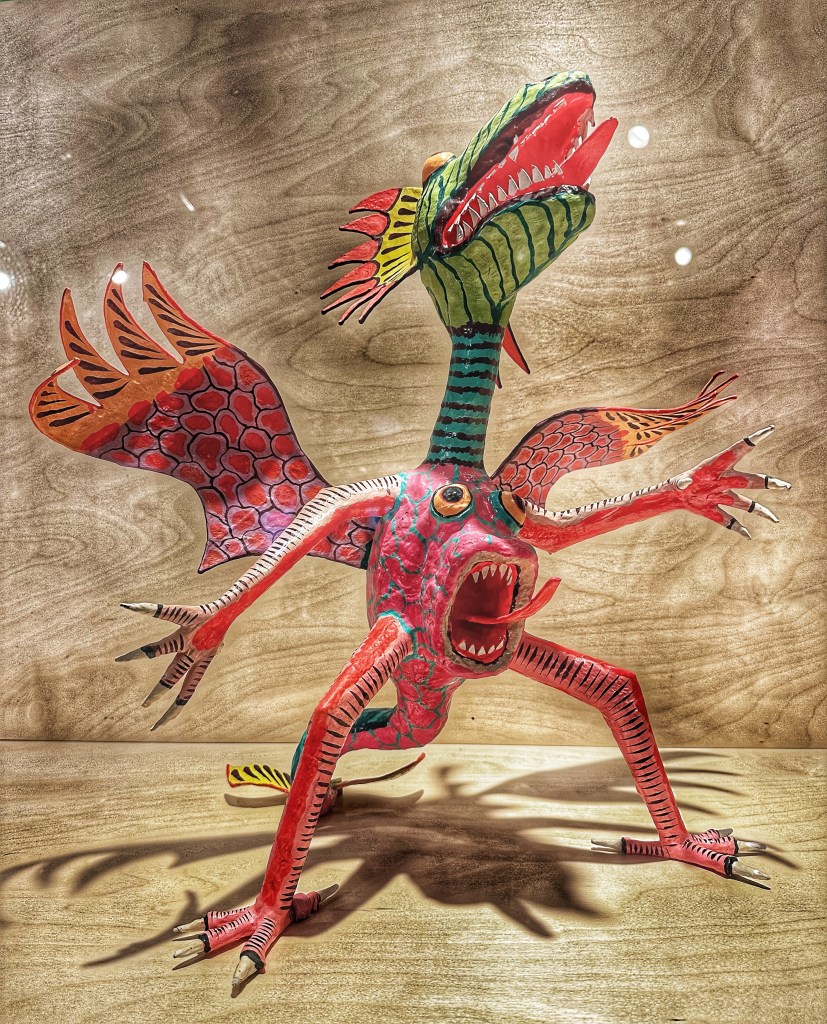
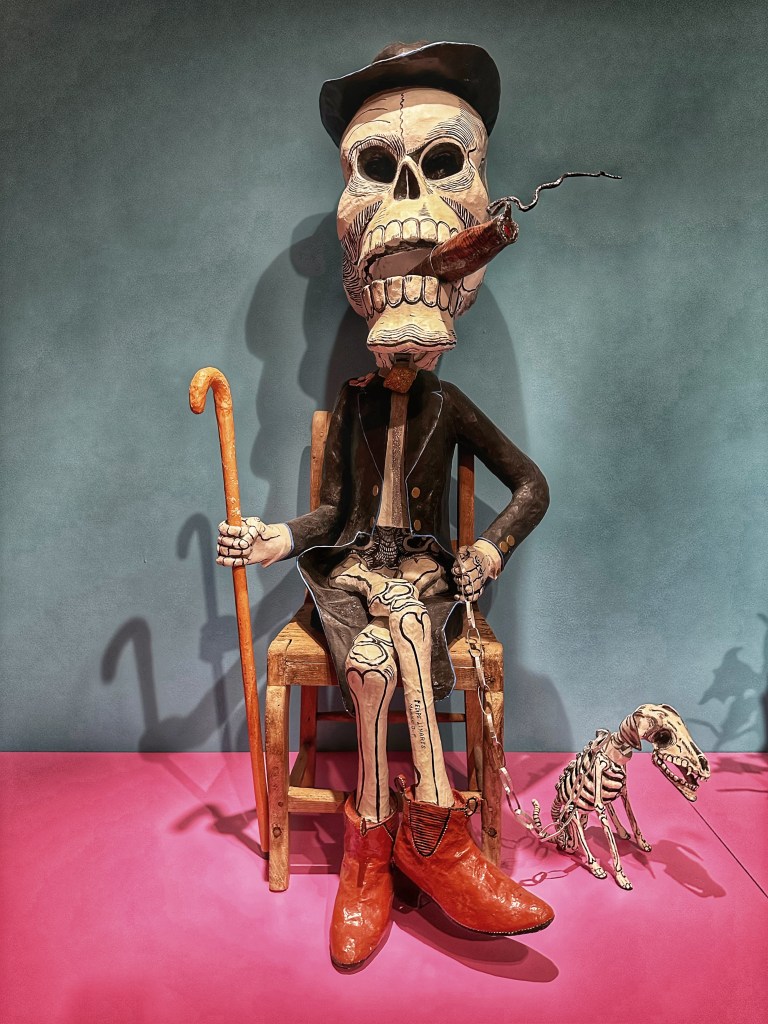
Santa Fe is a city steeped in art. Civic and private art galleries dot the city. On the east side of the city is an area known as Museum Hill. This is where you will find the International Museum of Folk Art and the Museum of Indian Arts and Culture among others. The Folk Art Museum was featuring an exhibit of Mexican Cartoneria. This work is created using paper and paste, papier-mâché. The technique is thought to have come to Mexico with the Catholic priests from Spain.
Yes! Papier-mâché
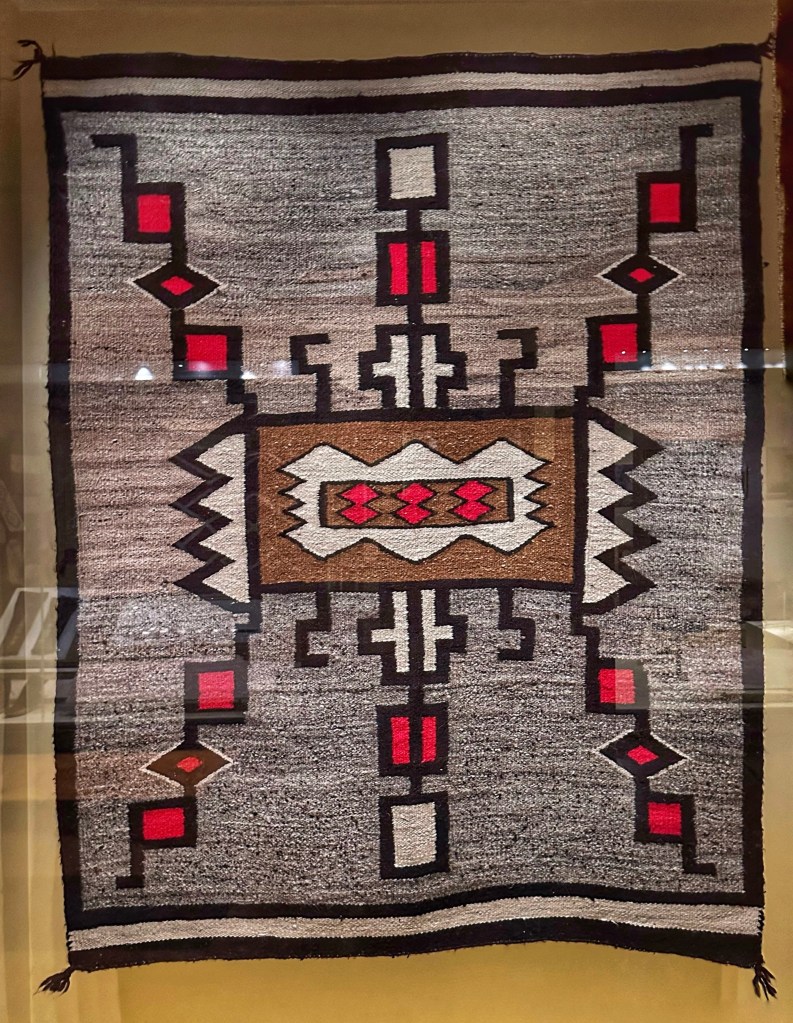
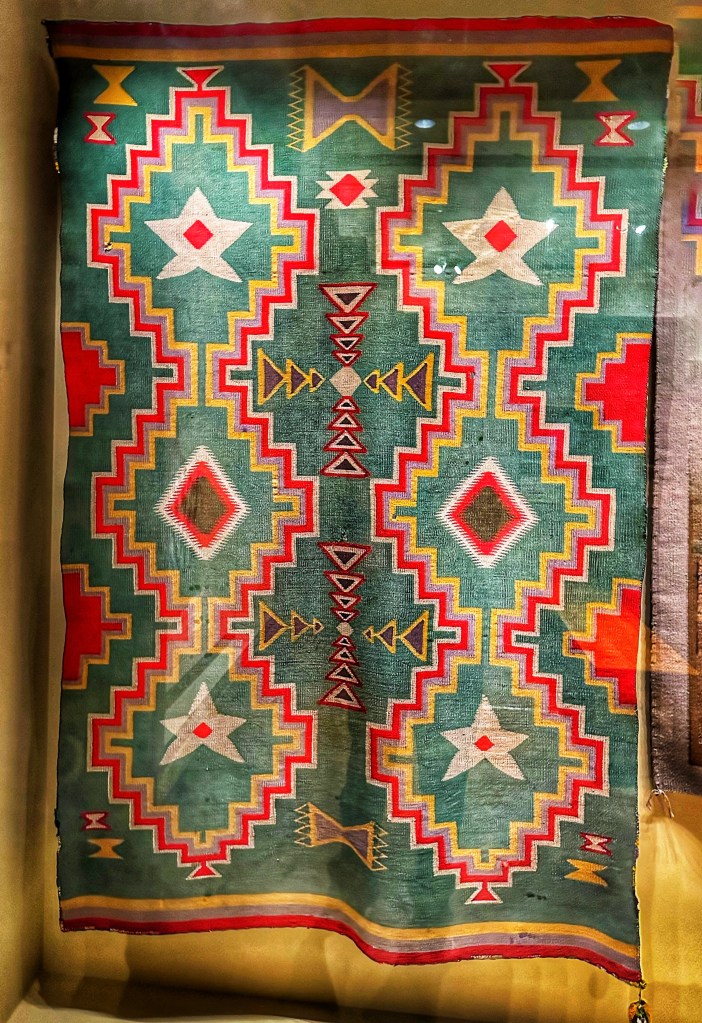
The Museum of Indian Arts and Culture featured antique and new Diné (Navajo) rugs.
Storm Weaving (1936) by a male weaver known as The One Who Weaves
Rug (1880-1897) by an Artist once known
We plan on staying in Santa Fe for almost a month so this will be the first installment of the stay.
We’ve driven through Kansas City, MO a number of times but have never spent any time there. This trip west we decided it was time to spend some time exploring the city and sample some of the city’s famed barbecue.
Site 62
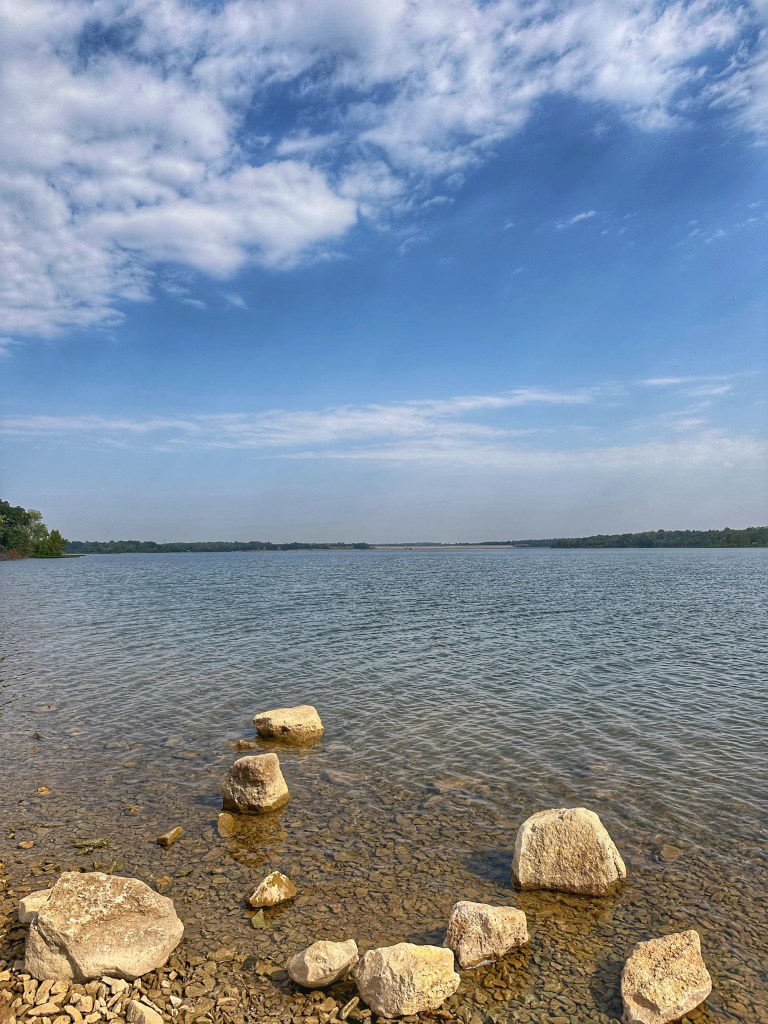
We set up camp south of the city in Longview Lake County Park.
Longview Lake
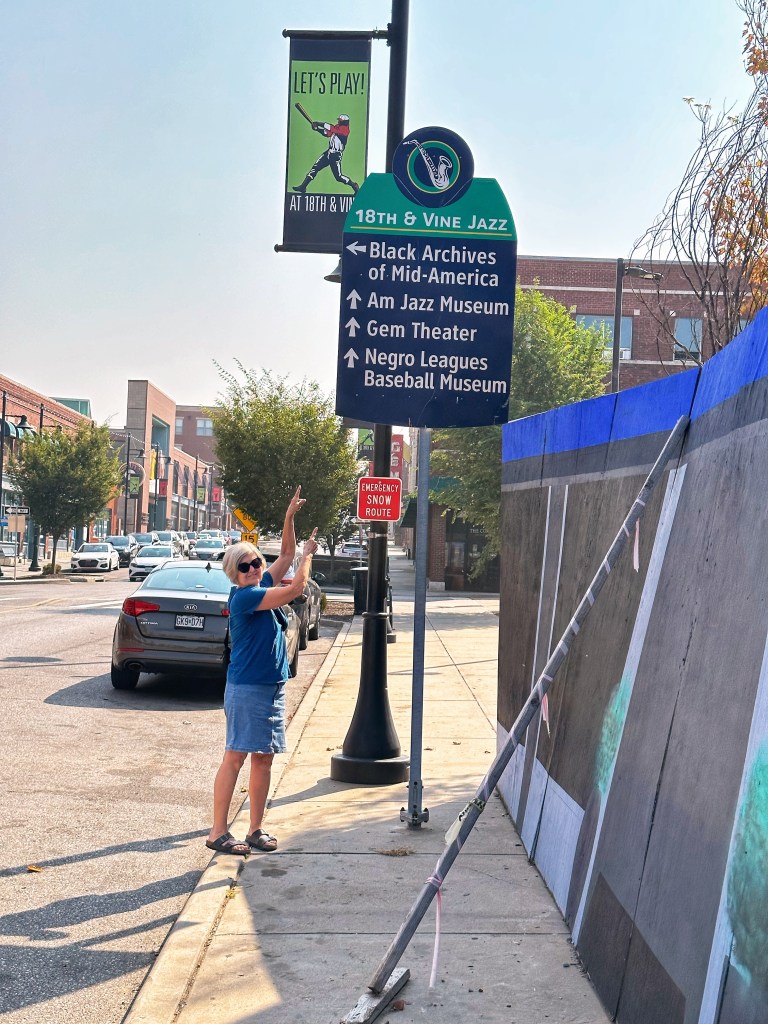
In addition to barbecue we wanted to visit the American Jazz Museum and the Negro Leagues Baseball Museum located in Kansas City’s 18th & Vine entertainment district.
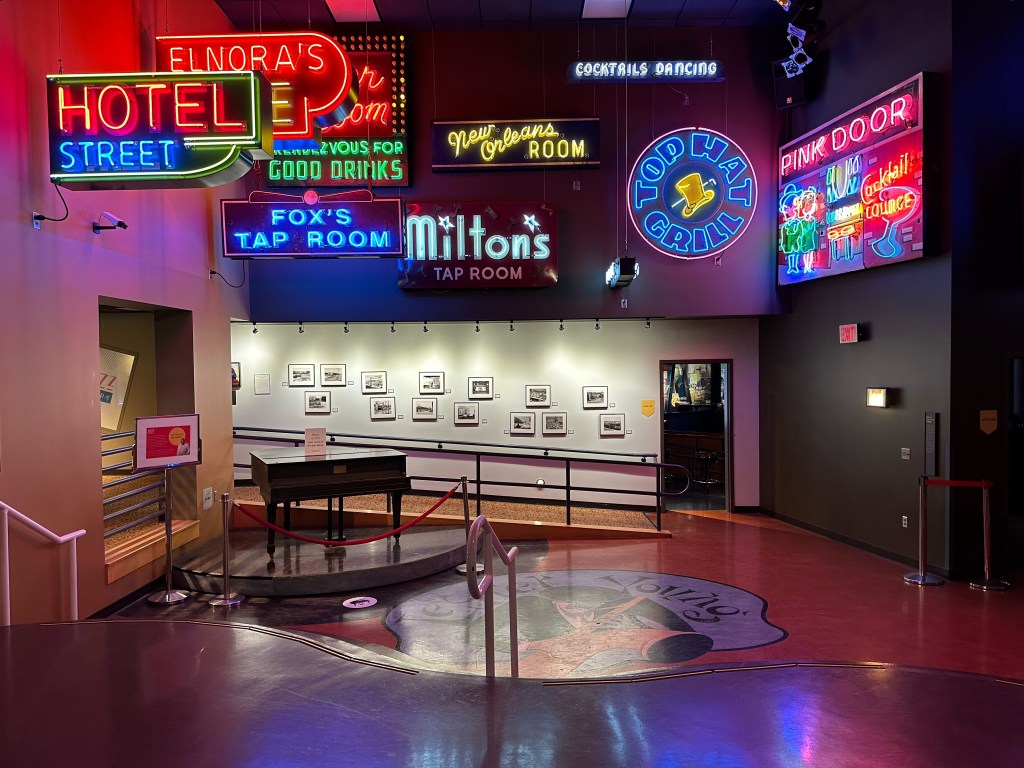
The American Jazz Museum celebrates all things Jazz with a focus on the rich history of the music in Kansas City.
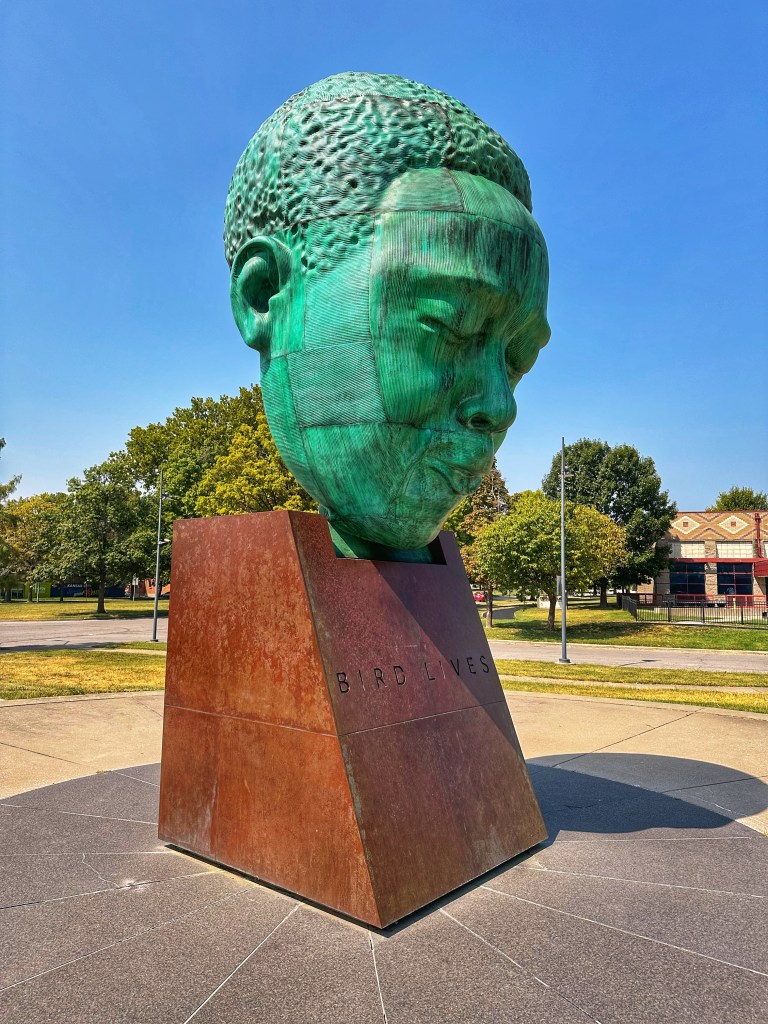
Charlie Parker Plaza at the back of the Jazz Museum
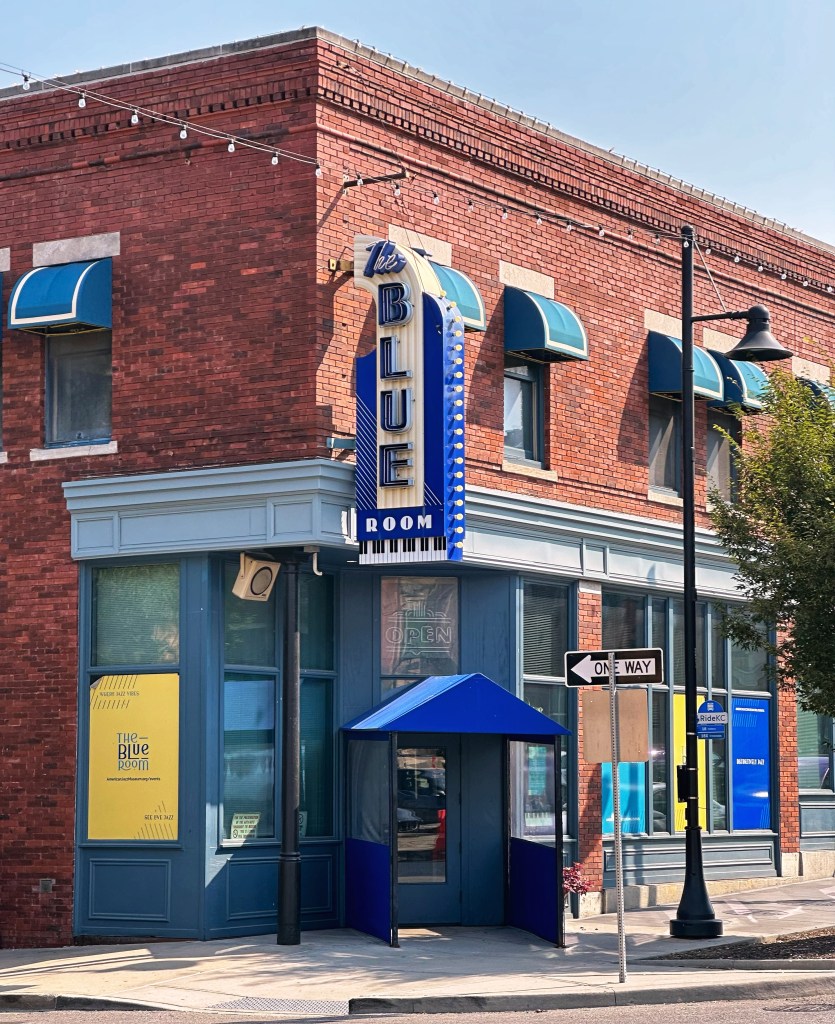
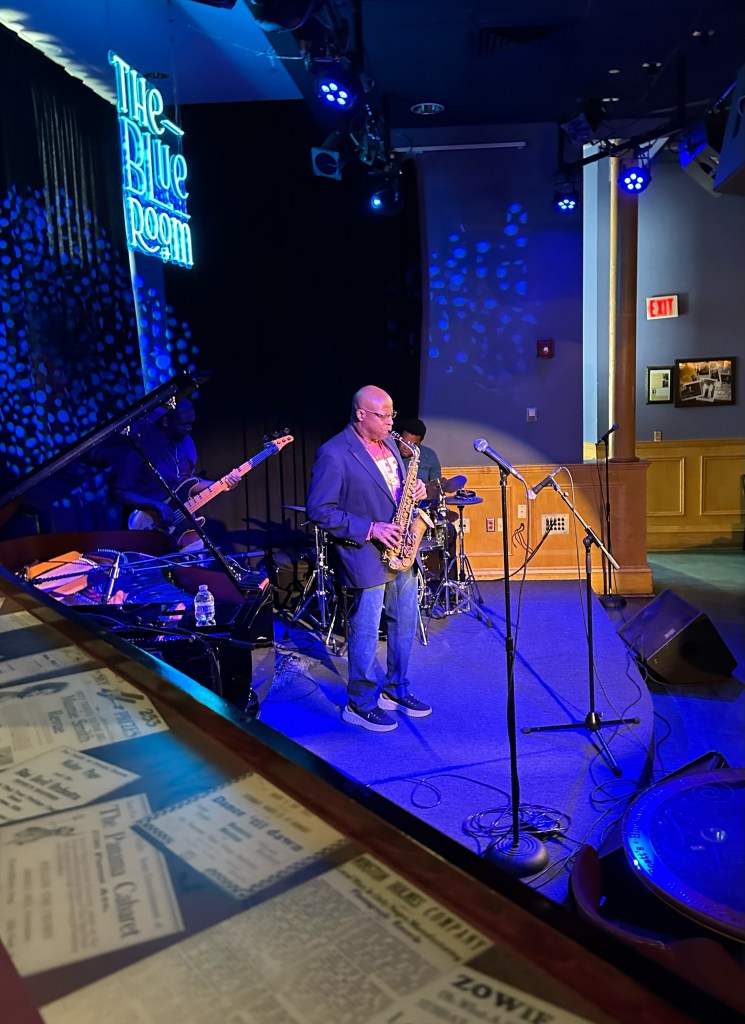
The Blue Room is part of the Jazz Museum and also a functioning Jazz club. Every day at noon a local Kansas City group performs for museum patrons. The day we visited we listened to the Jazz Disciples.
Just outside the Blue Room in the Museum
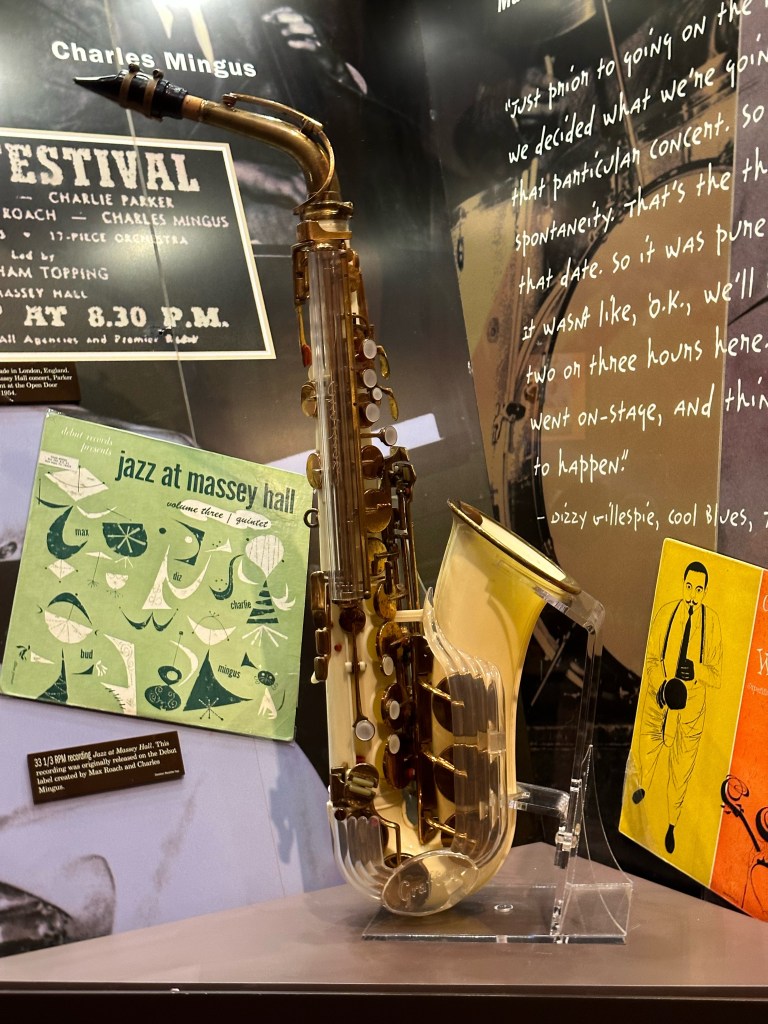
The museum is filled with lots of listening stations and performance footage. Historic artifacts however, were in short supply. They did have a Grafton plastic saxophone like the one Charlie Parker played on the famous Massey Hall recording from 1953.
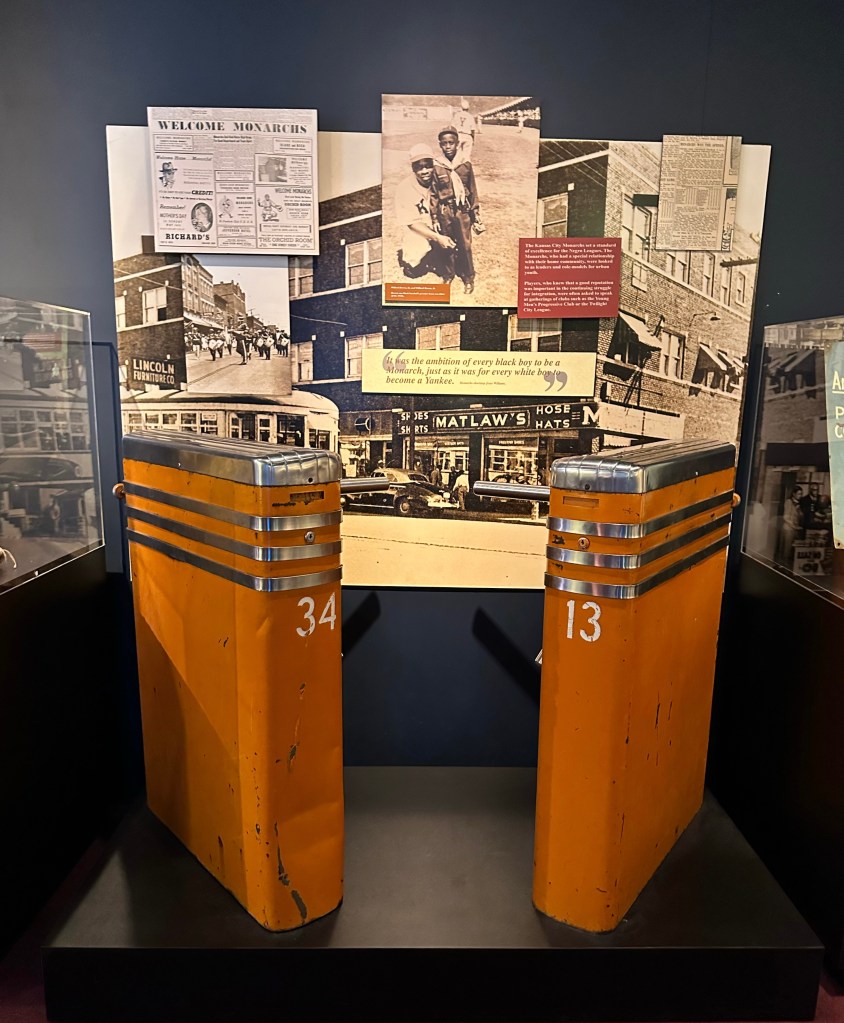
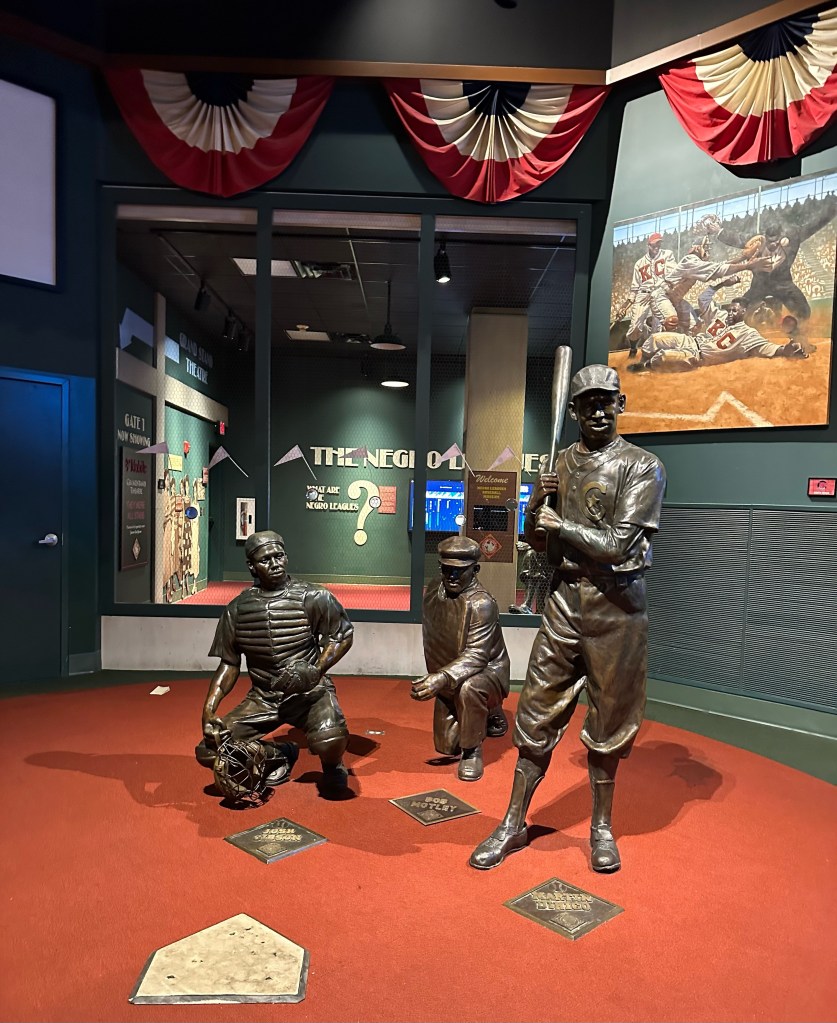
The Negro Leagues Baseball Museum shares the same building as the Jazz Museum. The museum traces the history of the Negro Leagues and celebrates the achievements of its players. The museum juxtaposes that history with United States history which makes for enlightening reading. The museum also features artifacts and interviews of former players.
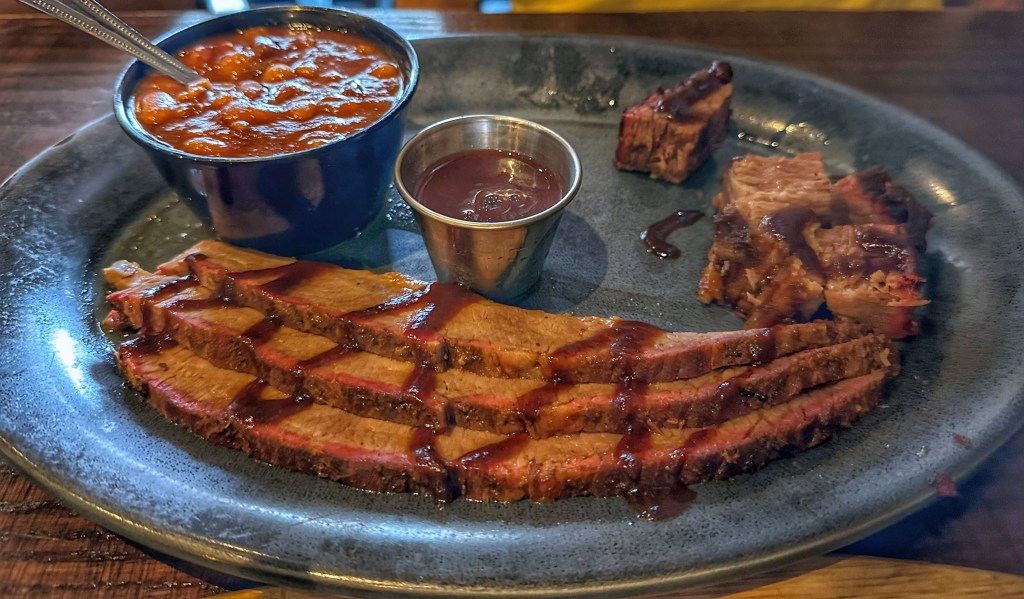
Kansas City is well known for its barbecue. It all comes down to the sauce. KC style sauces are thick and sweet. The recipe usually includes a base made of tomato and molasses. The sauce is cooked into the meat or brushed on immediately after cooking.
Brisket and Burnt Ends with barbecue beans
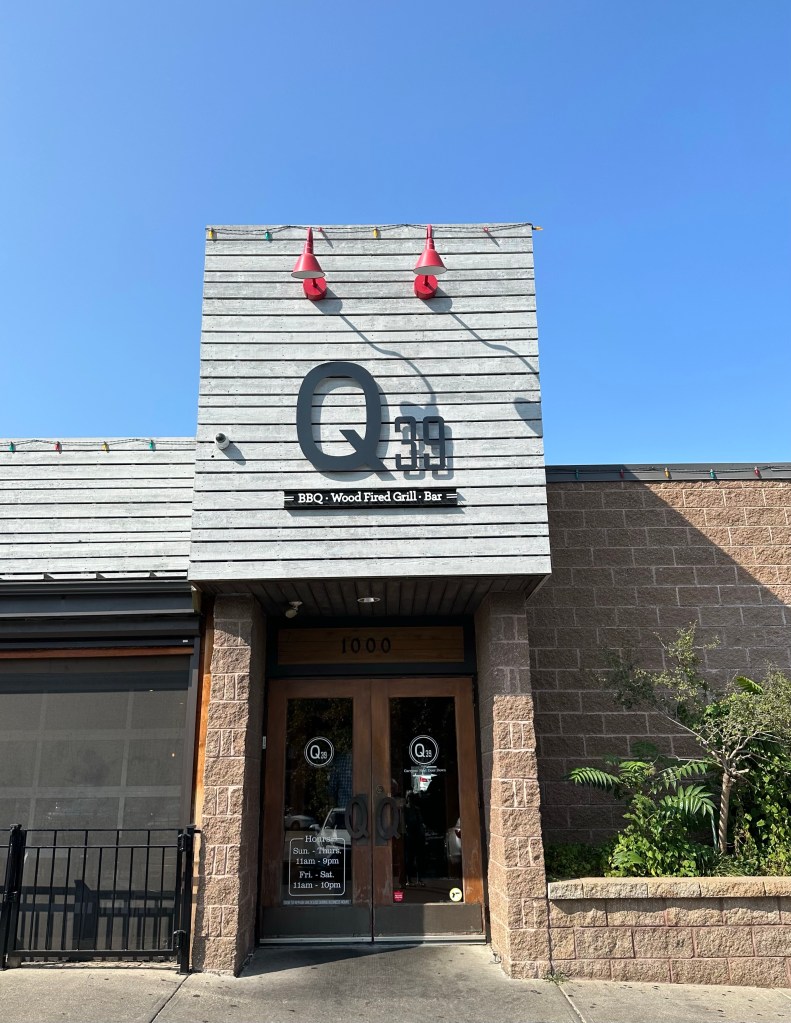
We tried a number of barbecue establishments but the one that topped our list was Q39 a newish restaurant (open for nine years) in midtown Kansas City.
During our Kansas City stay the temperatures reached into the 90’s. We decided to spend some time in air conditioned art galleries.
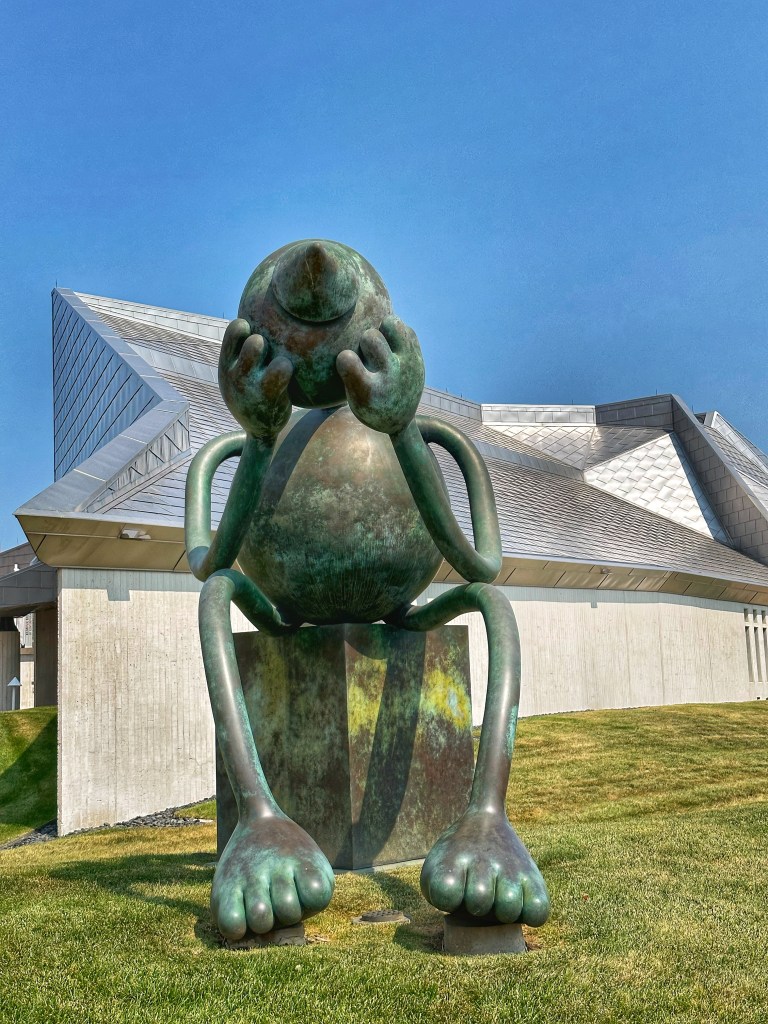
Tom Otterness’s Crying Giant, 2002
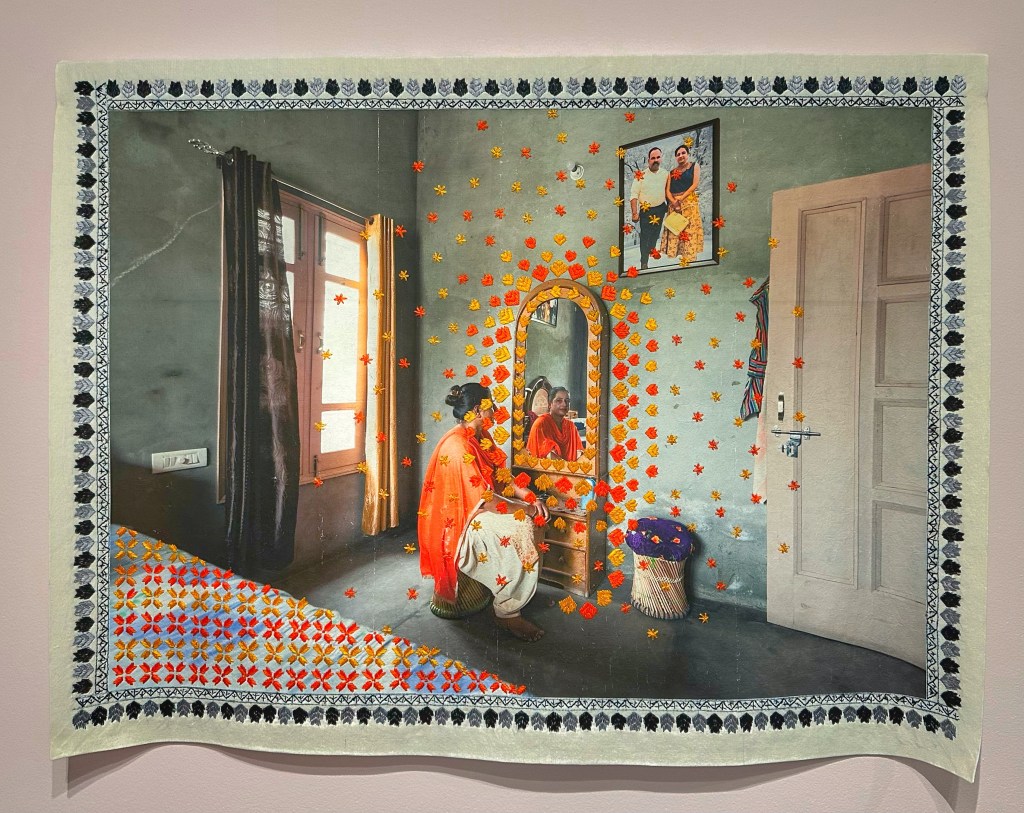
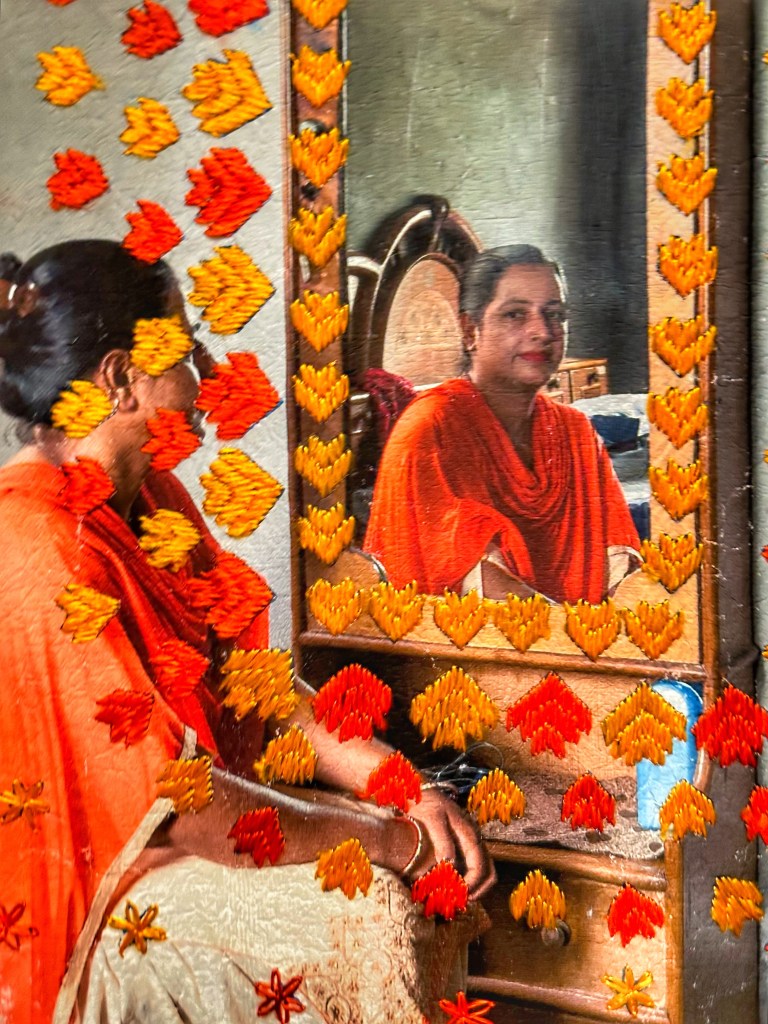
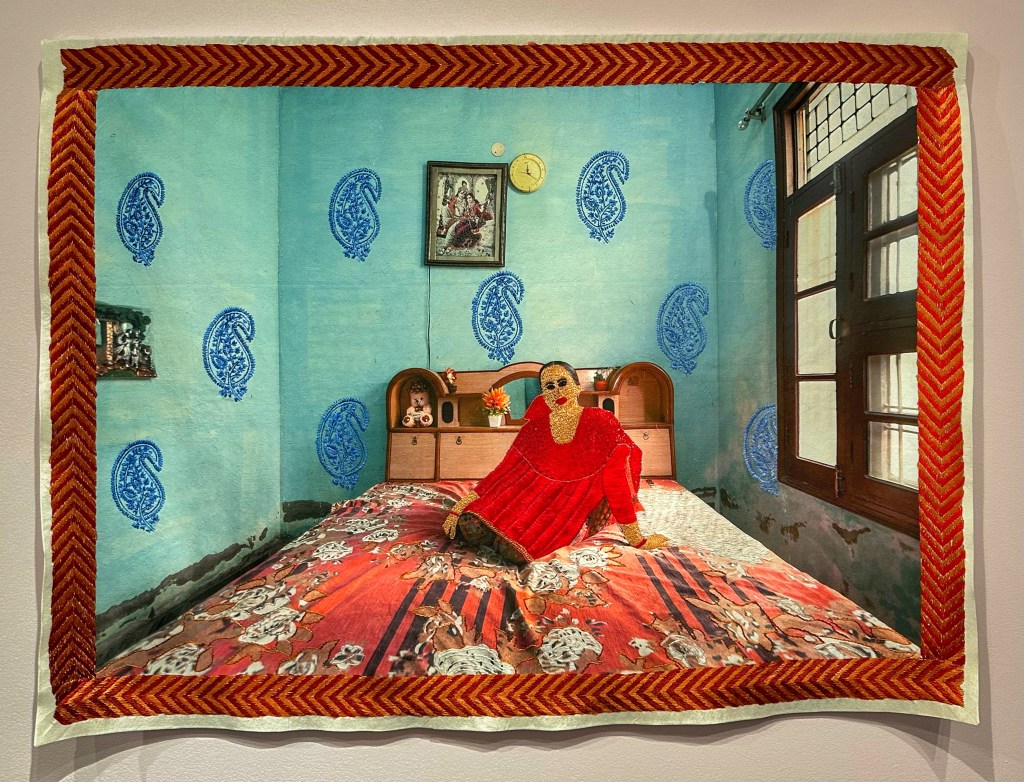
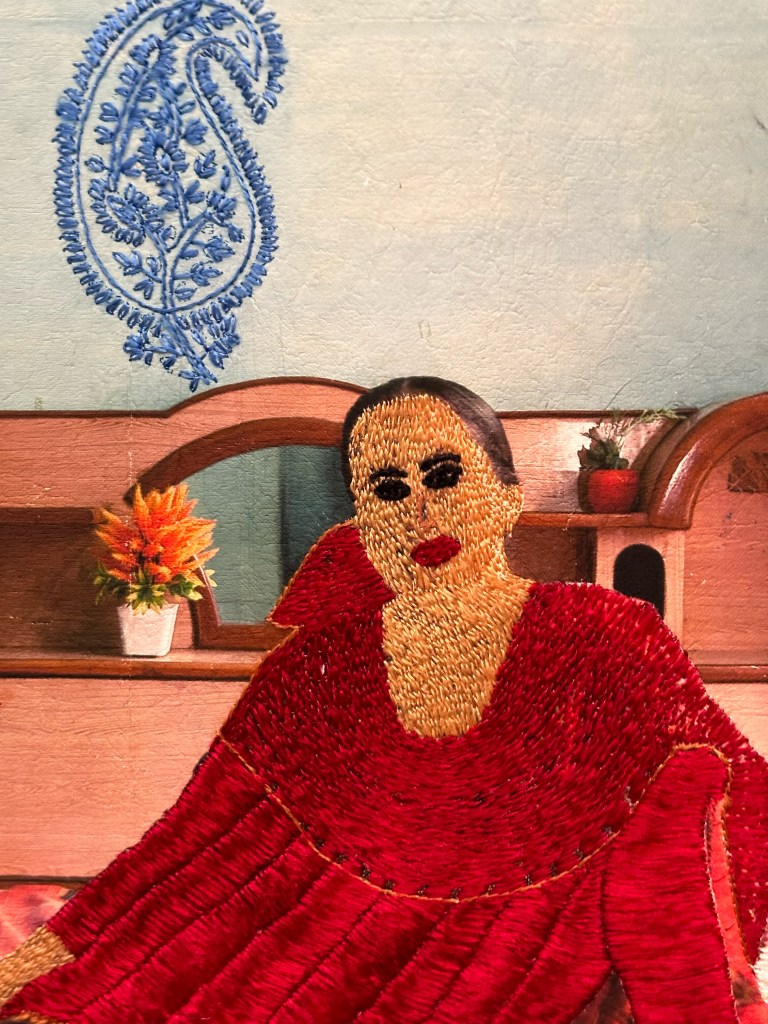
The Kemper Museum of Contemporary Art opened in 1994 and is Missouri’s largest contemporary art museum. They were featuring the work of Spandita Malik an Indian photographer and her collaboration with women across North India. Her subjects are survivors of domestic and gender based abuse. The portraits are printed on khaadar fabric and the women are asked to embroider their own portraits. In this way the women claim agency over their portrayal.
Radha Rani IV, 2023Detail Meena II, 2023Detail
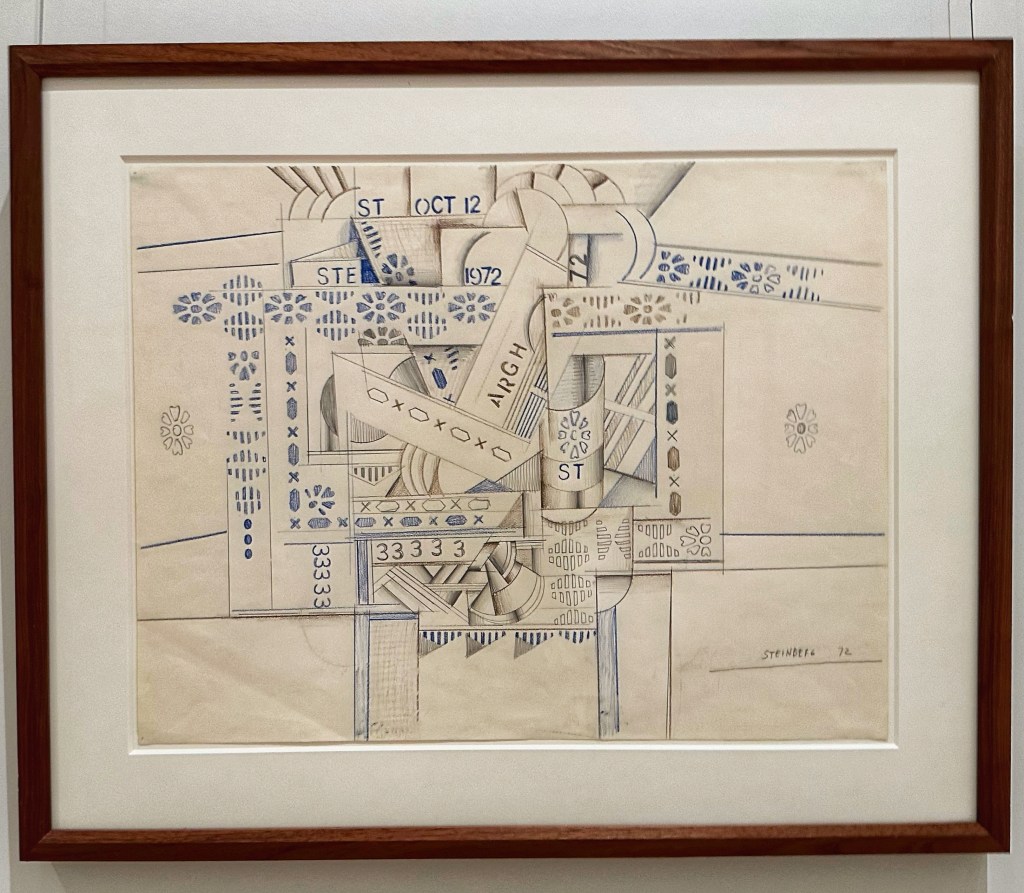
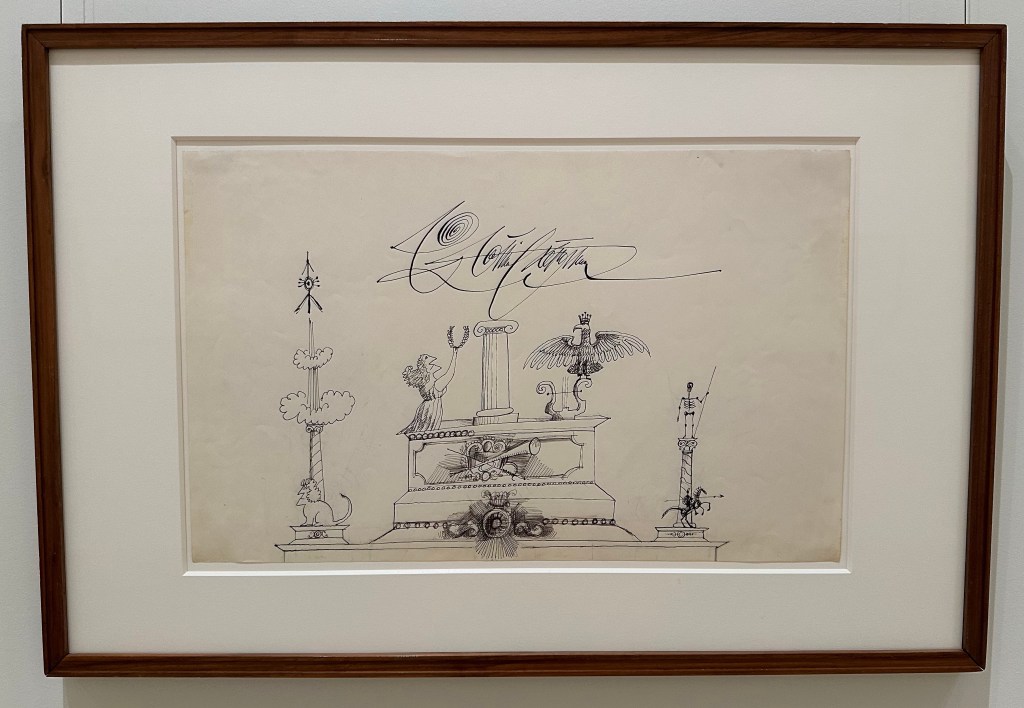
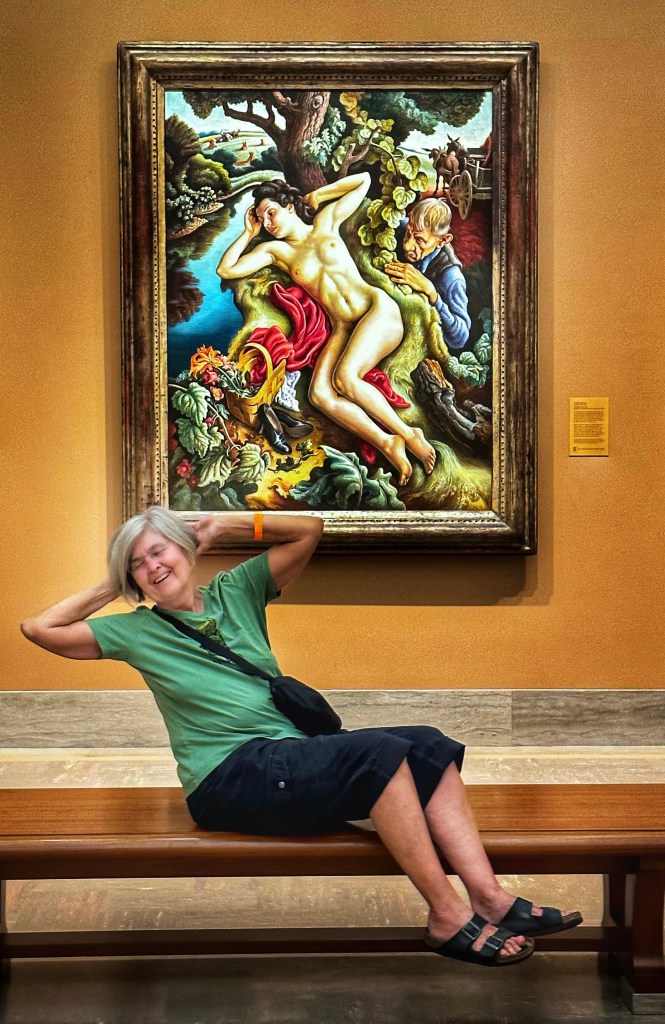
We left the Kemper and walked a short distance to the Nelson-Atkinson Museum of Art. The museum is known for its extensive collection of work from around the world. The museum was far too large to see everything in the time we had. We focused in on the work of Saul Steinberg(1914-1999) and Thomas Hart Benton(1889-1975). Steinberg is best known for the New Yorker Magazine covers he created. Benton was known as a leader in the regional art movement where he portrayed everyday people going about their lives.
Stencil Still Life, 1972 Saul Steinberg Untitled 1961-1965, Saul Steinberg The Benton Farm 1973-Thomas Hart Benton Persephone 1939-Thomas Hart Benton
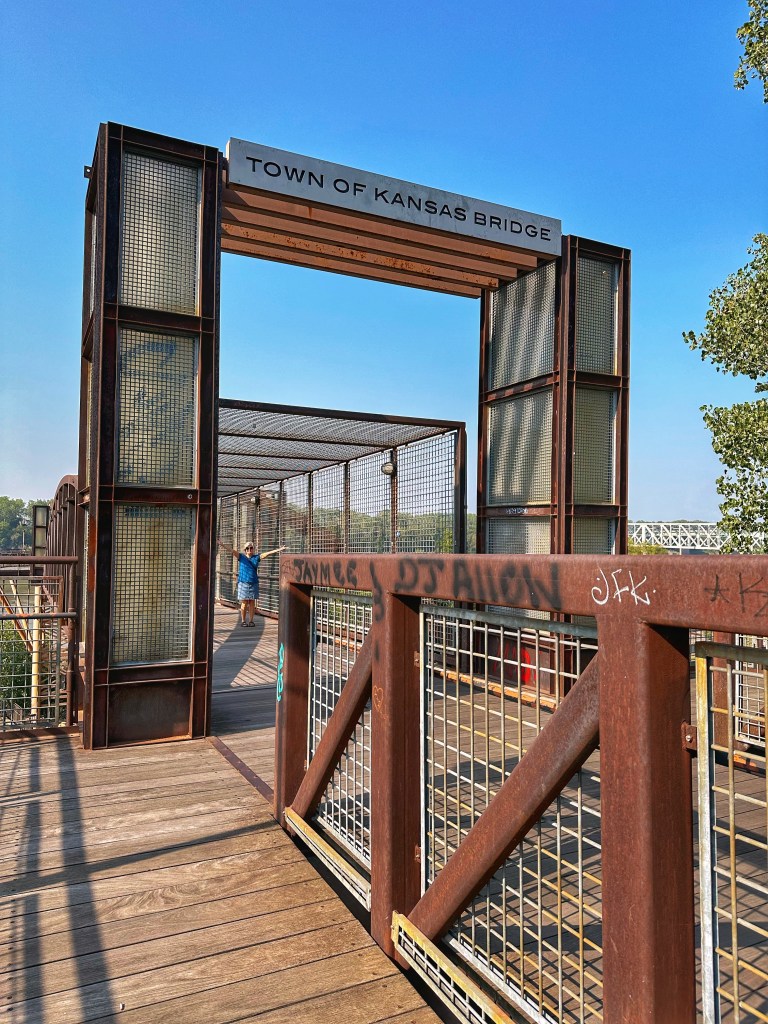
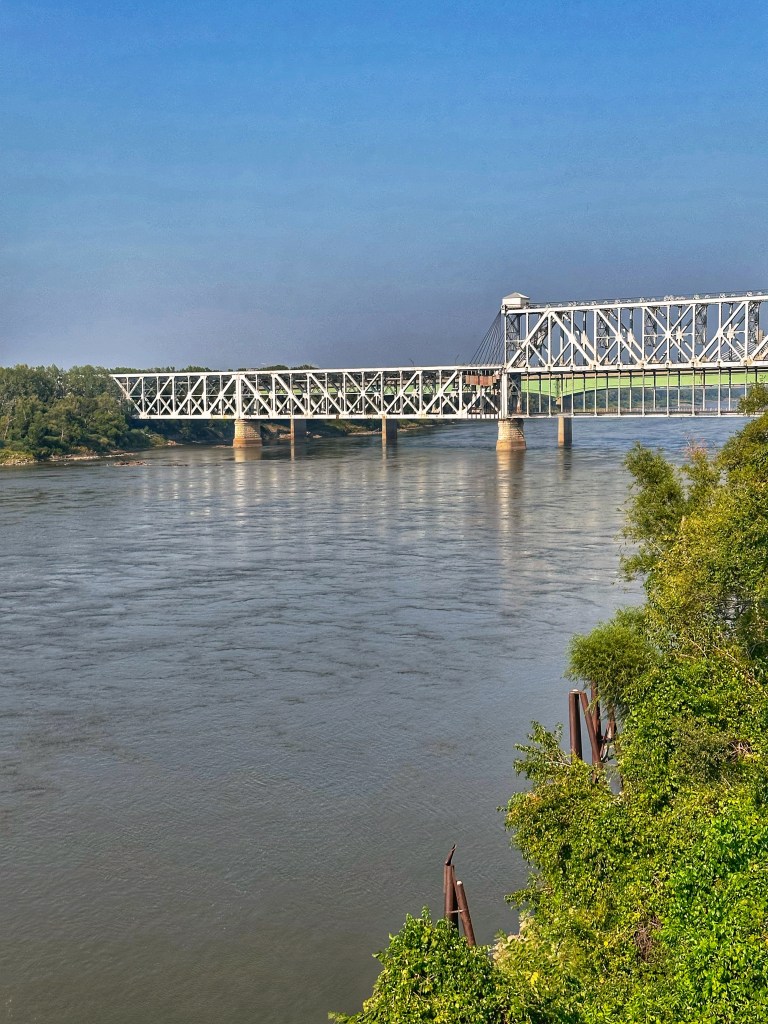
In the 1830’s the town of Westport was established along the Missouri River. The site was chosen as a place to outfit pioneers on the Santa Fe trail. In 1838 a group of investors bought up property along the river front. The area included Westport and was incorporated in 1850 as the Town of Kansas, named after the local Kansa Indians. The state of Missouri renamed it the City of Kansas and later Kansas City. At the time of its naming the territory on the other side of the river was part of an unorganized territory. The Territory of Kansas was established in 1861.They named their side of the river Kansas City in 1872 after statehood was granted.
The Missouri River at the former site of Westport
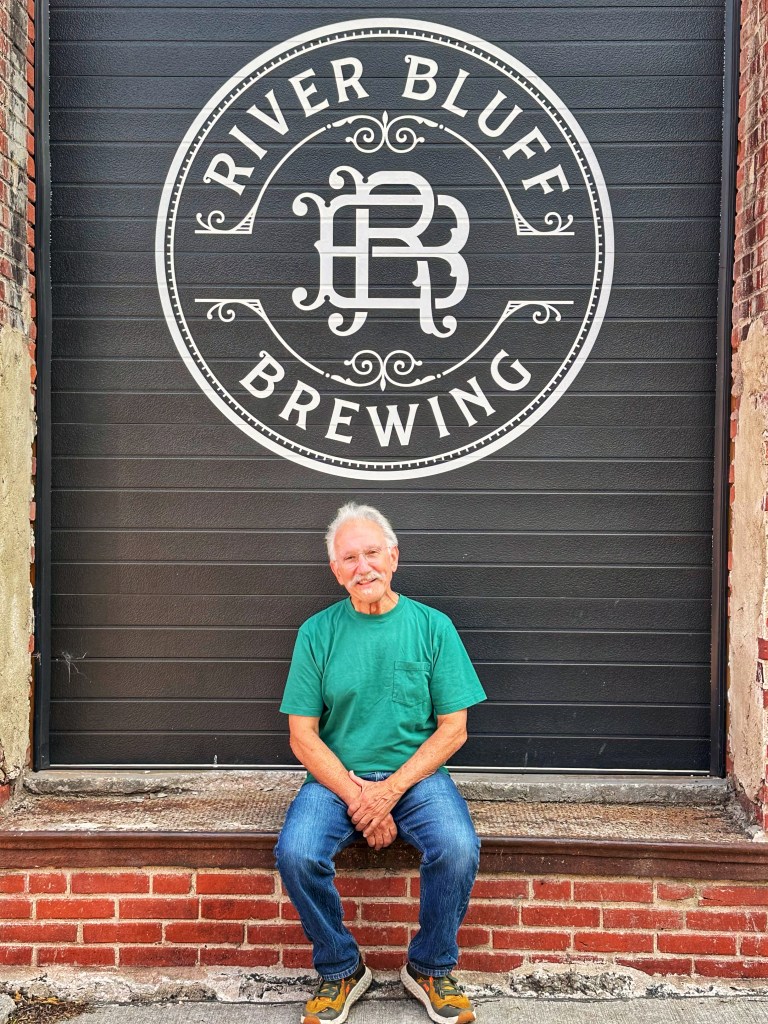
This bluff along the river is populated by old industrial sites that are being converted into loft spaces and businesses. A local brewery nearby called out for exploring.
We are happy to report that they serve a decent brew.
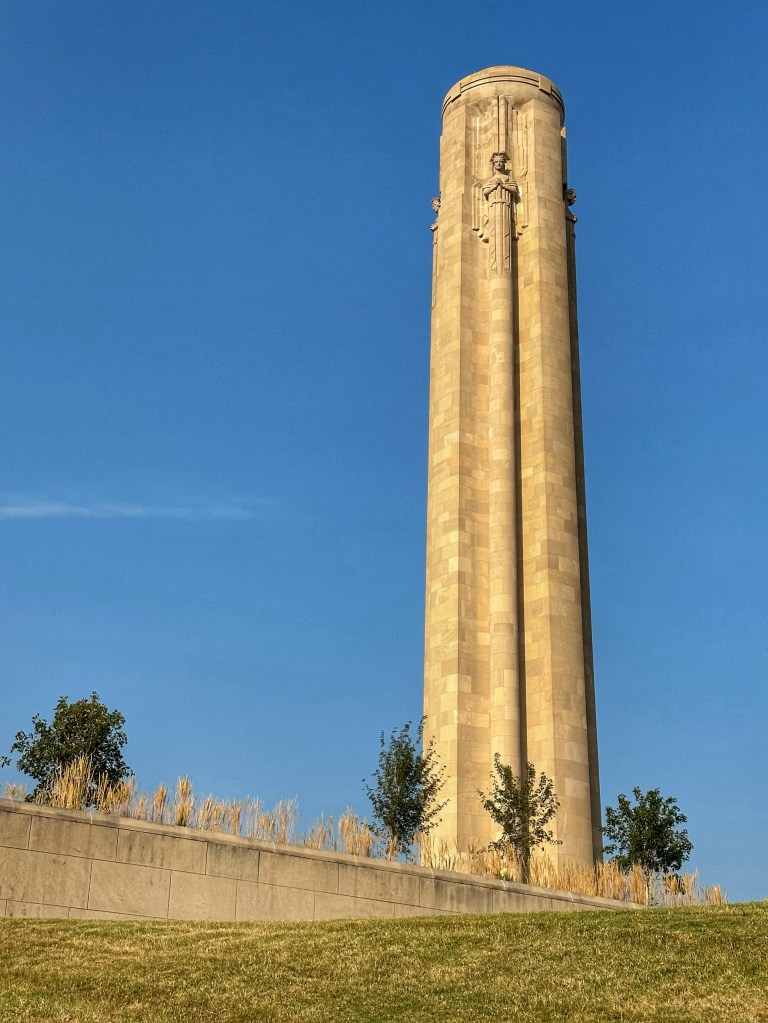
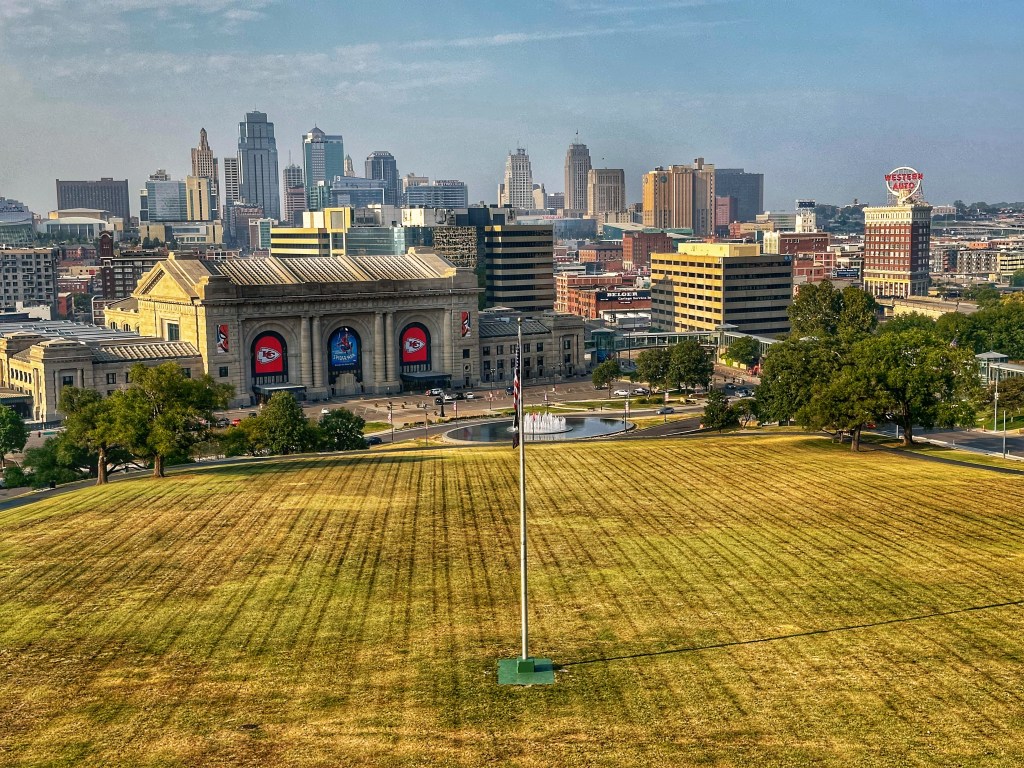
The National WWI Museum and Memorial is located in Kansas City. They claim to house the world’s most comprehensive WWI collection. It was closed by the time we got there so I can’t verify that claim but the grounds were beautiful.
Kansas City as seen from the WWI Memorial
Kansas City was bigger and grittier then we expected. We felt that we just scratched the surface of what the city had to offer. A return trip is certainly in order.
Paducah, Kentucky is home to the National Quilt Museum. We’ve been trying to get there for awhile. This trip we made it happen.
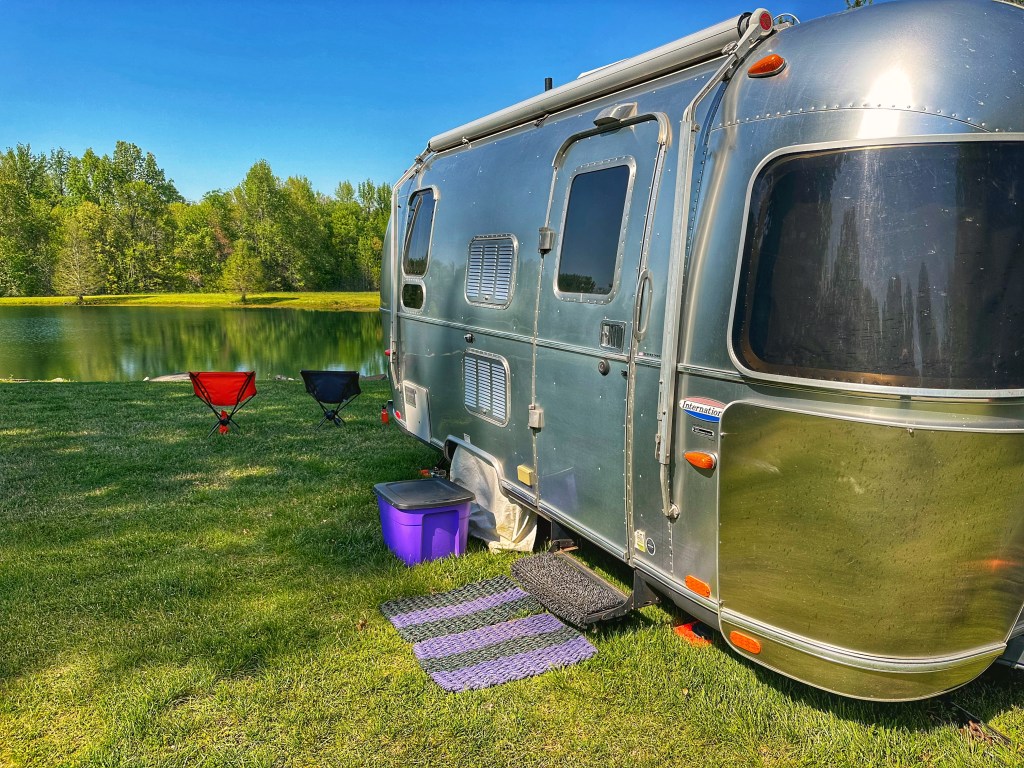
Fern Lake Campground
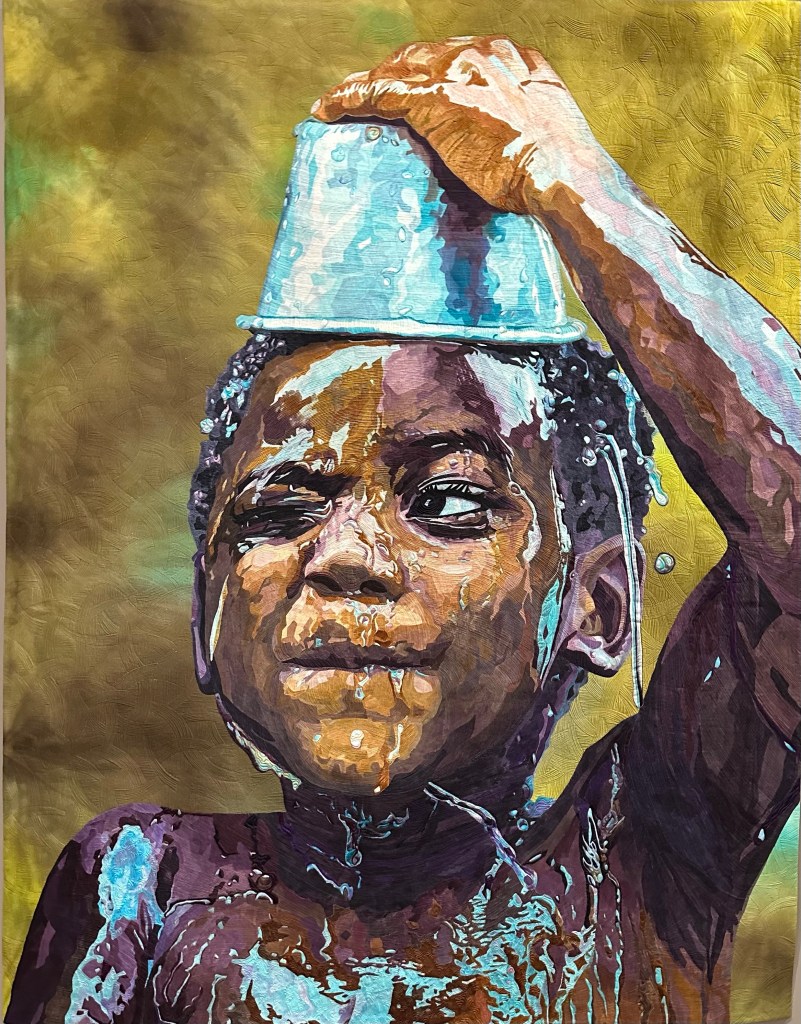
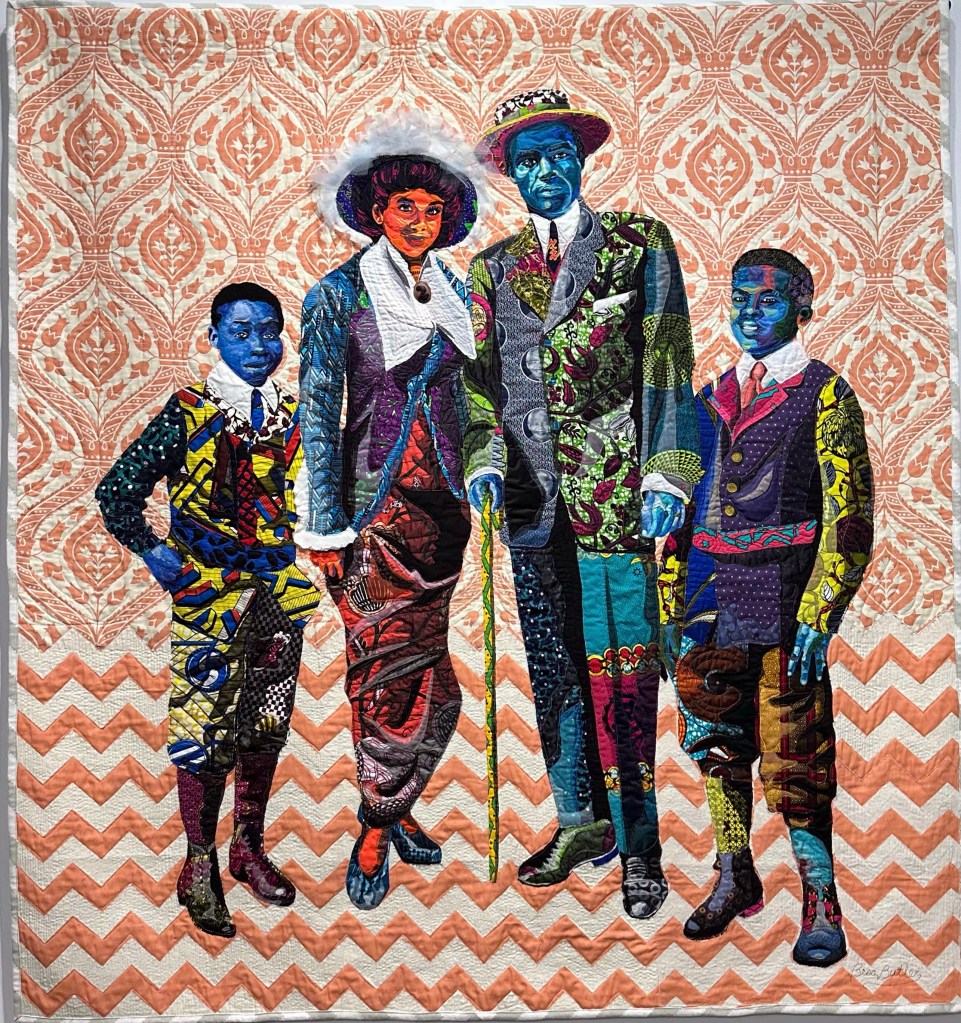
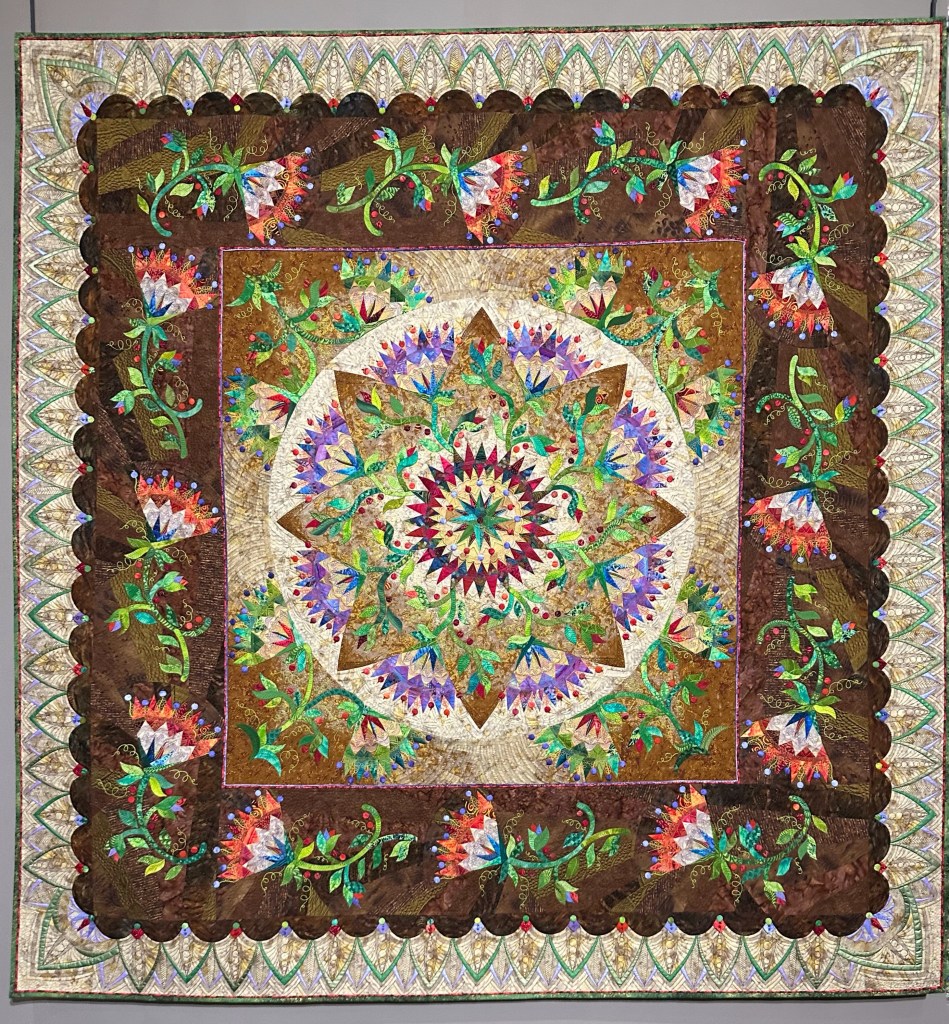
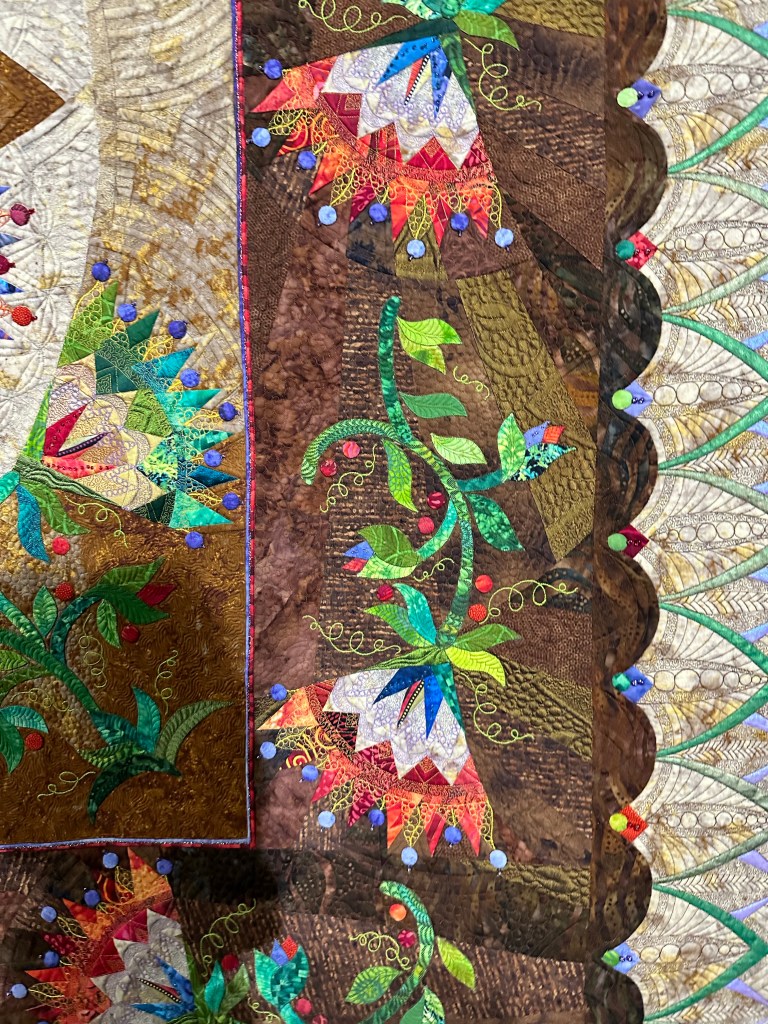
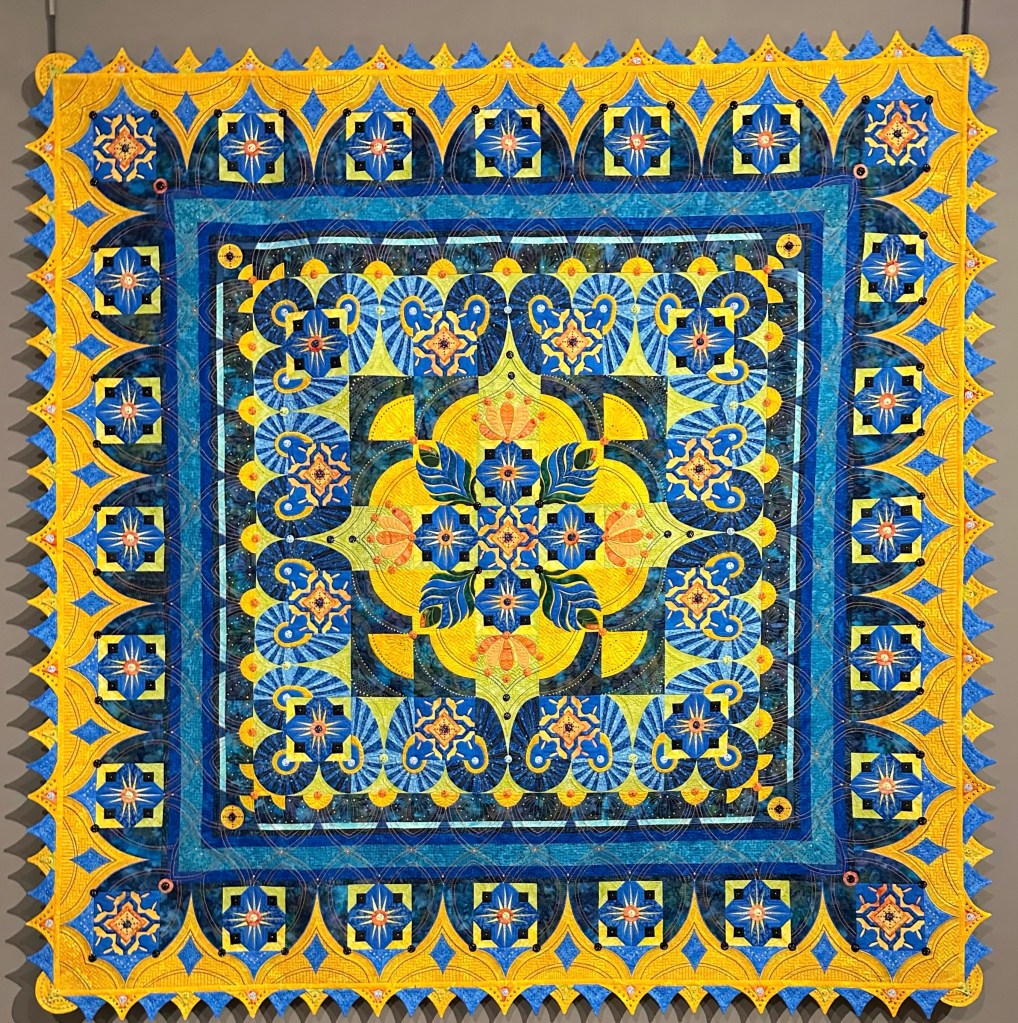
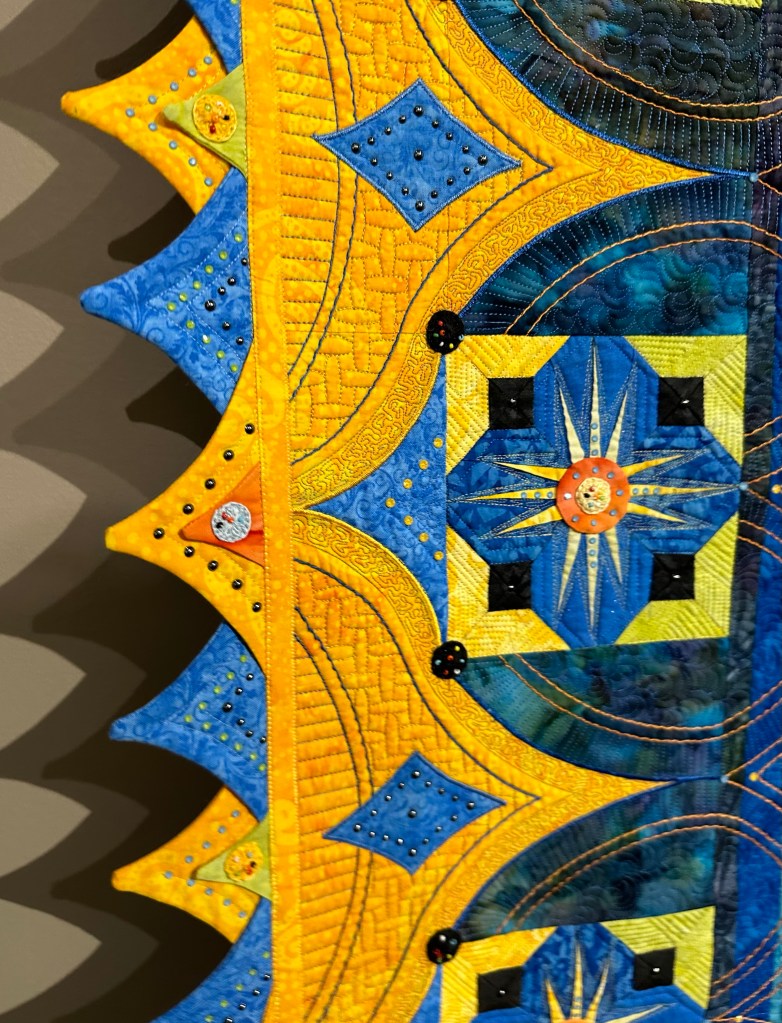
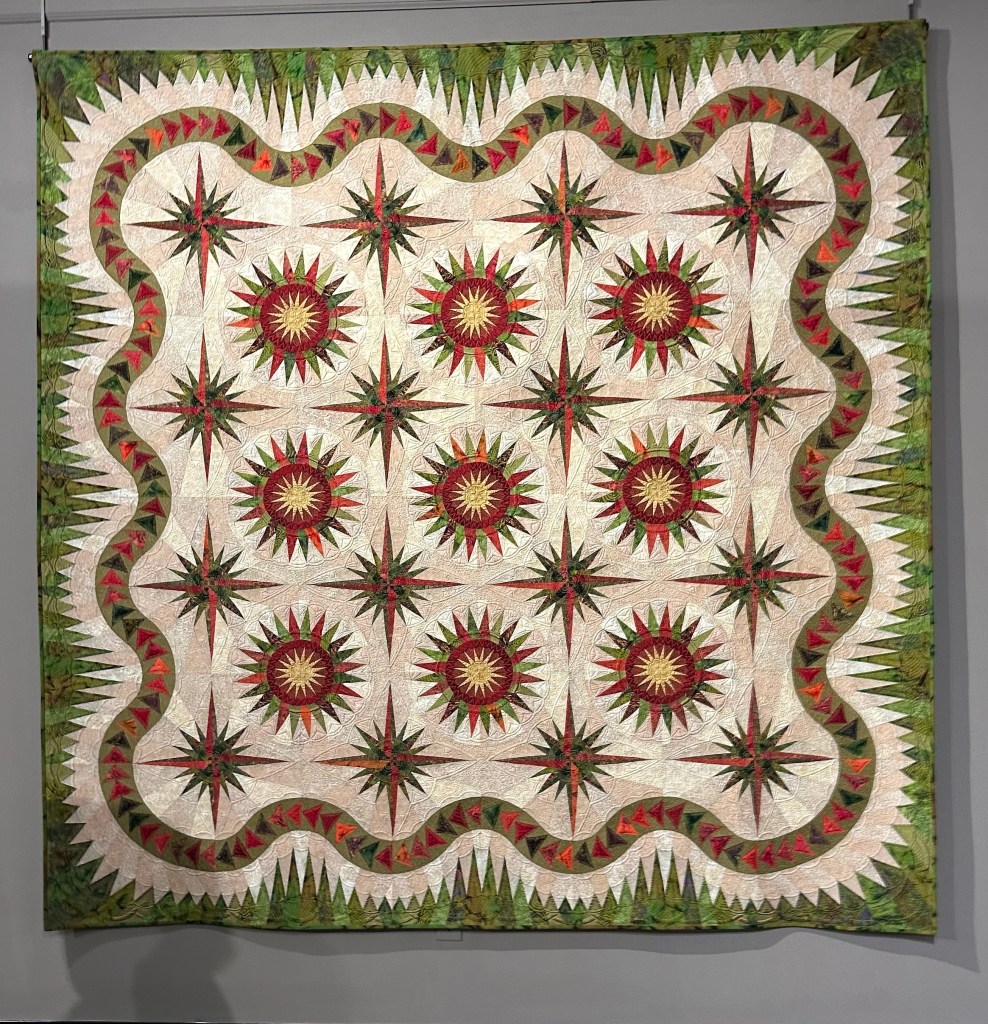
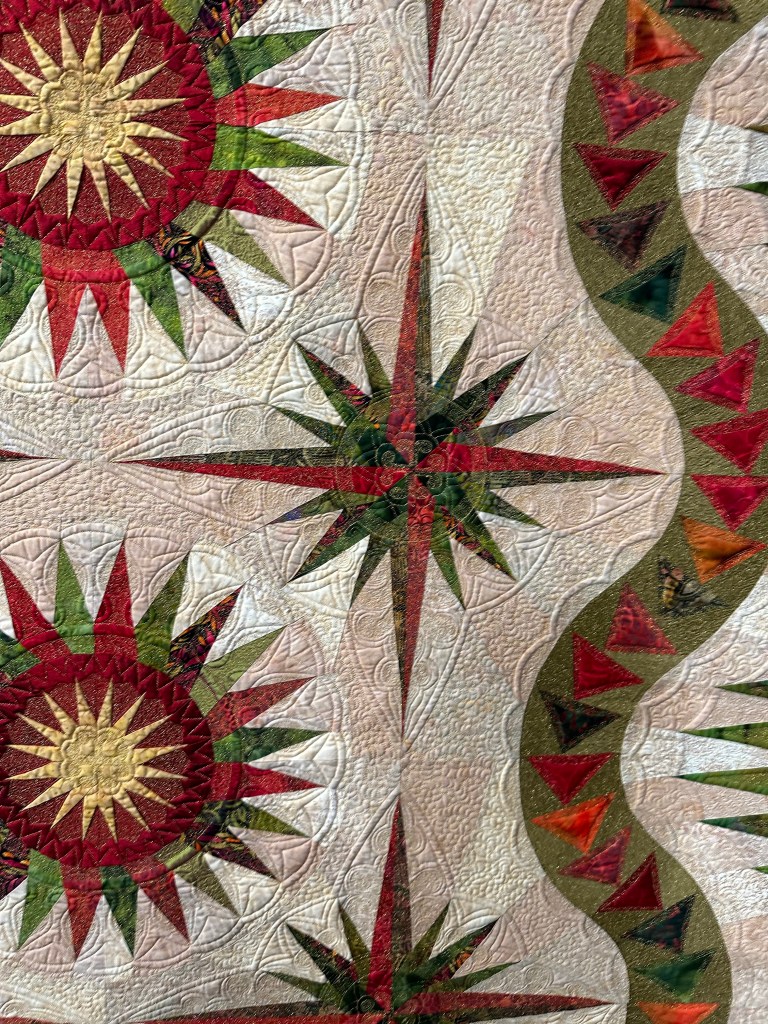
We arrived during Quilt Week, a massive gathering of quilters and vendors of all things quilting. Our focus was on the museum and their current exhibitions. We were not disappointed. To call what these quilters do quilts fails to convey the level of artistry involved in producing this work.
Summer Fun, 2022 by Marina Landi and Fabia Diniz
Yes! That was done with dyed fabric and thread.
Black Star Family, First Class Tickets to Liberia, 2018 by Bisa Butler
One of the major shows at the museum was called “Showstopper “ highlighting the work of Marilyn Badger, a competitive quilter. And showstoppers they were.
Exuberance, 2014Detail Midnight in Morocco, 2020Detail Filigree, 2009Detail
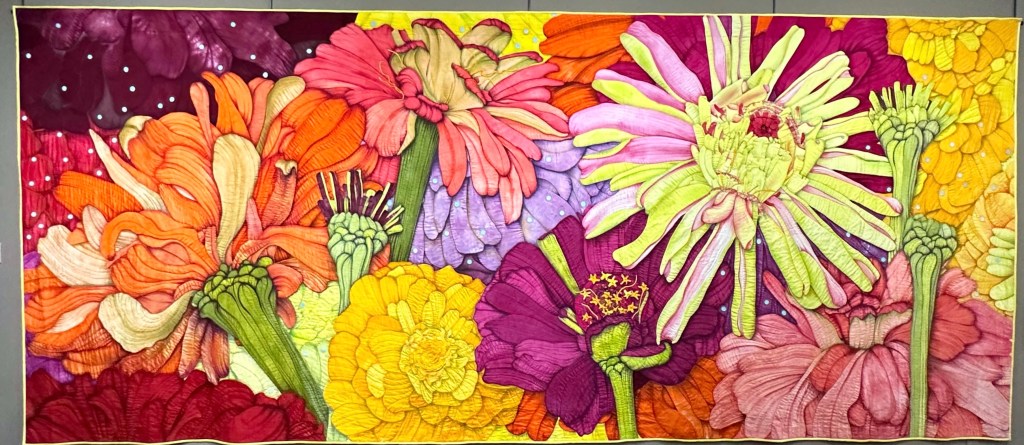
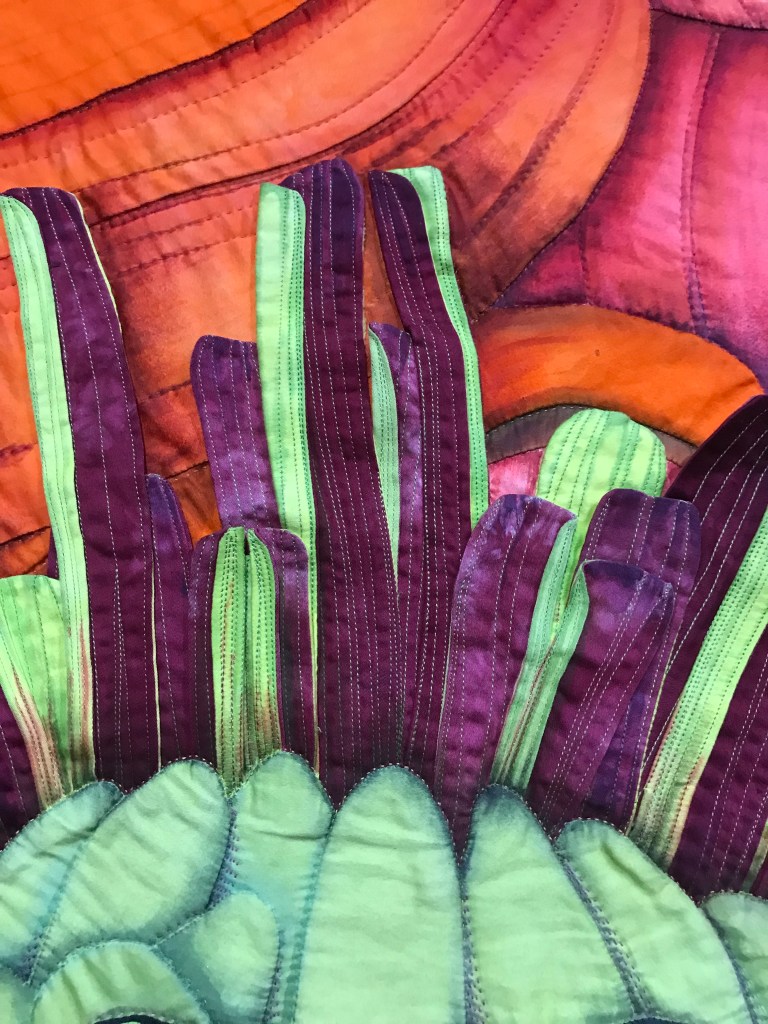
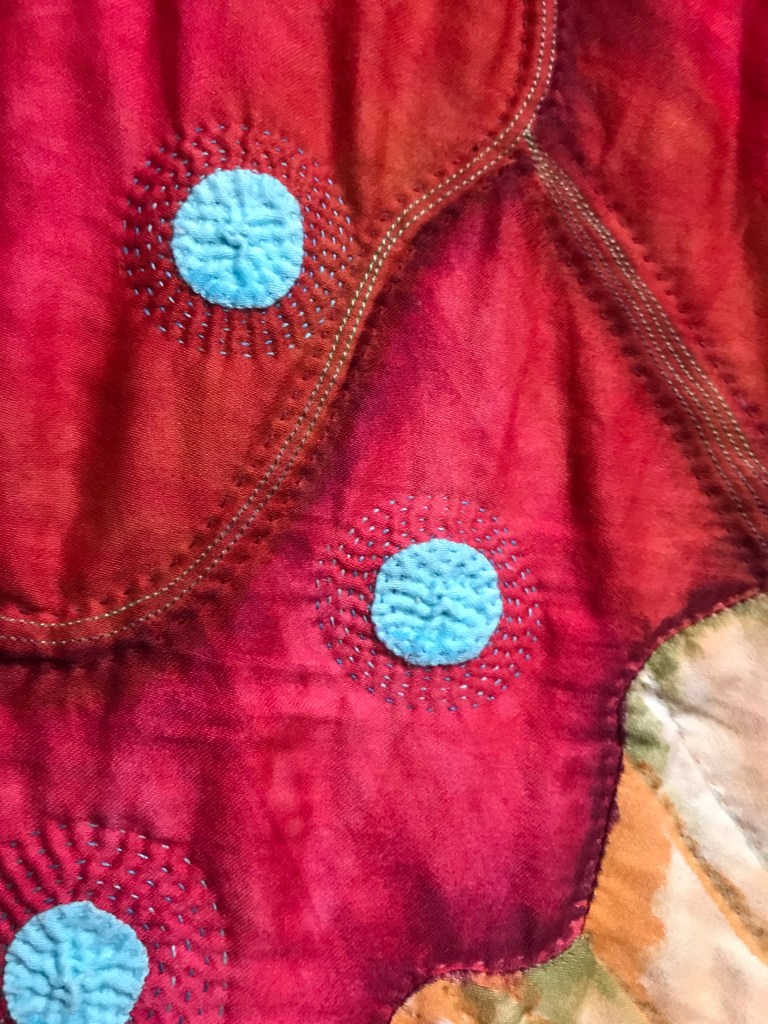
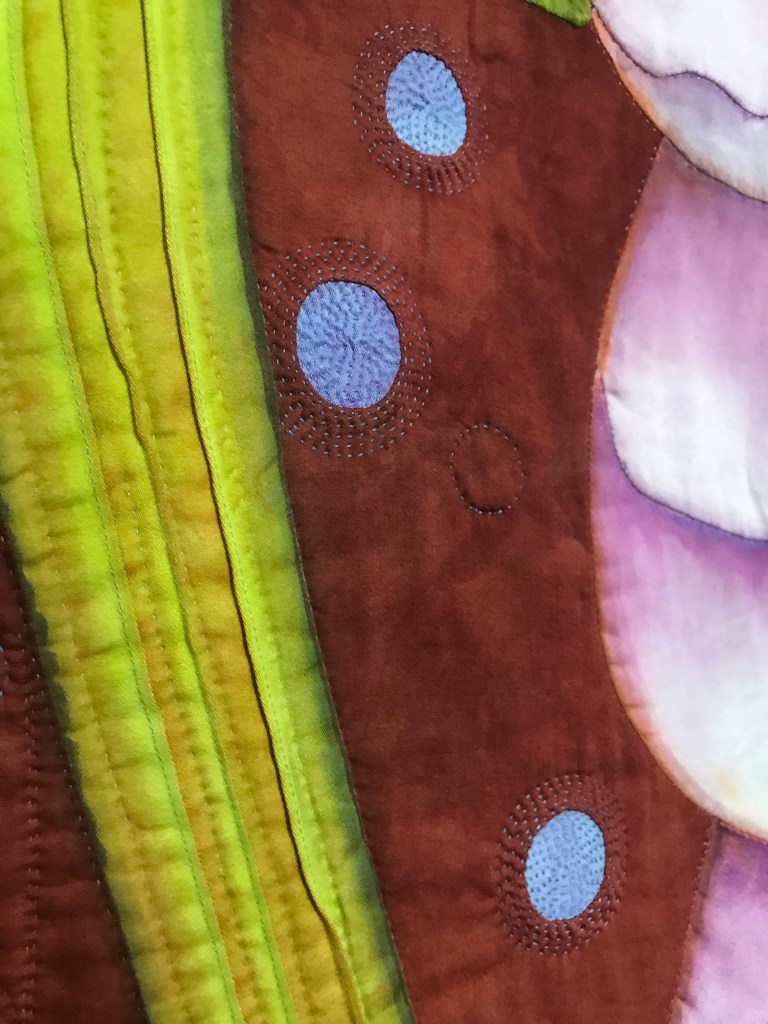
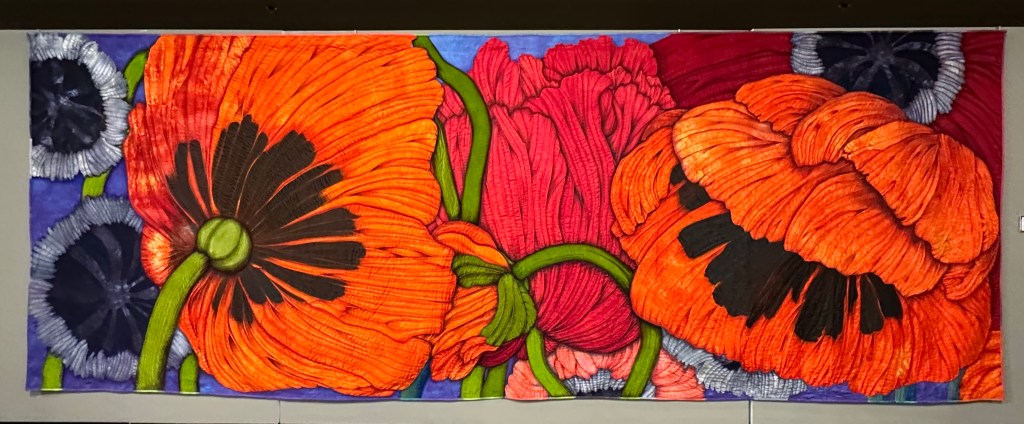
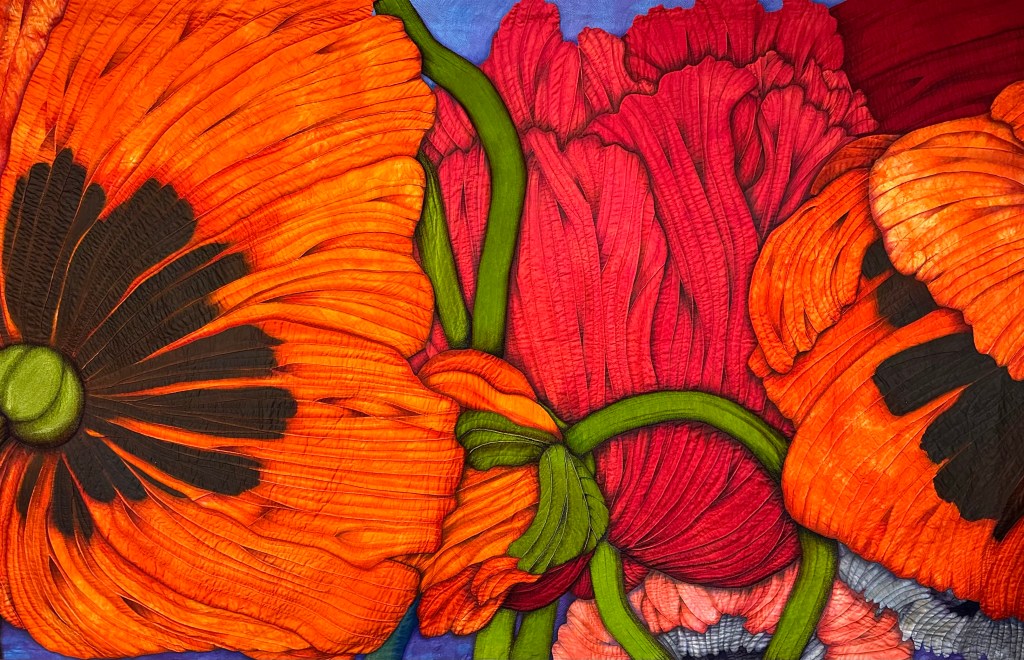
The other major museum show was “Larger Then Life” by Velda Newman. She dyes all of her fabrics and hand quilts everything.
“Zinnia” took two years to complete and is 17 1/2 feet long and over 7 feet tallDetail Detail Detail “Poppies”Detail
There are more mind blowing “Quilts” than would be practical to include here. If you enjoy this kind of textile art you owe yourself a visit to Paducah or at least a visit to the museum’s website: quiltmuseum.org.
After spending a day looking at quilts and rubbing shoulders with the hordes we drove to the Land Between the Lakes National Recreation Area for some bike riding.
On the Central Hardwoods Scenic Trail
We left Paducah and continued our journey north for a stop along the bourbon trail in Bardstown, Kentucky.
White Acres Campground
Bardstown refers to itself as “the bourbon capital of the world “. This is no idle boast given the number of distilleries in the area. In fact, as you wander the town you can smell corn mash being fermented.
Bardstown Visitor Center One of the lovely federalist style brick homes found in BardstownWe enjoyed wandering the “historic “ downtown
We weren’t there to wander Main Street but visit distilleries. We had one tour booked but decided to do some visits without tours.
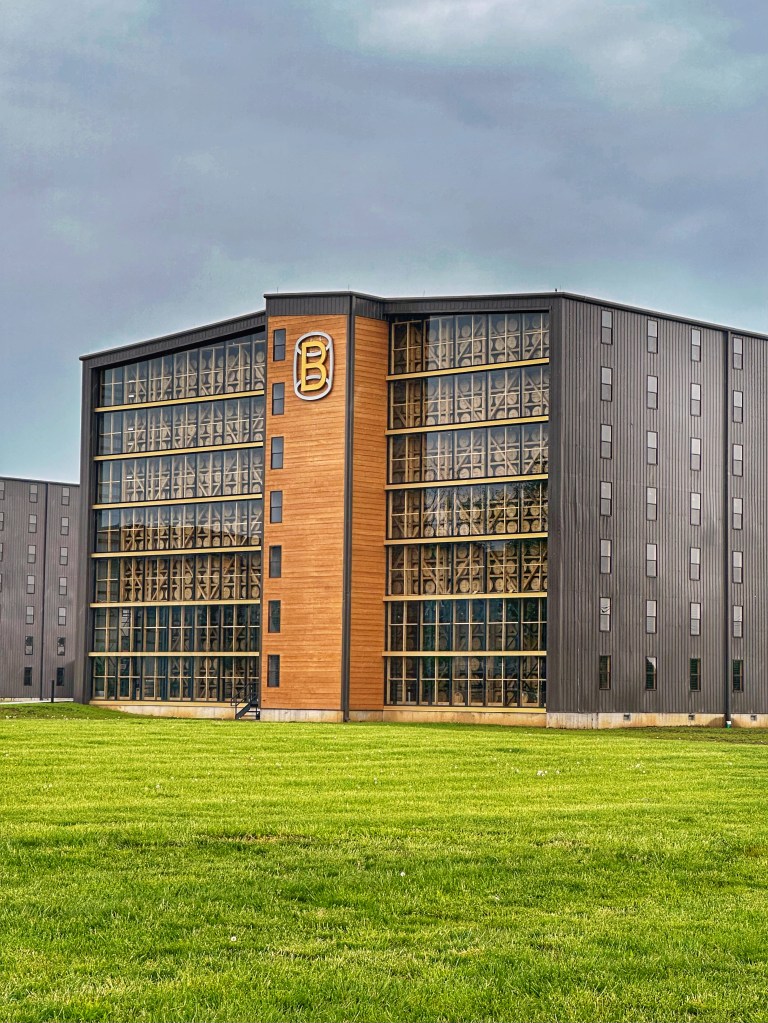
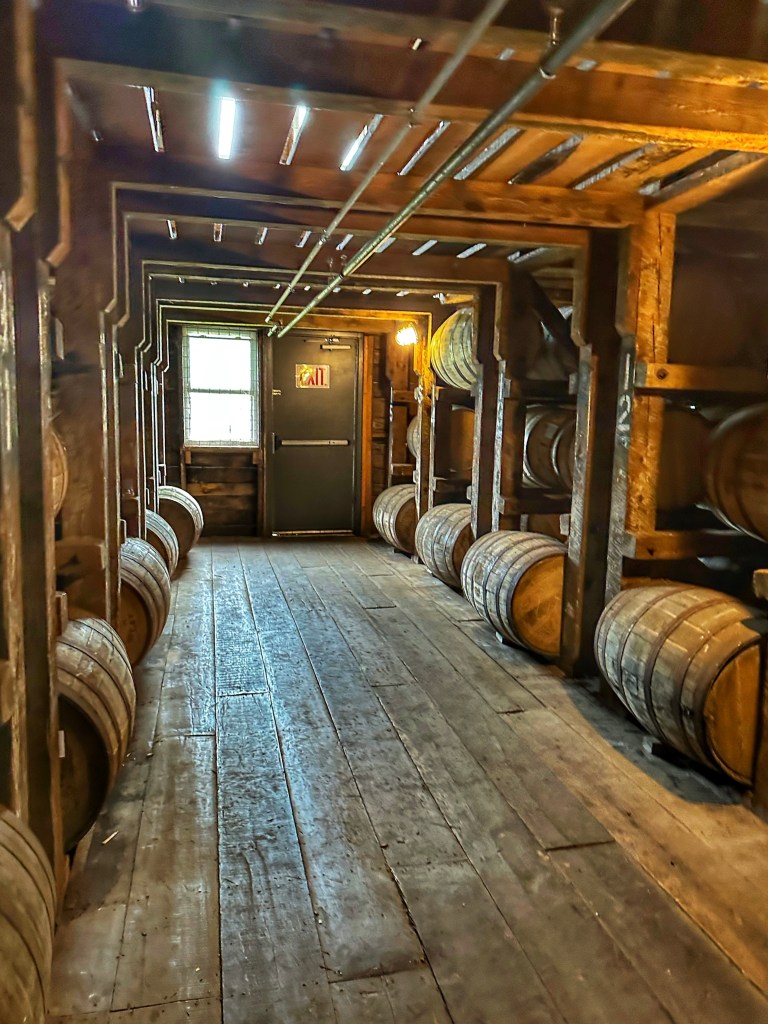
One of the numerous rickhouses ( where the barrels of bourbon are aged) found on the grounds of Bardstown Bourbon Company
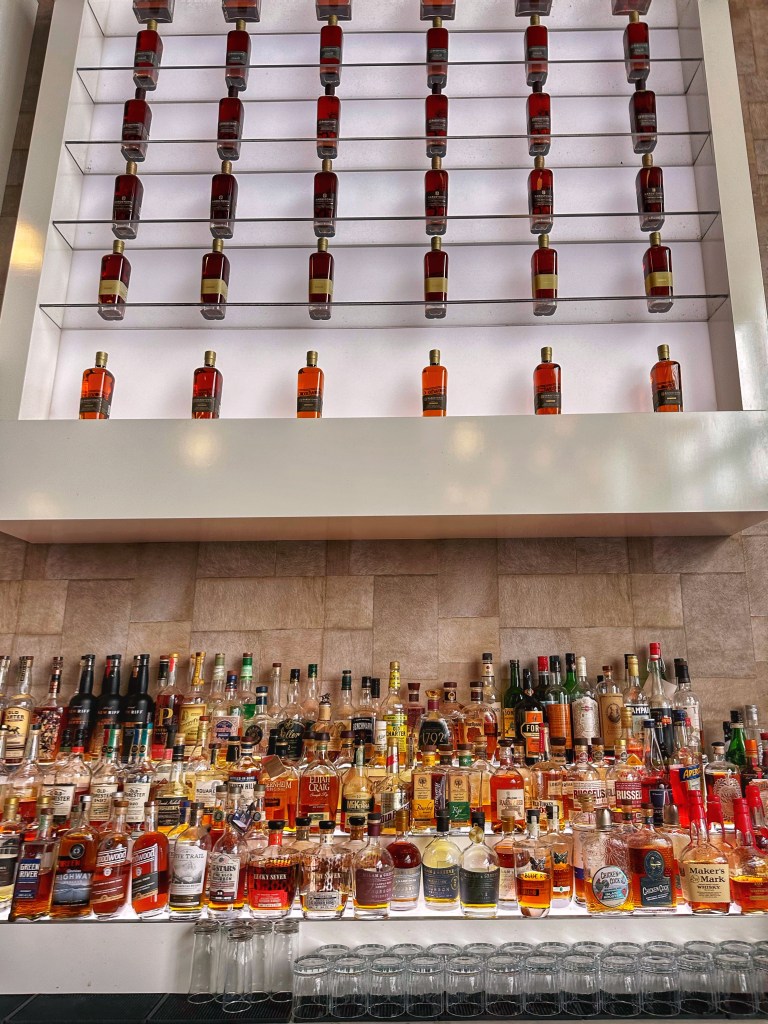
The Bardstown Bourbon Company is a new distillery in the area. They’ve been around less than seven years and have an outstanding bar in their new modern facility.
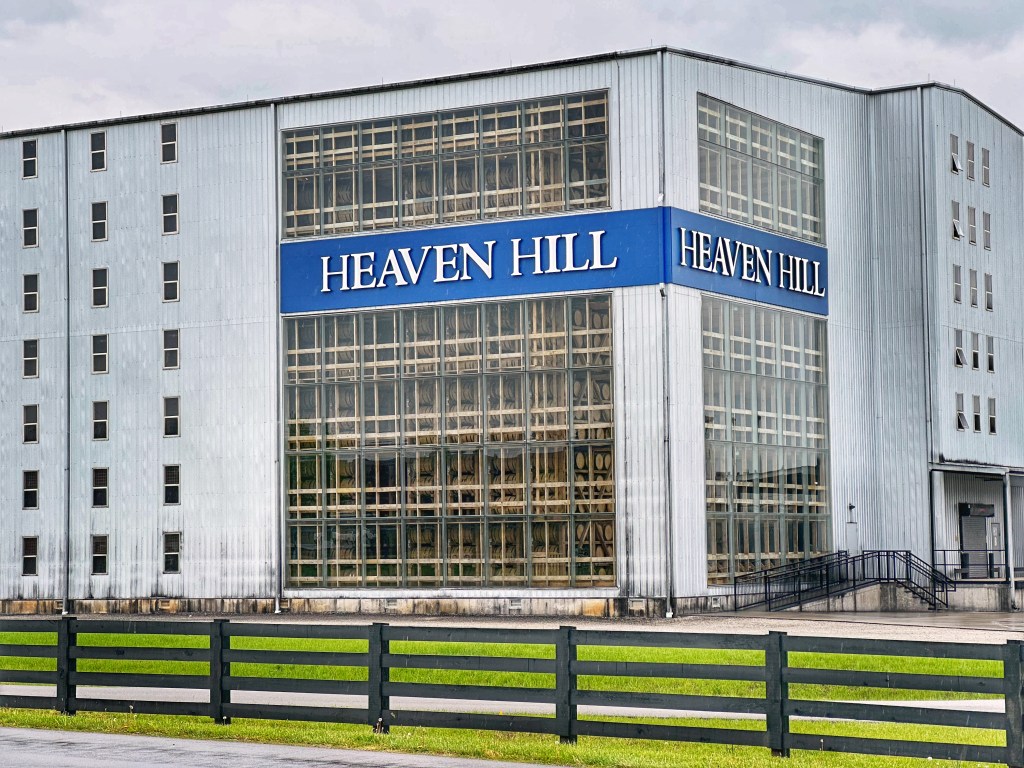
We also stopped by the Heaven Hill Distillery. The original distillery burned down in 1996 but they bought a facility in Louisville to continue to make whiskey. In 2022 they rebuilt their rickhouses on the sight of their original distillery.
We did book a tour and tasting at Willet, a smaller, family owned and operated distillery. The family were pig farmers until the abolition of prohibition in 1933 when they decided to ride the whiskey wave sweeping the country. The grounds are beautiful and they have great food @ the bar.
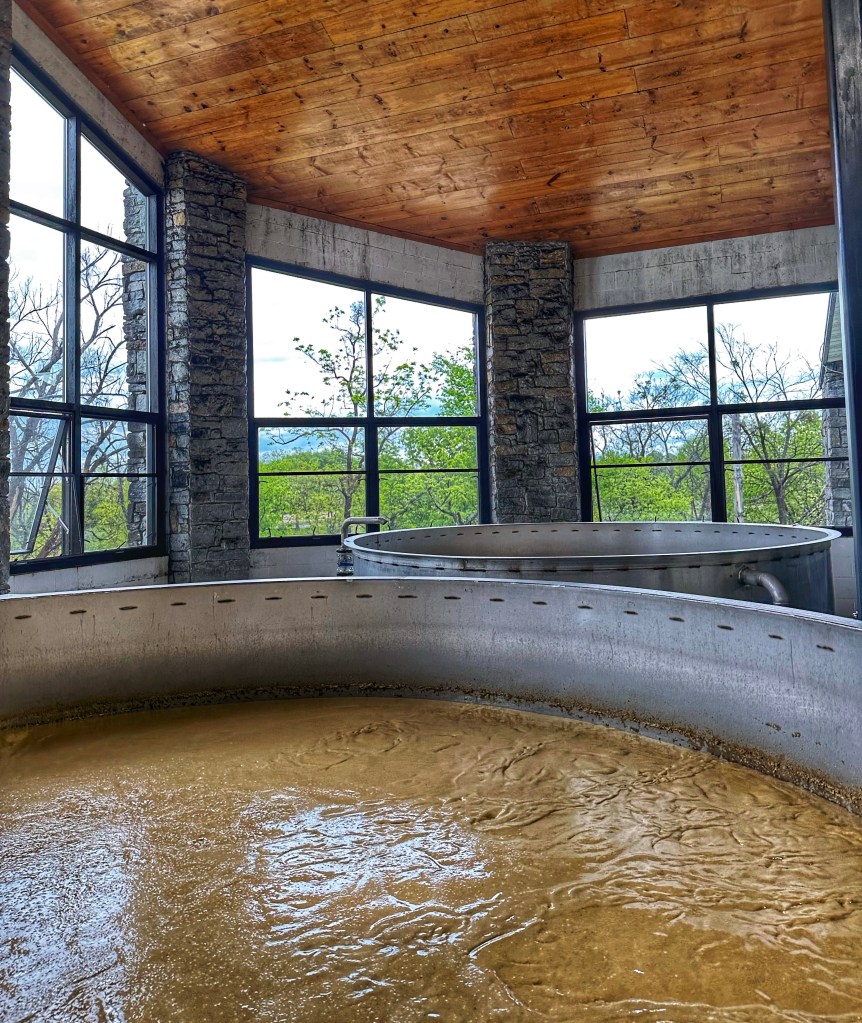
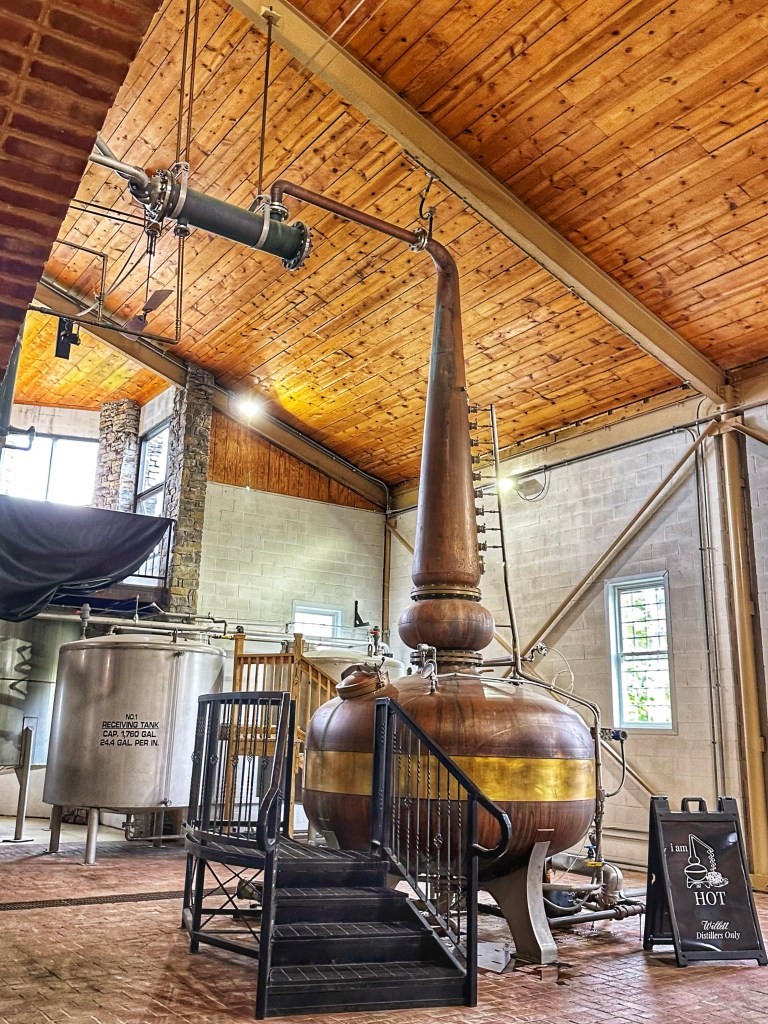
Fermentation TanksCopper Pot Still Willet’s original rickhouse
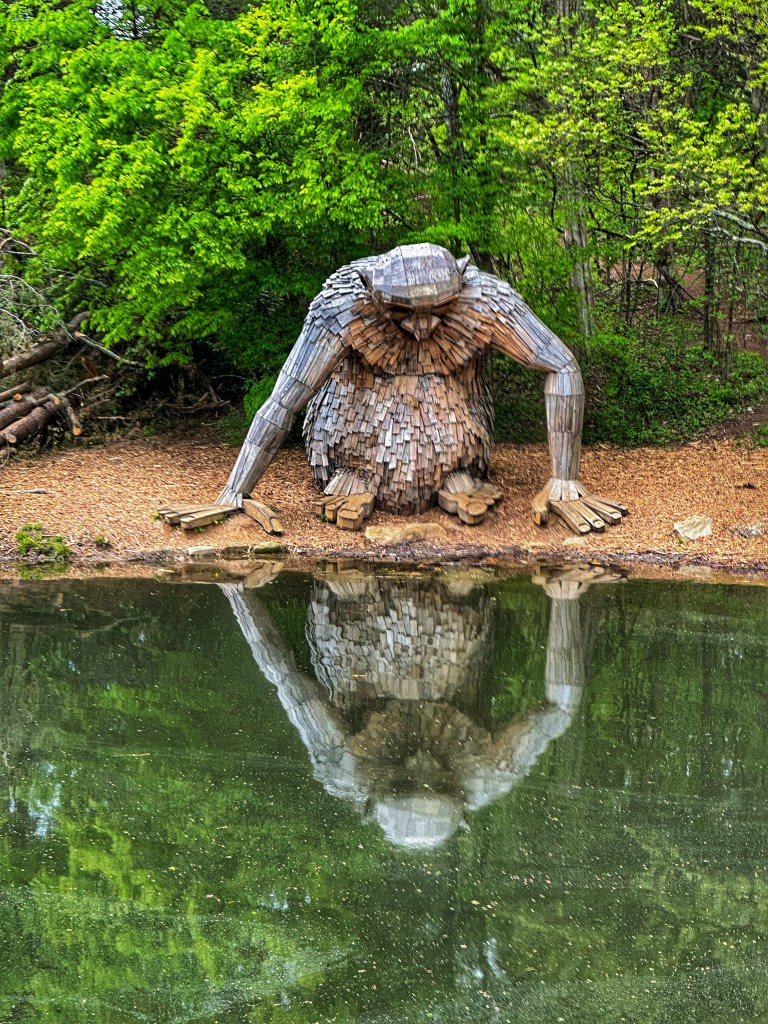
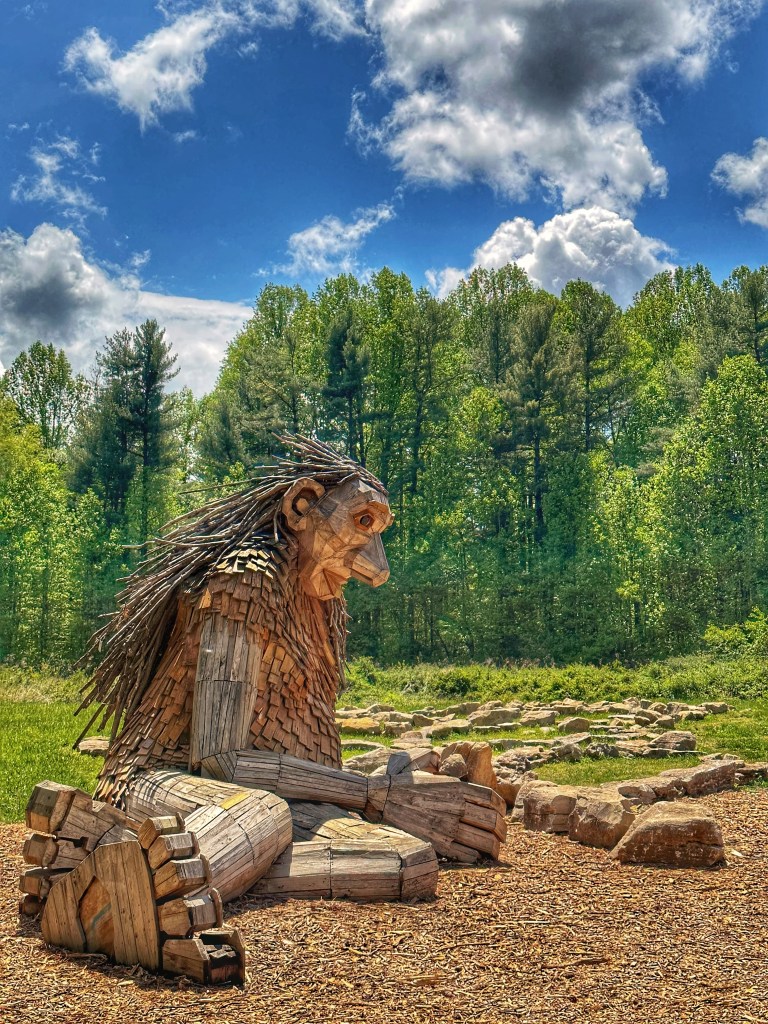
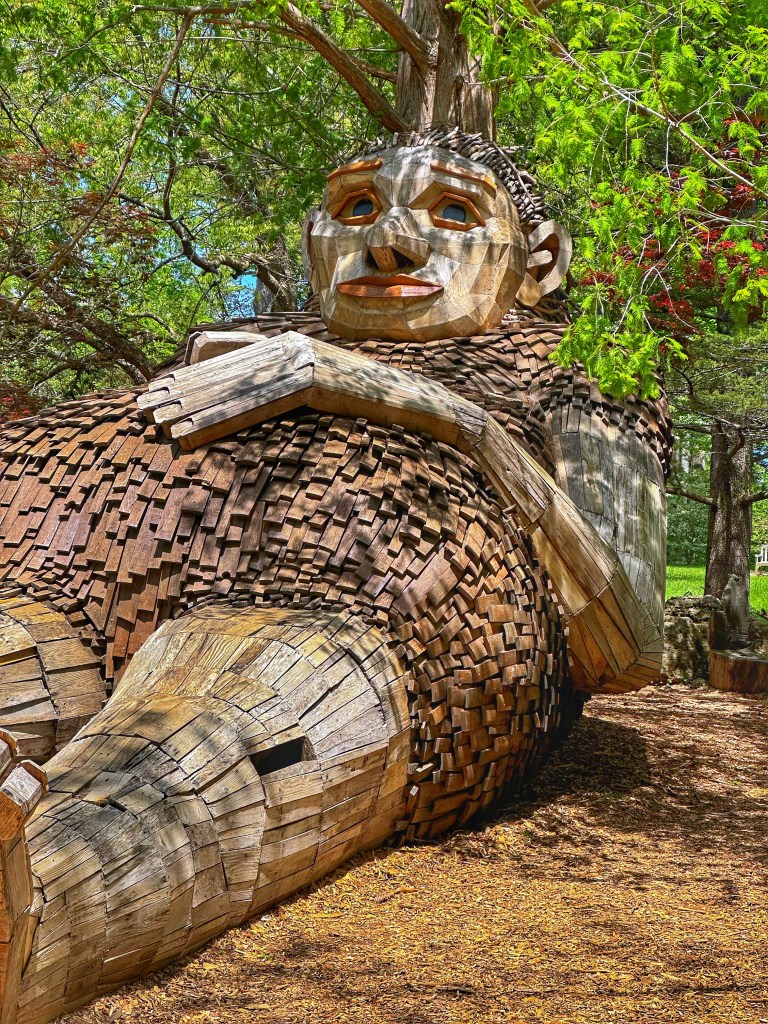
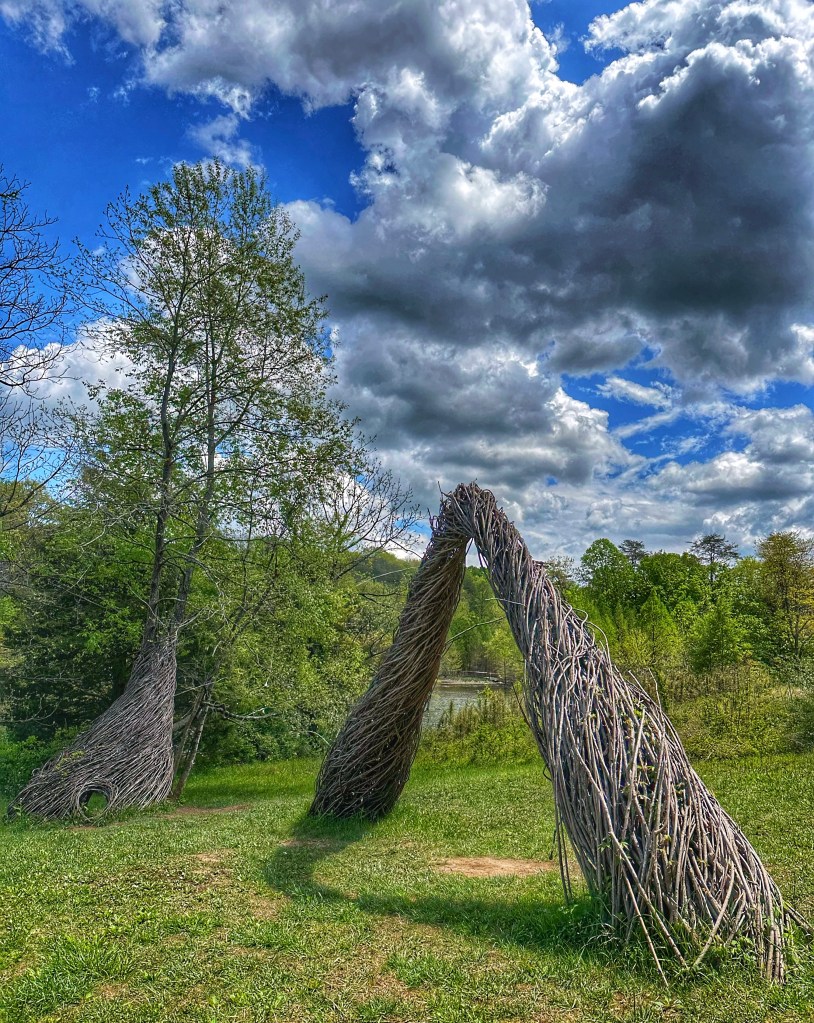
We made time to spend an afternoon at the 600 acre Bernhiem Arboretum. While wandering about we ran into few amenable trolls.
Little NisLittle ElinaMama Loumari
Thomas Dambo one of the many artists in residence that work with the arboretum created the troll series.
Oxygen by AkunzoSounds of the Whippoorwill by Justin Roberts
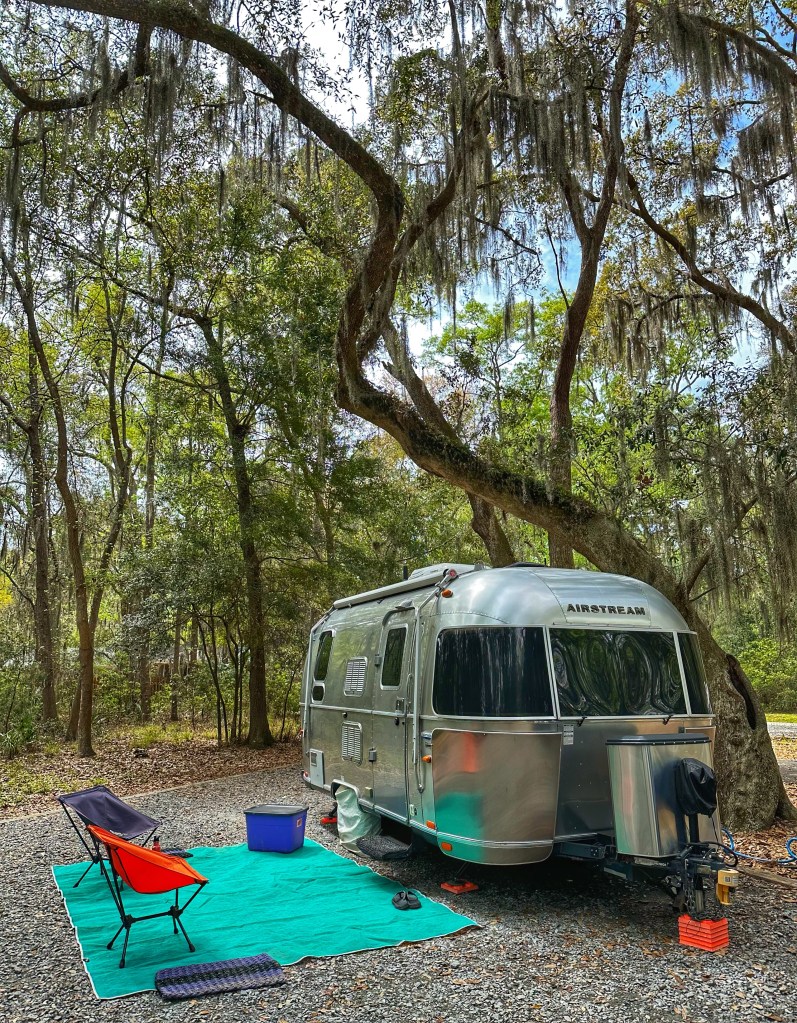
It’s been a great trip and after stopping at the Airstream factory in Jackson Center, Ohio for our annual repair and maintenance date, we head back to Buffalo. We plan on being back on the road in September.
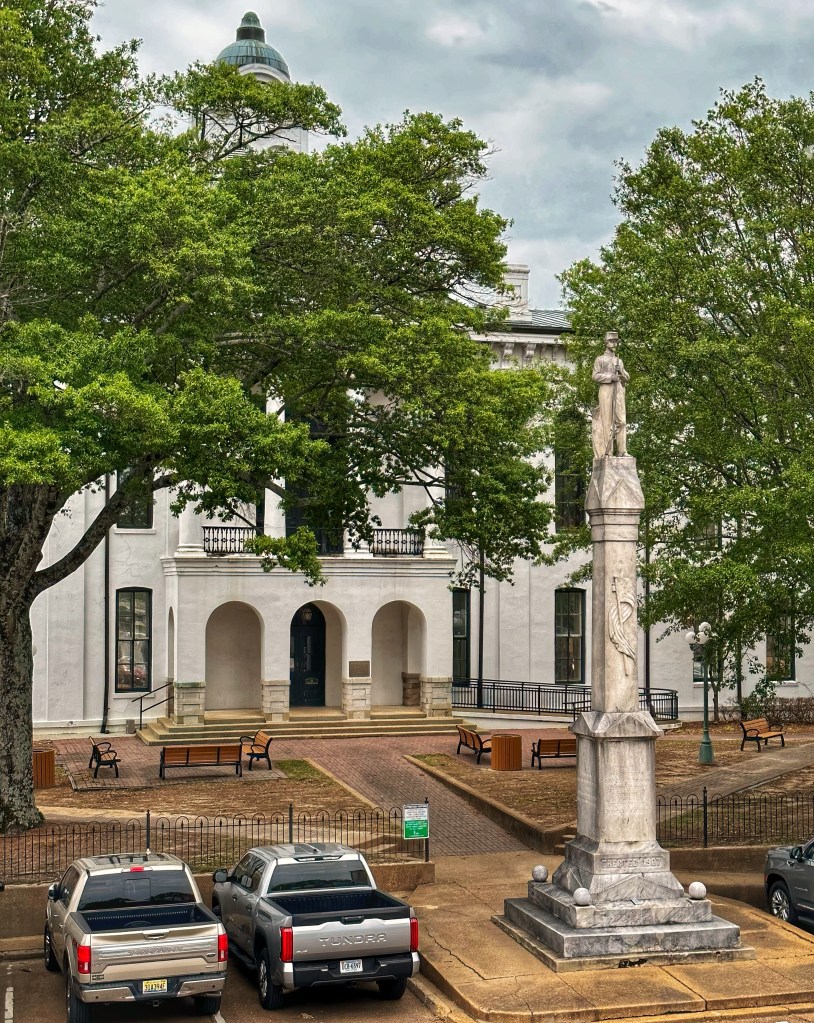
We left the New Orleans area and turned the Tincan north to Oxford, Mississippi. Oxford has an interesting history. It’s home to the University of Mississippi (Ole Miss), where in 1962 James Meredith integrated the university. Oxford was also the home of the author William Faulkner.
Site 19
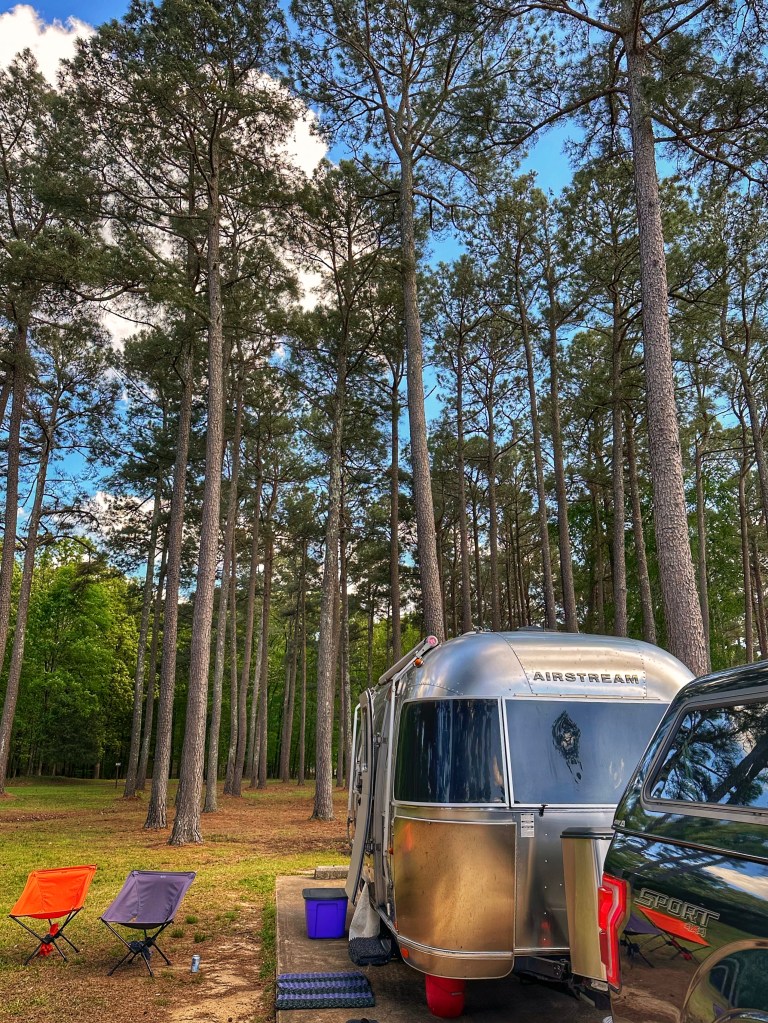
We camped about 30 minutes south of town in an Army Corp of Engineers campground called Persimmon Hill on Enid Lake. This was a great stop, the Army Corp campgrounds are very spacious and often have sewer hookups. This one had hiking, biking and fishing.
We drove into town and were taken aback by the traffic and people wandering around. The Ole Miss baseball team is the defending US Collegiate Champions and they were playing their rivals LSU over the weekend. In addition, Morgan Wallen (we had to ask who he was) was playing two large stadium shows as well. He’s a country artist which explained all the cowboy boots and hats. In spite of the crowds we were able to do most of what we had planned other than wander the University campus.
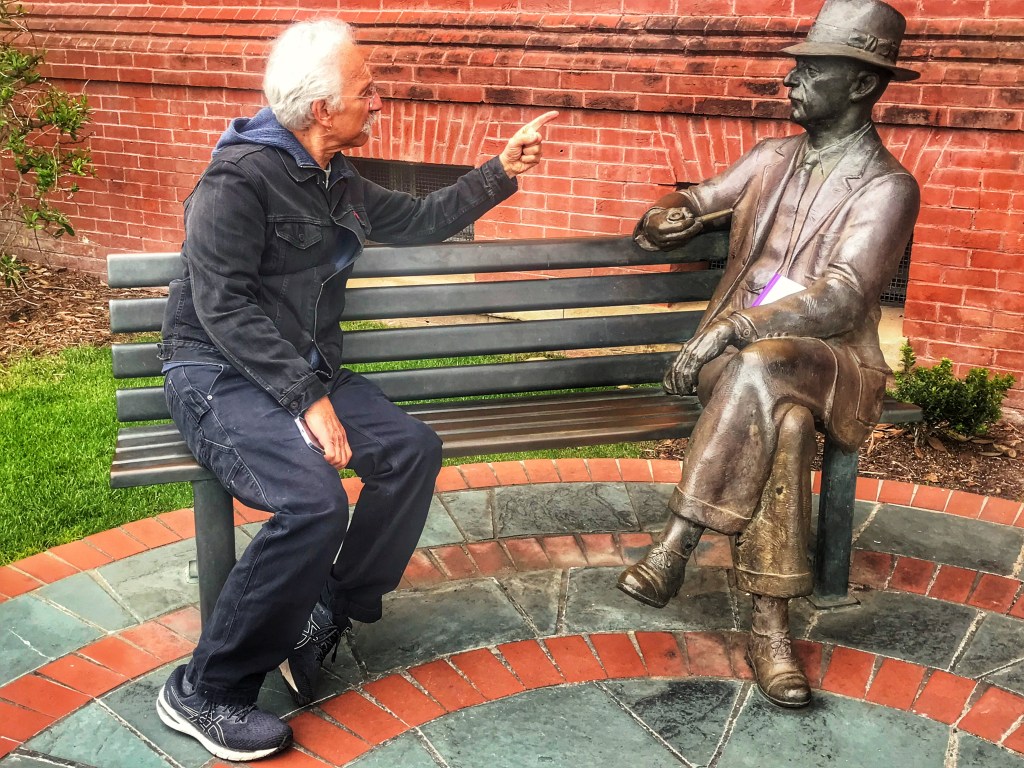
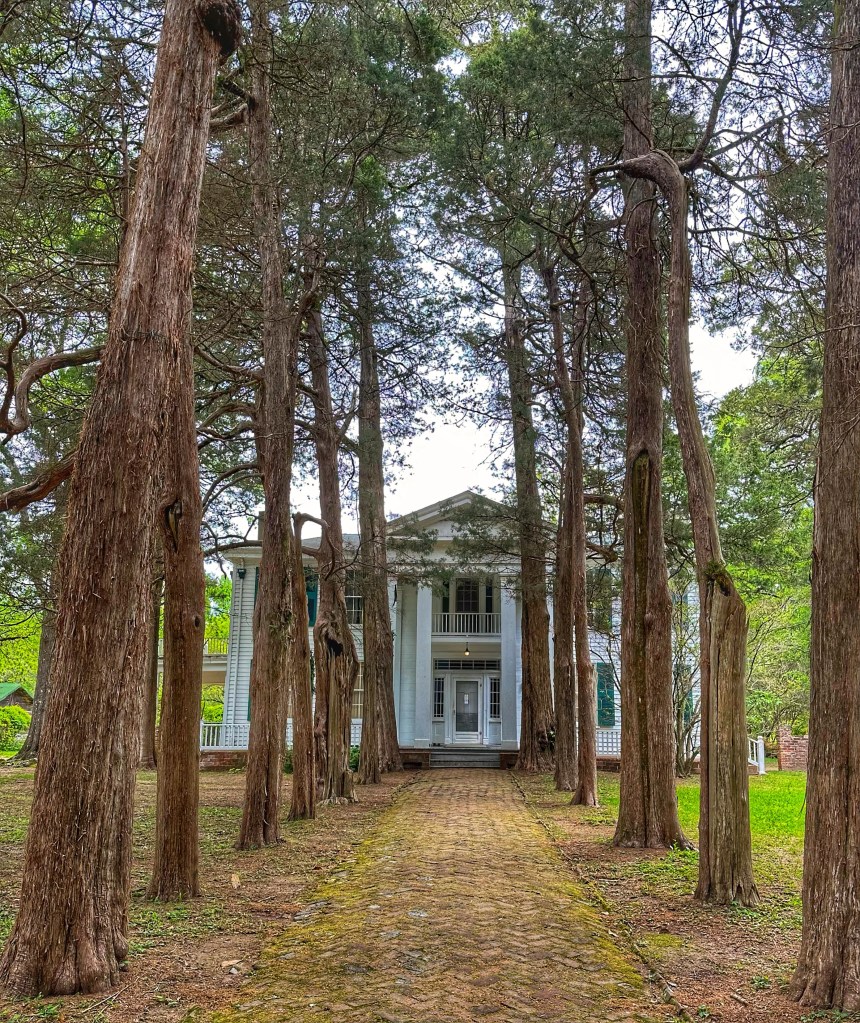
Courthouse Square Hashing it out with Faulkner Faulkner’s home, Rowan Oak
Faulkner never taught at Ole Miss and only attended for three semesters before quitting. However, the University maintains the house and does tours.
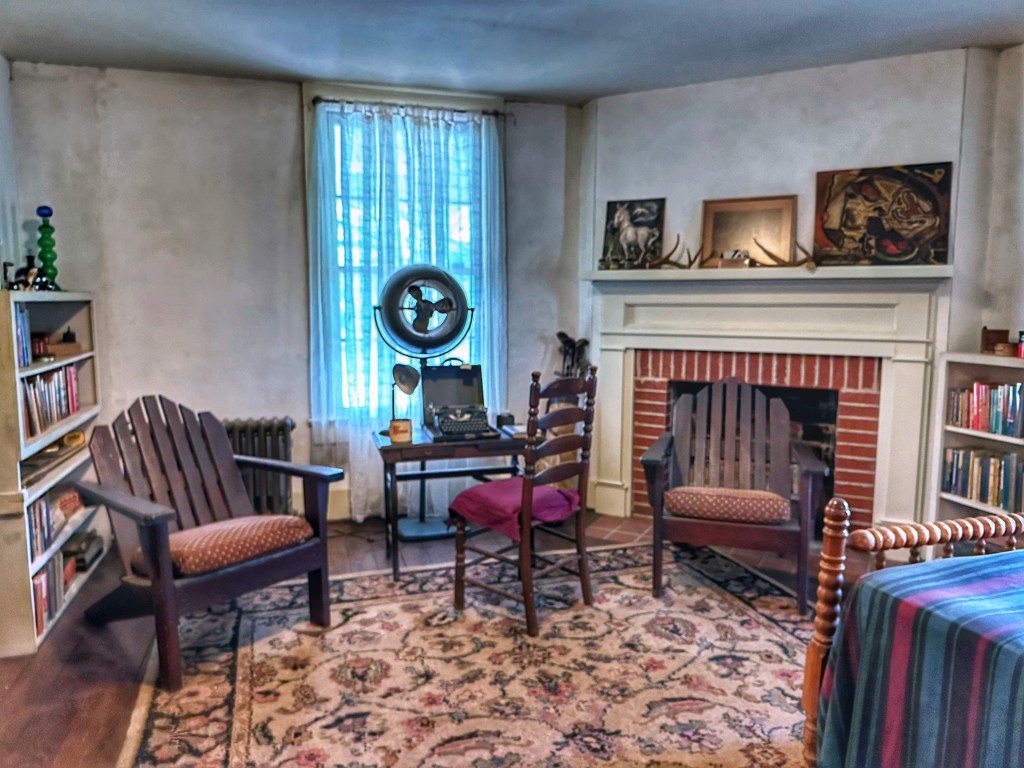
The study where Faulkner wrote
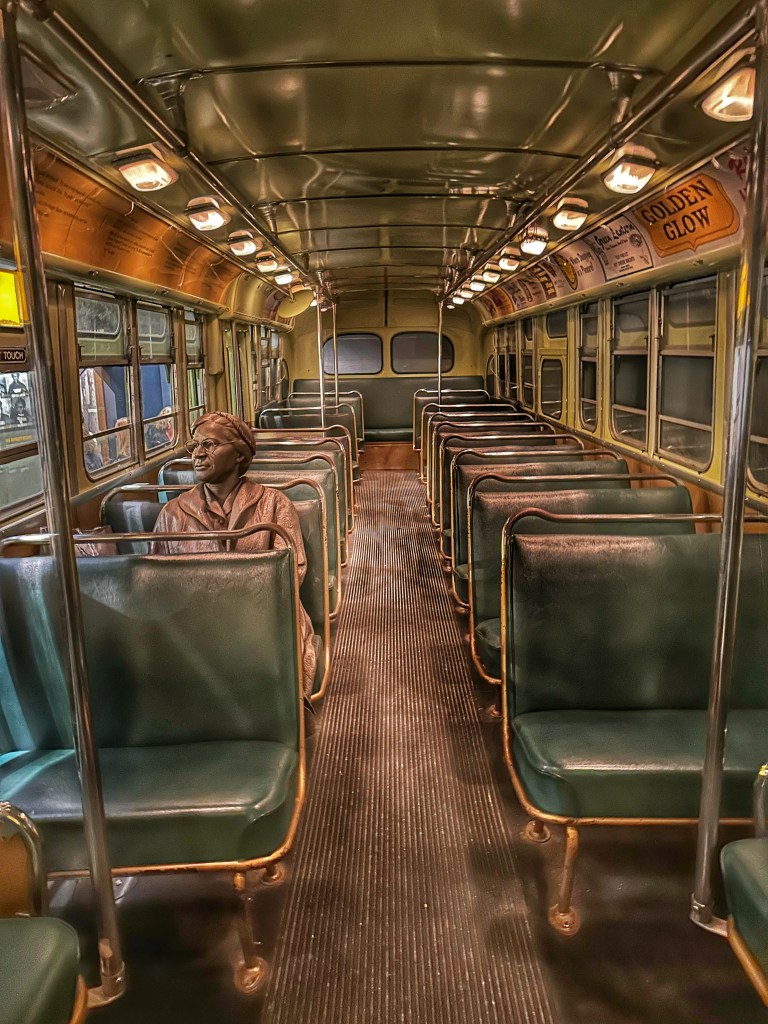
We realized we were only an hour away from the National Civil Rights Museum in Memphis. We’ve wanted to visit for awhile so we took advantage of our proximity to make it happen.
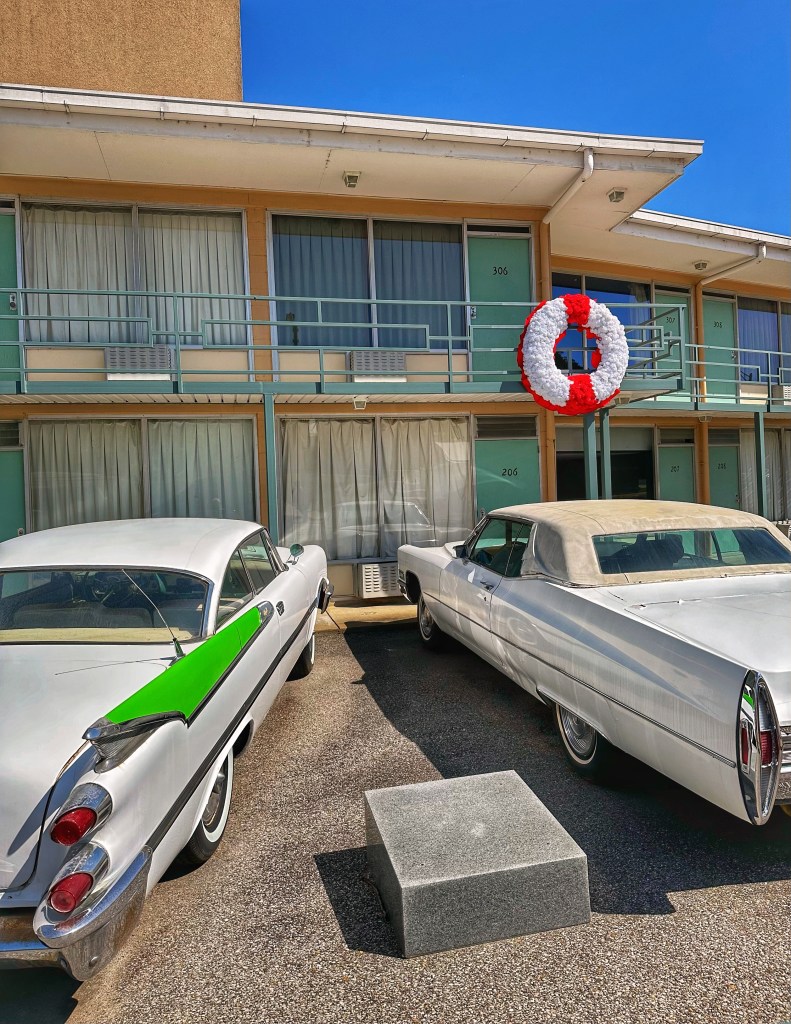
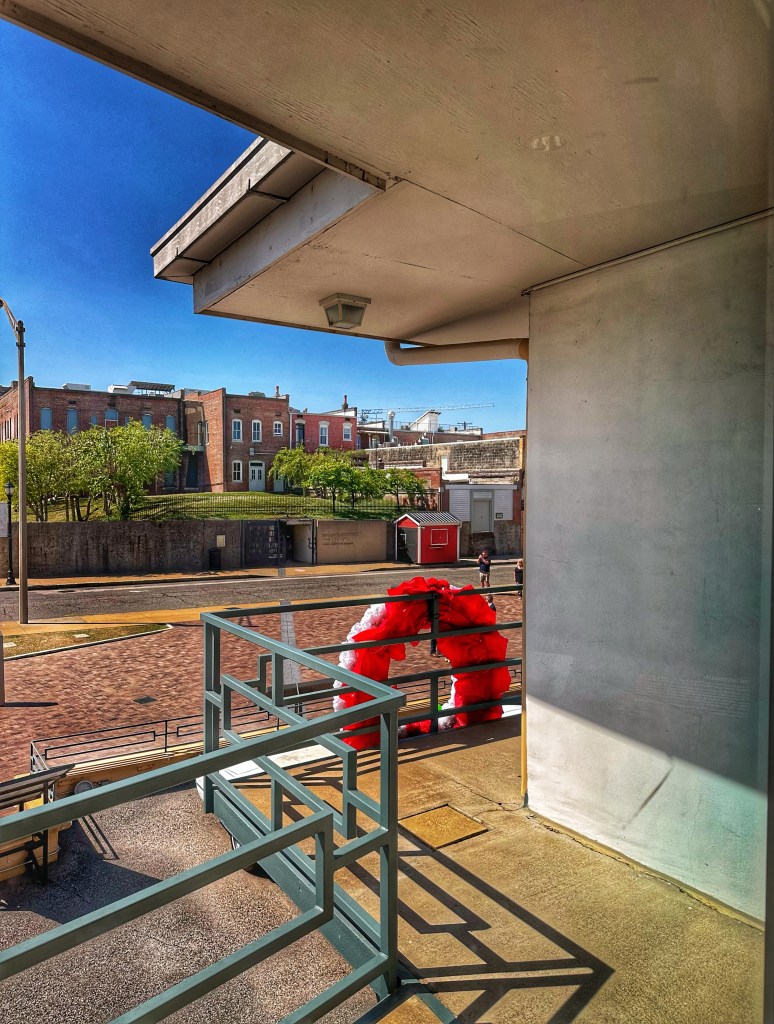
The museum is built around the former Lorraine Motel where Dr. Martin Luther King was murdered in 1968. The museum opened in 1991 and has exhibits that trace the US civil rights movement from the 17th century to the present. The museum is very well done and worth checking out.
Rosa ParksThe balcony outside Room 306On the balcony looking towards the rooming house where the fatal shot originated
While we ended our stay in Mississippi on a somber note we enjoyed our visit and are sure to return. But it’s time to pack up and head to Kentucky.
When visiting New Orleans we always camp at Bayou Segnette SP on the west bank of the Mississippi River. A twenty minute drive gets us to Algiers Point and a short ferry trip across the Mississippi to the French Quarter.
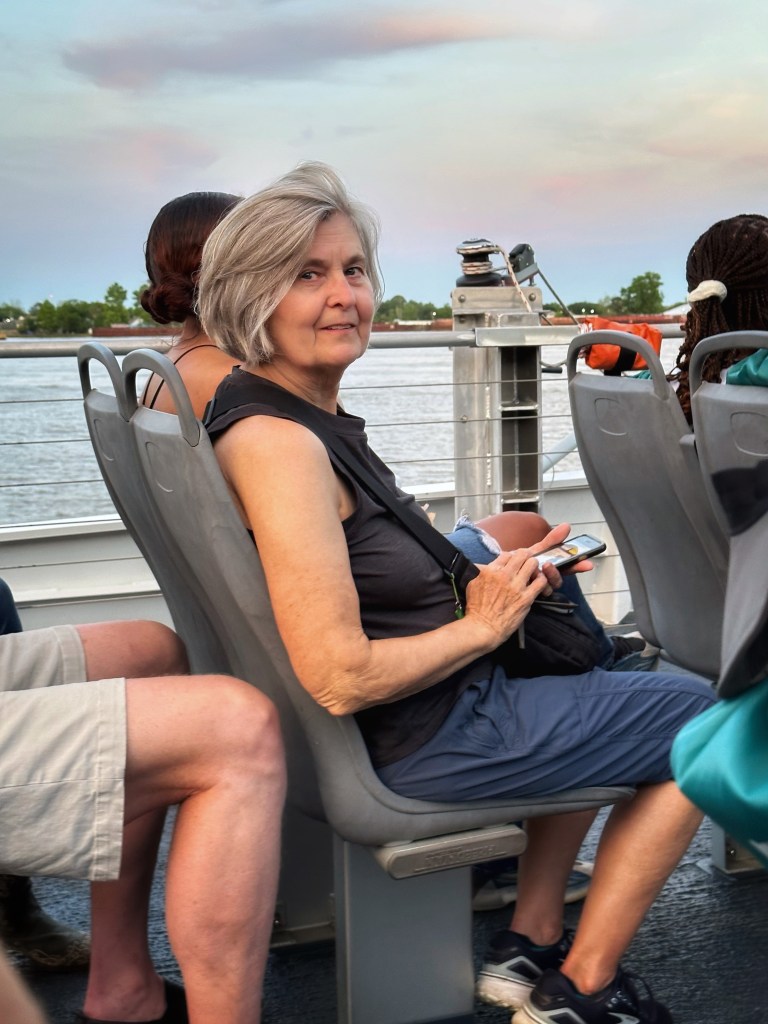
Site 98Festival Bound
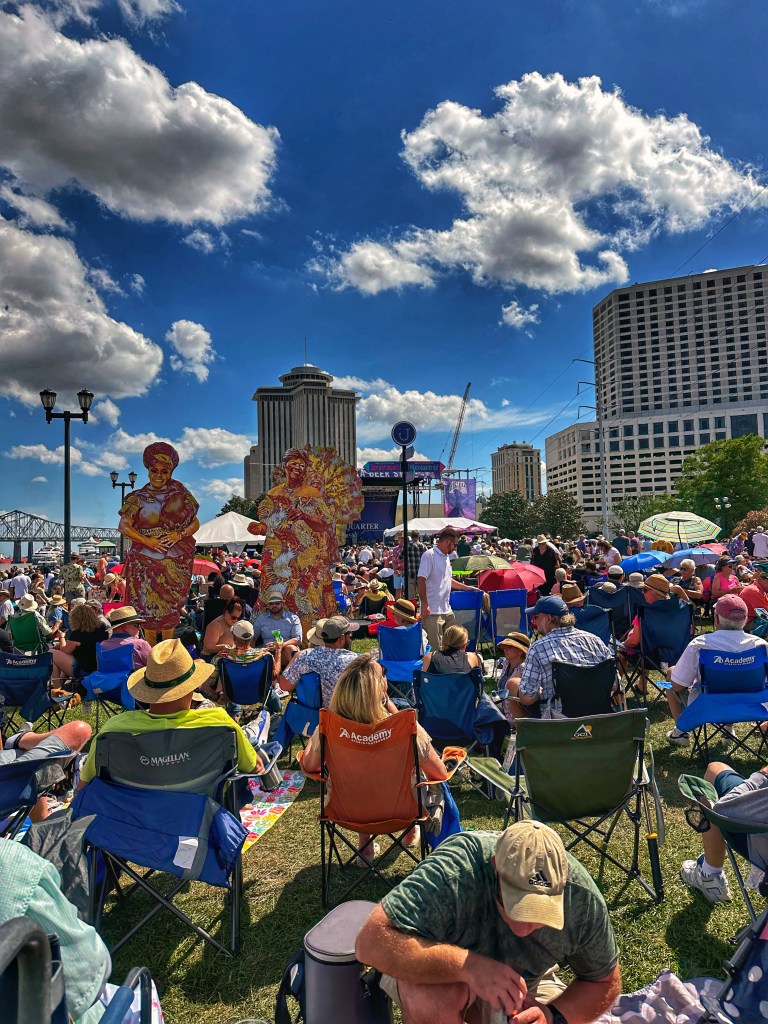
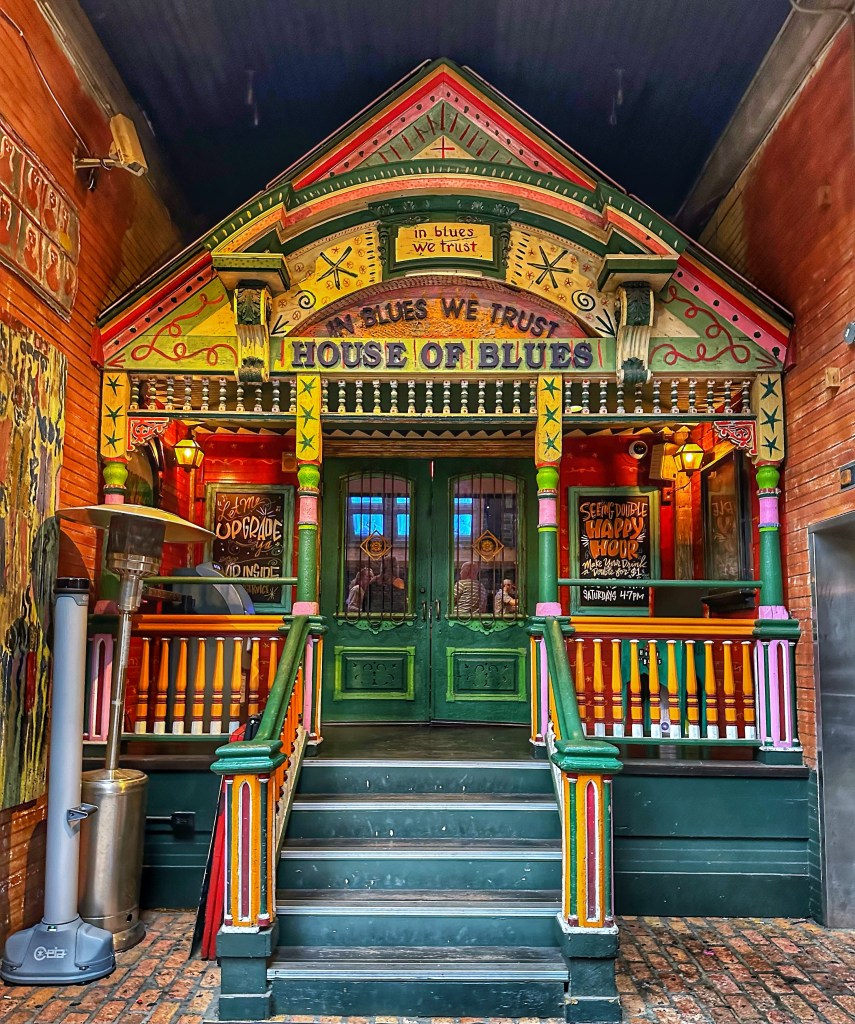
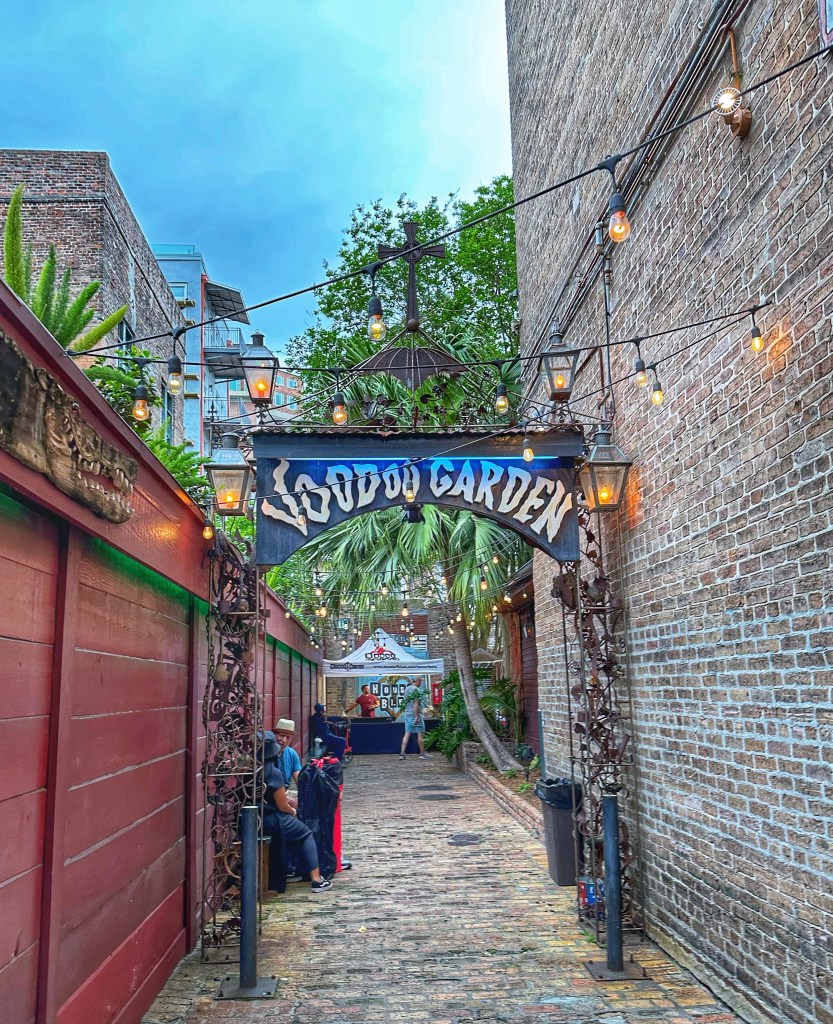
This was our second visit to the French Quarter Festival. The festival runs for four days and is free. Stages are set up throughout the Quarter and features a variety of local and regional talent. Good food and friendly people make for a fun time.
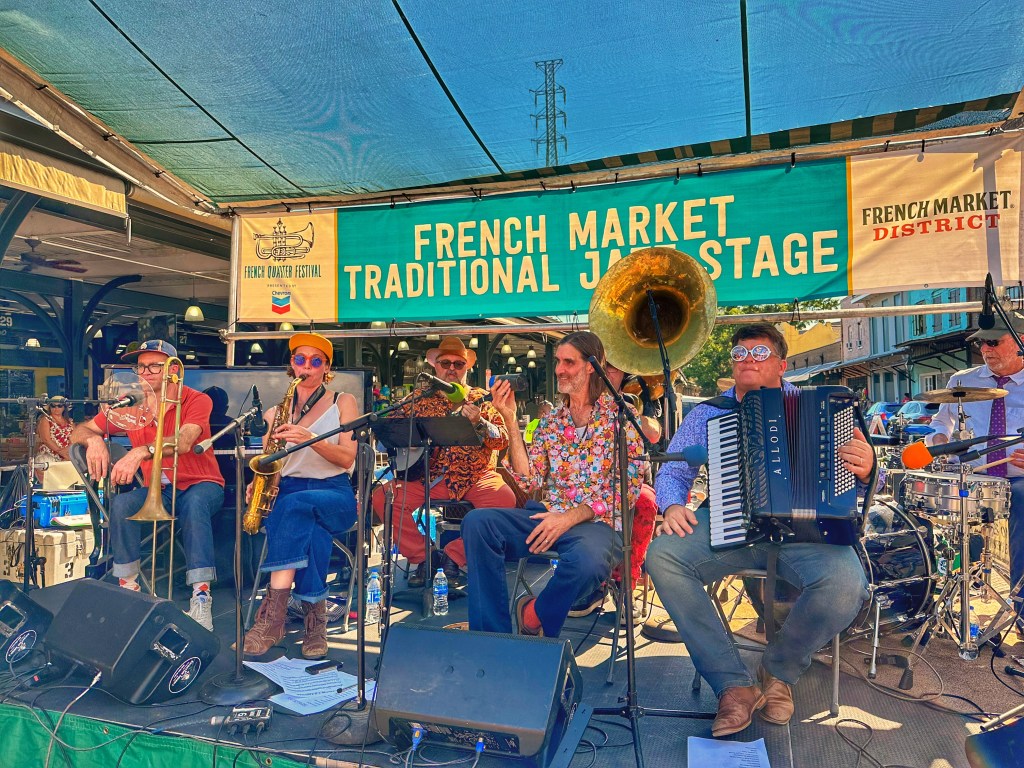
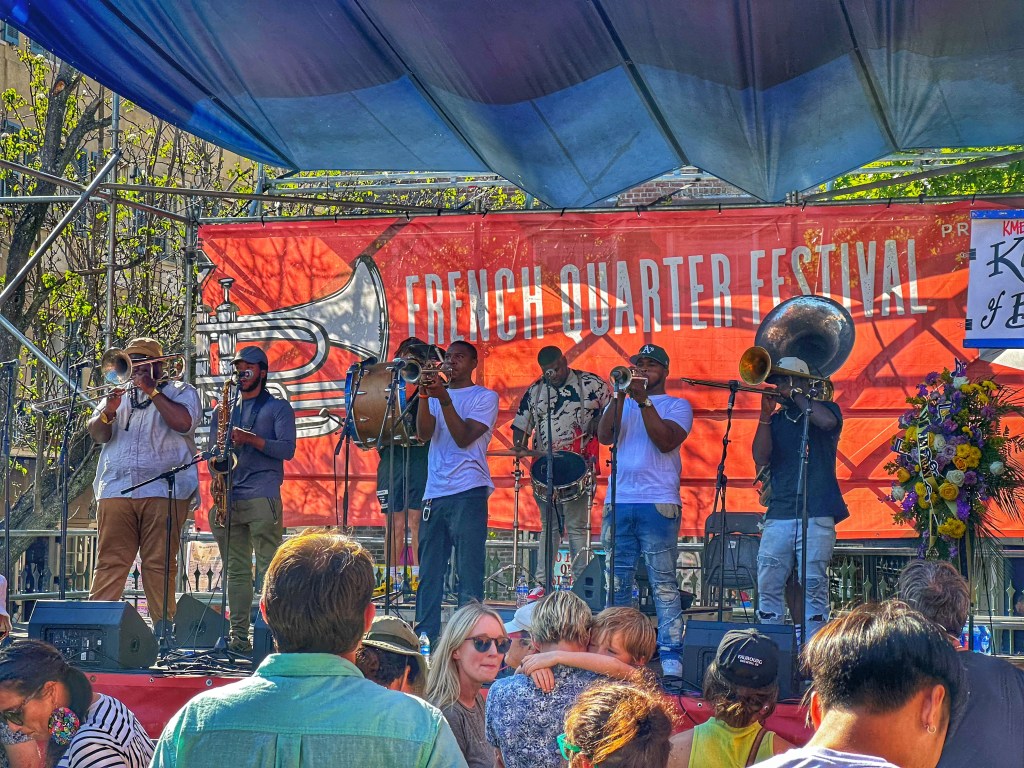
The Abita Stage, always well attendedThe Panorama Jazz Band The Kings of Brass
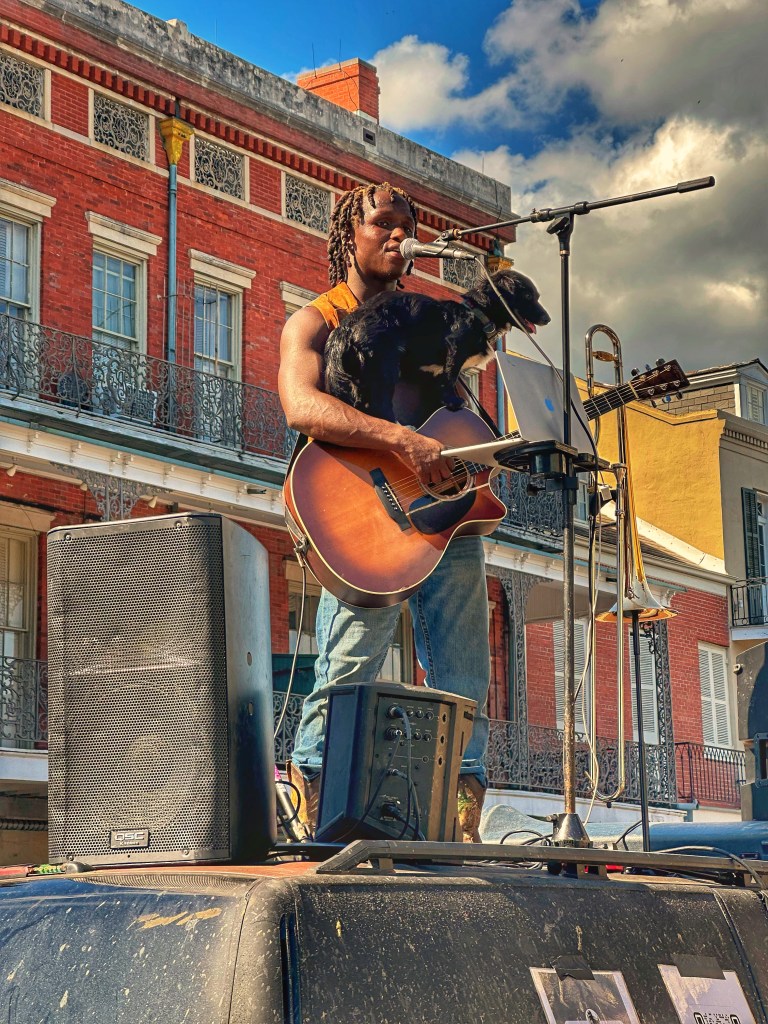
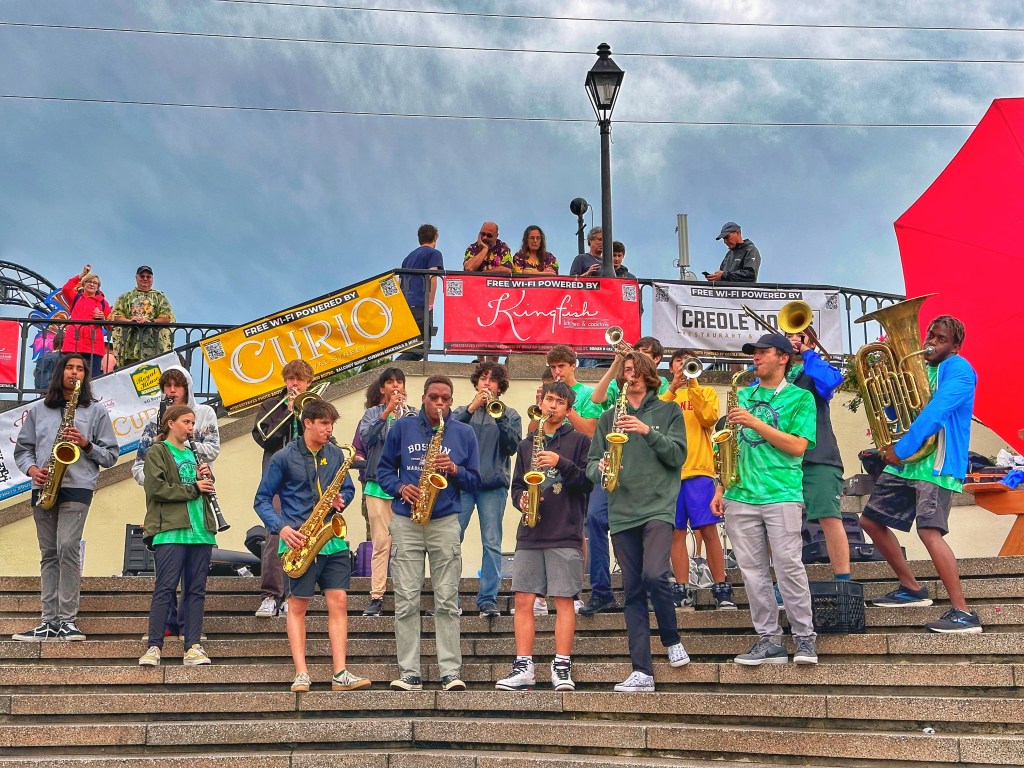
In addition to the formal stages there are plenty of street performers to entertain you as you wander the streets.
This group of high school musicians got together to busk @ the festival
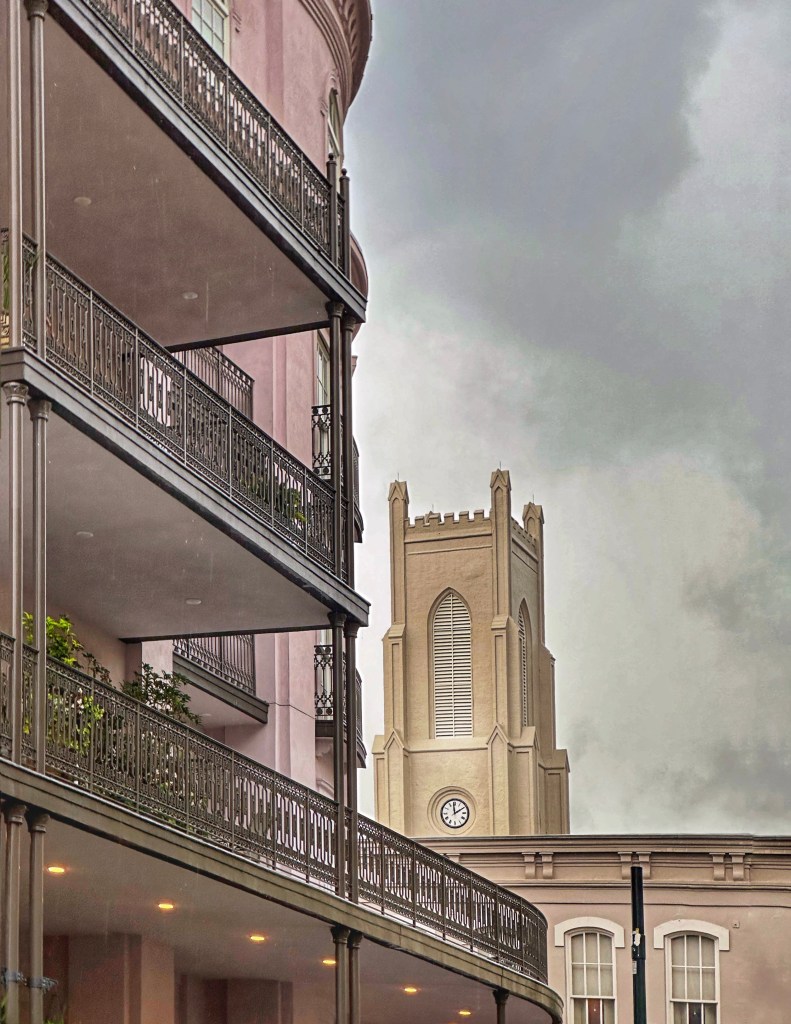
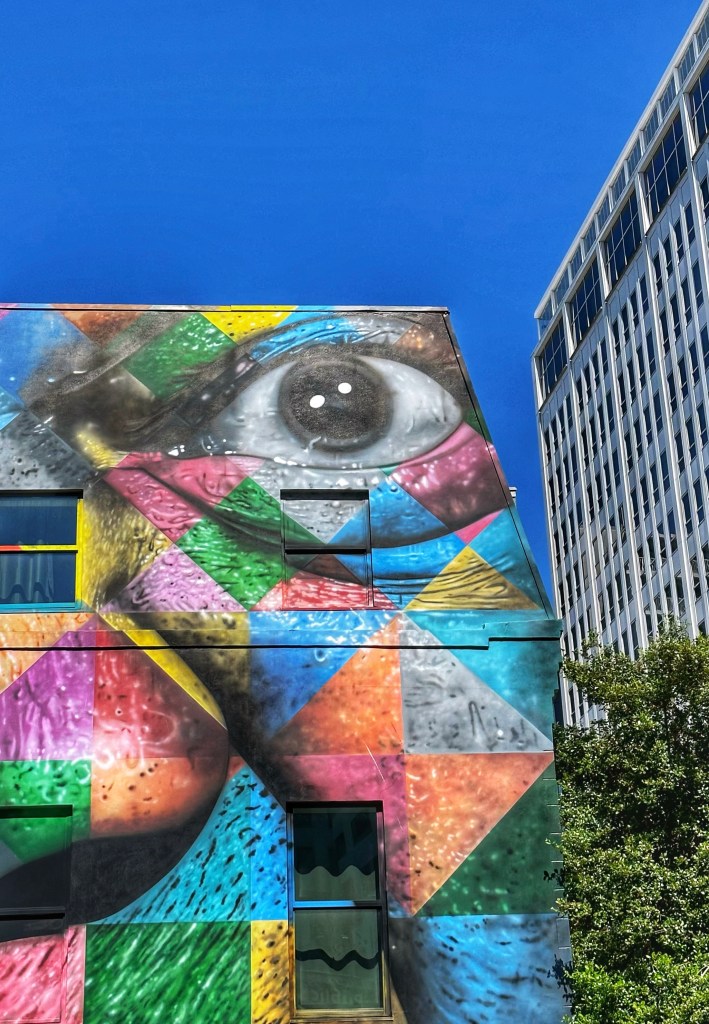
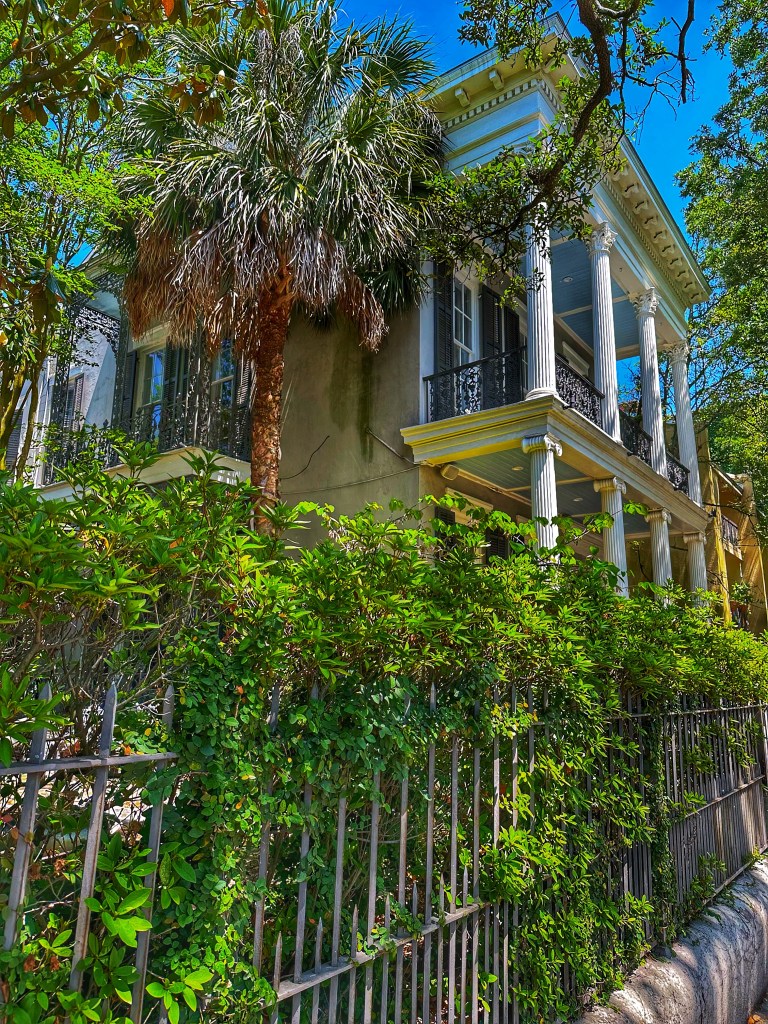
Wandering New Orleans is always a treat with lots of interesting architecture.
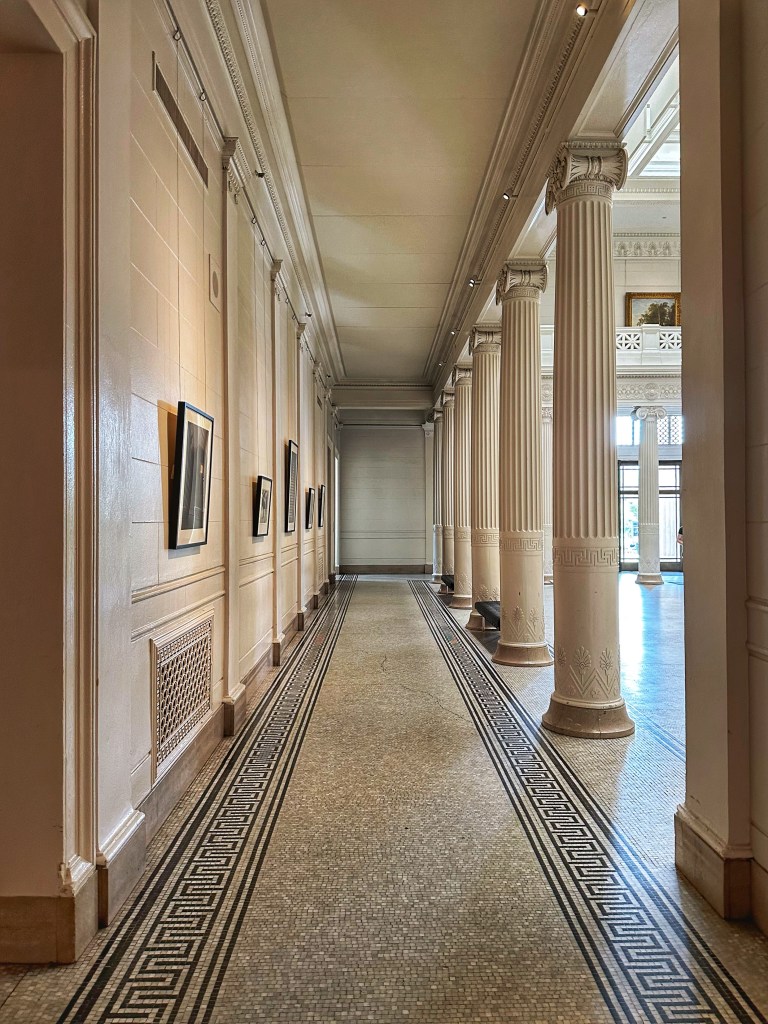
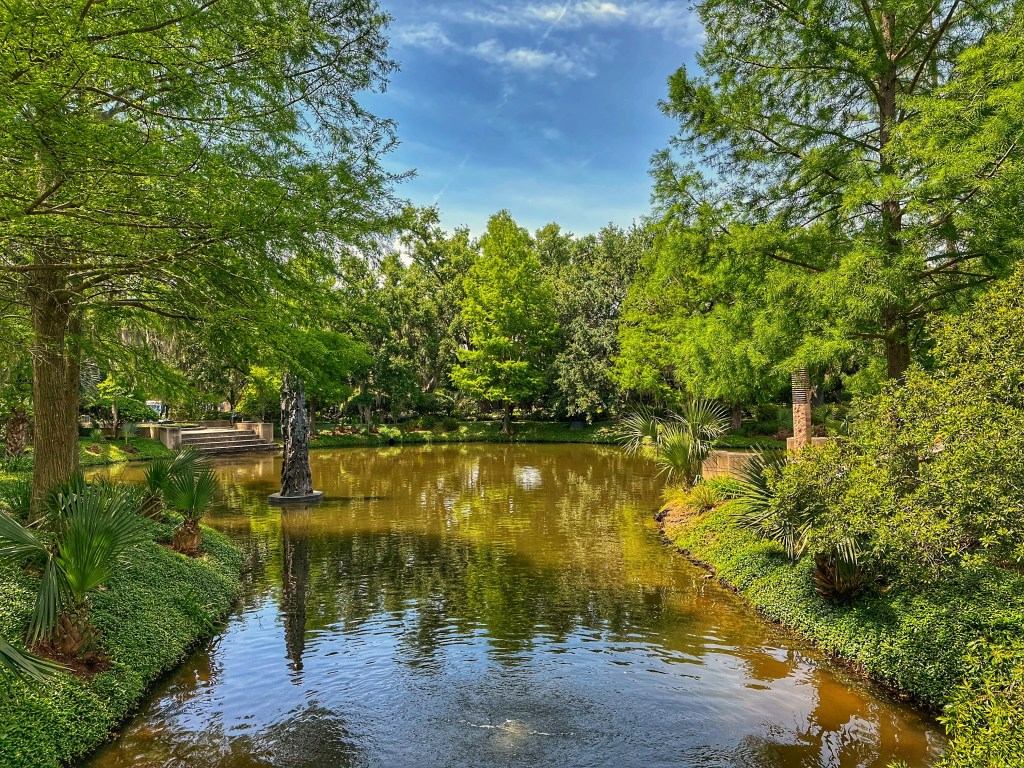
Whenever we visit New Orleans we make a point to visit the 1,300 acre City Park. The park is about 50% larger than Central Park in NYC and is home to the New Orleans Museum of Art (NOMA), a sculpture garden, a botanical garden and lots of open space.
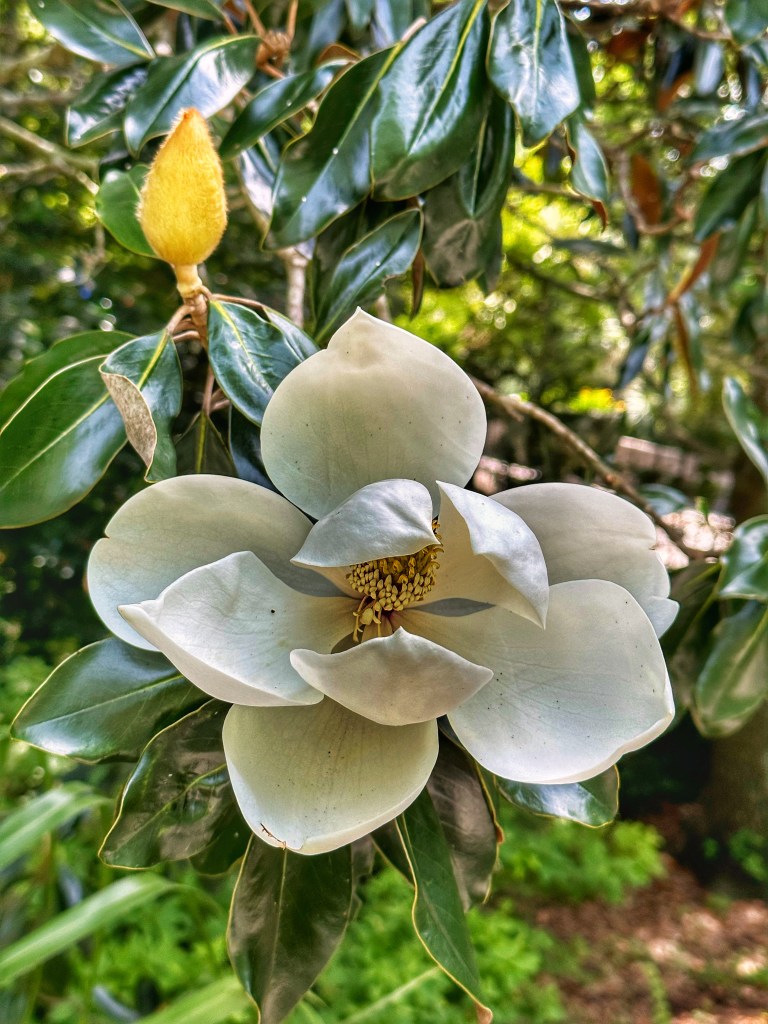
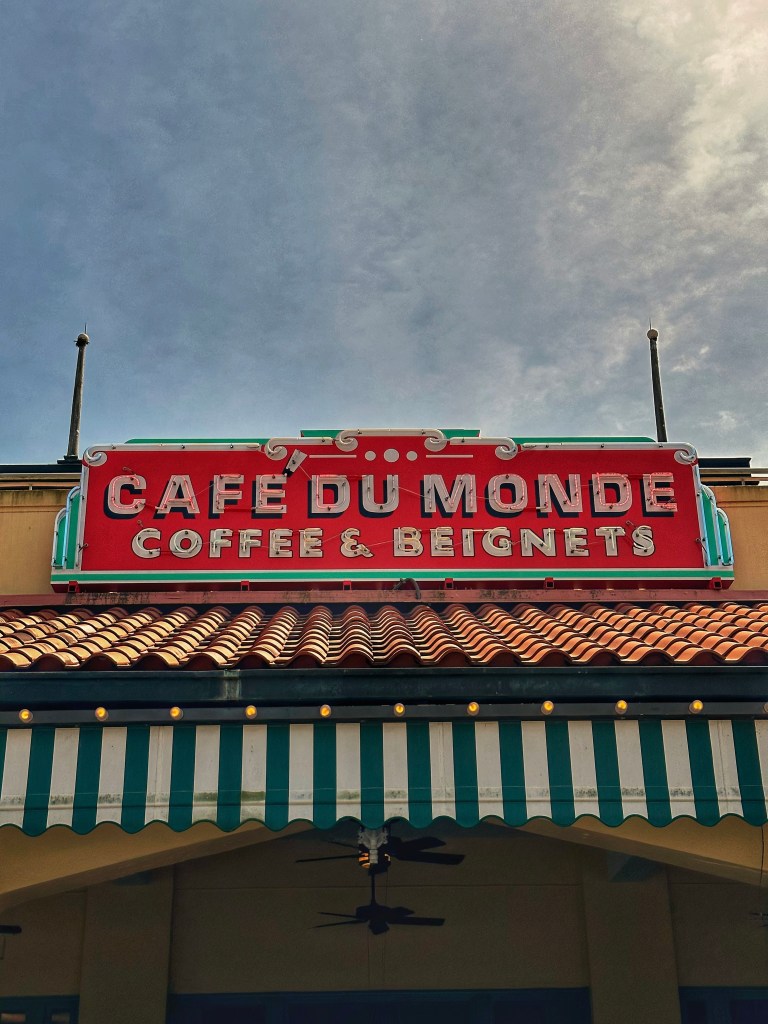
NOMAOne of Nick Cave’s Sound Suits at NOMAPart of the sculpture gardenThe Magnolia Trees were blossoming The park has our favorite coffee and beignet stop
New Orleans has lots of interesting neighborhoods to explore, the Bywater, Marigny, Treme, Irish Channel and the Garden District to name a few. With limited time we decided to wander the Garden District.
Lafayette Cemetery founded in 1833
You never know what you’ll see as you wander NOLA.
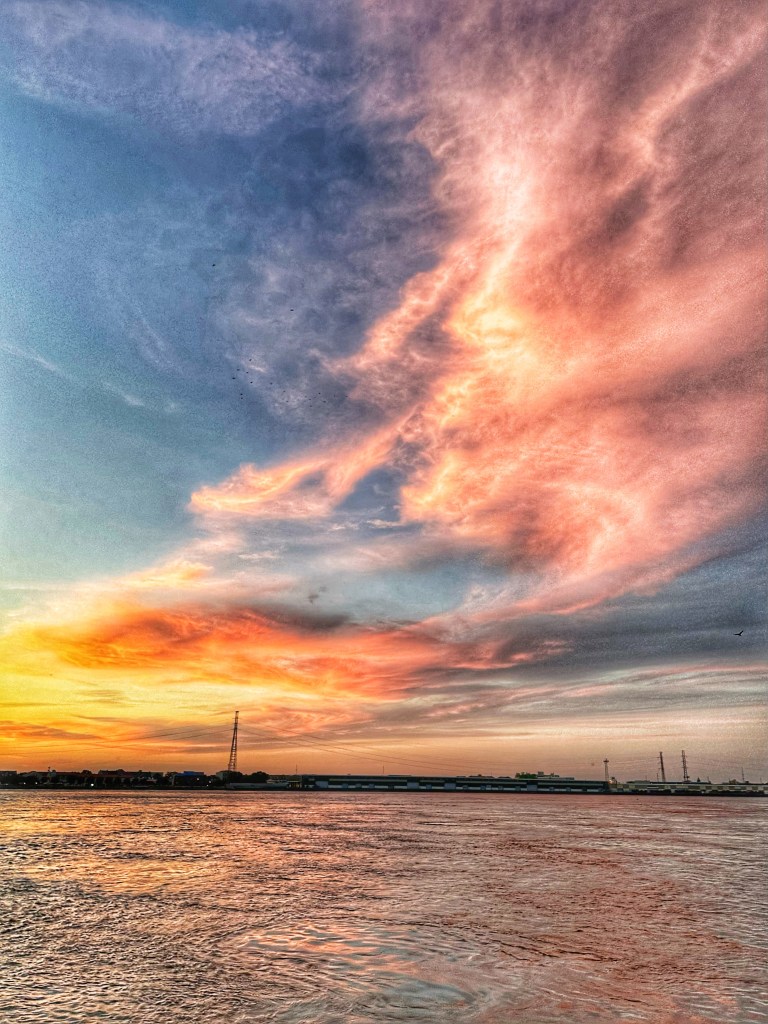
Sunset on the Mississippi River
After the festival we moved our base of operations to the north shore of Lake Pontchartrain and Fairview River SP.
Site 29
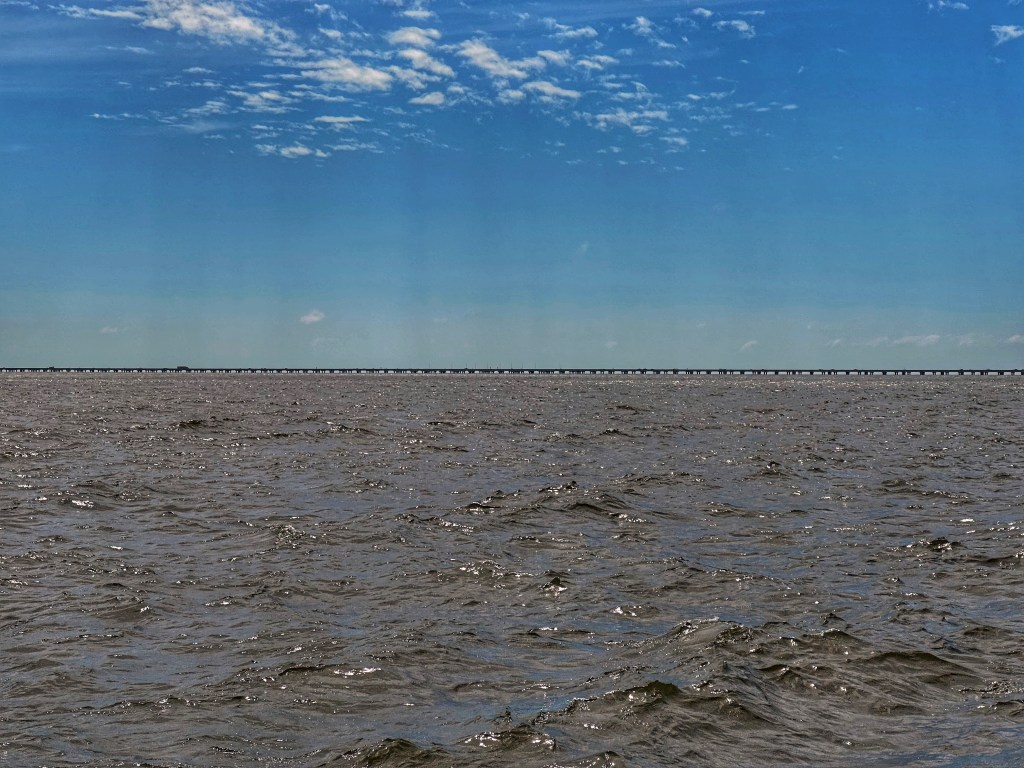
To get to the north shore of Lake Pontchartrain you have to travel the 24 mile causeway from New Orleans.
It’s a big lake
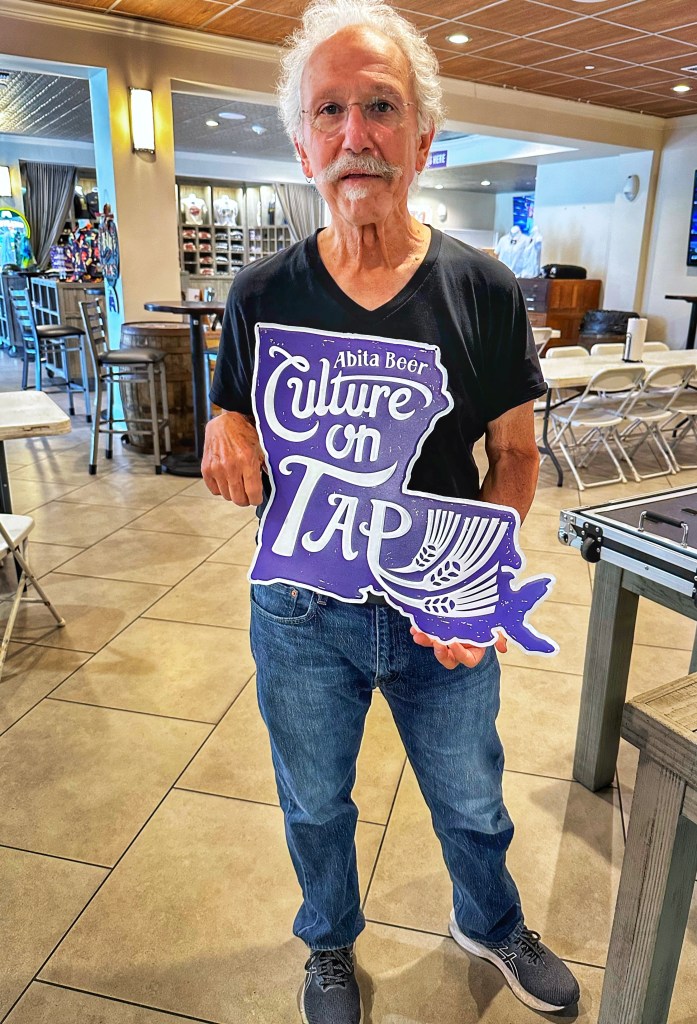
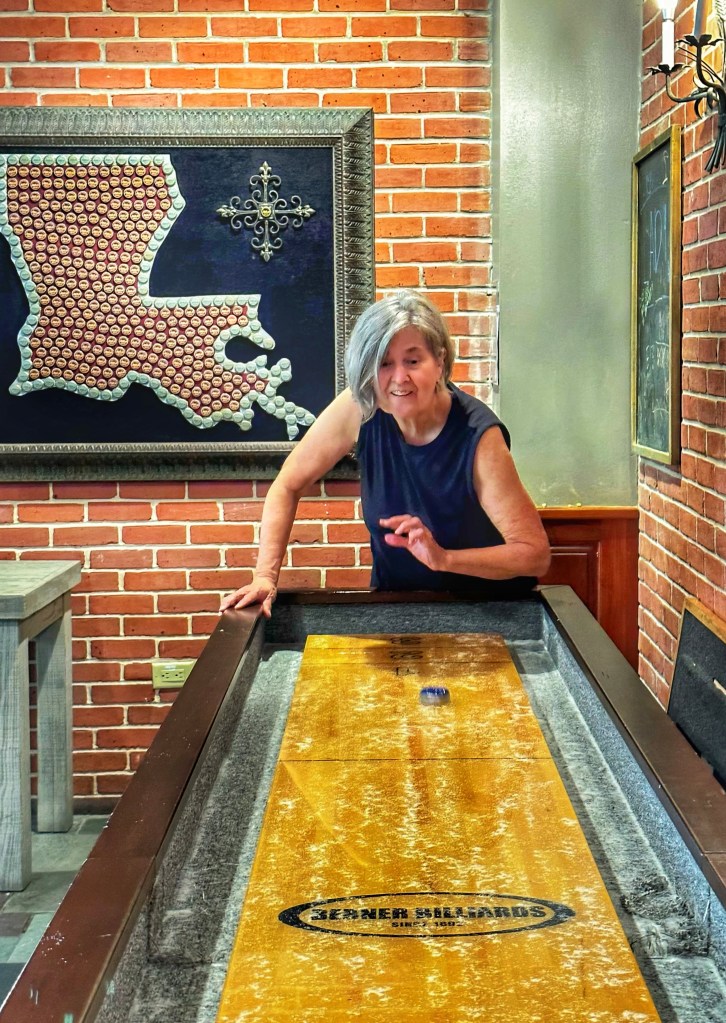
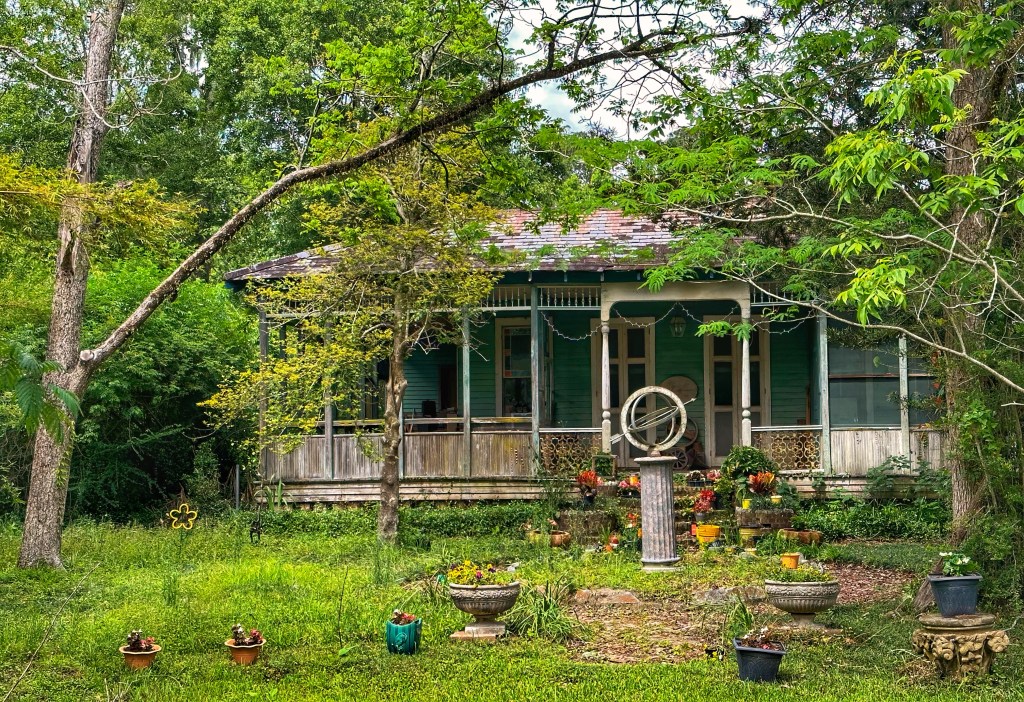
Situated along the north shore of the lake are a number of small towns that we wanted to check out. Abita Springs, home to Abita brewing was one of them.
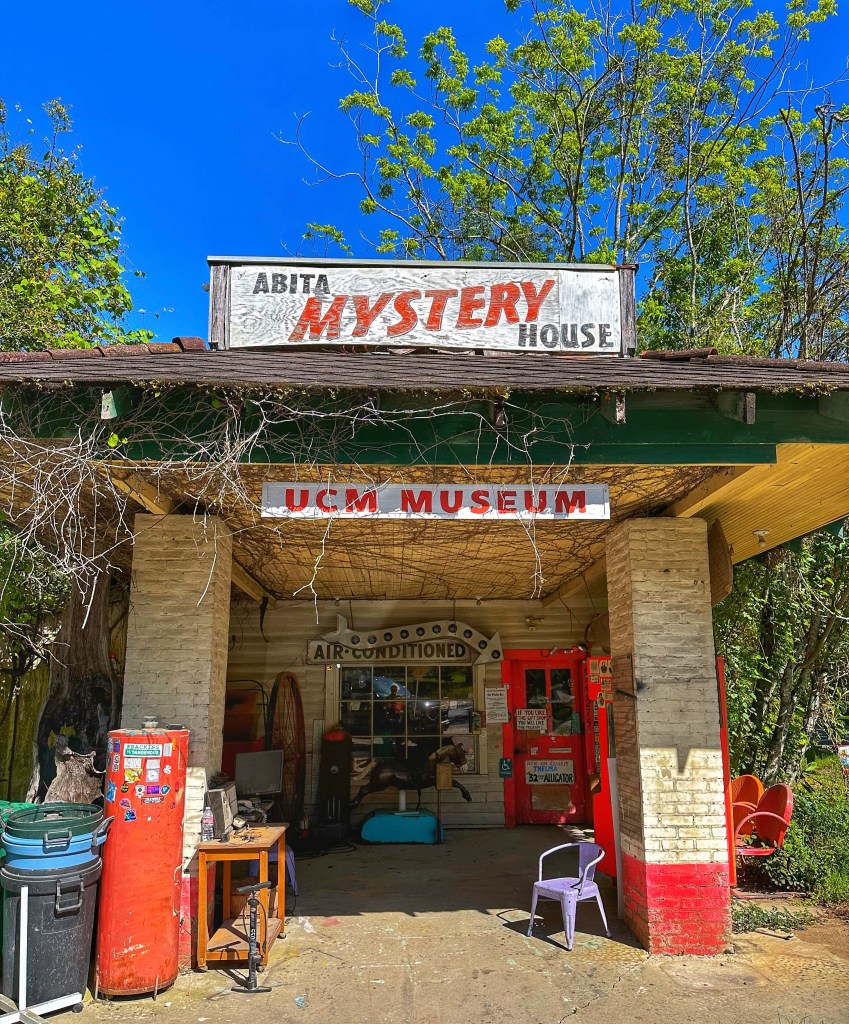
Pat’s winning shuffle board form A hoarder’s delight
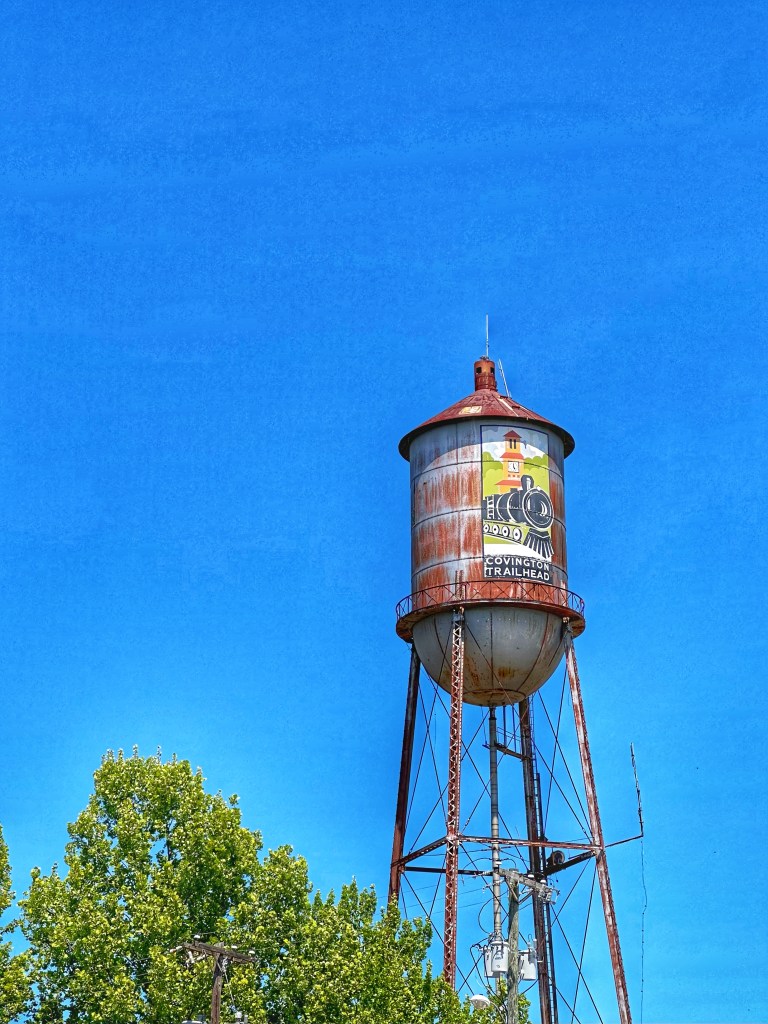
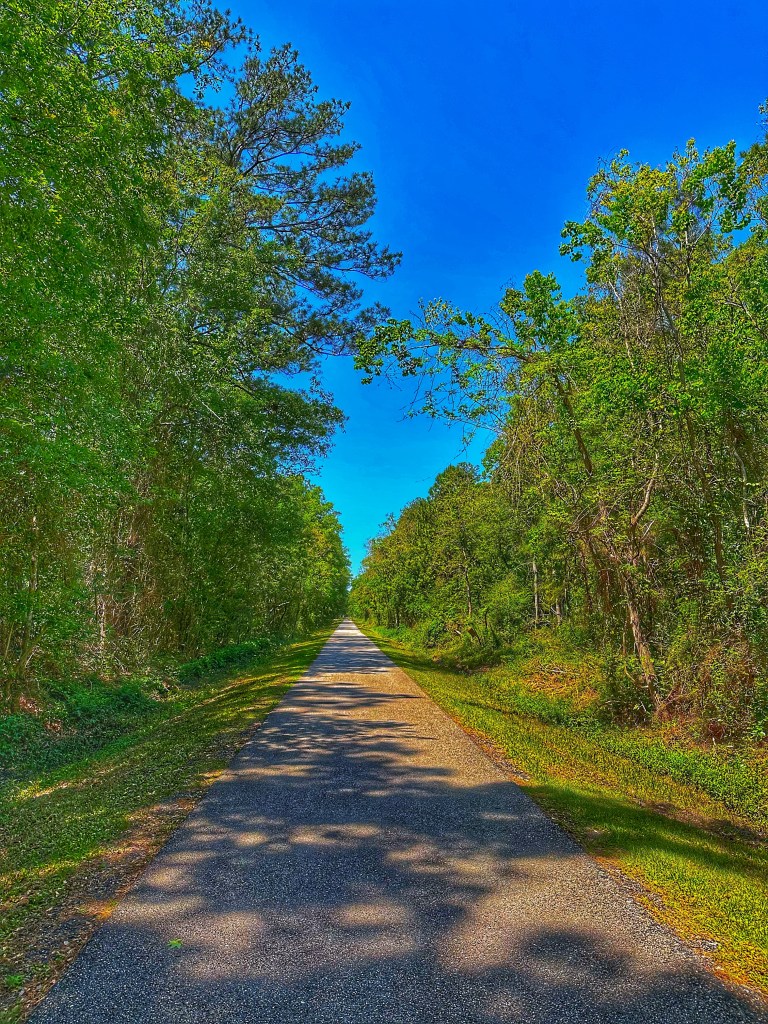
Connecting many of the north shore towns is the 31 mile Tammany Trace asphalt bike path. We road a section in Covington and Mandeville.
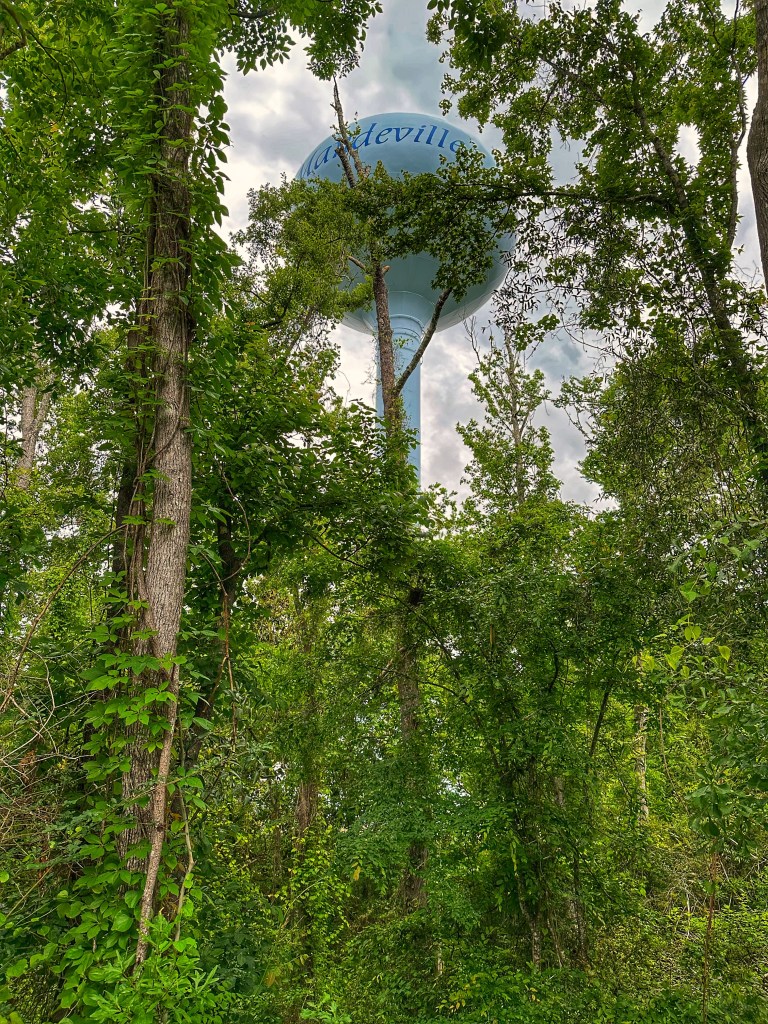
Along the Trace in Mandeville
We’ve reached the point in our trip where it’s time to start heading north. The trip home won’t be rushed, we still have some new locales to explore.
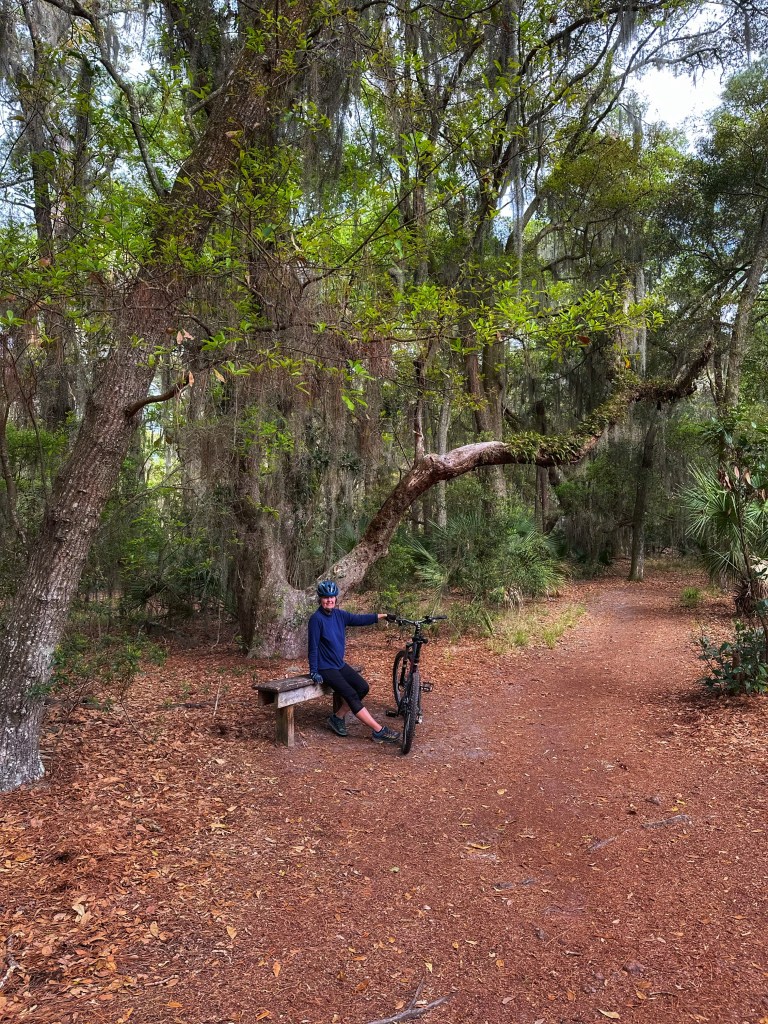
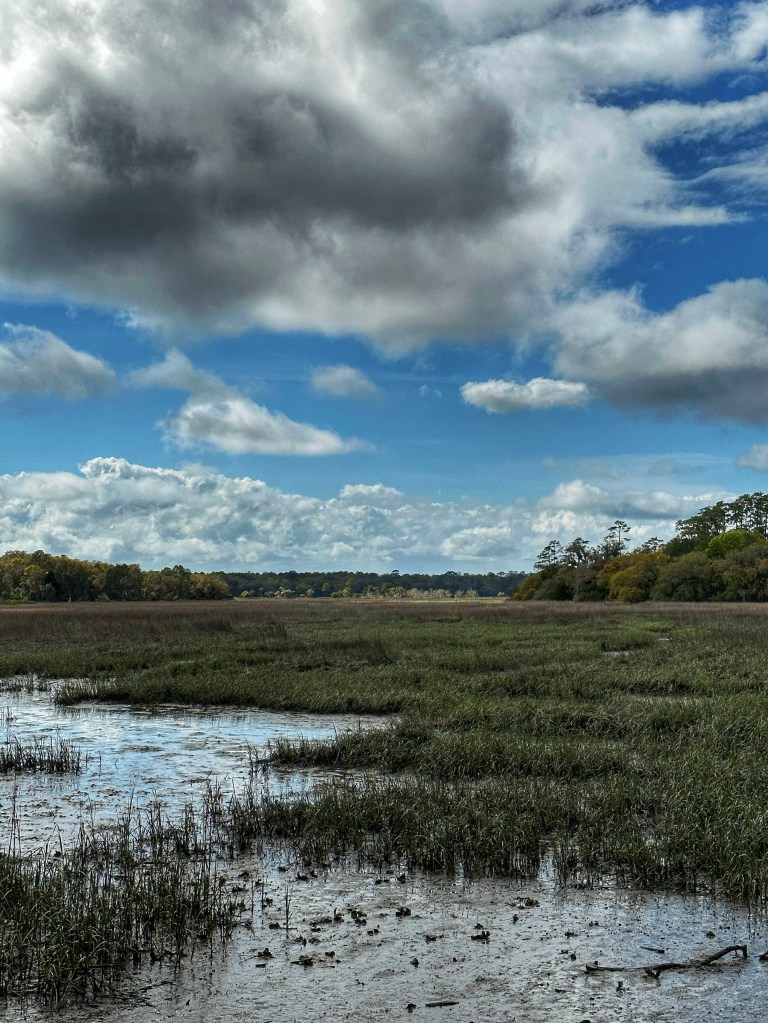
Some of the finest state campgrounds we’ve found are located in Georgia. However, Skidaway Island State Park is our favorite. It’s a beautiful spot located in a live oak hammock and surrounded by tidal salt marshes.
Site 6
Part of the park’s appeal is its proximity to downtown Savannah. We were here last October but didn’t spend much time in the city. The park’s natural beauty kept us close to home.
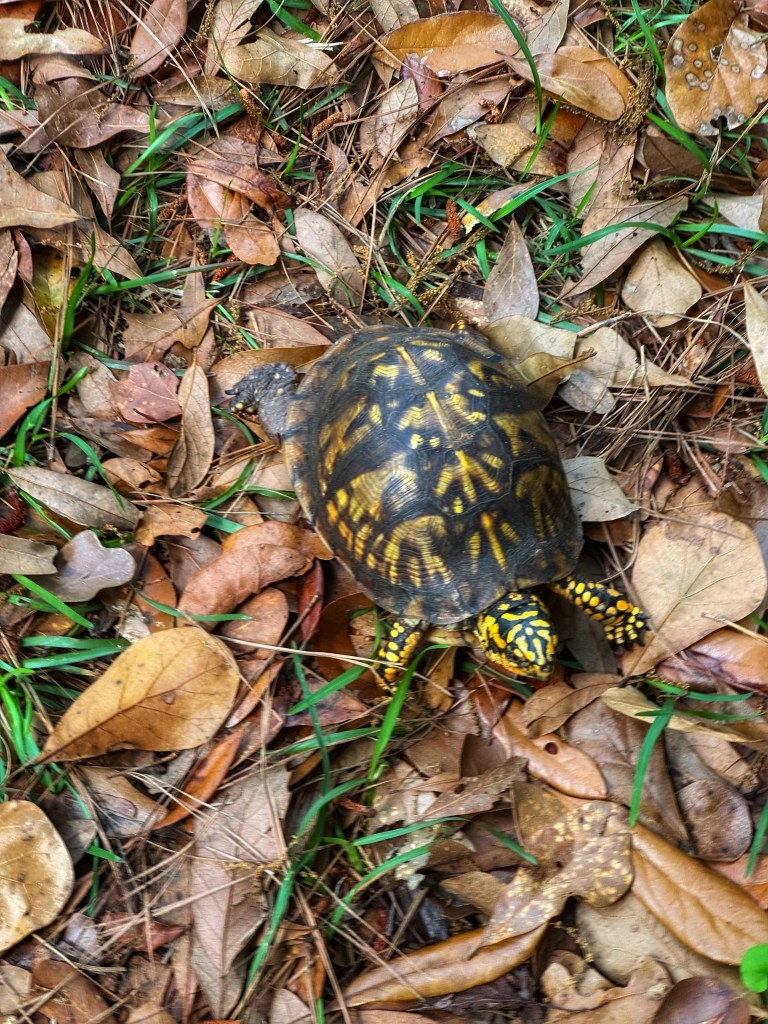
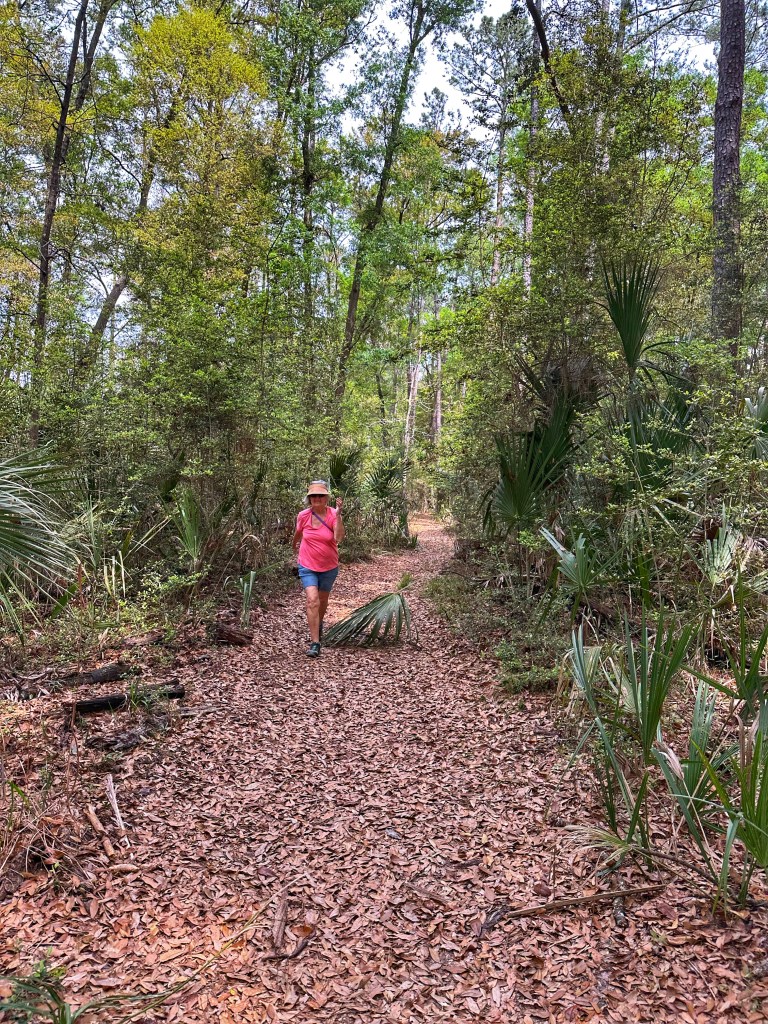
Ornate Box Turtle as seen while biking Salt Marsh
We love biking and hiking the park trails and just relaxing around camp. That’s basically what we did during our last visit. This time we timed our stop to coincide with the Savannah Music Festival. The plan is to spend more time in the city attending concerts.
The Metal Building at the Trustees Garden
The festival venues are spread around the city. This year saw the addition of two new performance spaces, The Trustees Garden (a large outdoor space) and The Metal building. Our first show happened here.
Christian Sands High Wire Trio
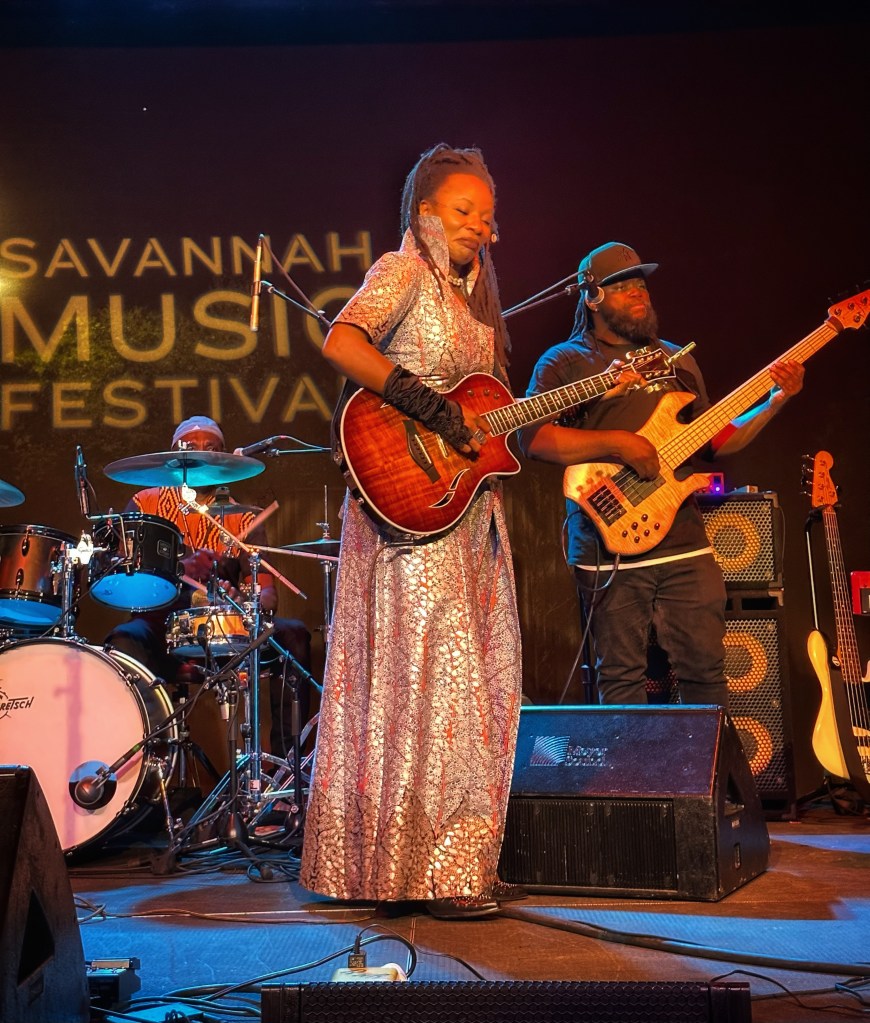
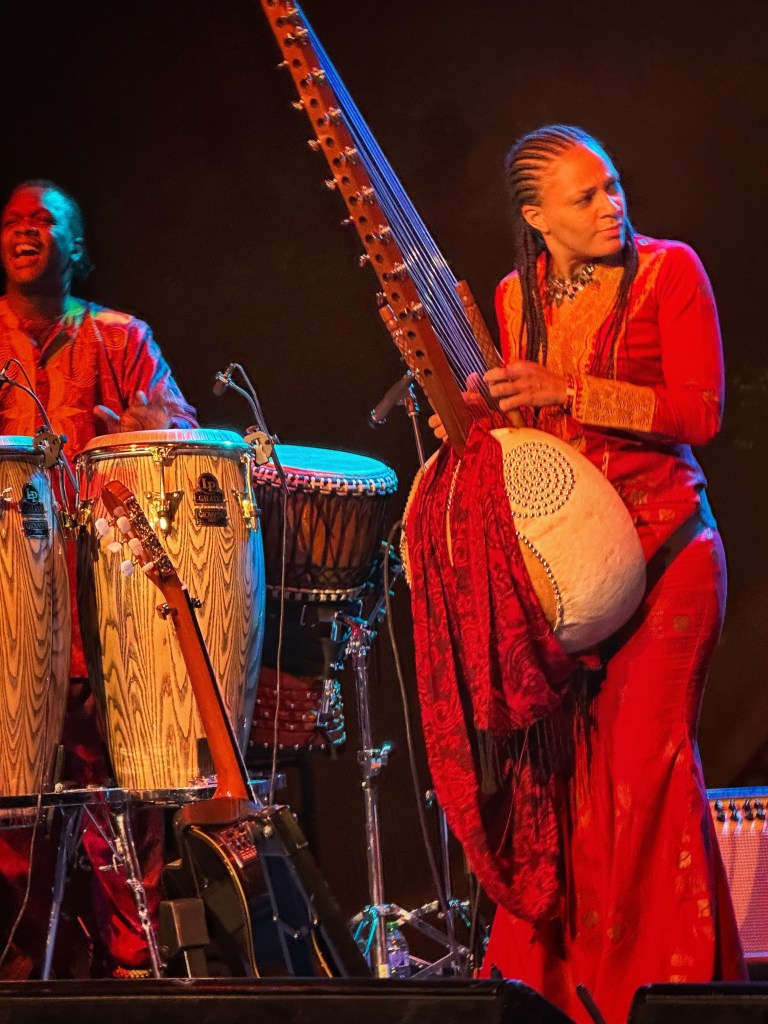
The festival does not focus on one style of music, it’s motto is “A world of music. One city.” We took the opportunity to enjoy some bands from Africa.
Natu Camara from GuineaSoba Jobarteh from Gambia
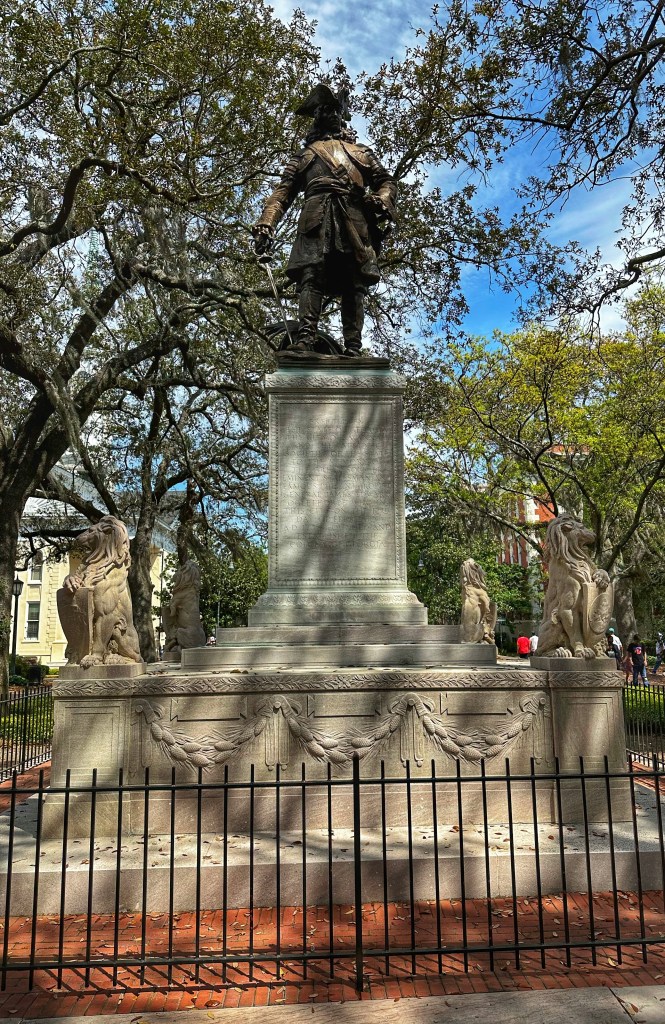
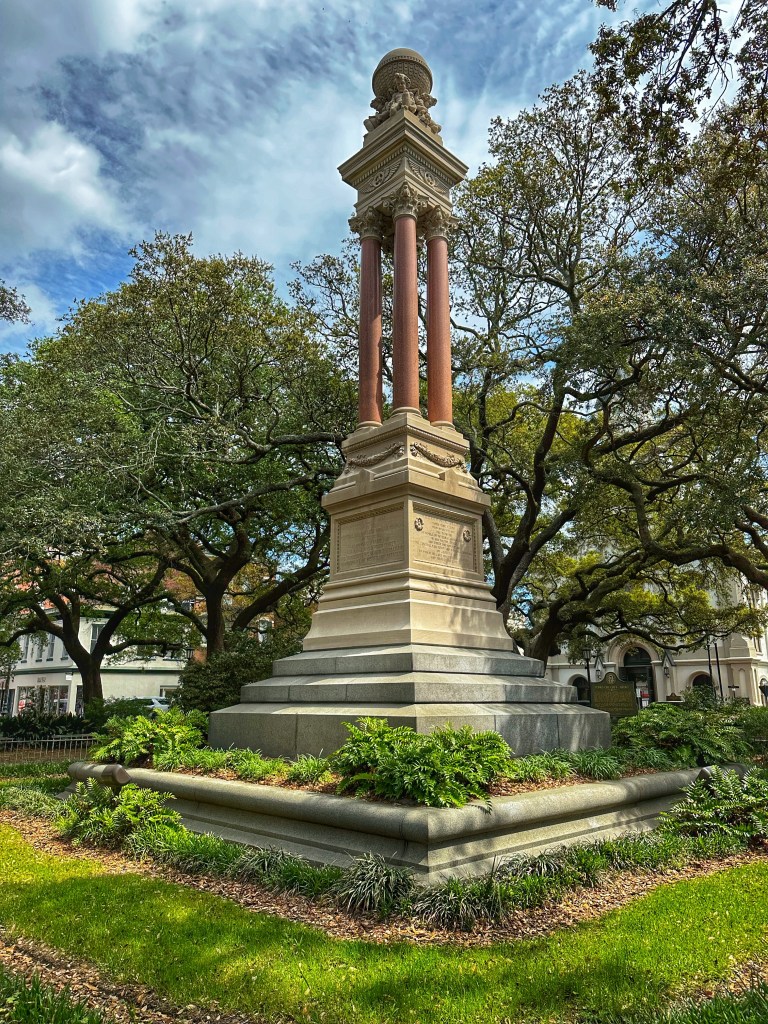
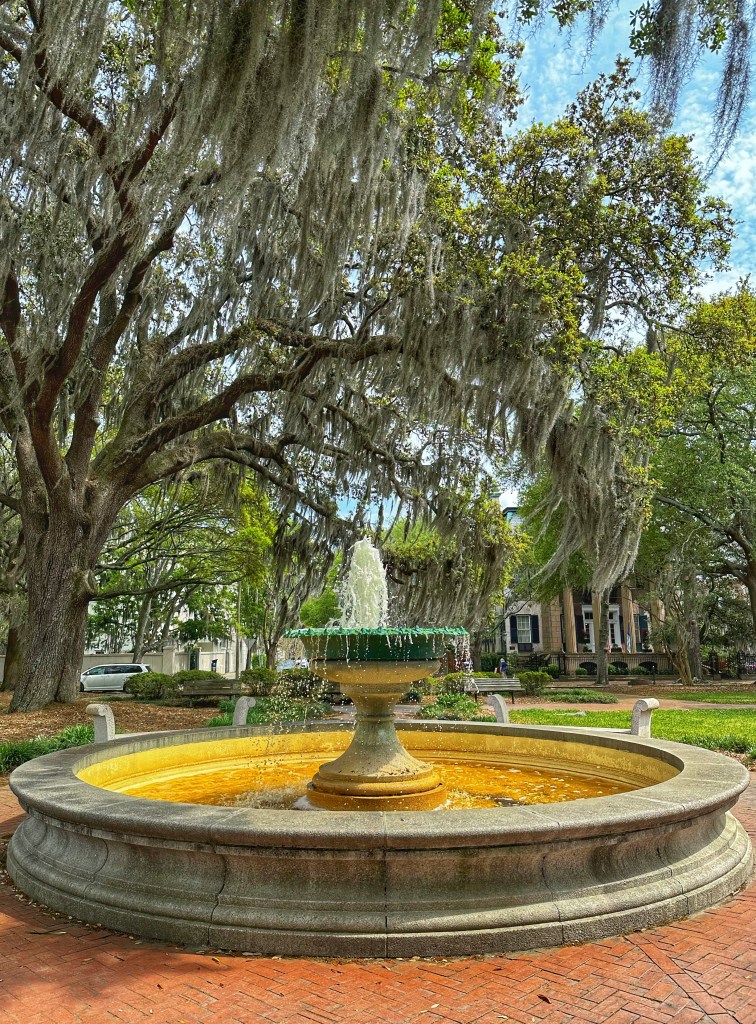
James Edward Oglethorpe established the city of Savannah in 1733. Oglethorpe planned the city around a series of squares with streets laid out in a grid. Each square had a small community of colonists living around it. Originally six squares were set up and grew to twenty four squares. Today, Savannah includes twenty two of those original squares.
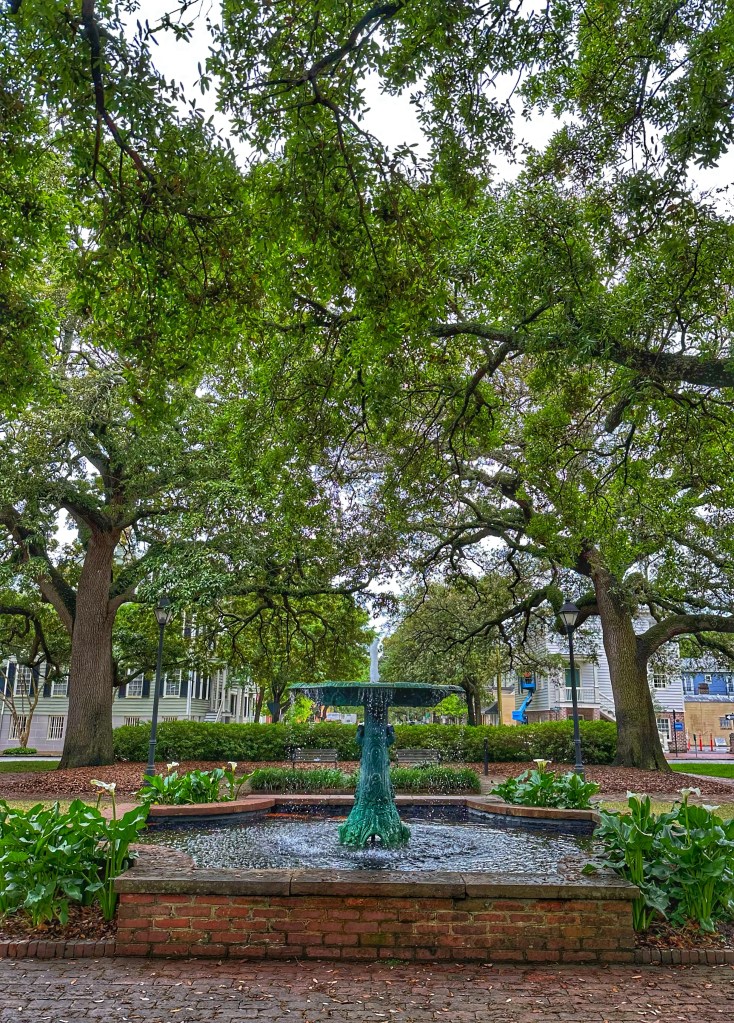
Oglethorpe statue in Chippewa SquareWright Square German Memorial Fountain in Orleans Square Columbia Square
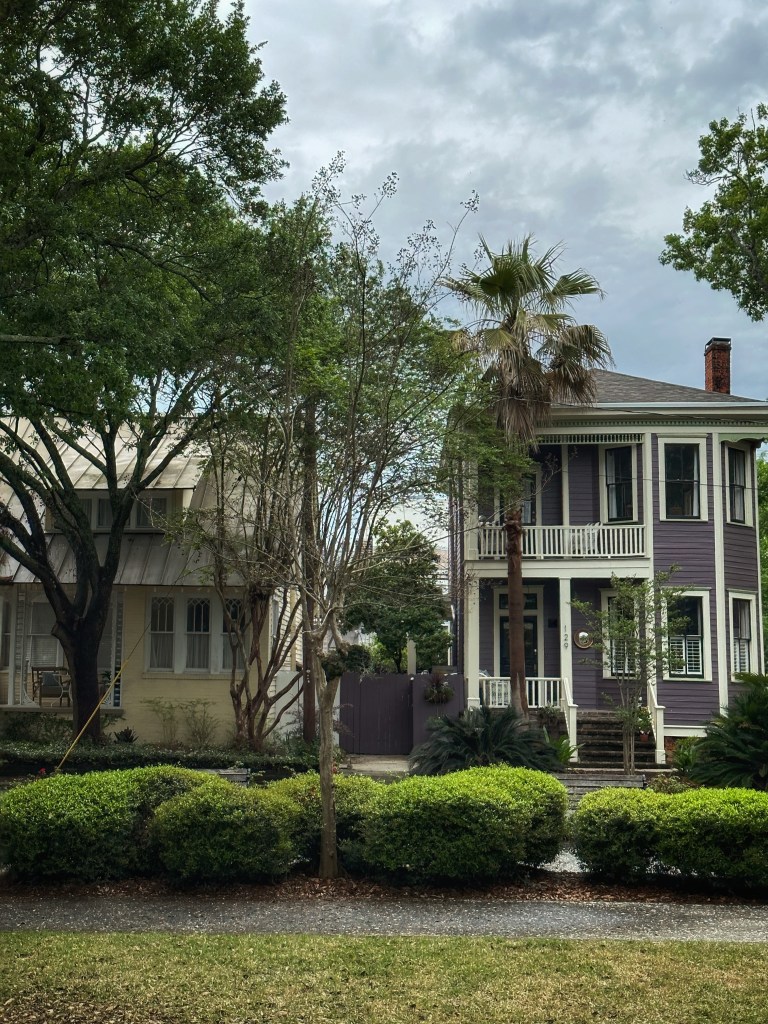
Savannah is a beautiful city that’s a joy to wander around in.
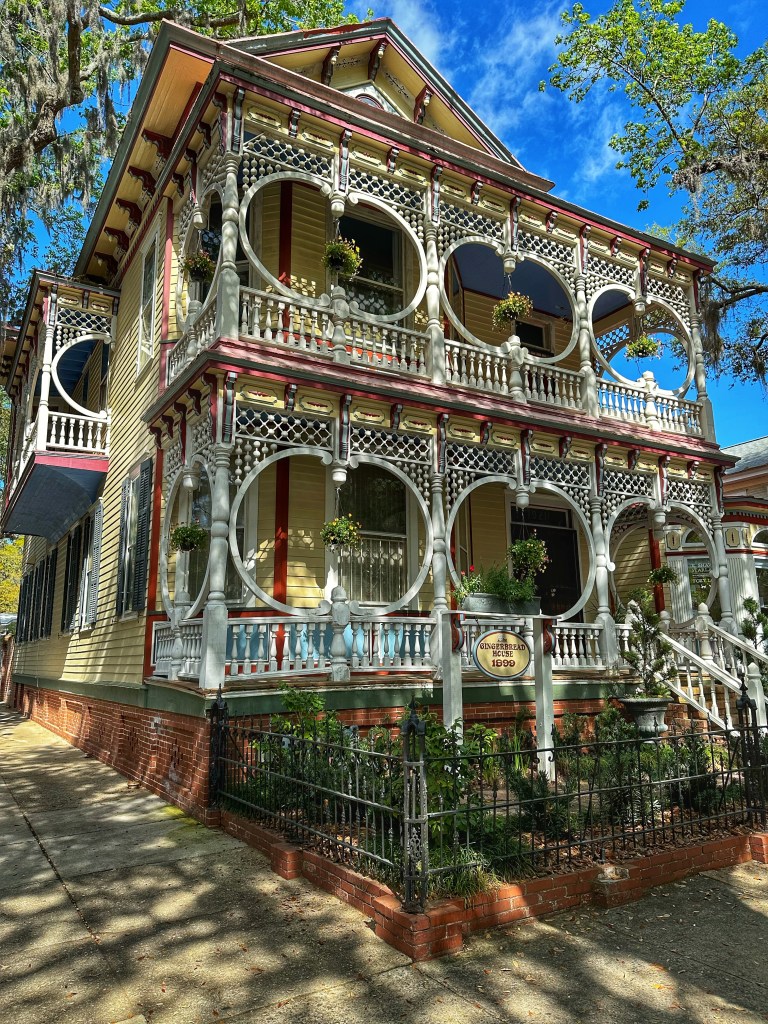
The Gingerbread House on Bull Street
Savannah is a port city that was vital in supplying Confederate troops during the Civil War. When General Sherman rolled through Georgia he left a path of destruction. However, when he got to Savannah he spared the city. Sparing the city allowed the Union army to use the port to supply its troops and deprive the Confederates of supplies.
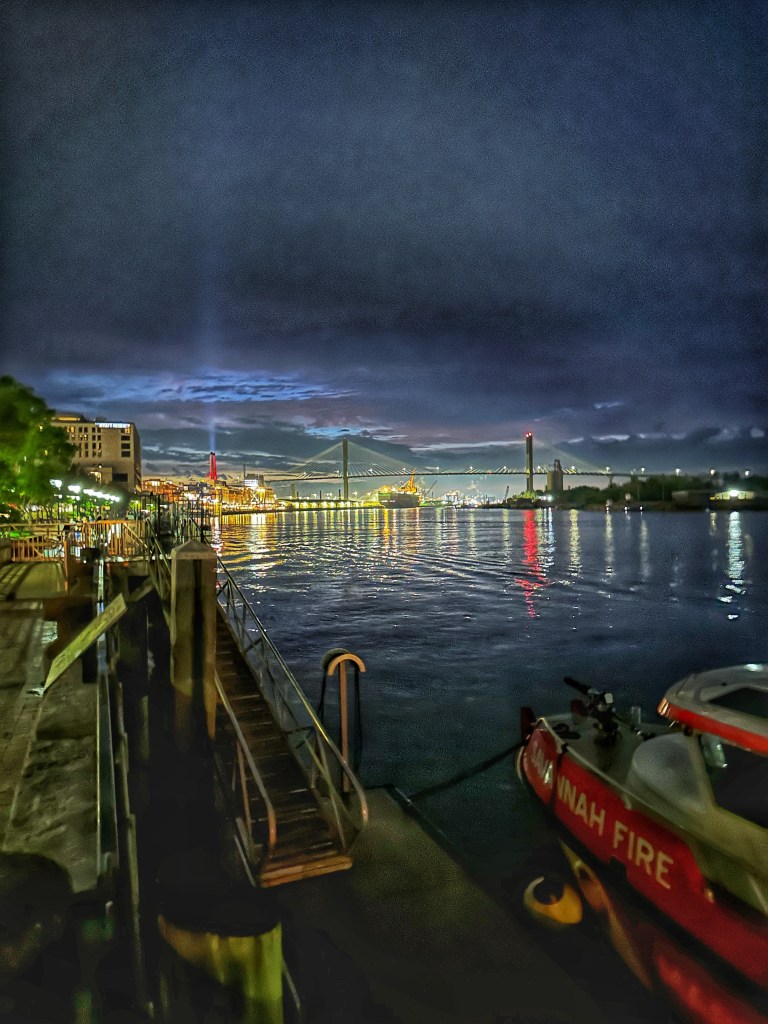
Evening on the Savannah River
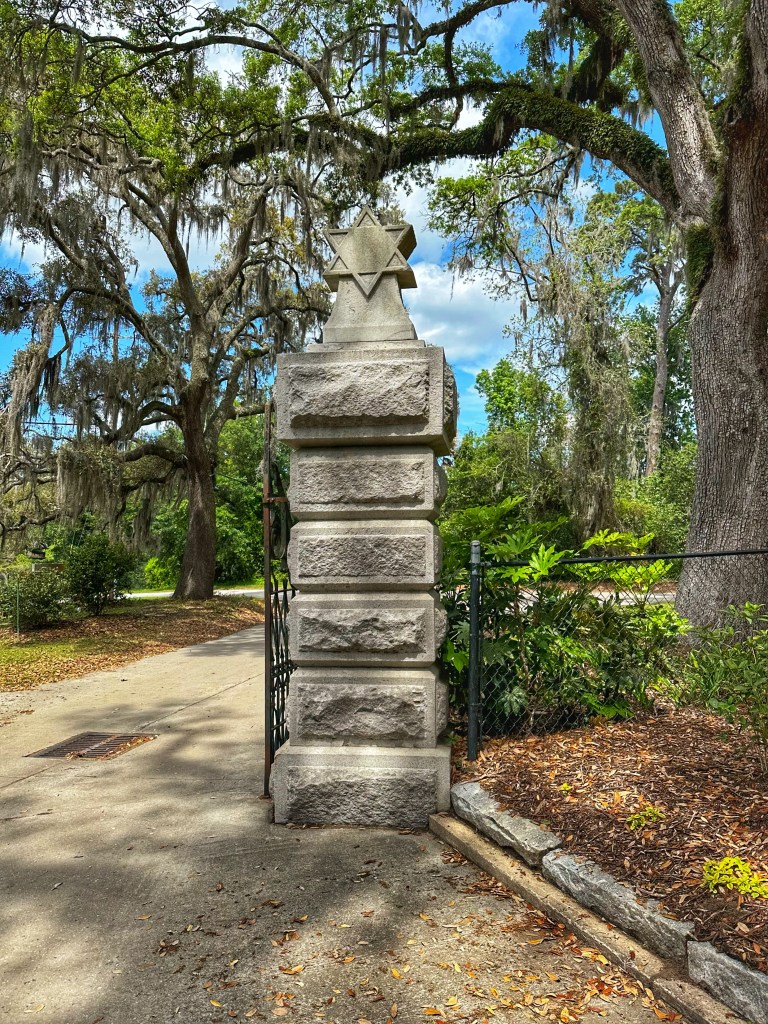
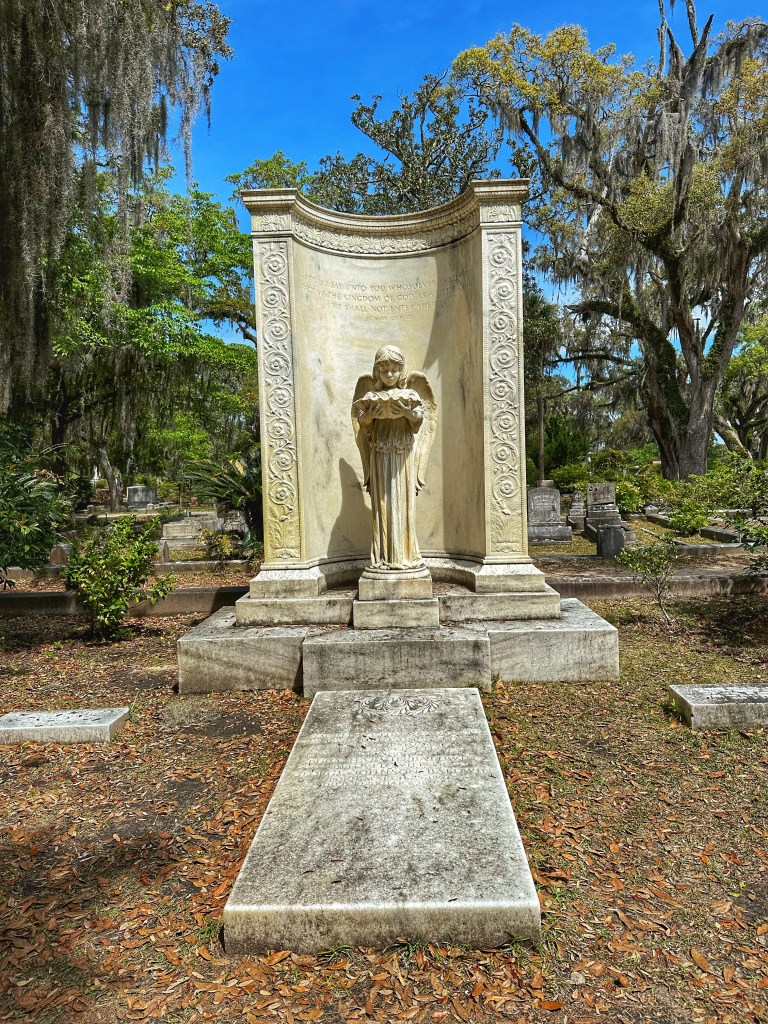
We’ve been lucky to have been able to visit Savannah on numerous occasions. While we enjoy revisiting favorite places we are always looking to find new spots. This trip we decided to checkout Savannah’s famous Bonaventure Cemetery where some of Savannah’s early residents are buried.
Bonaventure’s Jewish Gate
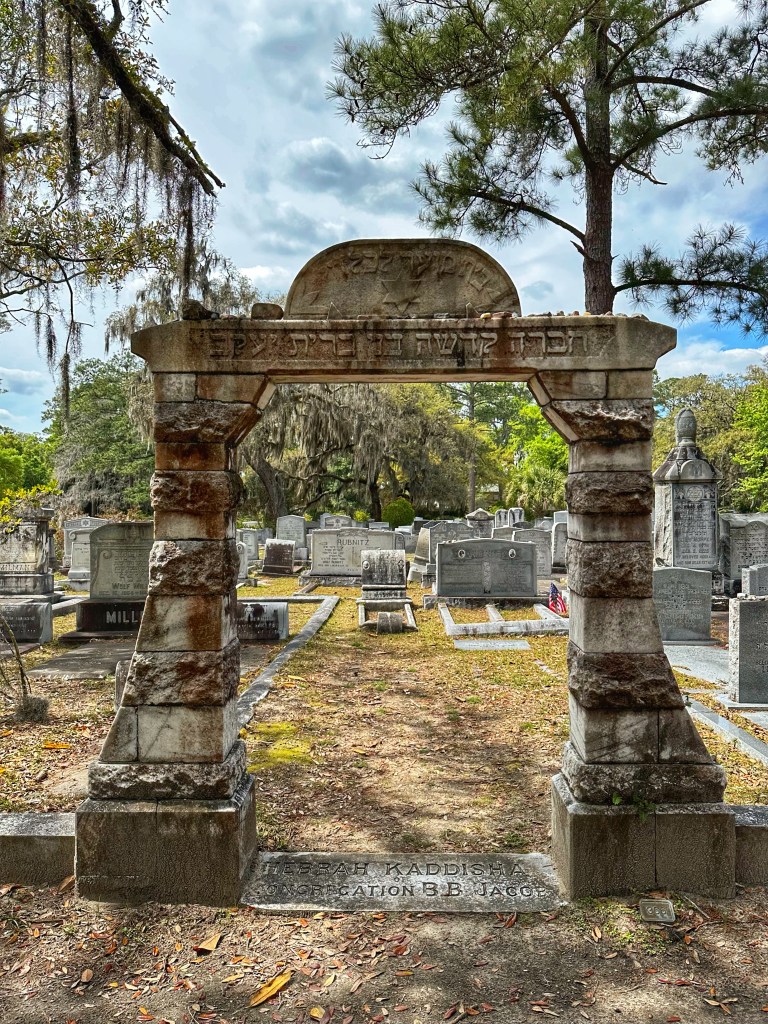
Oglethorpe’s original charter forbade slavery and guaranteed religious freedom in the colony. As a result many Jews elected to join the colony resulting in a Jewish section in the cemetery.
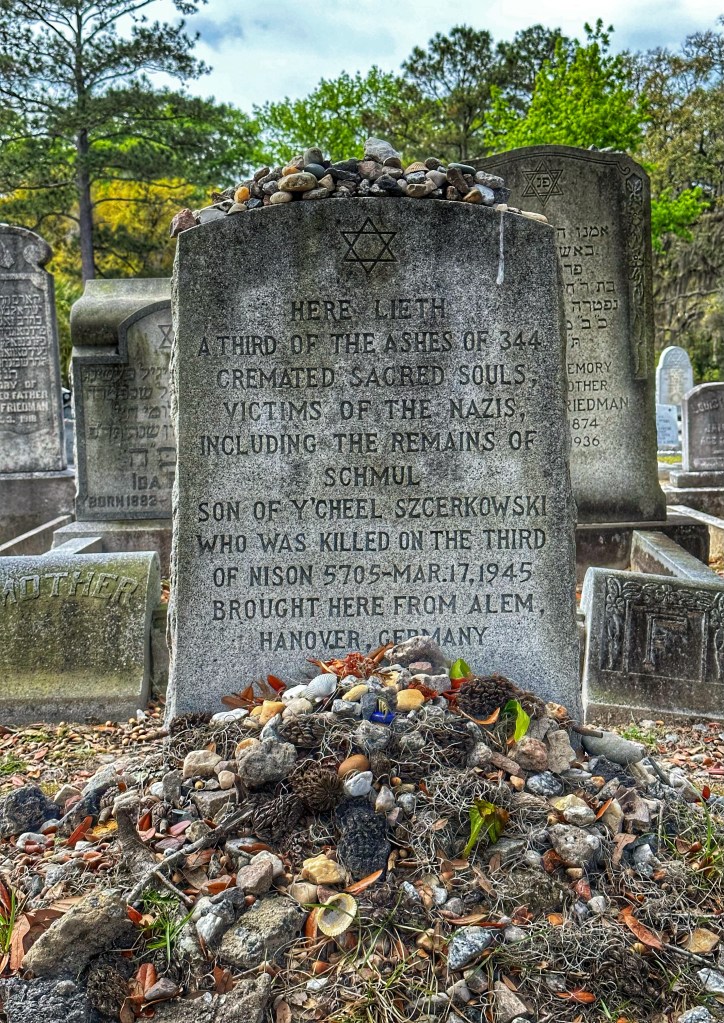
The cemetery’s Holocaust Memorial
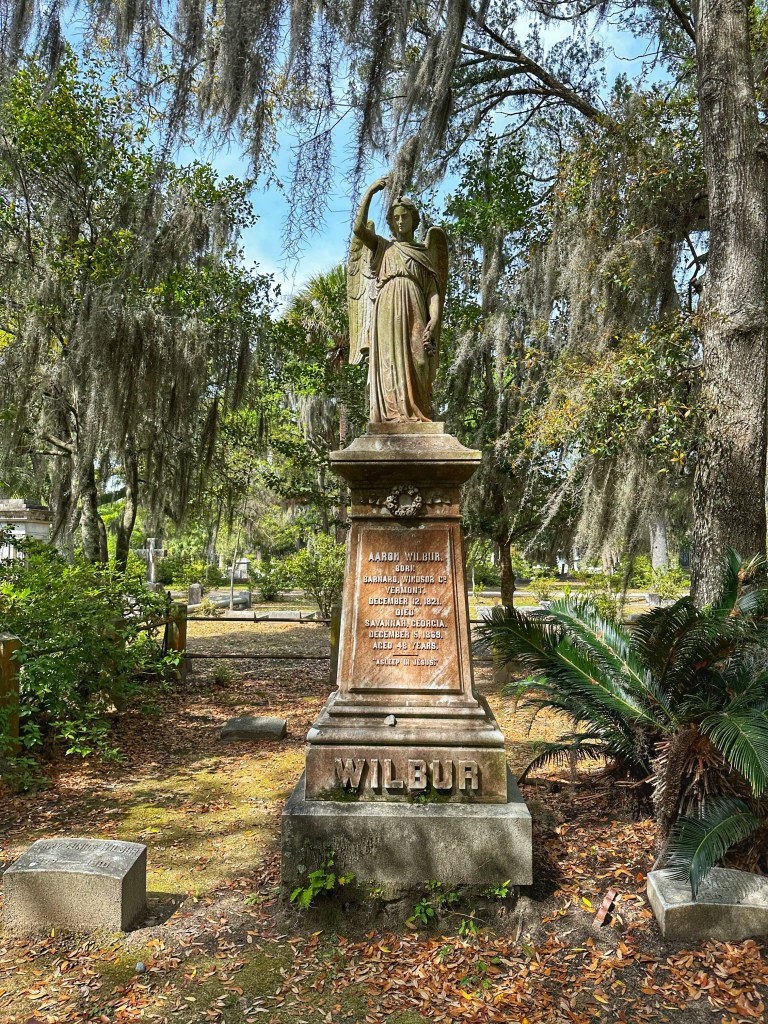
There’s also plenty of southern Gothic beauty to be found in the cemetery.
In between our explorations we are still attending music festival performances.
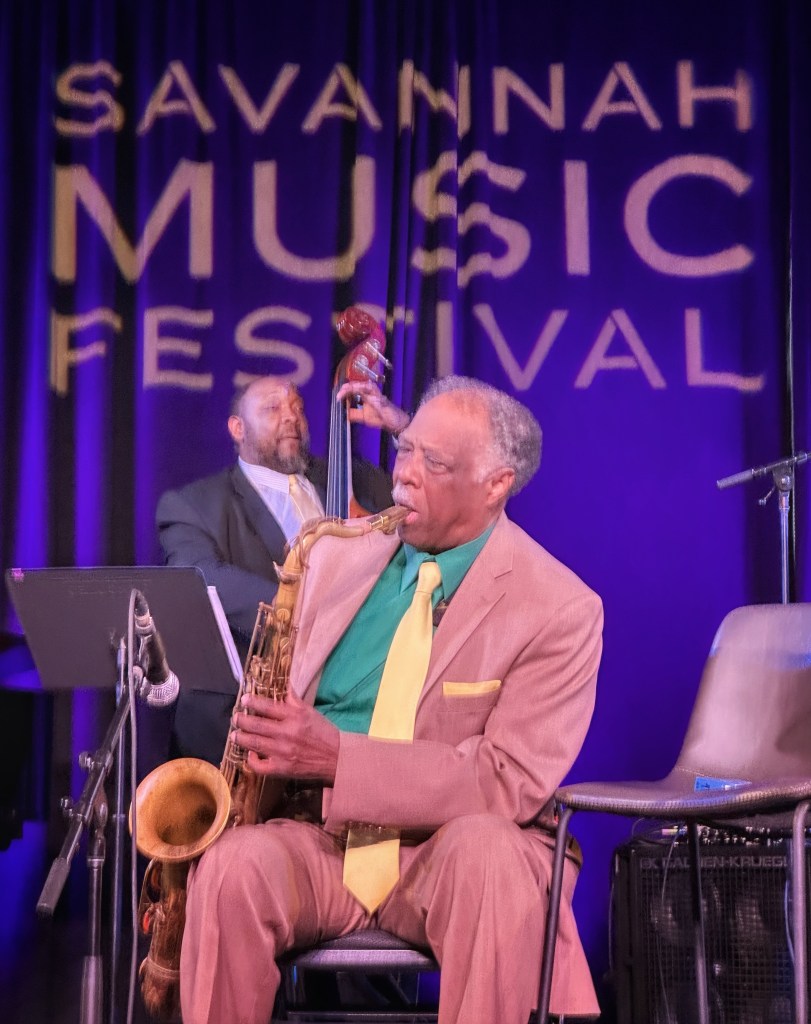
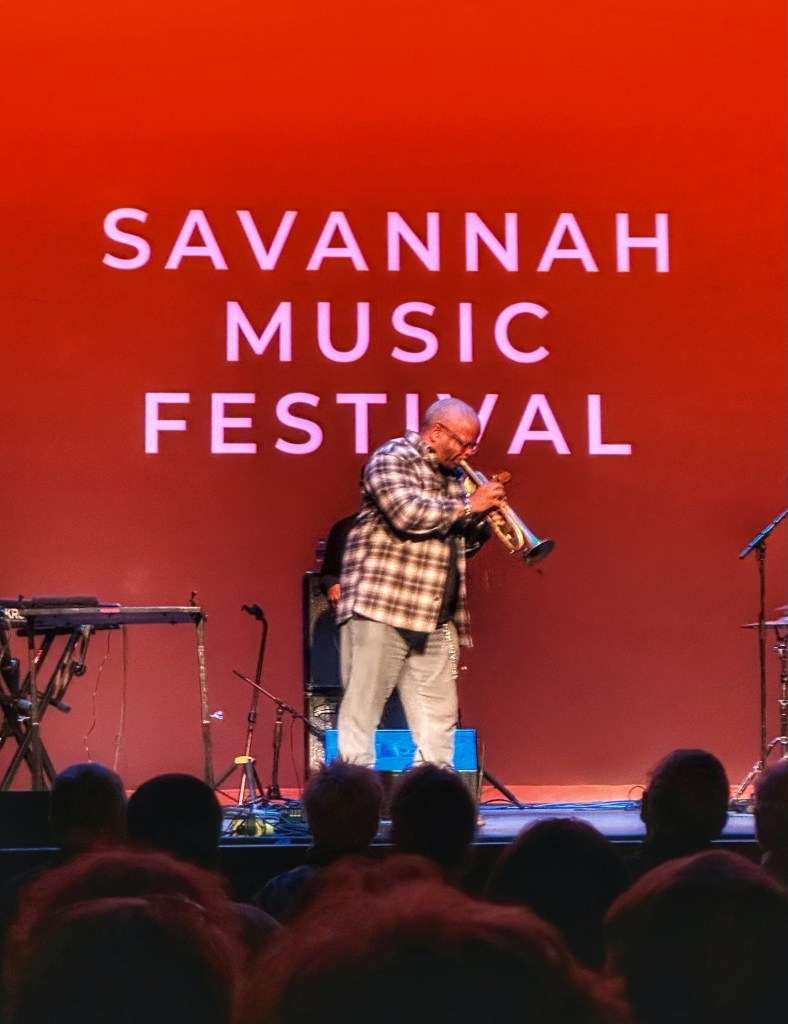
Eighty eight year old Houston Person bringing itCharles McPherson Quintet featuring Sean JonesTerence Blanchard with the E-Collective and Turtle Island Quartet
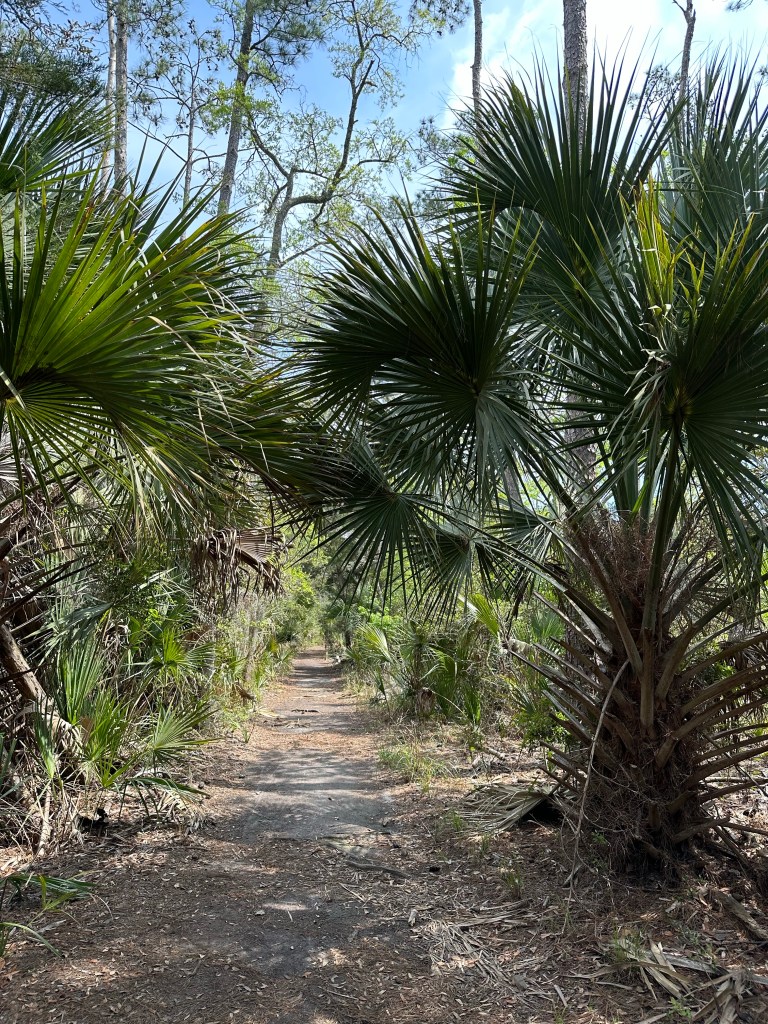
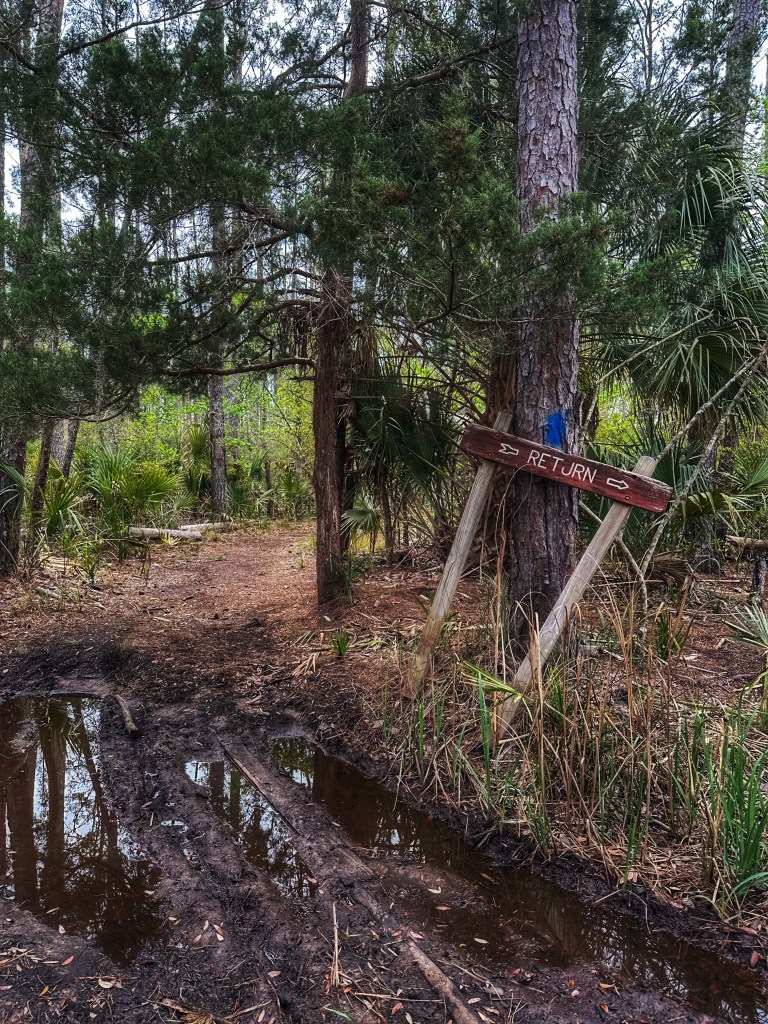
One of the perks of camping in a Georgia State Park is free admission to any other state park. We decided to travel south to Fort McAllistar for a hike on the Redbird Trail.
A lot of AmericanHistory has occurred in and around Savannah. From colonial times, Revolutionary War, Civil War and the Civil Rights era history happened here.
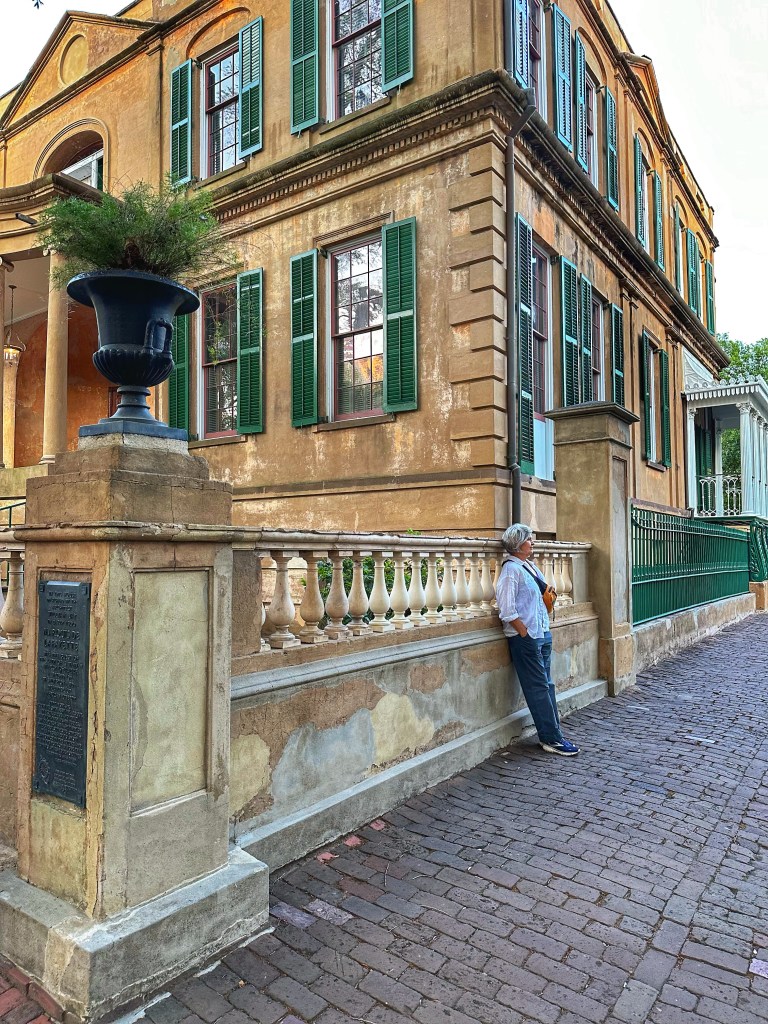
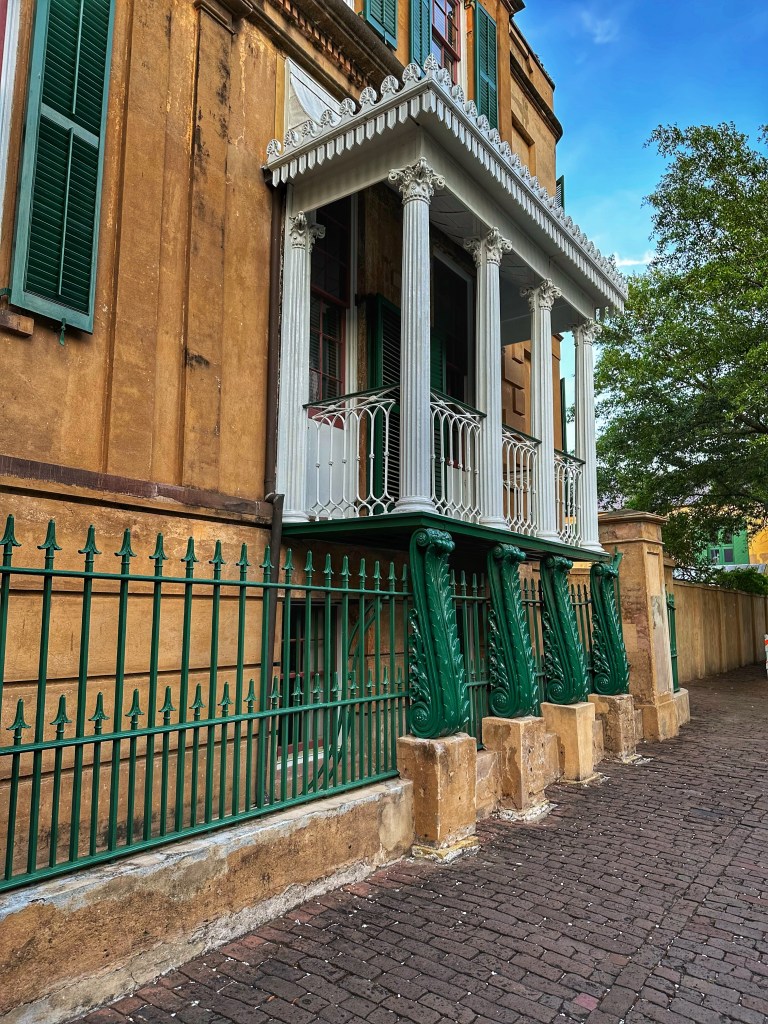
This is the Owens-Thomas house designed by William Jay and built between 1816 and 1819. General Lafayette stayed here a as a guest of the city in 1825 and addressed the residents of Savannah from the south balcony. The south balcony
Savannah is also home to a number of Art Galleries. Two of our favorites are the Jepson Center of the Arts and the SCAD Museum of Art.
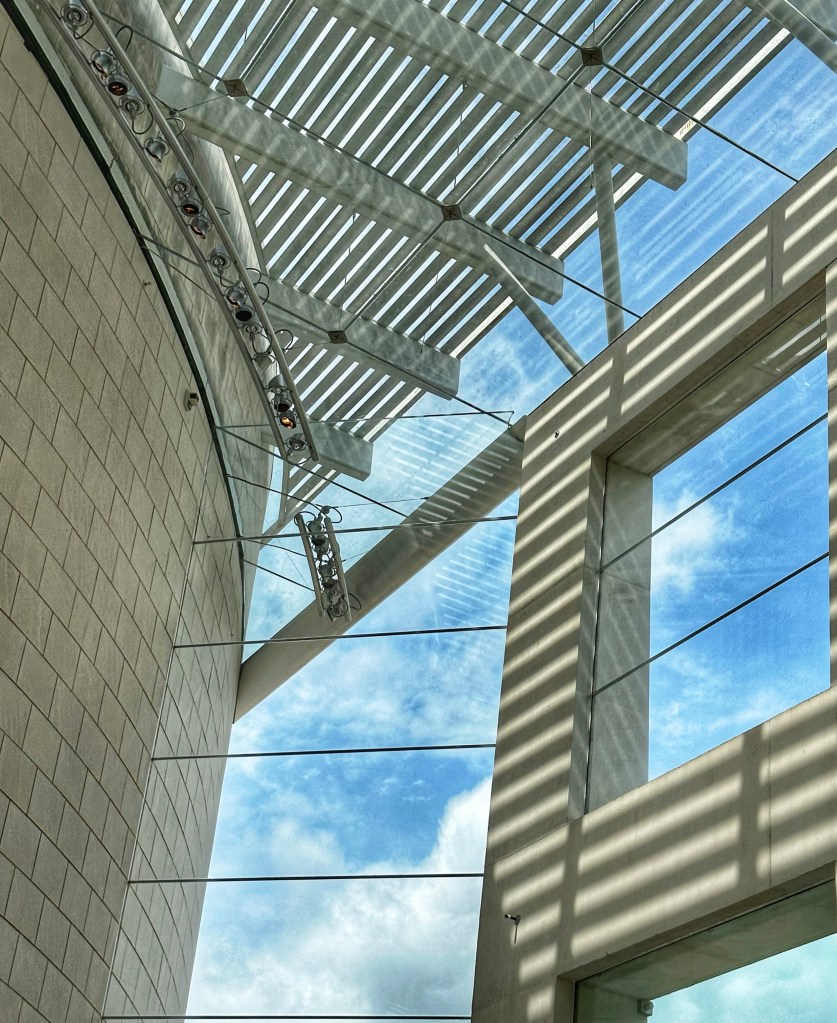
The atrium at the Jepson
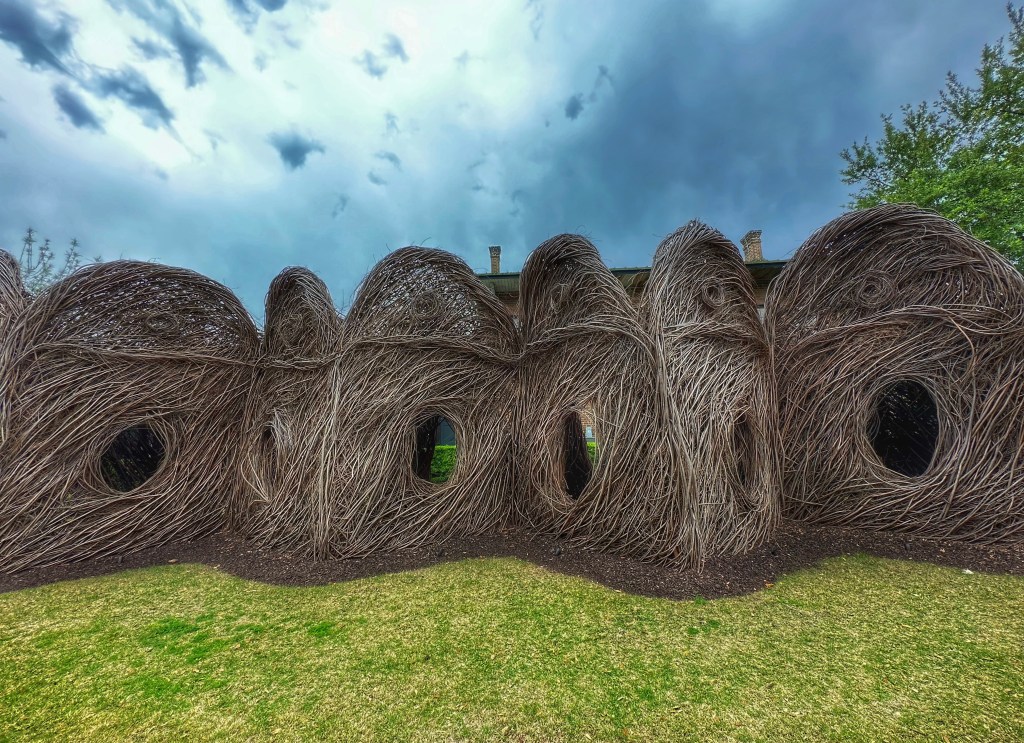
The Savannah College of Art and Design has a large presence in Savannah. They have been active in preserving historic architecture throughout the city. The SCAD museum is housed in a former train station which makes for an interesting exhibition space.
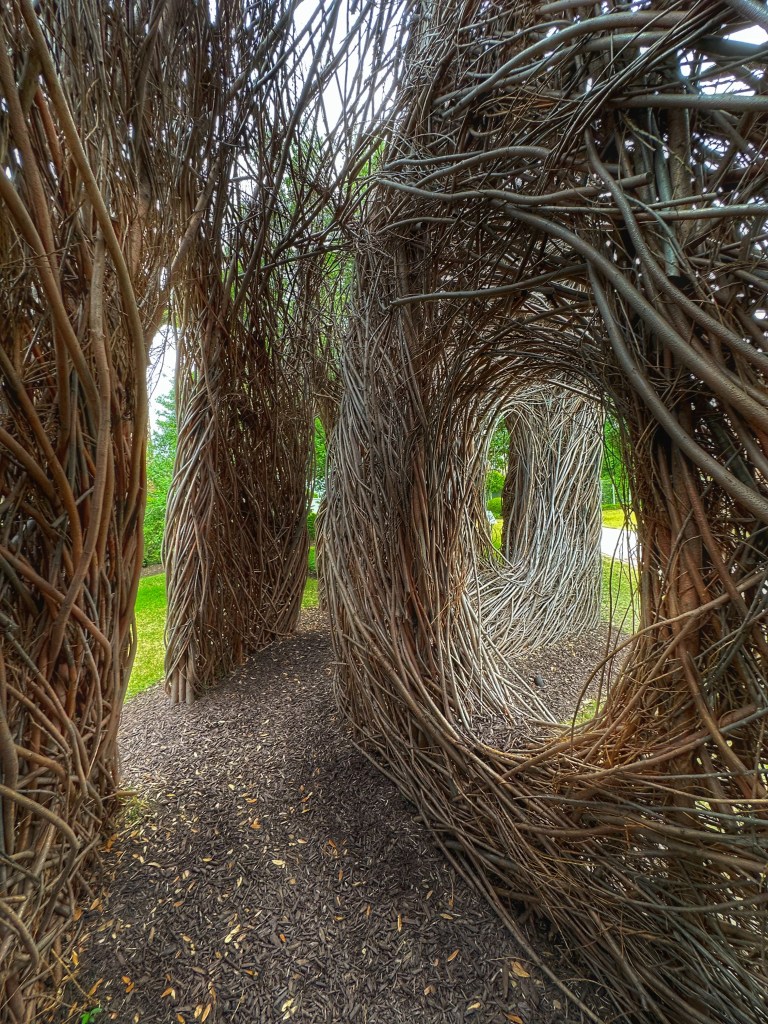
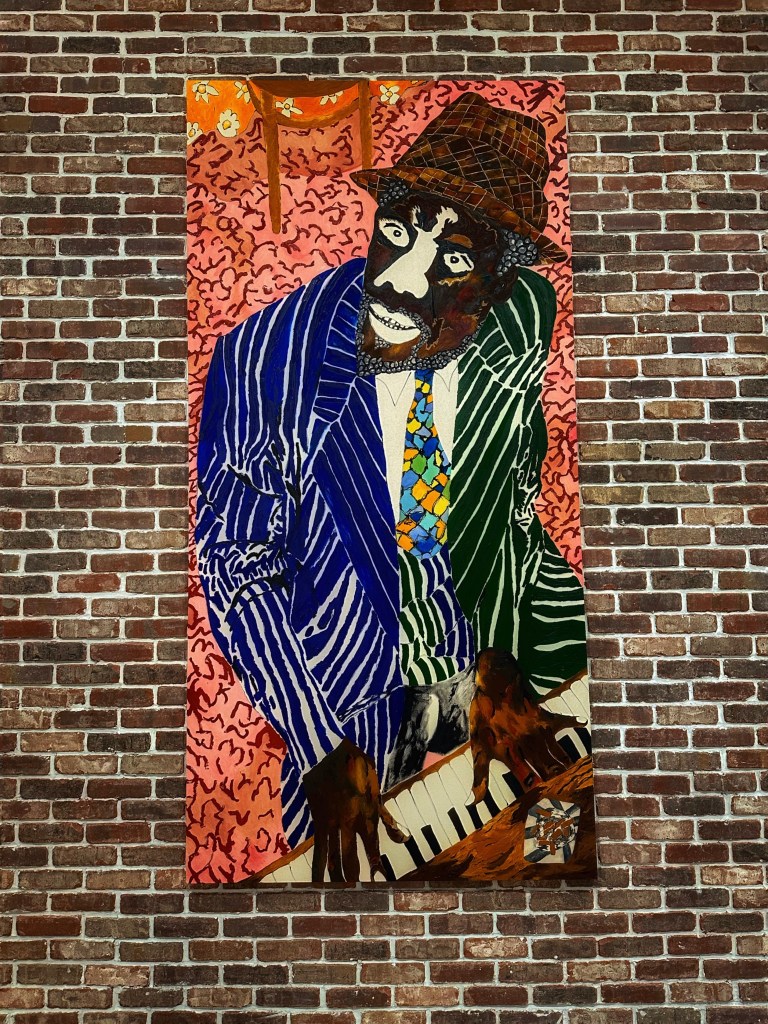
Patrick Dougherty’s “Making the Birds Proud”, 2021Chase Hall’s “Thelonius“, 2018-2019
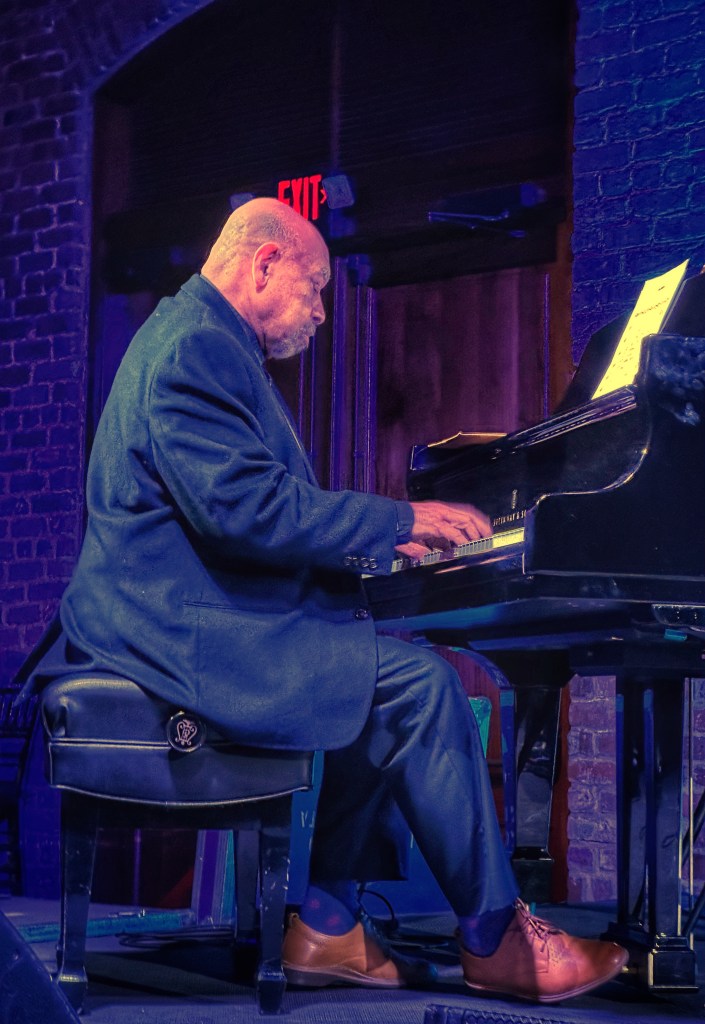
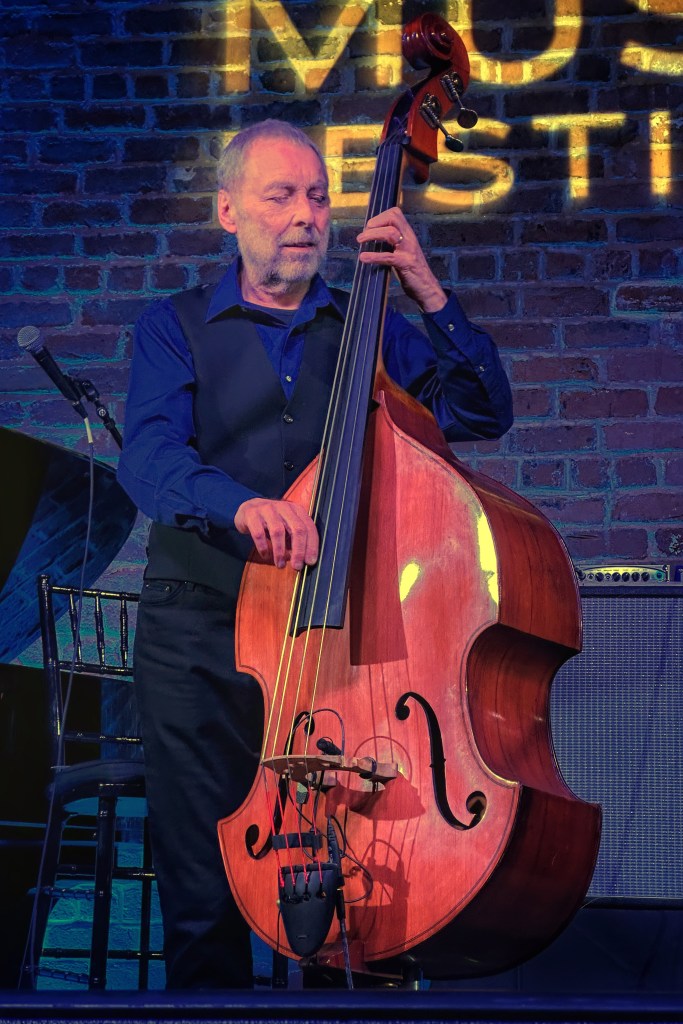
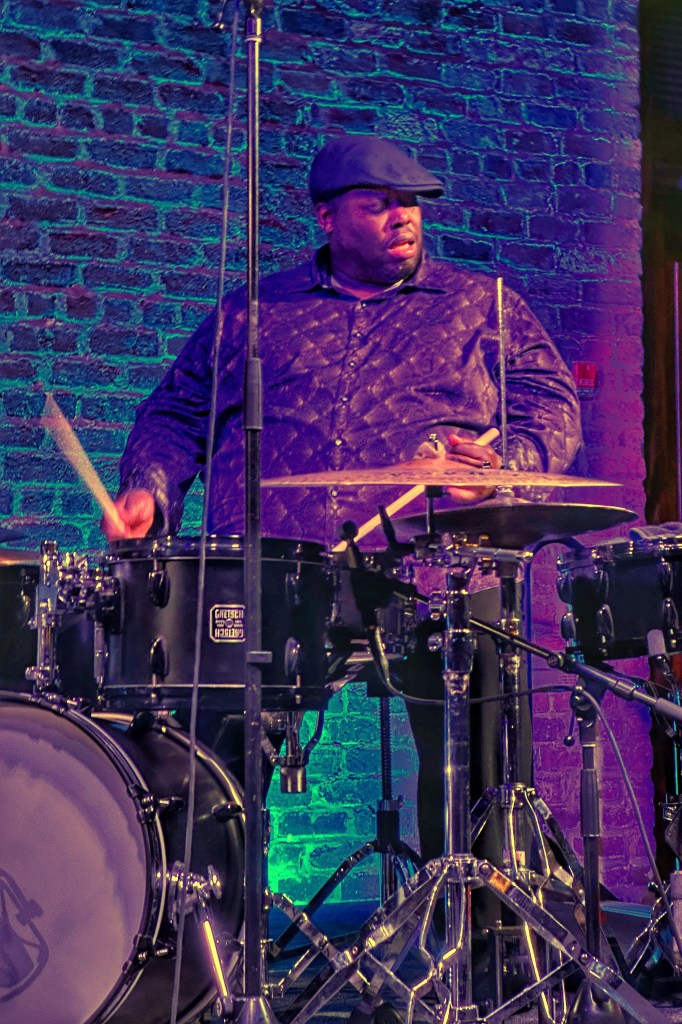
Savannah is a uniquely beautiful city and that alone is a reason for a visit. As avid music lovers, having a great music festival was added incentive to stop by for a visit. When we realized one of our favorite piano jazz trios was part of the festival we booked our trip and bought concert tickets.
Kenny BarronDave HollandJohnathan Blake
We’ve had a a wonderful stay in Savannah but it’s time to start heading west to New Orleans.























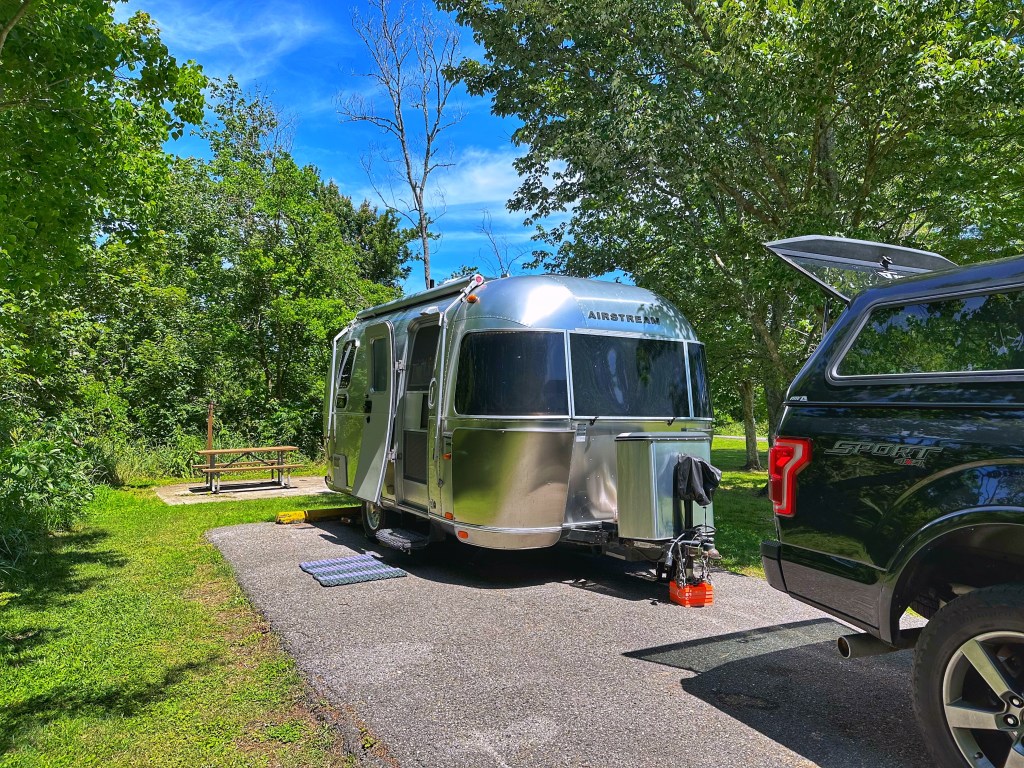










 Tincan Travels